
Imagine waking up one day to find that the edges of your world have started to blur. For millions of people with glaucoma, a group of eye conditions that damage the optic nerve, this isn't just a fear-it's a reality they fight against daily. The primary culprit is usually high intraocular pressure (IOP), the fluid pressure inside your eye. When medications and laser treatments stop working, surgery becomes the next line of defense. But which path do you take? The old gold standard, trabeculectomy, a traditional surgical procedure creating a new drainage channel for eye fluid, or the newer, less invasive options known as MIGS?
The landscape of glaucoma care has shifted dramatically in recent years. What was once a choice between doing nothing or undergoing major surgery has evolved into a spectrum of precise interventions. By July 2026, the consensus among ophthalmologists is clear: there is no single 'best' surgery. Instead, the right choice depends entirely on how advanced your disease is, what target pressure your doctor needs to achieve, and how much risk you are willing to accept during recovery.
Understanding the Two Main Surgical Paths
To make an informed decision, you first need to understand what these procedures actually do. Both aim to lower IOP, but they go about it in very different ways.
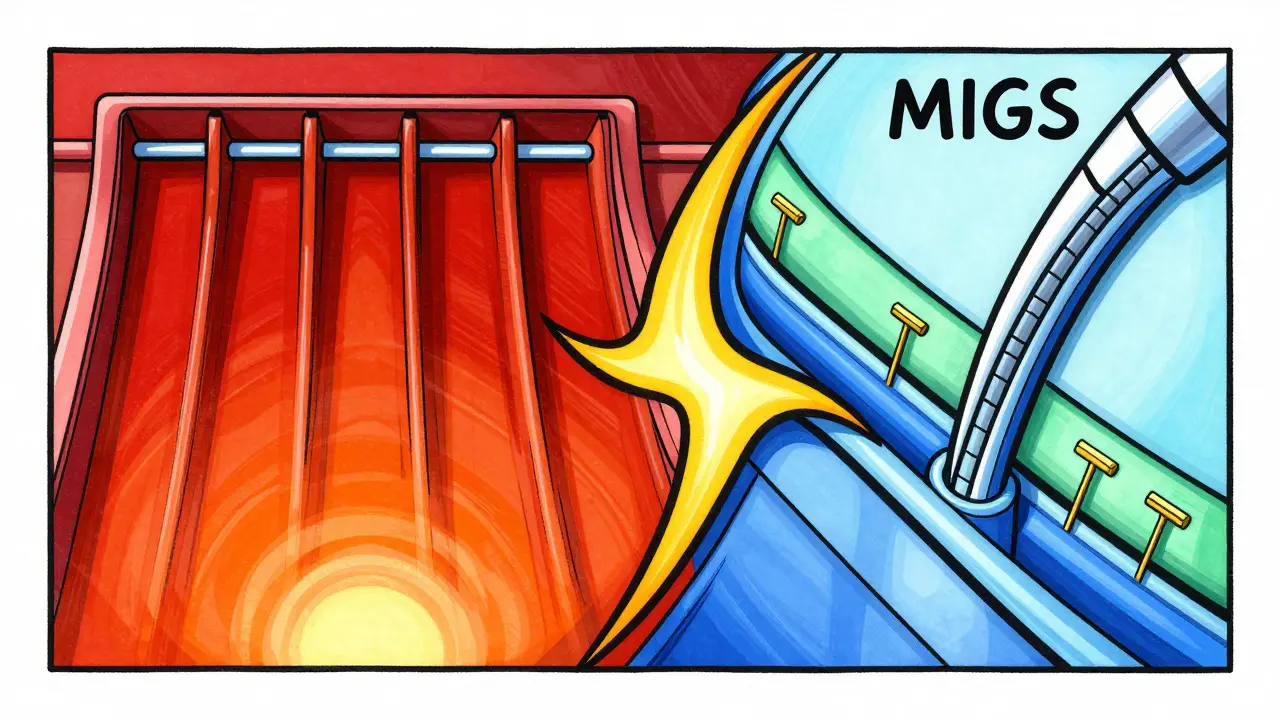
Trabeculectomy is the veteran of the field. Developed in the 1960s by British ophthalmologist John Cairns, it remains the most powerful tool for lowering eye pressure. During this surgery, the surgeon creates a small opening in the white part of your eye (the sclera) and removes a tiny piece of tissue called the trabecular meshwork. This allows fluid to drain out of the eye through a newly created reservoir, or 'bleb,' under the eyelid. It’s effective-often reducing pressure by 30-50%-but it’s also complex. The surgery takes about 60 minutes, and the recovery involves months of careful monitoring to ensure the bleb doesn’t leak or scar over.
On the other side of the spectrum sits MIGS, or Minimally Invasive Glaucoma Surgery. Emerging around 2012, MIGS represents a paradigm shift toward safety and speed. These procedures use micro-incisions, typically smaller than 1.5mm, to enhance fluid drainage. Think of them as installing tiny stents or scaffolds within the eye’s natural drainage system rather than building a completely new exit route. Because they cause minimal trauma, MIGS surgeries often take less time, can sometimes be combined with cataract surgery, and offer a much faster return to normal life.
Trabeculectomy: Power at a Price
Why would anyone choose trabeculectomy if MIGS exists? The answer lies in severity. If you have advanced glaucoma and need your eye pressure dropped to very low levels-say, below 15 mmHg-trabeculectomy is still the king. According to data from Mass Eye and Ear in 2023, this procedure achieves target pressures in 85-90% of cases within the first year. No MIGS procedure currently matches that level of power.
However, that power comes with significant risks. The complication rate for trabeculectomy is higher, ranging from 5% to 15%. Serious issues can include:
- Hypotony: Pressure drops too low, potentially damaging the eye.
- Bleb leaks: The drainage reservoir develops a hole, leaking fluid (occurs in 10-15% of cases).
- Endophthalmitis: A rare but serious infection inside the eye (risk of 0.5-2.0%).
- Scarring: The body may heal the opening too quickly, causing the surgery to fail (10-20% failure rate at 5 years).
Recovery is intense. You’ll likely need follow-up visits for 3 to 6 months, and your surgeon might perform additional minor procedures, like suture lysis or bleb needling, to keep the drainage open. It’s a commitment, but for those facing blindness without aggressive intervention, it’s worth it.
MIGS: Safety and Speed for Mild-to-Moderate Cases
If your glaucoma is mild or moderate, MIGS offers a compelling alternative. As of early 2025, MIGS procedures account for approximately 65% of all standalone glaucoma surgeries in the United States. Why the surge? Patients love the quick recovery. Visual improvement often happens within 1 to 2 weeks, compared to the 4 to 6 weeks required for trabeculectomy.
There are several types of MIGS devices, each with its own mechanism:
- iStent inject: Tiny titanium stents placed in the trabecular meshwork. They reduce IOP by about 20-30%.
- Hydrus Microstent: An 8mm scaffold that opens up the drainage angle. It’s particularly popular when combined with cataract surgery.
- Xen Gel Stent: A 6mm gel-filled tube that bypasses the drainage system entirely, similar to a mini-trabeculectomy but safer. It costs around $6,300 per eye.
The trade-off is efficacy. MIGS typically lowers IOP by only 20-30%, resulting in final pressures around 15-18 mmHg. This is excellent for preserving vision in early-stage disease but often insufficient for advanced cases. However, the safety profile is stellar. Complication rates hover between 1% and 3%, making it a low-risk option for patients who want to avoid the intensive postoperative care of traditional surgery.
Costs and Financial Considerations
Money matters when choosing a medical procedure. While insurance coverage varies, understanding the base costs helps set expectations. Traditional trabeculectomy averages around $4,200 per eye. MIGS devices, however, are more expensive due to the cost of the implants themselves. The Xen Gel Stent, for instance, runs approximately $6,300, while tube shunt surgeries range from $5,000 to $7,500.
Don’t forget the hidden costs of recovery. Trabeculectomy requires more office visits, potential repeat procedures, and longer time off work. MIGS patients often return to their routines much sooner, which can offset the higher upfront device cost. Always check with your insurer about coverage for specific MIGS devices, as some plans may classify certain implants as experimental or non-covered depending on your diagnosis.
| Feature | Trabeculectomy | MIGS (e.g., iStent, Hydrus) | Tube Shunts |
|---|---|---|---|
| IOP Reduction | 30-50% | 20-30% | 30-40% |
| Target Pressure | 5-15 mmHg | 15-18 mmHg | 10-15 mmHg |
| Complication Rate | 5-15% | 1-3% | 10-20% |
| Recovery Time | 4-6 weeks | 1-2 weeks | 4-6 weeks |
| Average Cost | $4,200 | $6,300+ | $5,000-$7,500 |
| Best For | Advanced Glaucoma | Mild-to-Moderate Glaucoma | Failed Prior Surgery |
The Role of Laser Therapy in Modern Treatment
Before jumping to any incision, consider where laser therapy fits in. The 2023 LiGHT trial changed everything. It showed that Selective Laser Trabeculoplasty (SLT) is just as effective as eye drops for controlling IOP in primary open-angle glaucoma. At three years, 75.3% of patients treated with SLT maintained target pressure, compared to 73.2% on medication.
Because of this evidence, many experts, including Dr. Joel S. Schuman at NYU Langone Health, now recommend SLT as the first-line treatment after diagnosis. It’s quick, painless, and reversible. Newer versions like Direct Selective Laser Trabeculoplasty (DSLT) treat the entire 360 degrees of the drainage angle automatically without touching the eye, though they may cause slightly more irritation afterward. If you haven’t tried SLT yet, ask your doctor if it’s an option before considering surgery.

What to Expect During Recovery
Your experience post-surgery will depend heavily on which procedure you choose. With trabeculectomy, expect a rigorous schedule. You’ll need to apply antibiotic and steroid eye drops multiple times a day for months. Your surgeon will monitor the bleb closely, looking for signs of leakage or scarring. You might need to wear an eye shield at night for weeks to prevent accidental rubbing.
MIGS recovery is far gentler. Most patients resume reading, driving, and light computer work within a few days. Drop regimens are shorter, often lasting only a few weeks. The main restriction is avoiding heavy lifting or strenuous exercise for a short period to prevent bleeding. If you had MIGS combined with cataract surgery, your vision might improve significantly as both issues are addressed simultaneously.
Future Trends: Biointerventional Surgery
The field isn’t standing still. By 2026, we’re seeing the rise of biointerventional glaucoma surgery, particularly in the suprachoroidal space. These emerging techniques involve injecting drugs or placing tiny shunts behind the retina, offering a new way to manage pressure without disturbing the front of the eye. While still evolving, these methods promise even fewer complications and easier administration. Keep an eye on clinical trials if current options don’t fit your needs.
Is MIGS better than trabeculectomy?
It depends on your stage of glaucoma. MIGS is safer and has a faster recovery, making it ideal for mild-to-moderate cases. However, trabeculectomy lowers eye pressure more significantly, making it necessary for advanced glaucoma where very low target pressures are required.
How long does recovery take after glaucoma surgery?
MIGS patients typically recover in 1-2 weeks, returning to normal activities quickly. Trabeculectomy requires 4-6 weeks for initial healing and 3-6 months of close monitoring to ensure the drainage site remains functional.
Can glaucoma surgery restore lost vision?
No. Glaucoma surgery aims to lower eye pressure to prevent further vision loss. It cannot reverse damage that has already occurred to the optic nerve. Early detection and treatment are crucial to preserving existing sight.
What are the risks of trabeculectomy?
Risks include hypotony (pressure too low), bleb leaks, infection (endophthalmitis), and scarring that causes the surgery to fail. The overall complication rate is 5-15%, requiring vigilant postoperative care.
Is laser treatment (SLT) effective enough to avoid surgery?
For many patients with primary open-angle glaucoma, yes. The LiGHT trial showed SLT is as effective as eye drops. It is now often recommended as a first-line treatment before considering invasive surgeries.
How much does glaucoma surgery cost?
Trabeculectomy averages $4,200 per eye. MIGS procedures vary widely, with devices like the Xen Gel Stent costing around $6,300. Tube shunts range from $5,000 to $7,500. Insurance coverage varies, so check with your provider.