
Getting life-saving medication shouldn’t mean choosing between rent and refills. For millions of Americans, patient assistance programs from drug companies are the only way to afford prescriptions. But qualifying isn’t simple. Income limits, insurance status, and paperwork hurdles turn what should be straightforward help into a maze. If you’re struggling to pay for pills like insulin, cancer drugs, or heart medications, this is what actually matters - not marketing brochures, but the real rules drug makers use to decide who gets help.
Who Can Even Apply?
The biggest myth about patient assistance programs (PAPs) is that they’re for anyone who can’t afford medicine. That’s not true. Most programs only help people who are uninsured or underinsured - meaning your insurance doesn’t cover the drug, or your out-of-pocket costs are unbearable. If you have standard commercial insurance, you’re often automatically disqualified, even if your co-pay is $500 a month. Pfizer’s Patient Assistance Program, for example, explicitly says: "We do not assist patients with commercial insurance." Same with Merck and GSK. Their programs are built to fill gaps left by the system, not to replace it. But here’s the catch: if you’re on Medicare Part D, you might still qualify - if you meet strict income rules and prove you were denied Extra Help. Takeda’s Help At Hand program requires you to first apply for Medicare’s Extra Help program and submit proof of denial before they’ll even look at your application.Income Limits: It’s Not What You Think
Income is the #1 factor. Nearly every program uses the Federal Poverty Level (FPL) as its benchmark. For 2023, 500% of FPL meant $75,000 a year for a single person and $153,000 for a family of four. But that’s not the whole story. Pfizer uses tiered limits. For everyday meds like Eucrisa (eczema cream), you must earn under 300% FPL - about $43,200 for one person. For cancer drugs like Keytruda? They raise the bar to 500-600% FPL - up to $77,760. GSK’s limit is lower: $58,650 for one person, $120,570 for four. AbbVie doesn’t set a flat number - eligibility depends on the specific drug you’re prescribed. And it’s not just gross income. Programs require Modified Adjusted Gross Income (MAGI), the same number the IRS uses for Obamacare subsidies. Many applicants mess this up, thinking their total paycheck is what counts. But if you have deductions like 401(k) contributions or student loan interest, those lower your MAGI. You need your tax return, W-2s, or recent pay stubs to prove it. One study found 31% of applicants got confused between gross income and MAGI - and got denied.Insurance Status: The Hidden Trap
This is where most people get stuck. Independent charity PAPs - like the PAN Foundation or HealthWell Foundation - often require you to have some insurance. In fact, 97% of them won’t help uninsured people, according to a 2019 study. That’s a brutal gap. If you’re uninsured, you’re usually stuck with manufacturer PAPs, and even those have strings attached. Medicare beneficiaries face a cruel middle ground. If your income is between 135% and 150% of FPL - about $18,347 to $20,385 for one person - you don’t qualify for Medicare’s Extra Help, but you also don’t qualify for most manufacturer PAPs. You fall into the "Medicare Part D gap" - a zone where no program helps you, even though you’re paying thousands out of pocket. And if your insurance plan tells you to apply for a PAP to get your drug covered? That’s a red flag. Merck and others explicitly ban patients whose insurers "require or encourage" PAP use. Why? Because if manufacturers pay for drugs that insurers should cover, it distorts pricing. So insurers can’t push you to a PAP - and if they do, you’re ineligible.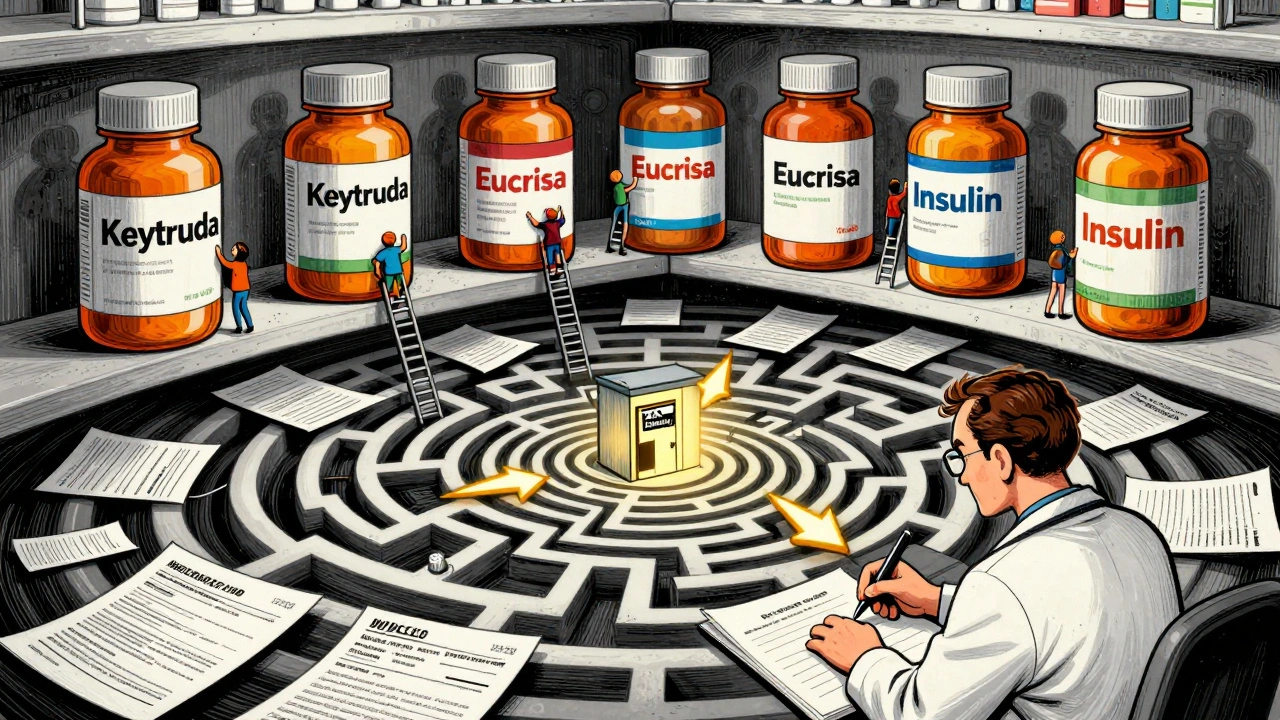
Residency and Treatment: Location Matters
You must live in the United States. That’s non-negotiable. All major programs - Pfizer, Merck, AbbVie, Takeda - require proof of U.S. address. You can’t be living abroad, even temporarily. And your doctor must be licensed in the U.S. and treating you here. If you’re on vacation in Canada and need your diabetes meds? No help. If you’re a U.S. citizen studying in the UK? You’re out of luck. Your prescription must come from a U.S.-based provider. That means telehealth visits with U.S. doctors count - as long as the doctor is licensed in your state. But prescriptions from foreign clinics, even if you’re a U.S. resident, won’t work.Application Process: What They Actually Want
You’ll need three things: a completed form, your doctor’s signature, and proof of income. The form itself isn’t hard - about 27 minutes to fill out, according to AbbVie’s testing. But mistakes happen. Half of all errors are in calculating household size. If you live with your adult child who files taxes separately, are they part of your household? It depends. Programs count anyone you financially support, even if they don’t live with you. That’s where people get tripped up. Doctors have to sign off. Not just any note - a formal verification form. Merck says it takes an average of 28 days for doctors to return these. If your doctor’s office is slow, your approval gets delayed. Some programs offer fax-back forms or online portals to speed it up, but you have to ask. For income proof, expect to send: one of these - your most recent tax return, W-2, pay stubs from the last 30 days, or a letter from your employer. If you’re self-employed, you’ll need profit/loss statements. Pfizer now lets you link your TurboTax account to auto-fill income data - cutting errors by 29% since 2023.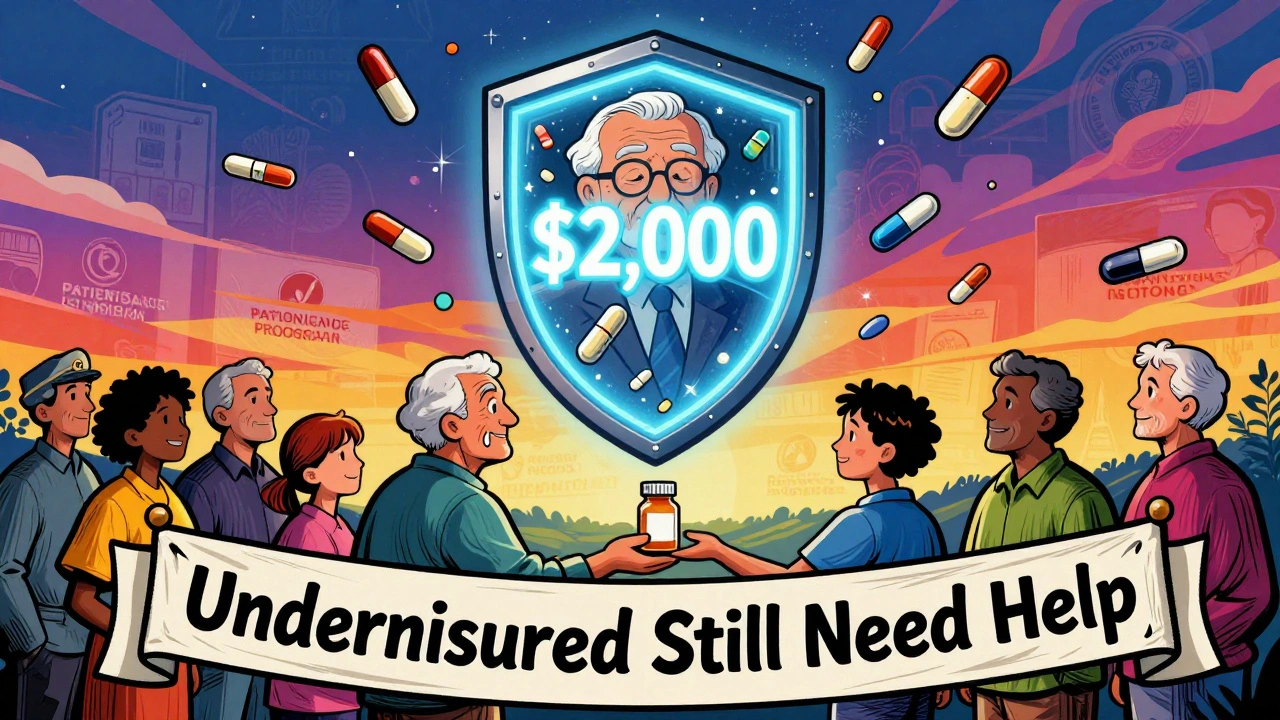
What Happens After You Apply?
Approval times vary. Most programs take 7-14 days. But if your case is complex - say, you’re on Medicare with multiple chronic conditions - it can take 3-4 weeks. Once approved, you’ll get your meds delivered directly to your home or pharmacy. In CMS surveys, 89% of patients received their first shipment within 72 hours of approval. But it’s not a one-time thing. For specialty drugs - cancer, MS, rheumatoid arthritis - you’ll need to reapply every 3 months. For regular meds like blood pressure pills, once a year. GSK requires annual re-enrollment. If you miss the deadline, your meds stop. No warning. No grace period. Denial rates are high. Reddit users report 37% of initial applications get rejected. Why? Incomplete docs (68% of cases), income mismatch (22%), or insurance status errors. The Medicare Rights Center found 42% of applicants had to try three or more times to qualify. Persistence matters.What’s Changing in 2025 and Beyond?
The Inflation Reduction Act kicks in fully in 2025. For Medicare Part D users, your out-of-pocket drug costs will be capped at $2,000 a year. That’s huge. Experts predict this will cut PAP usage among seniors by 35-40%. Why? Because if you’re paying less out of pocket, you won’t need manufacturer help as much. But here’s the twist: the same law lets Medicare negotiate drug prices starting in 2026. If prices drop, PAPs may shrink. But they won’t disappear. Why? Because 27.5 million Americans are still underinsured - their plans have high deductibles, narrow networks, or don’t cover certain drugs at all. For them, PAPs remain essential. Some companies are adapting. Twelve major drug makers launched "commercial PAPs" in 2022-2023 - programs that help people with insurance who still pay too much. AbbVie’s program now lets insured patients get discounts if their co-pay exceeds $100. It’s a new model: not for the uninsured, but for the underburdened.What to Do Right Now
1. Find your drug. Go to the manufacturer’s website. Search "[Drug Name] patient assistance program." Pfizer has RxPathways. Merck has Merck Helps. GSK has the GSK Patient Assistance Foundation. 2. Check income limits. Use the 2023 FPL chart. Multiply your household size by the FPL amount. If you’re under 500%, you likely qualify for at least one program. 3. Know your insurance status. Are you uninsured? On Medicare? Commercial insurance? That determines which programs you can even apply for. 4. Gather docs now. Get your tax return, pay stubs, and doctor’s contact info ready. Don’t wait. 5. Call for help. Most programs have navigators. Wait times are long - 11 minutes on average, 18 for Medicare - but they can walk you through the form. Ask if they have a fax-back option or online portal. Don’t give up after one denial. Reapply. Double-check your income math. Ask your doctor to prioritize your form. For many, these programs are the only way to stay alive.Can I get help if I have Medicare Part D?
Yes, but only under specific conditions. Most manufacturer PAPs require you to first apply for Medicare’s Extra Help program and get denied. If your income is below 150% of the Federal Poverty Level ($20,385 for a single person in 2023), you may qualify for PAP assistance after proving you were turned down for Extra Help. Programs like Takeda’s Help At Hand have this exact process. But if you’re above that income level, you likely won’t qualify for PAPs - and you’ll have to pay full price until the $2,000 out-of-pocket cap kicks in under the Inflation Reduction Act in 2025.
What if I’m uninsured but my income is too high?
You’re in a tough spot. Most manufacturer PAPs require income under 500% of the Federal Poverty Level. If you’re above that, you won’t qualify. Independent charities like PAN or HealthWell also cap eligibility at 400-500% FPL. Your only options are drug manufacturer coupons (if available), pharmacy discount programs like GoodRx, or negotiating cash prices directly with your pharmacy. Some hospitals have sliding-scale clinics - ask your provider. But without financial assistance, you may have to switch to generic alternatives or delay treatment.
Do I need to reapply every year?
Yes, for most programs. If you’re taking a specialty drug - like those for cancer, rheumatoid arthritis, or multiple sclerosis - you’ll need to reapply every 3 months. For routine medications like blood pressure or diabetes pills, annual re-enrollment is typical. GSK and Pfizer both require yearly updates. If you miss the deadline, your medication will stop. Set calendar reminders. Some programs send email alerts, but don’t rely on them. Proactively check your account or call your PAP coordinator.
Can I use a PAP and a pharmacy discount card at the same time?
No. You can’t combine PAP assistance with discount cards like GoodRx or SingleCare. PAPs provide free or deeply discounted medication directly from the manufacturer. Discount cards are negotiated cash prices with pharmacies. Using both at once is not allowed - and attempting to do so can get you kicked out of the program. Choose the better option: if the PAP gives you the drug for free, use that. If the discount card is cheaper than your co-pay, use that. But never both.
What if my doctor won’t sign the form?
Call the PAP’s support line. Many have dedicated staff who can email or fax the form directly to your doctor’s office and explain the process. Some programs even provide pre-filled templates to make it easier. If your doctor’s office is unresponsive, ask if you can speak to a nurse or medical assistant - they often handle these forms. If all else fails, contact a patient advocacy group like the Patient Advocate Foundation. They can intervene on your behalf. Don’t let a slow doctor’s office stop your access to medicine.




James Kerr
December 3, 2025 AT 04:08Just got approved for my insulin through Pfizer’s program after 3 tries. Took forever but worth it. My co-pay dropped from $400 to $0. If you’re struggling, don’t give up. Call their helpline - they’re actually helpful.
Rashi Taliyan
December 4, 2025 AT 17:43I cried when I saw my first shipment arrive. No joke. I was choosing between my meds and groceries. This isn’t charity - it’s survival. Thank you to whoever wrote this guide.
sagar bhute
December 4, 2025 AT 20:00This whole system is a scam. Drug companies make billions and pretend they care. They only help when forced. Don’t believe the hype.
shalini vaishnav
December 6, 2025 AT 13:04Why are we even talking about this? In India, we get generic insulin for $2 a vial. Americans make everything complicated. You have insurance - stop complaining.
Rashmin Patel
December 6, 2025 AT 18:26OMG YES 🙌 I spent 6 weeks fighting Takeda’s Help At Hand - sent 4 versions of my tax return, got denied twice, then called their rep and she literally walked me through the MAGI calculation. Turns out my 401(k) deductions lowered it enough! I’m now on Keytruda for free. If you’re stuck, DON’T GIVE UP. The forms are annoying but the people behind them? Sometimes angels in suits. Also - use TurboTax link if you can. Saved me 3 days.
vinoth kumar
December 7, 2025 AT 10:35Anyone else notice how the PAPs don’t help if you’re on Medicaid? My cousin got denied because she’s on state insurance even though her co-pay is $600. That gap is insane. We need better rules.
bobby chandra
December 7, 2025 AT 16:46Let me break this down like I’m talking to my grandma: If you’re uninsured and making under $75k solo, you probably qualify. If you’re on Medicare and got slapped with a denial for Extra Help? That’s your golden ticket. Don’t trust the website - CALL. They have people who know the loopholes. And if your doc is slow? Send the form via fax. I did it. Got signed in 48 hours. You got this.
Archie singh
December 9, 2025 AT 09:00Everyone’s acting like this is a breakthrough. It’s not. This is band-aid capitalism. The real fix is price controls. Stop glorifying corporate charity. These programs exist because the system is broken - not because Big Pharma has a conscience.
Gene Linetsky
December 10, 2025 AT 16:34They’re lying about the income limits. I applied for Humira and they asked for my 2022 tax return but my income dropped 40% in 2023. They ignored my pay stubs. This is rigged. I’m not the only one. I’ve seen 12 people get denied for the same reason. They want you to fail.
Vincent Soldja
December 11, 2025 AT 05:42Complex system. Poorly communicated. Inefficient. Noted.
Makenzie Keely
December 11, 2025 AT 13:57As someone who’s helped 87 patients navigate PAPs through my nonprofit - I can confirm: the biggest killer is paperwork confusion. People think they need a lawyer. They don’t. They need a friend who’s done it before. And yes - the 3-month re-enrollment for cancer drugs? Brutal. Set phone alarms. Write it on your fridge. This isn’t just bureaucracy - it’s life-or-death logistics.
parth pandya
December 12, 2025 AT 15:14hey i just got approved for my diabetes meds! i used goodrx first but it was still $300 so i tried the papp and it worked! i think i made a mistake on the household size at first but the helpline fixed it. thanks for the tips!!
Albert Essel
December 13, 2025 AT 19:39Just want to add - if you’re on Medicare and your income is between 135%-150% FPL, you’re in the worst possible zone. No one helps you. I know because I’m there. The $2,000 cap in 2025 is going to save lives. Until then, keep applying to every program you can find. Even if you get denied, document it. It helps advocacy groups push for change.