
Bisphosphonate Timing Tracker
Step 1: Select Medication
Choose your prescribed medication to set the correct waiting time.
Step 2: Waiting Period
Quick Reference Guide
- Water Only: Take with a full glass (6-8 oz) of plain tap water.
- Stay Upright: Remain sitting or standing until you have eaten/drank something else.
- Dairy Warning: Milk, yogurt, and cheese significantly reduce absorption. Avoid during the wait.
- Juice/Coffee: Acidity can also interfere. Wait until the timer finishes.
You just took your morning pill for bone health. You washed it down with a splash of orange juice because water felt boring, or maybe you grabbed a quick yogurt right after because you were running late. It seems harmless, right? But here is the hard truth: if you are taking oral bisphosphonates like Alendronate (Fosamax) or Risedronate (Actonel), that tiny bit of dairy or juice might have just rendered your medication almost useless.
This isn't just a minor inconvenience; it's a major clinical issue. Oral bisphosphonates have notoriously poor bioavailability-meaning your body absorbs very little of the drug to begin with. When you introduce Calcium, magnesium, or other divalent cations found in dairy products, they bind to the medication in your gut, forming insoluble complexes that pass right through you without being absorbed. Studies suggest this can reduce absorption by 80-90%. So, why do millions of people still struggle with this? Because the rules are strict, and life is messy. Let's break down exactly how to navigate this tricky interaction so your treatment actually works.
The Science Behind the Blockade
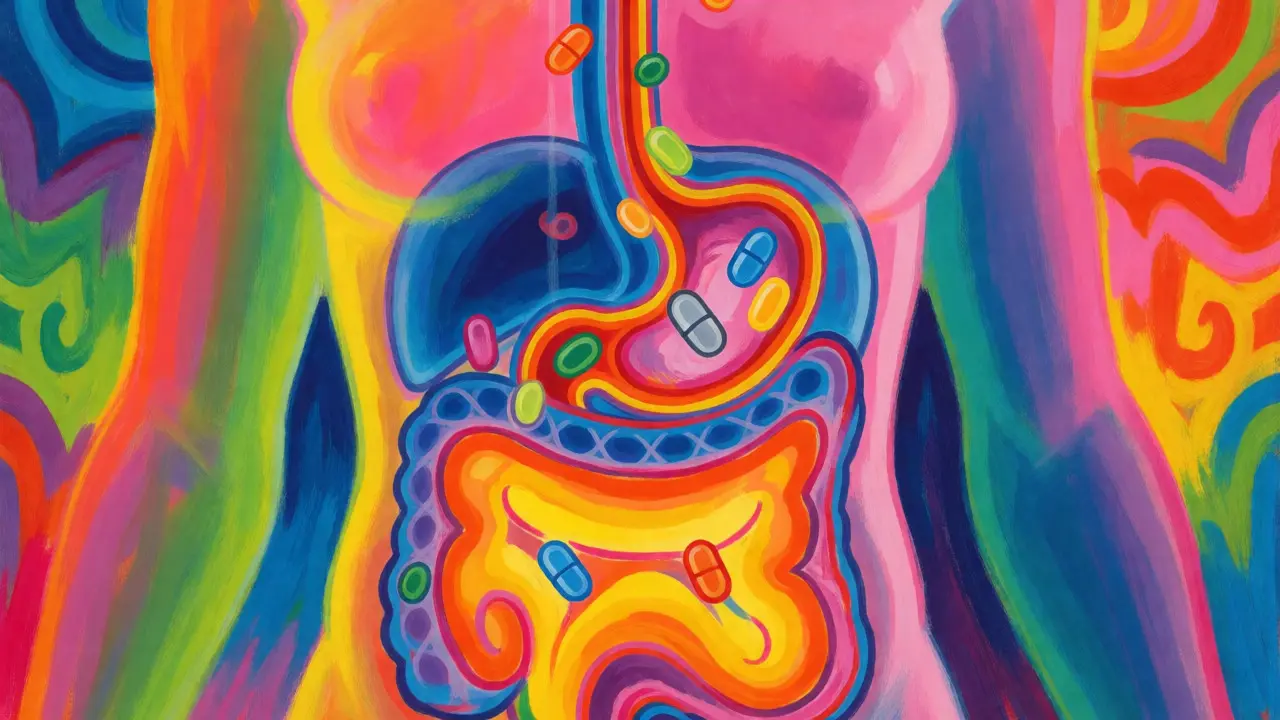
To understand why you need to be careful, you have to look at what happens inside your stomach. Bisphosphonates are designed to stick to bone tissue, but they don't stick well to anything else unless given the chance. In the acidic environment of an empty stomach, they remain soluble enough to cross into your bloodstream. However, Milk, cheese, yogurt, and even some juices contain minerals like calcium and magnesium.
When these minerals meet the bisphosphonate molecule, they grab onto it. Think of it like a magnet attracting metal filings. The resulting complex is too large and chemically stable to pass through the intestinal wall. Instead of entering your blood and protecting your bones, the medication gets excreted. Dr. Kenneth Saag, a leading expert in rheumatology, has noted that even something as seemingly healthy as a glass of orange juice can cut absorption by half due to its acidity and mineral content. The FDA-approved prescribing information for Fosamax explicitly warns that absorption is "markedly decreased" in the presence of calcium. This isn't theoretical; it's a pharmacokinetic fact that dictates how you take your meds.
Why Timing Is Everything
If absorption is so easily blocked, how do doctors get around it? They rely on timing. The golden rule for oral bisphosphonates is simple but demanding: take them on an empty stomach with plain water only, then wait. For most common drugs like Alendronate, you must wait at least 30 minutes before eating, drinking anything other than water, or taking other medications. For Ibandronate, that window extends to 60 minutes.
Why these specific times? It comes down to gastric emptying. After about 30 minutes, your stomach begins to empty its contents into the small intestine. By waiting, you ensure the medication moves past the point where food interference is most critical. A 2021 study published in Pharmacotherapy showed that waiting less than 30 minutes reduced absorption by nearly 45%. That’s a massive loss for a drug that already starts with less than 1% bioavailability. If you eat breakfast at 7:00 AM, you need to take your pill at 6:30 AM or earlier. There is no wiggle room for "just a bite." Even a few crackers can disrupt the process.
Dairy vs. Other Foods: What Really Matters
While all food interferes, dairy is often the biggest culprit because it is dense in calcium. But it’s not the only enemy. Here is a breakdown of common offenders and their impact:
| Substance | Primary Interfering Agent | Estimated Impact on Absorption | Recommendation |
|---|---|---|---|
| Milk/Yogurt/Cheese | Calcium, Casein | High (up to 90% reduction) | Avoid during fasting window |
| Orange Juice | Acidity, Potassium | Moderate-High (50-60% reduction) | Avoid during fasting window |
| Coffee/Tea | Tannins, Acidity | Moderate | Avoid during fasting window |
| Bran Cereal | Fiber, Phytates | High | Avoid during fasting window |
| Plain Water | None | Optimal | Required for administration |
Notice that coffee and tea are also problematic. Many patients think black coffee is fine because it lacks milk, but the tannins and acidity can still hinder absorption. The same goes for fruit juices. If you love your morning latte, save it for after your waiting period. Some patients find it helpful to keep a dedicated glass of water by their bedside to take the pill immediately upon waking, ensuring they don't accidentally reach for a beverage first.
Real-World Adherence Challenges
Knowing the rules is one thing; following them every day is another. Data from the Therapeutic Outcomes Project shows that nearly 40% of patients stop taking oral bisphosphonates within the first year. While side effects like heartburn play a role, the complexity of administration is a close second. Older adults, particularly those over 65, report higher difficulty levels, with 53% finding the requirements "very difficult" compared to 32% of younger users.
Common mistakes include forgetting to wait, taking the pill with coffee instead of water, or snacking too soon. One Reddit user shared how three months of taking Fosamax with orange juice resulted in zero improvement on their bone density scan. Conversely, patients who establish rigid routines often see success. For example, taking the pill at 6:00 AM with 8 ounces of water and having breakfast at 6:30 AM creates a consistent habit. Pharmacist counseling has been shown to improve adherence rates by 37%, highlighting the value of professional guidance when setting up these routines.

Alternatives When Dairy Is Non-Negotiable
For some patients, the strict fasting requirement is simply unmanageable. Maybe you wake up nauseous, or perhaps you live with family members who expect breakfast immediately. In these cases, injectable alternatives like Denosumab (Prolia) or teriparatide (Forteo) might be better options. These medications bypass the digestive system entirely, meaning food interactions are not a concern.
However, cost is a significant factor. Generic alendronate costs roughly $4 per month, while injectables can run between $1,500 and $2,000 monthly. Insurance coverage often dictates the choice, with many Medicare Part D plans requiring patients to try oral bisphosphonates first. Newer formulations, such as delayed-release risedronate (Atelvia), offer more flexibility by allowing food intake, though they still require avoiding calcium-rich foods. Always discuss these trade-offs with your doctor before switching.
Tips for Success
- Set an Alarm: Use your phone to remind you exactly when to take the pill and when you can eat.
- Prep Your Water: Keep a full glass of plain water next to your bed to avoid kitchen trips.
- Stay Upright: Remain sitting or standing for at least 30 minutes after taking the pill to prevent esophageal irritation.
- Separate Supplements: Take calcium and iron supplements at lunch or dinner, never in the morning with your bisphosphonate.
- Read Labels: Check hidden sources of calcium in protein bars or fortified cereals if you tend to snack early.
Can I take my bisphosphonate with sparkling water?
Yes, plain carbonated water is generally acceptable because it contains no minerals or sugars that interfere with absorption. Just ensure it doesn't contain added calcium or flavorings.
What if I accidentally ate breakfast 15 minutes after taking my pill?
You likely reduced the effectiveness of that specific dose, but you don't need to retake it. Continue with your regular schedule the next day. Consistency over time matters more than perfect adherence to every single dose.
Does coffee affect bisphosphonates even without milk?
Yes. Coffee contains compounds called tannins and is acidic, both of which can decrease absorption. Wait until your designated time (usually 30-60 minutes) before drinking coffee.
Are there any bisphosphonates I can take with food?
Standard oral bisphosphonates like alendronate and risedronate require an empty stomach. However, a delayed-release formulation of risedronate (Atelvia) can be taken with food, though it still requires avoiding calcium-rich foods.
How long should I stay upright after taking the medication?
You should remain upright (sitting or standing) for at least 30 minutes after taking the pill. This helps prevent the medication from irritating your esophagus as it travels to your stomach.



Patrick van der Velde
September 1, 2026 AT 06:18It is frankly embarrassing that the medical establishment still relies on a medication with such abysmal bioavailability while simultaneously demanding an almost monastic discipline from patients who are often elderly and cognitively compromised. The fact that we have to treat a simple pill like a radioactive isotope just because it interacts with calcium speaks volumes about the lack of innovation in pharmaceutical delivery systems. We are essentially asking people to undergo a daily ritual of deprivation-no coffee, no juice, no food-for thirty minutes, only to be rewarded with a drug that barely makes it into their bloodstream anyway. It feels less like healthcare and more like a punishment for having bones.
Sarah Kinch
September 2, 2026 AT 06:33ugh another article telling me i cant drink my morning coffee with milk bc science says so
i feel like theyre gatekeeping joy
also the stat about 40% quitting is lowkey insane but also makes sense bc who wants to wait around hungry?
fred eden
September 3, 2026 AT 14:44This is such a helpful reminder! 🙌 I always forget about the coffee thing since I think black is safe, but tannins are sneaky. 😅 It really helps to prep the water bottle the night before so you aren't stumbling around looking for things at 6 AM. Stay strong everyone, your bones will thank you! 💪🦴
Pearl Richardson
September 5, 2026 AT 09:57The correlation between strict dietary restrictions and adherence failure suggests that this is not merely a pharmacological issue but a systemic one designed to fail. One must consider why the industry pushes oral bisphosphonates despite these known limitations when injectables bypass the gut entirely. Is it simply cost? Or is there a deeper agenda to keep patients tethered to a routine that reinforces dependency on daily dosing rather than quarterly or semi-annual interventions? The data regarding the 80-90% reduction in absorption due to minor dietary infractions seems suspiciously high, almost as if designed to excuse poor outcomes later. 🤔📉
Vivek Chaturvedi
September 6, 2026 AT 00:45the rules are clear
take it with water
wait 30 mins
eat
if you cant do that dont complain about results
its basic discipline
people want magic pills without effort
it doesnt work that way
larry williams
September 7, 2026 AT 20:53I really appreciate how this post breaks down the 'why' behind the rules rather than just listing them. For many of us, especially those of us who are older or managing multiple health conditions, understanding the mechanism-like the binding of divalent cations-makes the restriction feel less arbitrary and more like a partnership with our own bodies. It is completely normal to struggle with the timing; remember that consistency over time matters more than perfection on any single day. If you miss a window, don't spiral into guilt, just reset the next morning. You are doing a great job protecting your long-term mobility, and small steps toward better habits are victories worth celebrating. Keep going, you've got this. 🌟
Tobi Oyewole
September 8, 2026 AT 07:00I believe it is crucial to approach this topic with empathy for the patient's lived experience rather than solely focusing on the pharmacokinetics. While the scientific explanation regarding gastric emptying and mineral binding is accurate, we must acknowledge that the social and psychological burden of these rigid constraints can significantly impact quality of life. A balanced perspective would involve discussing alternatives like Denosumab more openly, not just as expensive options, but as viable solutions for those who find the oral regimen unmanageable. Respecting individual boundaries means recognizing that compliance is not a moral failing but a complex interaction of biology, habit, and circumstance. Let us strive for solutions that honor both clinical efficacy and human dignity.
hareesh kumar
September 10, 2026 AT 02:32you guys are missing the point totally its all about the magnesium levels in the soil where the wheat grew which changes the phytate content which then binds to the aluminum in the antacid you took last week which messes up the pH balance of your stomach lining making the bisphosphonate stick to the mucus instead of the blood wall so basically its a conspiracy by the dairy lobby to make sure you buy their calcium supplements separately because if you absorbed the medicine properly you wouldnt need their branded yogurt which has added sugar to mask the taste of the chemicals they put in to preserve the shelf life during transport across oceans where the humidity changes the crystalline structure of the active ingredient making it less potent so you take two pills thinking its double dose but its actually half strength because of the oxidation process that happens when you open the bottle and expose it to air which contains oxygen radicals that attack the bond between the phosphorus and the carbon chain rendering it inert before it even hits your tongue unless you live in a vacuum sealed room which most of us dont so we are all doomed to waste money on useless pills while the doctors nod and smile knowing full well that the absorption rate is a myth created to justify the price hike every five years
Venkatesan V.K.
September 10, 2026 AT 10:57The article presents a compelling argument, yet it fails to adequately address the socioeconomic disparities inherent in adhering to such a rigorous regimen. While the scientific basis for the interactions is sound, the recommendation to purchase specific brands or prepare dedicated water bottles assumes a level of domestic stability that not all patients possess. Furthermore, the dismissal of coffee as a primary offender lacks nuance regarding the type of beans used, as darker roasts may contain fewer tannins, potentially offering a slight mitigation strategy that was overlooked. Overall, a lazy critique of the text reveals a superficial engagement with the real-world complexities of medication management beyond mere biochemical facts.