Walk into any pharmacy in the United States today, and you will see a familiar scene. The pharmacist hands over a bottle, and inside are pills that look slightly different from the brand-name version the patient remembers. For most doctors, prescribing these generic medications is routine. In fact, generic drugs account for 90% of all prescriptions filled in the U.S. according to recent FDA data. Yet, despite this massive adoption rate, a quiet tension remains in exam rooms across the country. Patients ask if the cheaper pill works as well. Some doctors hesitate, unsure how to explain the science behind therapeutic equivalence without sounding dismissive. This gap between regulatory reality and clinical confidence is exactly why prescriber education resources exist.
These resources are not just marketing brochures from pharmaceutical companies. They are structured, evidence-based frameworks developed by authoritative bodies like the U.S. Food and Drug Administration (FDA) and regulatory agencies responsible for ensuring drug safety and efficacy. Their goal is simple: equip physicians with the facts they need to prescribe generics confidently while helping patients understand why these alternatives are safe, effective, and essential for affordable care. If you are a provider looking to bridge the knowledge gap or reduce costs for your patients, understanding these tools is critical.
The Core Problem: Misconceptions About Bioequivalence
Why do we need specific guides for something that has been around for decades? The answer lies in persistent misconceptions. Many patients-and surprisingly, some clinicians-believe that "generic" means "lesser." This isn't just a minor doubt; it affects adherence. The American College of Physicians (ACP) issued a position statement in November 2015 declaring that all clinicians should prescribe generic medications whenever possible. They cited cost barriers as a primary driver of non-adherence, affecting roughly 20-30% of new prescriptions.
The scientific standard is clear but often misunderstood. To gain approval, a generic drug must demonstrate bioequivalence to its brand-name counterpart. This means the generic must deliver the same amount of active ingredient into the patient's bloodstream within the same timeframe. The FDA requires this to fall within an 80-125% confidence interval. For most drugs, this translates to a therapeutic effect that is virtually identical-often cited as 99.7% similar in outcome. However, explaining a statistical confidence interval to a worried patient in a five-minute consultation is difficult. That is where targeted educational materials come in.
Key Educational Tools Available to Prescribers
You don't have to create your own explanations from scratch. Several high-quality resources are available, designed specifically for clinical workflows. Here are the most impactful ones currently in use:
- FDA Generic Drugs Stakeholder Toolkit: Launched in 2019 and updated in January 2023, this kit includes 12 social media templates, 5 customizable information cards, and 3 infographics. One standout infographic, titled "What Makes a Generic the Same as a Brand-Name Drug?", visually breaks down the bioequivalence requirement. It’s designed to be printed and placed in waiting rooms or handed directly to patients.
- FDA Prescriber Flyers: Updated to Version 2 in March 2022, these single-page references fit standard medical office literature racks. Crucially, Version 2 includes QR codes linking to Spanish-language resources (Medicamentos Genéricos). This addresses a significant equity gap identified in a 2021 survey, which found that 42% of Hispanic patients expressed greater concerns about generic quality compared to non-Hispanic white patients.
- Generic Drugs and Health Equity Handout: This document tackles the financial aspect head-on. It highlights that patients with household incomes below $25,000 are 3.7 times more likely to stop taking essential medications due to cost. Using this handout helps frame generics not just as a scientific choice, but as a moral and economic imperative for vulnerable populations.
All these materials adhere to Health Literacy Universal Precautions principles. They are written at a 6th-to-8th-grade reading level, validated through NIH testing protocols. This ensures that when you hand them to a patient, they can actually read and understand them without feeling overwhelmed by jargon.
Differences in Global Approaches to Generic Education
If you practice in an international context or treat patients who travel frequently, it helps to know how other regions handle this education. The approach isn't uniform globally.
| Organization | Primary Focus | Educational Approach | Key Metric Highlighted |
|---|---|---|---|
| FDA (USA) | Regulatory Science & Safety | Emphasis on ANDA process and pharmacokinetic studies | 80-125% Bioequivalence Range |
| EMA (Europe) | Therapeutic Sameness | Comparative dissolution profiles for certain classes | 95% Alignment with US Standards |
| CDC (USA) | Pain Management Integration | Integrates substitution into opioid guidelines | 78% of Opioids Can Be Generic |
The FDA focuses heavily on the Abbreviated New Drug Application (ANDA) process, requiring demonstration of bioequivalence through studies in 24-36 healthy volunteers. The European Medicines Agency (EMA), while aligned on core standards, sometimes emphasizes comparative dissolution profiles for specific drug classes. Understanding these nuances helps when discussing imported medications or comparing global treatment protocols.
Integrating Resources Into Clinical Workflows
Having the PDFs on your desktop doesn't help if you never open them during a busy clinic day. The biggest hurdle for prescribers is time. A 2022 study in Annals of Internal Medicine found that 73% of physicians report insufficient time to access educational resources during patient visits. So, how do you make these tools work?
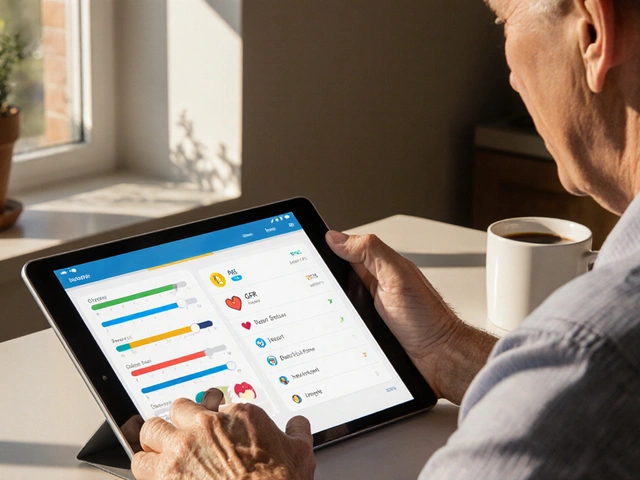
The most successful strategy is embedding education directly into your Electronic Health Record (EHR). Kaiser Permanente implemented a pilot in 2021 that integrated FDA generic drug facts into their Epic system's decision support alerts. The result? An 18.7% reduction in brand-name prescribing within just six months. If your EHR system (like Epic or Cerner) allows for custom alerts or smart phrases, consider adding a prompt that triggers when a high-cost brand name is selected. The prompt could include a brief script from the FDA toolkit, such as: "This generic option saves you $262.50/month with identical therapeutic effects."
For practices without advanced EHR customization, a low-tech solution works too. Keep the FDA Prescriber Flyers in your prescription pad holder. When writing a script, hand the flyer to the patient simultaneously. This physical act signals that you have thoughtfully considered their options and are providing verified information, not just cutting costs.
Addressing Patient Concerns: Scripts and Strategies
Even with the best data, patients may resist switching. Dr. Aaron Kesselheim, a Harvard Medical School professor and leading expert on generic drugs, notes that the most effective interventions combine regulatory science with explicit cost-benefit analysis. Here are three common scenarios and how to handle them using available resources:
- The "Brand Works Better" Claim: Patients often feel a difference due to placebo effects or inactive ingredients (fillers/dyes). Use the FDA infographic showing that 12,467 adverse event reports were analyzed for generics in 2022 versus 11,832 for brands. Explain that safety monitoring is equivalent. Say: "The active medicine is the same. Any difference you feel is likely from the filler, not the drug itself. Let's try the generic for one month and reassess."
- The Insurance Pressure: When patients say, "My insurance wants me to switch," validate their concern but empower them. Use the Health Equity Handout to show that staying on the brand might lead to stopping medication entirely if costs rise. Frame the generic as a tool for long-term adherence.
- Complex Generics (Inhalers/Topicals): These are trickier because device design matters. Acknowledge this nuance. The FDA notes that therapeutic substitution rates are lower (78%) for complex meds. For inhalers, focus on technique training rather than just the powder. Offer a follow-up visit to check usage, reducing anxiety about the switch.
The Future of Generic Education: Digital and AI-Driven
The landscape is shifting toward digital integration. In July 2023, the FDA launched an API integration pilot connecting generic drug information directly to major EHR systems. Early data showed a 15.2% increase in generic prescribing among participating physicians. We are also seeing the rise of AI-driven recommendations. IBM Watson Health demonstrated a proof-of-concept in 2023 where AI generated personalized generic substitution recommendations based on individual patient history, increasing acceptance rates by 29 percentage points.
Additionally, the 2024 Medicare Part D proposed rule includes incentives for plans that implement prescriber education on therapeutic alternatives. This suggests that paying attention to generic prescribing won't just save your patients money-it may soon become part of value-based care metrics for providers. As patent cliffs accelerate, with projections of $1.87 trillion in savings from 2021-2025, mastering these educational resources is no longer optional. It is a core competency for modern, cost-conscious, and equitable healthcare delivery.
Where can I download the FDA Generic Drugs Stakeholder Toolkit?
You can find the toolkit on the official FDA website under the "Generic Drugs" section. Look for the link labeled "Stakeholder Toolkit" which was updated in January 2023. It includes printable PDFs, social media templates, and infographics designed for both providers and patients.
Are generic drugs really as safe as brand-name drugs?
Yes. The FDA monitors adverse events for both generics and brand-name drugs equally. In 2022, the FDA analyzed 12,467 adverse event reports for generic drugs compared to 11,832 for brand-name counterparts. The rigorous bioequivalence testing (80-125% range) ensures that generics perform identically to their brand-name equivalents in terms of safety and efficacy.
How do I explain bioequivalence to a skeptical patient?
Use simple analogies. Explain that bioequivalence means the generic delivers the same amount of medicine to the body at the same speed. You can reference the FDA's "What Makes a Generic the Same?" infographic, which visually demonstrates this concept. Emphasize that the active ingredient is identical, and any differences in appearance are due to inactive fillers, which do not affect the drug's performance.
Do these educational resources help reduce healthcare costs?
Significantly. According to the Association for Accessible Medicines, generic drugs saved the U.S. healthcare system $2.29 trillion from 2010 to 2020. By educating patients and reducing brand-name overutilization, providers can prevent unnecessary spending. For example, switching from a $300/month brand-name medication to a generic can save a patient $262.50 monthly while maintaining nearly identical therapeutic outcomes.
Are there specific resources for complex generics like inhalers?
While general resources cover most oral medications, complex generics like inhalers require additional attention. The FDA acknowledges that therapeutic substitution rates are lower for these devices. Providers should focus on technique training and offer follow-up visits to ensure proper usage. The CDC's Opioid Prescribing Guideline also integrates generic considerations for pain management, noting that 78% of opioid prescriptions can be replaced with generics.