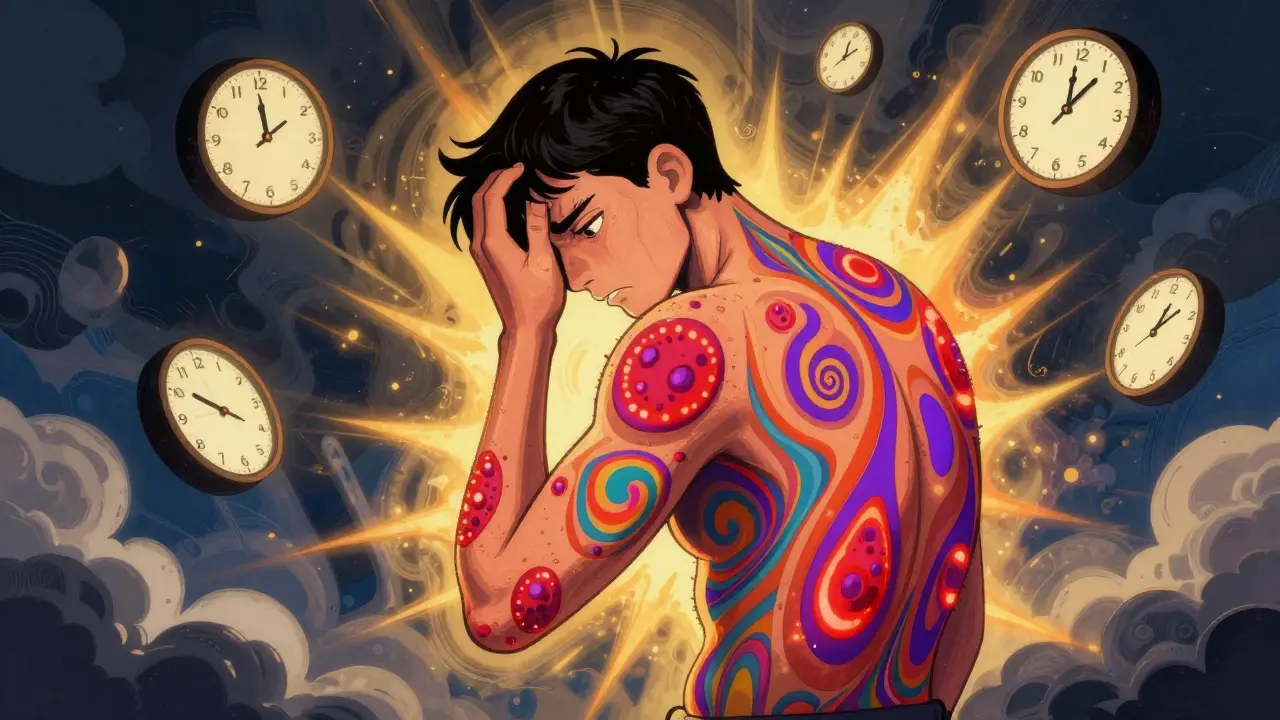
Psoriasis isn’t just a skin condition-it’s your immune system turning on itself. If you’ve ever woken up to new patches of red, scaly skin after a stressful week or a bad cold, you’re not alone. About 2-3% of people worldwide live with this chronic autoimmune disease, and for many, flares don’t come out of nowhere. They’re tied to clear, measurable triggers: stress, infections, and a broken skin barrier. Understanding these three isn’t about blame-it’s about control.
Stress Doesn’t Just Feel Bad-It Makes Psoriasis Worse
You’ve heard it before: "It’s all in your head." But with psoriasis, stress isn’t just psychological-it’s biological. When you’re under pressure, your body releases cortisol and other inflammatory chemicals. These don’t just make you feel anxious-they activate immune cells that speed up skin cell growth, the exact process behind psoriasis plaques.
Research from Mount Sinai and a 2024 review in PMC shows that stress doesn’t just worsen existing psoriasis-it can trigger it in people with the right genetic makeup. One patient in Bristol told me, "After my mom passed, my plaques spread from my elbows to half my back in three months." That’s not coincidence. A 2018 review found that nearly half of people with psoriasis say their first major flare happened within a year of a major life stressor.
Even "good" stress counts. Moving homes, starting a new job, or planning a wedding can all spike flare risk. And here’s the cruel twist: worrying about your next flare can trigger another one. It becomes a loop-stress causes flare, flare causes stress, and the cycle keeps going.
What helps? Not just "relaxing more." Real change comes from consistent habits. A 2023 study from Schweiger Dermatology found that patients who did 20 minutes of mindfulness meditation daily cut their flare frequency by 30% within eight weeks. Why? Because meditation lowers cortisol by about 25%. Regular walking, yoga, or even talking to a therapist can break the cycle. You don’t need to be calm all the time-you just need to interrupt the stress response before it hits your skin.
Infections Are Silent Triggers-Especially in the Throat
Think of your immune system like a security alarm. Sometimes, when it’s fighting a virus or bacteria, it gets confused and starts attacking your own skin. That’s what happens with psoriasis.
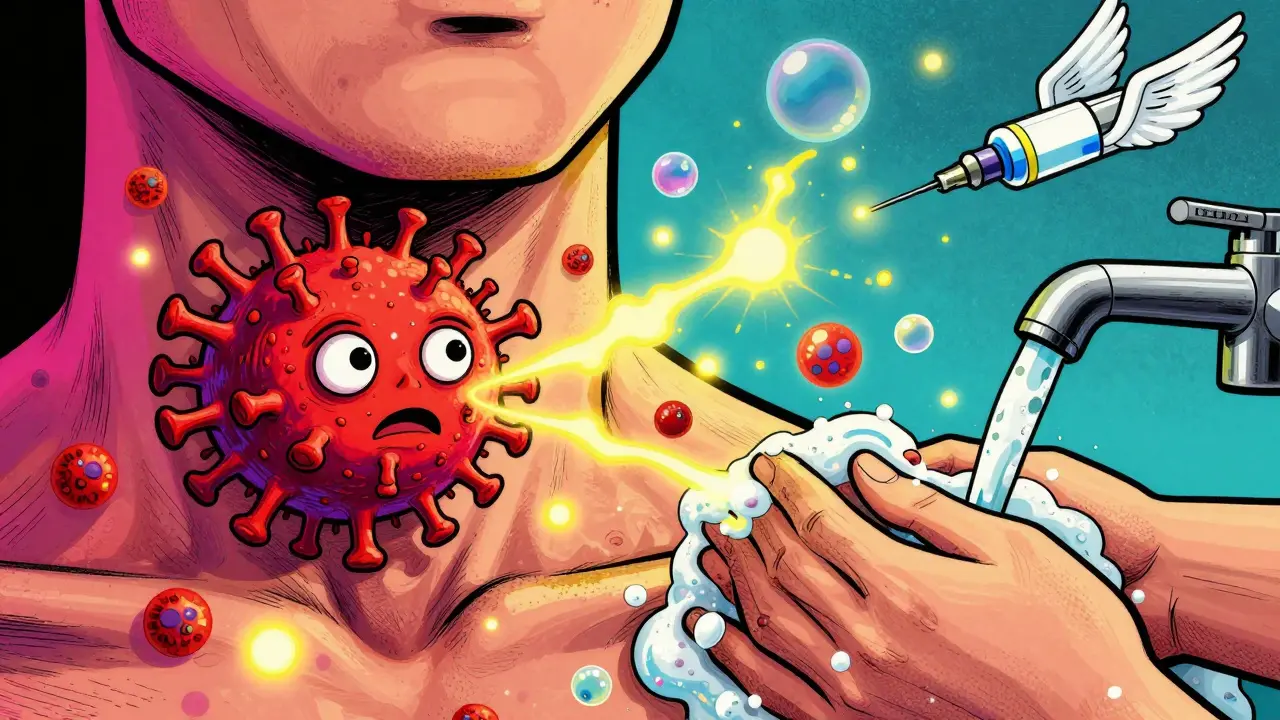
Strep throat is one of the biggest infection triggers, especially for kids and young adults. It often causes guttate psoriasis-small, drop-like spots that spread quickly. Even a mild cold or the flu can do it. And yes, even COVID-19 has been linked to new or worsening psoriasis in some people.
It’s not just about getting sick. The body’s response matters. When viruses like the common cold hit, they activate a protein called RIG-I, which signals immune cells to release IL-23-a key driver of psoriasis inflammation. In people with genetic risk, that signal doesn’t turn off. It keeps the fire burning.
Here’s what works: prevention. Wash your hands often. Get your flu shot. The data is clear: patients who stay up to date on vaccinations see 35% fewer infection-triggered flares. If you’re prone to throat infections, pay attention to sore throats. Don’t wait until it’s bad. See a doctor early. Antibiotics won’t cure psoriasis, but treating the infection early can stop the flare before it starts.
And here’s something surprising: HIV, which weakens the immune system, sometimes makes psoriasis worse instead of better. That’s because even when T-cells drop, other immune pathways-like IL-23-stay active. Psoriasis doesn’t follow simple rules. That’s why personalized care matters.
Your Skin Barrier Is Your First Line of Defense
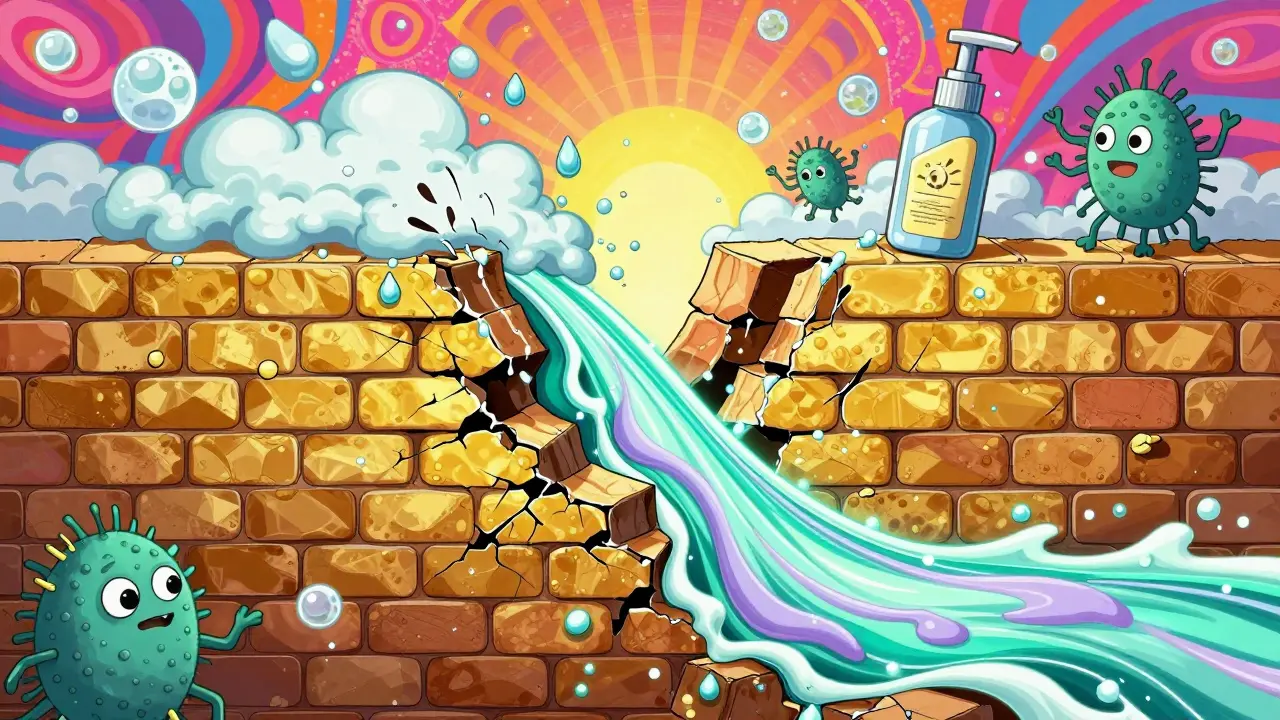
Psoriasis doesn’t just happen under the skin-it starts at the surface. The skin barrier is like a brick wall made of dead skin cells and natural oils. In psoriasis, this wall is cracked. Moisture escapes. Germs get in. And that’s when inflammation takes over.
Research from the PMC review shows a clear cycle: damaged barrier → bacteria build up → immune system overreacts → plaques form. In mice with broken skin barriers, scientists saw psoriasis-like symptoms. When they used topical antibiotics to reduce bacteria, the inflammation dropped. That’s not theory-it’s proof.
What breaks the barrier? Harsh soaps, hot showers, dry winter air, and scratching. Even a tiny bug bite or sunburn can trigger the Koebner phenomenon-where psoriasis forms exactly where the skin was injured. One dermatology clinic found that 45% of new plaques started at spots patients didn’t even remember hurting.
Fixing this isn’t about expensive creams. It’s about consistency. Use fragrance-free moisturizers with ceramides-those are the building blocks your skin naturally makes. Apply them twice a day, right after showering while your skin is still damp. Keep your home humidity between 40% and 60%. Use a humidifier in winter. Avoid soaps with a pH above 5.5; they strip your skin’s natural protection. The American Academy of Dermatology says this is non-negotiable.
And don’t scratch. It’s hard, I know. But cool compresses, oatmeal baths, and over-the-counter hydrocortisone (used short-term) can calm the itch without damaging the skin further. Treat every scratch like a wound. Protect it. Cover it. Let it heal.
What Doesn’t Work (And Why)
There’s a lot of noise out there. Some say cutting out dairy or gluten will cure psoriasis. Others swear by essential oils or detox teas. The truth? Diet can influence flares-but it’s not the main driver.
A 2022 survey by the National Psoriasis Foundation found that 32% of people report dairy as a trigger, 25% say gluten, and 18% point to nightshades like tomatoes or peppers. But that’s not universal. For others, these foods do nothing. That’s why tracking your own flares matters more than any diet trend.
Same with alcohol and smoking. Both are proven to make psoriasis worse. Alcohol increases inflammation. Smoking messes with immune function. If you’re trying to control flares, cutting back helps-but it’s not a magic fix. The real power lies in the big three: stress, infection, and barrier care.
And don’t blame yourself. Psoriasis isn’t caused by poor hygiene, bad choices, or lack of willpower. It’s an autoimmune disease with genetic roots. Your job isn’t to fix your body-it’s to manage the triggers you can control.
What You Can Do Today
You don’t need to overhaul your life. Start small. Pick one trigger to focus on this week.
- If stress is your biggest issue: Try 10 minutes of breathing exercises before bed. Use a free app like Insight Timer or Calm.
- If infections trigger you: Wash your hands for 20 seconds after being around sick people. Get your flu shot if you haven’t.
- If your skin feels dry and tight: Switch to a ceramide moisturizer. Apply it right after your shower. Do this every day for two weeks and notice the difference.
Track your flares in a simple notebook or phone note. Write down: what you were feeling, what you ate, if you got sick, and what your skin felt like. After a month, patterns will show up. That’s your personal trigger map.
And remember: progress isn’t linear. Some weeks will be good. Others won’t. That’s normal. What matters is that you’re learning what your body needs-not fighting it.
What’s Next for Psoriasis Care
Science is moving fast. New biologic drugs targeting IL-23 are helping 89% of patients achieve 90% skin clearance. Researchers are testing probiotics to fix gut-skin imbalances. Wearable devices that track stress levels and skin moisture are coming-soon, your phone might warn you before a flare hits.
But the most powerful tool right now is still you. Knowing your triggers gives you back control. You can’t stop your genes. But you can stop the chain reaction before it starts.
Can stress cause psoriasis to develop for the first time?
Yes. While psoriasis is genetic, stress can be the trigger that turns on the disease in someone who’s predisposed. Many people report their first major flare happening within a year of a major life event like a death, divorce, or job change. Stress doesn’t cause psoriasis alone, but it can be the spark.
Is psoriasis contagious?
No. Psoriasis is an autoimmune condition, not an infection. You can’t catch it from touching someone’s skin, sharing towels, or being near them. The plaques are made of your own overgrown skin cells-there’s no virus or bacteria to spread.
Why does my psoriasis get worse in winter?
Cold, dry air strips moisture from your skin, weakening the barrier. Indoor heating makes it worse. For 68% of people with psoriasis, winter is the hardest season. Using a humidifier, moisturizing daily, and avoiding long hot showers can help. Sunlight helps most people, but always protect your skin from burns.
Can I use regular lotion for psoriasis?
Not usually. Regular lotions often contain fragrances, alcohol, or harsh emulsifiers that irritate psoriasis-prone skin. Look for products labeled "fragrance-free," "ceramide-rich," and "for sensitive skin." Moisturizers with ceramides, hyaluronic acid, or colloidal oatmeal repair the skin barrier better than basic lotions.
Should I avoid all sun exposure?
No. For 72% of people, moderate sunlight helps clear psoriasis by slowing skin cell growth. But 8% have photosensitive psoriasis, where sun makes it worse. Always start slow-10-15 minutes a day, without burning. Never use tanning beds. If you’re unsure, ask your dermatologist about phototherapy, a controlled, medical form of light treatment.
Can losing weight help my psoriasis?
Yes. Fat tissue produces inflammatory chemicals that worsen psoriasis. Studies show that losing just 5-10% of body weight can cut flare frequency and improve how well medications work. It’s not about being thin-it’s about reducing inflammation. Even small, sustainable changes in diet and movement help.
If you’re struggling to manage flares, talk to a dermatologist who specializes in psoriasis. New treatments are more effective than ever, and personalized care can make a real difference. You’re not alone-and you don’t have to just live with it.


Anu radha
December 16, 2025 AT 12:20I had psoriasis since I was 12, and stress made it worse every time my dad yelled at me. I didn't know it was biological until I read this. Thank you.
Joe Bartlett
December 17, 2025 AT 20:19Handwashing works. I’ve been doing it since Brexit. No flares in two years.
Sam Clark
December 18, 2025 AT 20:56This is one of the most clinically grounded, compassionate summaries of psoriasis triggers I’ve encountered in a public forum. The emphasis on the skin barrier’s role-particularly the mechanistic link between microbial colonization and IL-23 activation-is not only accurate but vital for patient empowerment. The data on mindfulness reducing cortisol by 25% is particularly compelling and warrants broader integration into dermatological care pathways.
Naomi Lopez
December 20, 2025 AT 09:23Let’s be real-no one’s going to meditate for 20 minutes a day unless they’re already on a yoga retreat. Also, ‘ceramide-rich moisturizers’? That’s just fancy marketing for ‘expensive lotion.’ I use Vaseline. It’s cheaper, and it works.
Salome Perez
December 20, 2025 AT 13:20As someone who grew up in a household where skin care meant coconut oil and prayer, I never realized how much science was behind this. The part about the skin barrier being a brick wall? That’s the clearest explanation I’ve ever heard. And yes-humidity matters. In Chennai, my plaques vanished during monsoon season. No magic, just moisture.
Raven C
December 21, 2025 AT 05:46How dare you suggest that stress is a trigger? That’s victim-blaming disguised as science. Psoriasis is an autoimmune disease-it’s not about your emotional resilience or whether you ‘meditated enough.’ The burden of management should not fall on the patient’s psyche. This article reads like a corporate wellness pamphlet masquerading as medical advice.
Evelyn Vélez Mejía
December 21, 2025 AT 14:04There is a profound philosophical tension here: the body as a site of systemic betrayal versus the self as an agent of control. The article, while empirically sound, subtly reinforces the neoliberal myth of self-optimization-‘you can manage this if you just try harder.’ But what of those whose lives are defined by structural stress-poverty, racism, chronic underemployment? Their immune systems do not discriminate based on mindfulness app subscriptions. The real revolution is not in ceramides, but in equitable access to biologics, mental health care, and environmental justice.
Jigar shah
December 22, 2025 AT 00:10Interesting. But I wonder if the IL-23 pathway is the same in Indian patients as in Western ones. We have different genetics and gut microbiomes here. Maybe the triggers vary by region. Has anyone studied this?
Nishant Desae
December 23, 2025 AT 23:18Man, I’ve been dealing with this since I was 19, and honestly, the biggest thing that helped me was just… stopping the guilt. I used to think if I just ate cleaner or meditated more, I’d be cured. But my skin doesn’t care if I’m ‘doing better.’ It just reacts. What I learned? It’s not about perfection. It’s about showing up. Even if I only moisturize once a day, even if I skip yoga, even if I get sick-I still show up. And that’s enough. You’re not failing. You’re just living. And that’s brave.
Linda Caldwell
December 24, 2025 AT 18:32Just started using ceramide cream after reading this-two weeks in and my elbows don’t feel like sandpaper anymore. You got this. One step at a time.
Jody Patrick
December 26, 2025 AT 03:40Americans think everything’s fixable with apps and moisturizer. In the UK, we just take our meds and get on with it. No fluff.