
Drug Interaction Checker: Dofetilide & Acid-Suppressants
Instructions: Select an acid-suppressing medication below to see how it interacts with Dofetilide and understand the clinical risk level.
Cimetidine
H2 BlockerFamotidine
H2 BlockerOmeprazole
PPISelect a Medication
Click on a medication card above to view the interaction details.
Risk Level
Mixing the wrong medications can sometimes lead to a mild side effect, but in other cases, it can be a matter of life and death. When you combine Dofetilide is a Class III antiarrhythmic medication used to convert atrial fibrillation and atrial flutter back to a normal heart rhythm with Cimetidine is an H2-receptor antagonist used to treat gastric ulcers and acid reflux, you aren't just dealing with a simple interaction-you're looking at a severe medical contraindication. For a patient on dofetilide, taking a common heartburn pill like cimetidine can trigger a lethal heart rhythm in a matter of hours.
What exactly happens when these two drugs meet?
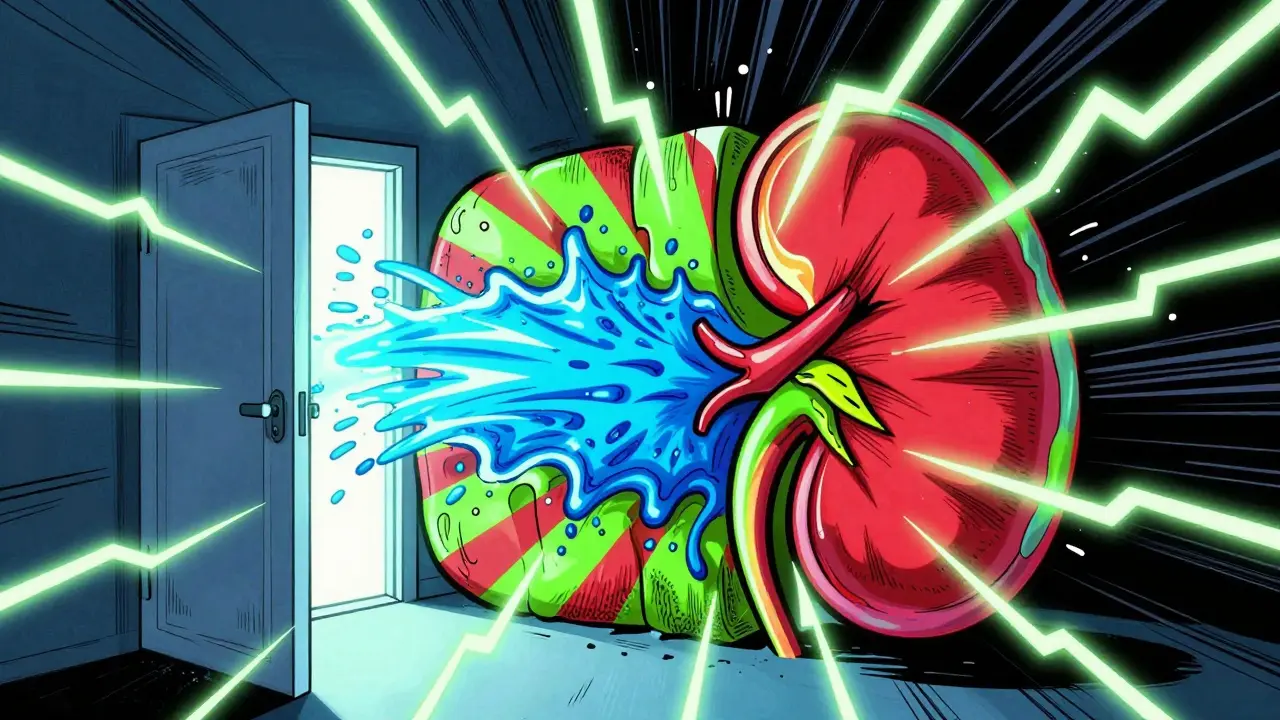
To understand the danger, you have to look at how the body gets rid of these drugs. Most of the dofetilide in your system is cleared out by the kidneys. Specifically, it uses a "cation exchange transport system" to leave the body. Think of this as a dedicated exit door for the medication.
Cimetidine has a nasty habit of blocking that exact door. When cimetidine is present, it shuts down the renal cation transport mechanism. Because the dofetilide can't get out, it builds up in the bloodstream. Research shows that plasma concentrations of dofetilide can jump by 50% to 100% within just 24 hours of taking cimetidine. When the levels of this drug get too high, it starts to slow down the electrical recharging of the heart, which leads to a dangerous condition called QT interval prolongation is an extension of the time it takes for the heart's ventricles to electrically recharge between beats.
The risk of Torsades de Pointes
A prolonged QT interval isn't just a technical measurement on an ECG; it's a red flag for a specific, life-threatening arrhythmia called Torsades de Pointes is a polymorphic ventricular tachycardia that can lead to sudden cardiac arrest. This is where the heart's electrical system essentially goes haywire, causing the ventricles to quiver rather than pump blood.
The numbers are sobering. While only about 3-5% of people on dofetilide alone experience significant QT prolongation, that number skyrockets to 12-18% if they are also taking cimetidine. In some clinical records, the relative risk of this complication is more than four times higher when these two drugs are combined. We've seen cases where a 72-year-old man developed Torsades de Pointes within 72 hours of starting cimetidine, requiring emergency ICU care and cardioversion to save his life.
Not all heartburn meds are created equal
You might be wondering if all acid-blockers are this dangerous. The short answer is no. Cimetidine is the "odd one out" among H2-receptor antagonists. Other drugs in the same family, like famotidine, don't block those kidney exit doors. Because they don't interfere with renal transport, they don't cause dofetilide levels to spike.
| Medication | Effect on Dofetilide Levels | Risk Level | Clinical Recommendation |
|---|---|---|---|
| Cimetidine | Increases by 50-100% | Critical / High | Contraindicated |
| Famotidine | No significant change | Low | Preferred Alternative |
| Omeprazole (PPI) | No significant change | Low | Safe Alternative |

How doctors manage the risk
Because this interaction is so predictable and dangerous, cardiology experts call it one of the clearest contraindications in the field. Most modern hospitals use electronic health record alerts that automatically flag any attempt to prescribe cimetidine to a patient on dofetilide. This "system safety" approach has helped drop inappropriate co-prescribing from nearly 9% down to around 1% in many academic centers.
If a patient absolutely must take a medication that interferes with dofetilide, the process is strict. Dofetilide usually needs to be stopped for about 10 days (roughly five half-lives) to ensure it's fully cleared from the system before the other drug is started. Additionally, doctors keep a very close eye on Potassium is an essential electrolyte for heart muscle contraction and electrical stability. If potassium levels drop below 3.6 mmol/L, the heart becomes even more susceptible to the arrhythmias caused by dofetilide toxicity.
What you should do if you're on Dofetilide
If you are taking dofetilide, you need to be your own strongest advocate. Don't assume that an over-the-counter medication is safe just because it's available at a pharmacy. Always ask your pharmacist or doctor: "Does this interfere with my renal clearance?"
Avoid any medication that acts like cimetidine. If you have heartburn or a stomach ulcer, stick to the safer alternatives like famotidine or proton pump inhibitors (PPIs) such as omeprazole. Even a single dose of cimetidine can be enough to trigger a reaction in some people, so there is no such thing as a "safe small dose" in this scenario.
Can I take a single dose of cimetidine if I'm on dofetilide?
No. Case reports have shown that even a single 300 mg dose of cimetidine can lead to syncope (fainting) and polymorphic ventricular tachycardia in patients taking dofetilide. The risk is too high for even short-term use.
What is the safest alternative for acid reflux when taking dofetilide?
Famotidine and proton pump inhibitors (PPIs) like omeprazole are generally considered safe alternatives because they do not inhibit the renal cation transport system required for dofetilide excretion.
How does cimetidine actually cause the heart risk?
Cimetidine blocks the "exit door" in the kidneys (the renal cation exchange system). This causes dofetilide to build up in the blood, which prolongs the QT interval, making the heart vulnerable to lethal rhythms like Torsades de Pointes.
What are the warning signs of a dofetilide-cimetidine interaction?
The most serious signs include dizziness, fainting (syncope), or a feeling that your heart is racing or skipping beats. These can be signs of QT prolongation or the onset of a ventricular arrhythmia.
Why is potassium monitoring important for these patients?
Low potassium (hypokalemia) makes the heart more sensitive to the effects of dofetilide. To minimize the risk of arrhythmia, doctors aim to keep potassium levels between 4.0 and 5.0 mmol/L.




Elizabeth Holden
May 1, 2026 AT 17:36omg basic stuff... everyone knows cimetidine is old news and barely used now lol
Kelly Feehely
May 3, 2026 AT 09:51Of course they push famotidine instead! Big Pharma just switches which patent they want you to pay for while they keep the actual mechanisms of renal transport hidden in redacted papers. Wake up and stop trusting these "safe alternatives" blindly!!
Jenny X
May 4, 2026 AT 09:32The systemic suppression of the cation exchange transport system is just a smokescreen for the bio-accumulation of synthetic alkaloids. It is a classic pharmacokinetic play to keep patients dependent on specific metabolic pathways controlled by the industry.
bharat films
May 6, 2026 AT 00:52Who even uses cimetidine in 2024? 🤡 This whole post is just trying to scare people with basic pharmacology. Absolute joke 🤣🤣🤣
Mikaela -anonymous 😏
May 7, 2026 AT 22:03Wow... truly a tragedy that people can't even read a label... but hey, who needs a functioning heart when you have "convenient" over-the-counter meds, right??? So profound... truly...
Spencer Farrell
May 8, 2026 AT 16:03The intersection of pharmaceutical kinetics and cardiac electrical stability reveals a fundamental fragility in the human condition. One might argue that the propensity for such catastrophic interactions underscores the precarious nature of our biological existence when augmented by chemical intervention.
Kartik Agarwal
May 10, 2026 AT 09:54For those unfamiliar with the terminology, the polymorphic ventricular tachycardia mentioned is essentially a chaotic electrical storm in the heart. It is crucial to maintain a high therapeutic index and ensure that the glomerular filtration rate is stable before initiating Class III antiarrhythmics.
kelvin villa saab
May 11, 2026 AT 22:38I once knew a guy who took this stuff and almost died because his doc was a total moron and didnt check the interactons!! It's crazy how some people just don't do there jobs right in the medical field, seriously a disaster!!