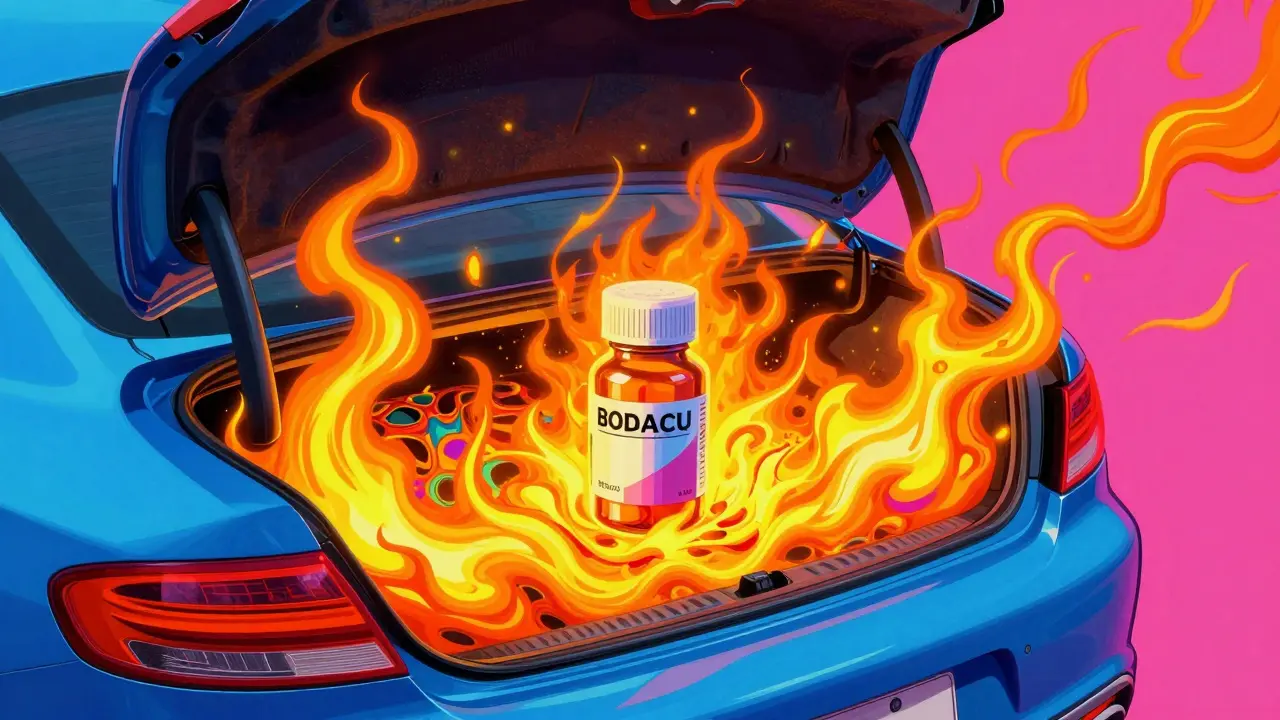
Imagine landing in a tropical paradise only to realize your critical medication has been sitting in a 150°F car glove box for three hours. For many, this isn't just a travel mishap-it's a medical emergency. Whether it's insulin losing its potency or an epinephrine pen failing after a freezing flight, the way you store your meds during a trip can be the difference between a relaxing vacation and a hospital visit. The goal isn't just to carry your pills; it's about maintaining travel medication storage that preserves the chemical integrity of your treatment from takeoff to touchdown.
The Temperature Trap: Why Your Storage Choice Matters
Most people assume that if a pill looks fine, it's fine. But pharmaceutical chemistry is fickle. According to the USP (United States Pharmacopeia) a scientific organization that sets standards for medicines, the vast majority of medications need to stay between 68-77°F (20-25°C). When you step outside those bounds, you aren't just risking a bit of degradation-you're risking a total loss of efficacy.
The danger is most acute in cars. A common mistake is tossing a pharmacy bag in the glove compartment. On a sunny day, those small spaces can hit 158°F (70°C), which can destroy active ingredients in minutes. Even more critical are biologics, like insulin. Research shows that for every 1°C deviation above 8°C, certain types of insulin can lose up to 1.7% of their potency every single hour. If you're traveling in the summer, your medication can literally evaporate in effectiveness before you even reach your hotel.
Mastering the Cold Chain for Refrigerated Meds
If your medication requires refrigeration (typically between 36-46°F or 2-8°C), you can't rely on a hotel mini-fridge, which are often unreliable or set to the wrong temperature. You need a dedicated system to maintain the "cold chain."
Instead of a generic cooler bag with ice packs that might freeze your meds (which is just as bad as overheating them), look for phase-change material coolers storage devices that use specialized gels to maintain a precise temperature range. For example, tools like Frio Wallets use evaporative cooling to keep meds safe for days without electricity. For longer trips, a TempAid MedCooler a high-performance medical cooler verified for multi-day temperature stability can keep your biologics stable for up to 72 hours. Pro tip: always pre-freeze your packs at 0°F (-18°C) for at least 12 hours before you leave to ensure the cooler hits its maximum duration.
| Medication Category | Ideal Temperature Range | Recommended Storage Tool | Risk of Improper Storage |
|---|---|---|---|
| Standard Tablets/Capsules | 68-77°F (20-25°C) | Original bottle in carry-on | Chemical degradation/reduced potency |
| Biologics (e.g., Insulin) | 36-46°F (2-8°C) | Phase-change cooler / Frio Wallet | Rapid potency loss / Glucose dysregulation |
| Emergency Injectables | Room Temp (Avoid extremes) | Insulated pouch | Device failure (e.g., Epipen malfunction) |

Navigating TSA and International Customs
Nothing adds stress to a trip like a secondary security screening because your meds look suspicious. The golden rule is simple: keep everything in its original pharmacy container. While pill organizers are tempting for saving space, they are a nightmare for security. Using an organizer can actually increase medication errors by nearly 28% because you lose the ability to verify the drug and dosage quickly.
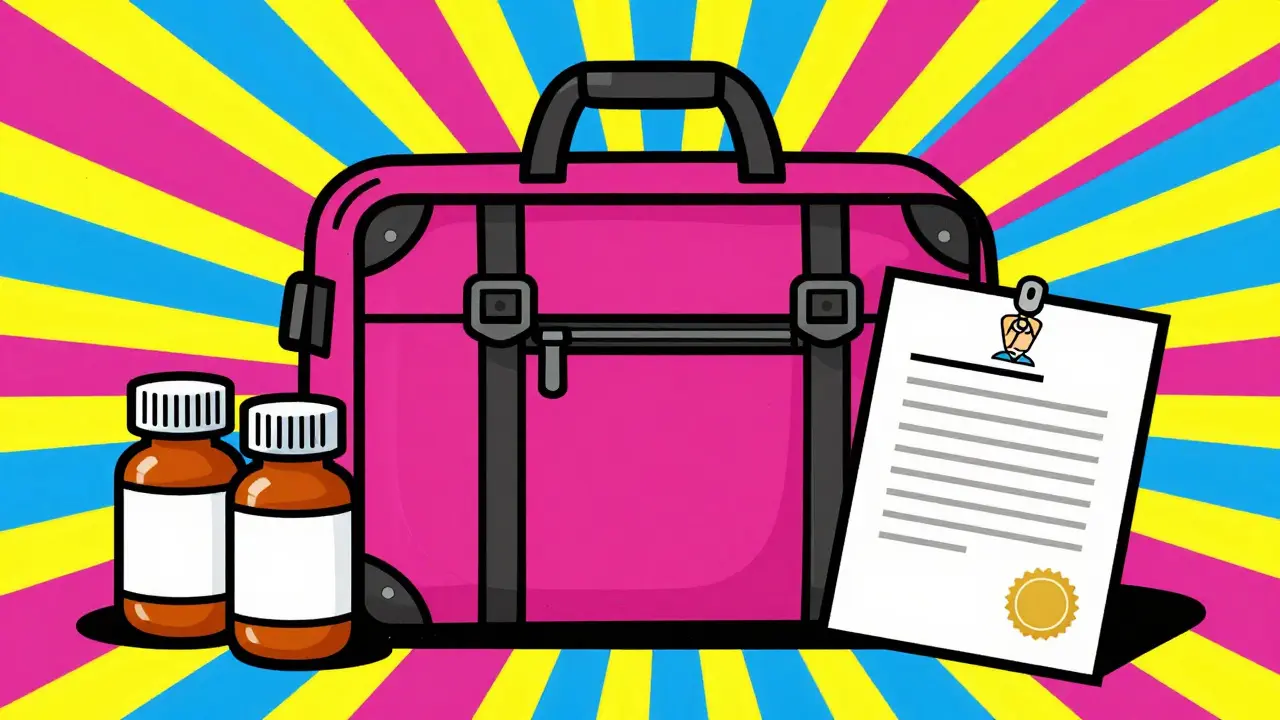
If you have liquid medications, the TSA (Transportation Security Administration) the agency responsible for security for traveling passengers and aircraft in the US has a strict 3-1-1 rule (liquids under 3.4 ounces in one quart-sized bag). However, medical exceptions exist. To avoid delays, carry a TSA-1400 Medical Notification Form or a signed physician's letter on official letterhead. This letter should list the medication name, the dosage, and the medical necessity. In an international setting, having this documentation can make the difference between a quick walk through customs and a lengthy interrogation.
The Pre-Trip Checklist: 14 Days to Departure
Good storage starts before you even pack your bags. You shouldn't be rushing to the pharmacy the night before your flight. Start your planning 14 days out. This gives you enough time to request early refills-many insurance plans, including Medicare Part D, allow for refills a few days early if you're traveling.
If you're crossing multiple time zones, don't just guess your new dosing schedule. Consult your pharmacist about a week before you leave. For medications tied to your circadian rhythm, experts suggest making small, 15-minute daily adjustments to your dose time to help your body acclimate without shocking your system.
Consider these essential steps for a foolproof trip:
- Divide and Conquer: Keep the majority of your meds in your carry-on. Never put critical medications in checked luggage. If the airline loses your bag, you lose your health.
- Verify Stability: Check if your medication has temperature-indicating labels (like 3M's MonitorMark) that change color if the drug has been exposed to heat.
- Backup Plan: For critical biologics, carry a small emergency supply in a separate, highly insulated pouch.
- Digital Log: Keep a photo of all your prescriptions and the prescribing doctor's contact info on your phone.
Dealing with Travel Emergencies
Despite your best efforts, things happen. Luggage gets delayed, or a cooler fails. If you suspect your medication has been exposed to extreme heat or cold (like a freezing aircraft cargo hold), do not assume it's still working. Look for physical changes: is the liquid cloudy? Has the powder changed color? If you're using insulin and notice a sudden, unexplained spike in your blood glucose, your medication may have degraded.
In these cases, contact a local pharmacy or healthcare provider immediately. Do not attempt to "double dose" to make up for a potentially weakened medication, as this can lead to dangerous toxicity if the drug is actually still potent.
Can I put my medications in a pill organizer to save space?
It's tempting, but generally not recommended. Keeping meds in original containers reduces identification errors by over 92% and prevents issues with TSA or customs. If you must use an organizer, carry a copy of your prescriptions and a list of the medications' National Drug Codes (NDC) to prove what each pill is.
What is the safest way to carry insulin on a plane?
Always carry insulin in your carry-on luggage. Use a validated cooling pouch like a Frio Wallet or a TempAid MedCooler to maintain a temperature between 36-46°F. Avoid placing it in the overhead bin where temperatures can fluctuate; instead, keep it in a bag under the seat in front of you.
Do I need a doctor's note for medications at the airport?
While not always required for domestic travel, it is highly recommended for international trips. A letter on official letterhead detailing the medication, dosage, and medical necessity helps smooth out customs processing and is often required for certain controlled substances in foreign countries.
How do I handle time zone changes for my medication?
Consult your pharmacist about 7 days before travel. For most meds, a gradual shift of 15-30 minutes per day is the safest way to align your dosing with the new local time without causing significant gaps in your treatment.
What should I do if my medication was left in a hot car?
Check for physical changes like discoloration or cloudiness. Contact your pharmacist to see if that specific drug is heat-stable. If it's a biologic like insulin and it's been above 86°F for more than two hours, it may have lost significant potency and should be replaced.
Next Steps for Your Trip
If you are a frequent traveler with complex medical needs, your next step should be to invest in a Bluetooth-enabled temperature monitor. These devices allow you to track the exact conditions your meds are experiencing in real-time via your smartphone.
For those traveling to countries with strict pharmaceutical laws (such as Japan or the UAE), check the embassy website to see if your specific medication is a controlled substance. You may need an embassy-certified translation of your prescription to avoid legal issues at the border.