
When you take an SSRI antidepressant like sertraline or escitalopram, it’s meant to help you feel better - not put you in danger. But if you’re also taking another medication, even something as common as a painkiller or herbal supplement, you could be at risk for a serious, even deadly, condition called serotonin syndrome. It doesn’t happen often, but when it does, it hits fast. And too many people don’t realize what’s happening until it’s too late.
What Exactly Is Serotonin Syndrome?
Serotonin syndrome isn’t just a side effect. It’s a medical emergency caused by too much serotonin building up in your brain and nervous system. Think of serotonin as a chemical messenger that helps regulate mood, sleep, and muscle control. SSRIs work by blocking the reabsorption of serotonin so more of it stays available in your brain. That’s good for depression. But if another drug adds even more serotonin - or stops your body from clearing it - things can spiral out of control. The symptoms show up quickly, often within hours of a new medication or dose change. You might notice:- Shivering or muscle twitching you can’t control
- Heavy sweating, even when it’s cool
- Muscles that feel stiff or rigid
- Rapid heartbeat, high blood pressure
- Fever above 38°C (100.4°F)
- Confusion, agitation, or hallucinations
Which Medications Are the Biggest Risks?
Not all drug combinations are equal. Some are far more dangerous than others. Here’s what the data shows:- MAOIs - These older antidepressants like phenelzine or selegiline are the worst offenders. Combining them with SSRIs is strictly forbidden. Studies show 30-50% of people who mix them die. Even a two-week gap between stopping one and starting the other isn’t always enough - with fluoxetine, you need five weeks because it sticks around so long.
- Linezolid - This antibiotic, used for stubborn infections, blocks serotonin breakdown. A 2022 study found people over 65 taking linezolid with an SSRI had nearly 3 times the risk of serotonin syndrome. It’s rare, but deadly when it happens.
- High-risk opioids - Tramadol, dextromethorphan (found in cough syrups), and pethidine (meperidine) are especially dangerous. A 2023 study found they increase serotonin syndrome risk by 4.7 times when taken with SSRIs. That’s why the CDC now advises doctors to avoid these in patients on SSRIs. Morphine or oxycodone are safer choices.
- SNRIs - Venlafaxine or duloxetine, used for depression and nerve pain, add more serotonin to the mix. Combining them with SSRIs triples your risk compared to taking just one.
- Herbal supplements - St. John’s wort is a big one. People think it’s “natural,” so it’s safe. But it boosts serotonin too. There are dozens of reports of people ending up in the ER after mixing it with Prozac or Zoloft.
Why Are Older Adults at Higher Risk?
It’s not just about what you take - it’s about how many things you take. About 22% of Americans over 65 are on five or more medications daily. Many are on SSRIs for anxiety or depression, plus opioids for arthritis pain, plus an antibiotic for a sinus infection, plus a sleep aid, plus a supplement. Each one adds a little more serotonin - or blocks its clearance. Elderly patients also process drugs slower. Their liver and kidneys don’t work as well. A dose that’s fine for a 30-year-old can become toxic for a 70-year-old. And because symptoms like confusion or shivering are often blamed on “just getting older,” doctors miss the real cause. A 2023 study in the Journal of Managed Care & Specialty Pharmacy found that when pharmacists reviewed all medications for Medicare patients, they cut serotonin syndrome risks by 47%. That’s not magic - it’s just someone checking the list.
What About Over-the-Counter and Herbal Products?
You wouldn’t think a cough syrup or a vitamin could be dangerous. But here’s the truth:- Dextromethorphan - Found in Robitussin, Delsym, and many cold meds. It’s a serotonin booster. One patient on Reddit described developing muscle rigidity and fever after taking it with sertraline. She was hospitalized for three days.
- St. John’s wort - Sold as a natural antidepressant. It’s not regulated like prescription drugs. A 2022 GoodRx survey found 14% of SSRI users taking it reported symptoms like shivering or sweating - but only 2% went to the doctor.
- Tryptophan and 5-HTP - These are serotonin precursors. Taking them with SSRIs is like pouring gasoline on a fire.
- Buspirone - Used for anxiety. It’s not an SSRI, but it affects serotonin. Still, many doctors prescribe it alongside SSRIs without realizing the risk.
How to Stay Safe: A Simple Checklist
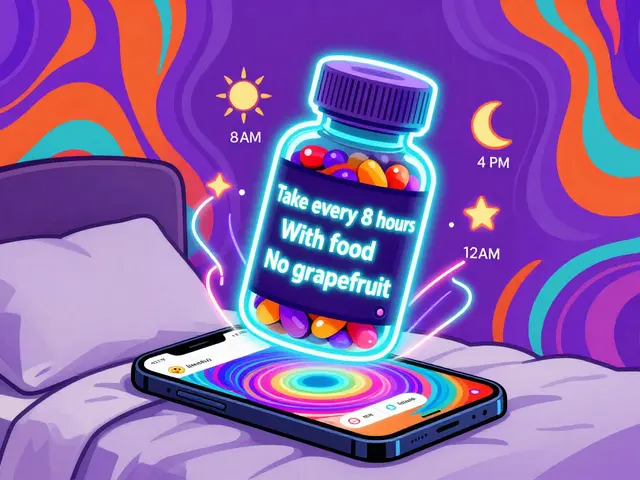
You don’t need to stop your SSRI. You just need to be smart about what else you take. Here’s what to do:- Know your meds. Keep a written list of everything you take - including doses and why. Bring it to every appointment.
- Ask your pharmacist. They’re trained to spot dangerous combinations. When you pick up a new prescription, ask: “Could this interact with my antidepressant?”
- Check for hidden sources. Look at cold medicines, sleep aids, and even migraine pills. Dextromethorphan and tramadol are everywhere.
- Watch for the 5 S’s. Shivering, Sweating, Stiffness, Seizures (rare), Sudden confusion. If you notice any of these after starting a new drug, seek help immediately.
- Don’t stop SSRIs suddenly. Withdrawal can cause its own problems. If you need to switch, follow your doctor’s washout schedule - especially with fluoxetine, which needs five weeks.
What’s Changing in 2025?
The system is catching up. In 2024, the FDA mandated that all electronic prescribing systems in the U.S. must include automatic alerts when a doctor tries to prescribe a high-risk combination - like an SSRI with tramadol or linezolid. Hospitals using Epic, Cerner, and other systems have already seen a 32% drop in dangerous co-prescriptions. Meanwhile, researchers are working on a blood test called SerotoninQuant, which may soon give doctors an objective way to confirm serotonin syndrome - instead of guessing based on symptoms. It’s still in trials, but if it works, it could save lives by catching cases earlier.Real Stories, Real Consequences
In 1984, 18-year-old Libby Zion died after being given meperidine while on phenelzine. Her death led to major reforms in how doctors are trained. But the problem hasn’t gone away. A 2023 Reddit user, ‘AnxietyWarrior87,’ wrote: “I took tramadol for my back pain while on sertraline. Within 12 hours, I was shaking, burning up, and couldn’t move my legs. I thought I was having a heart attack. The ER doctor said it was serotonin syndrome. I spent three days in the hospital.” The FDA’s adverse event database shows over 1,800 serotonin syndrome reports linked to SSRIs between 2018 and 2022. Nearly 70% involved drug combinations. Most of these cases were preventable.Bottom Line: You’re Not Alone - But You Must Be Vigilant
SSRIs are life-changing for millions. But they’re not harmless. The risk of serotonin syndrome is real - especially when other drugs sneak in unnoticed. The good news? You can protect yourself. Know your medications. Ask questions. Don’t assume something is safe just because it’s over-the-counter or herbal. And if you feel something’s off - trust your gut. Get help fast.There’s no shame in asking your doctor: “Could this new medicine be dangerous with my antidepressant?” That’s not being paranoid. That’s being smart.
Can you get serotonin syndrome from just one SSRI?
It’s extremely rare. Serotonin syndrome almost always happens when two or more serotonergic drugs are combined. Taking an SSRI alone at a normal dose is very unlikely to cause it. The risk comes from adding another medication, supplement, or even an over-the-counter cough syrup that also affects serotonin.
How long does it take for serotonin syndrome to develop?
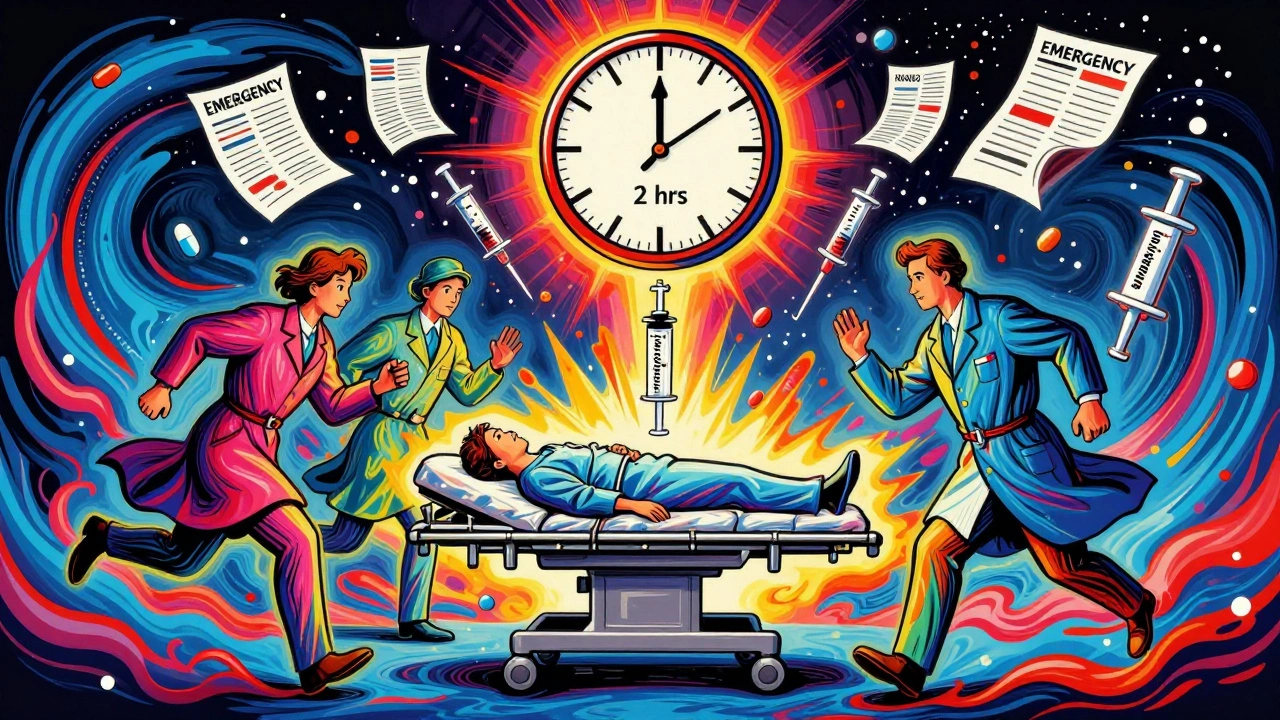
Symptoms usually appear within hours - often within 2 to 6 hours after taking a new drug or increasing a dose. In some cases, they can show up within 30 minutes. If you’ve just started a new medication and suddenly feel unwell, don’t wait. Seek medical help right away.
Is serotonin syndrome the same as an allergic reaction?
No. An allergic reaction involves your immune system and usually causes hives, swelling, or trouble breathing. Serotonin syndrome is a toxic reaction caused by too much serotonin in your brain and nerves. It affects your muscles, temperature, and mental state - not your skin or airways. The treatments are completely different.
Can I take ibuprofen or acetaminophen with my SSRI?
Yes. Regular painkillers like ibuprofen (Advil) and acetaminophen (Tylenol) do not increase serotonin levels and are generally safe to use with SSRIs. Avoid opioids like tramadol or codeine unless your doctor specifically says it’s safe. Always check with your pharmacist if you’re unsure.
What should I do if I think I have serotonin syndrome?
Go to the emergency room immediately. Do not wait to see if it gets better. Tell the staff you’re taking an SSRI and any other medications or supplements you’ve recently started. Treatment involves stopping the offending drugs, giving fluids, and sometimes using medications like cyproheptadine to block serotonin. Early action saves lives.
Emma Sbarge
December 13, 2025 AT 08:46People still don’t get it - this isn’t about being paranoid. It’s about being alive. I’ve seen three friends end up in the ER because they thought St. John’s wort was ‘natural’ and therefore safe. It’s not. It’s a serotonin bomb wrapped in a hippie blanket. Stop pretending supplements are harmless just because they’re sold next to kale chips.
Donna Hammond
December 14, 2025 AT 05:47This is one of the most important posts I’ve read all year. I’m a pharmacist and I see this every single week - people on SSRIs popping tramadol for back pain or mixing dextromethorphan with Zoloft because they ‘just needed something for their cough.’ The scary part? They never connect the dots. I keep a printed handout on my counter titled ‘What Your Doctor Might Not Tell You About Your Antidepressant’ - and it’s always snatched up. Knowledge saves lives. Share this.
Richard Ayres
December 15, 2025 AT 03:12It’s worth noting that serotonin syndrome isn’t just about drug interactions - it’s also about systemic failures. The healthcare system is built on silos: your psychiatrist prescribes the SSRI, your orthopedist prescribes the tramadol, your primary care gives you the antibiotic, and your pharmacist isn’t always consulted. We need better integration. Electronic alerts are a start, but they’re not enough. We need mandatory medication reconciliation at every visit, especially for older adults on polypharmacy. This isn’t just patient education - it’s a structural fix.
Sheldon Bird
December 16, 2025 AT 03:57Hey, I just want to say - if you’re reading this and you’re on an SSRI, you’re not alone. I’ve been on sertraline for 8 years and I used to panic every time I got a cold because I didn’t know what was safe. Then I started asking my pharmacist: ‘What’s in this?’ And guess what? They love it when you ask. Seriously. They’re trained for this. Don’t be shy. You’re not being annoying - you’re being smart. And if you’re feeling shaky or weird after a new med? Go to the ER. No shame. No waiting. Just go.
Karen Mccullouch
December 17, 2025 AT 20:14Ugh. I can’t believe we’re still having this conversation in 2025. People take OTC meds like they’re candy. And then they blame the ‘system’ when they end up in the hospital. No. It’s your responsibility. Your body. Your choices. If you can’t read a label or ask a simple question, don’t be surprised when you get hurt. This isn’t a conspiracy. It’s basic biology. And if you’re too lazy to learn it, don’t expect everyone else to clean up your mess.
Rawlson King
December 18, 2025 AT 19:46While the clinical data presented is statistically sound, one must consider the epistemological limitations of pharmacovigilance reporting systems. The FDA’s Adverse Event Reporting System (FAERS) is inherently biased toward over-reporting due to its voluntary nature and lack of causal verification. Furthermore, the conflation of correlation with causation in the cited Reddit anecdote undermines the scientific rigor of the argument. One must not conflate anecdotal evidence with epidemiological truth.
Himmat Singh
December 19, 2025 AT 06:50It is an empirical fact that serotonin syndrome is an exceedingly rare condition when compared to the total number of SSRI prescriptions dispensed annually. The fear-mongering tone of this article is disproportionate to the actual risk. Moreover, the suggestion that herbal supplements are inherently dangerous is a Western pharmaceutical hegemony disguised as medical advice. In India, St. John’s wort has been used for centuries without incident. Perhaps the issue lies not in the substances, but in the pharmacokinetic ignorance of Western clinicians.
kevin moranga
December 20, 2025 AT 18:44Man, I just want to say - this post hit home. My mom’s on sertraline, gabapentin, metoprolol, lisinopril, and a multivitamin with tryptophan. She thought the vitamin was ‘just for energy.’ I found out when she started sweating like crazy and mumbling about ‘the walls talking.’ We took her to the ER and the doctor said it was serotonin syndrome. She was in the hospital for 48 hours. Since then, I made her a color-coded pill organizer with little notes: ‘NO TRAMADOL,’ ‘NO DEXTRO,’ ‘NO ST. JOHN’S.’ I even printed out this article and taped it to the fridge. I’m not a doctor. I’m just her son. But I learned. And now I make sure everyone in my family knows this stuff. You don’t need to be a genius to save a life. Just care enough to ask.
Alvin Montanez
December 21, 2025 AT 09:02Let’s be honest - most people who take SSRIs are already mentally fragile. They’re the type who’ll swallow anything labeled ‘natural’ because they distrust science. Then they get mad when the system doesn’t protect them from their own stupidity. This isn’t a medical crisis. It’s a cultural one. We’ve turned healthcare into a consumer product where people demand solutions without responsibility. You don’t get to take a mood-altering drug and then treat every cough syrup like it’s harmless candy. If you can’t handle basic pharmacology, maybe you shouldn’t be on SSRIs at all. Stop outsourcing your brain to Big Pharma and start thinking for yourself.
Keasha Trawick
December 22, 2025 AT 19:51Okay - serotonin syndrome isn’t just a medical term, it’s a full-blown sensory nightmare. Imagine your body turning into a live wire. Shivering like you’re in a freezer while your skin’s on fire. Muscles locking up like you’ve been dipped in concrete. Your brain screaming ‘something’s wrong’ but your tongue won’t form words. And then the hallucinations - not spooky ghosts, but your own thoughts turning against you, whispering that you’re dying and no one’s coming. I lived it. Took me six months to stop flinching every time I heard a cough. And yeah - it was dextromethorphan and sertraline. The ER doc said I was lucky. Lucky? I had to relearn how to walk. Don’t be a statistic. Check your damn meds.
Webster Bull
December 24, 2025 AT 16:48Just ask. Always ask. Pharmacist. Doctor. Auntie. Whoever. It’s not weak. It’s wise. And if you’re scared? Good. That means you’re paying attention.
Tommy Watson
December 26, 2025 AT 15:56Wait so like… if I take a tylenol with my zoloft, am I gonna die? 😭
Michael Gardner
December 27, 2025 AT 20:44Actually, serotonin syndrome can occur with a single SSRI if the dose is massively elevated - like in overdose cases. The article says it’s ‘extremely rare’ with one drug, which is technically true, but misleading. There are documented cases of people hitting 400mg of sertraline and crashing. So it’s not *always* drug interactions. It’s mostly. But not always. Don’t oversimplify.