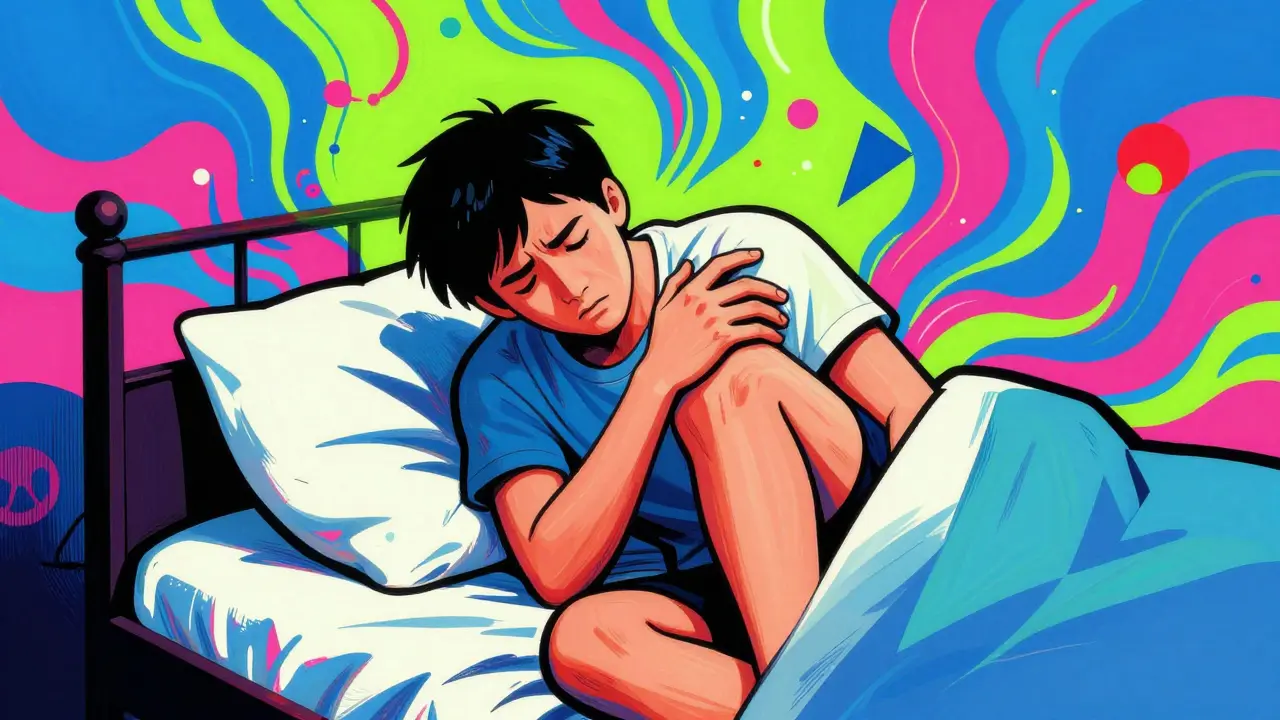
Imagine waking up with a deep ache in your thighs or shoulders. You’ve been taking a medication to protect your heart, but now you feel like it’s hurting your body. For millions of people, this is the reality of statin intolerance, defined by the National Lipid Association as the inability to tolerate at least two statins due to objectionable symptoms or abnormal lab results that resolve upon discontinuation. It’s not just in your head, but it’s also not always what you think it is. The truth about statin-related muscle issues is complex, involving everything from genetics to placebo effects, and there are real solutions beyond just stopping treatment.
The stakes are high. Stopping heart-protective medication without a plan can increase your risk of cardiovascular events by up to 25%. Yet, nearly half of all statin prescriptions are discontinued within the first year. If you’re struggling with muscle pain, stiffness, or weakness after starting a statin, you need to understand why it happens, how to confirm if it’s truly the drug, and what modern alternatives exist to keep your cholesterol under control without the side effects.
Is It Really Statin Intolerance?
Before switching medications or giving up on treatment, we need to separate true drug intolerance from other common causes of muscle pain. This distinction matters because many people stop effective therapy unnecessarily. According to the European Atherosclerosis Society, diagnosing Statin-Associated Muscle Symptoms (SAMS) requires looking at three key factors: the nature of the symptoms, blood test results for creatine kinase (CK), and the timing relative to when you started or stopped the drug.
SAMS typically hits large muscle groups-thighs, buttocks, back, and shoulders-and often feels like heaviness, stiffness, or cramps rather than sharp pain. In studies, 78% of patients report thigh involvement. Crucially, these symptoms usually appear within 30 days of starting the medication or increasing the dose. If your pain existed before you took the pill, it’s likely not statin-related. Common look-alikes include osteoarthritis, which affects 41% of patients diagnosed with SAMS, fibromyalgia, and vitamin D deficiency. In fact, nearly 30% of people labeled as statin-intolerant have low vitamin D levels (<20 ng/mL), which alone can cause significant muscle aches.
The diagnostic gold standard involves a "discontinuation-rechallenge" process. Your doctor stops the statin to see if symptoms resolve, then carefully reintroduces it. Surprisingly, only 34% of suspected cases recur during re-challenge. This suggests that for many, the original pain was unrelated to the drug. The landmark SAMSON trial highlighted this further, showing that 90% of reported side effects during statin therapy were also experienced during placebo periods. This doesn’t mean your pain isn’t real; it means the nocebo effect-the expectation of harm-plays a massive role in how we perceive medication side effects.
Understanding the Biology Behind the Pain
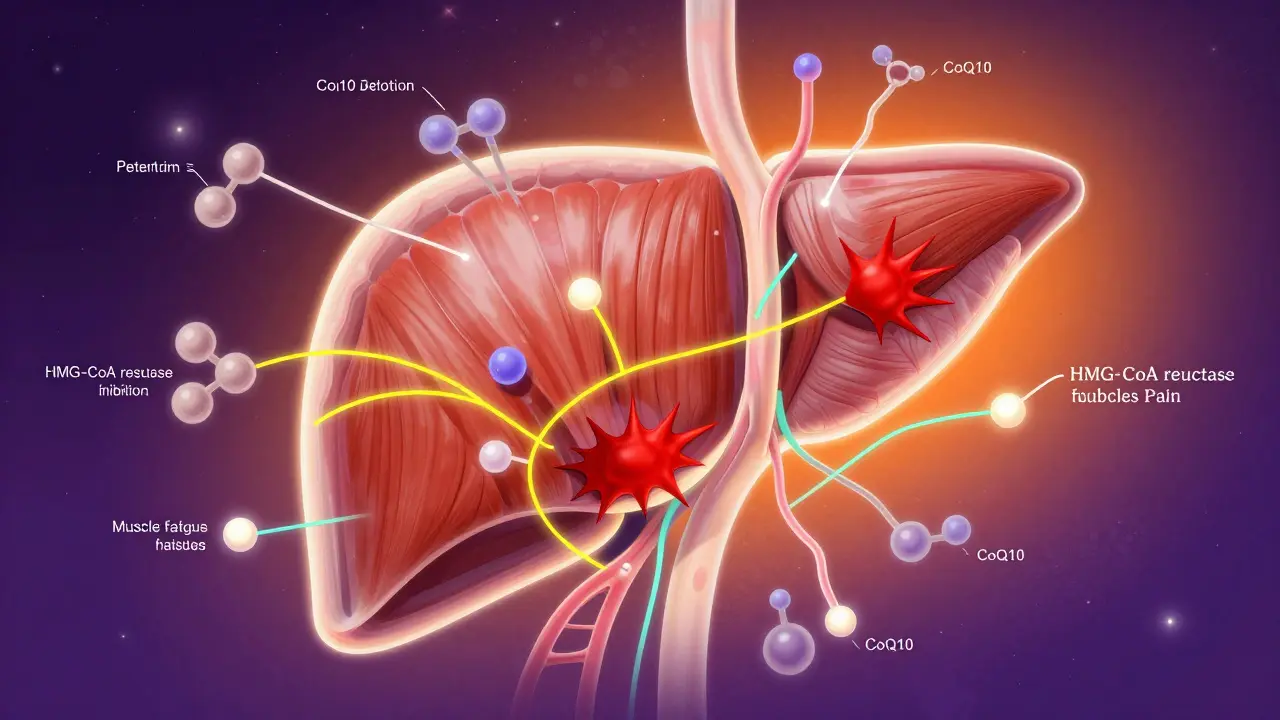
Why do some people get muscle pain while others don’t? It comes down to how your body processes the drug. Statins work by blocking an enzyme called HMG-CoA reductase, which helps your liver produce cholesterol. But this pathway also produces coenzyme Q10 (CoQ10), a molecule essential for muscle energy production. Some theories suggest that lowering CoQ10 leads to muscle fatigue and pain, though clinical trials on CoQ10 supplementation have shown mixed results, with only about one-third of patients reporting benefit.
Genetics play a bigger role than most realize. Variants in the SLCO1B1 gene, specifically the *5 and *15 alleles, are linked to a 4.5-fold increased risk of myopathy. This gene controls how statins enter liver cells. If it’s less active, more statin stays in your bloodstream, potentially affecting muscles. By 2025, pharmacogenetic testing aims to guide statin selection for 30% of new patients, helping doctors avoid drugs that will trigger reactions based on your DNA profile.
Drug interactions are another major culprit. Medications that inhibit the CYP3A4 enzyme-such as certain antibiotics, antifungals, or calcium channel blockers-can raise statin levels in your blood. About 22% of patients with suspected SAMS are found to be taking interacting medications. Always review your full medication list with your pharmacist or doctor to rule out these hidden triggers.
Strategies for Managing Statin Intolerance
If you’ve confirmed true intolerance, don’t despair. There are several evidence-based strategies to find a regimen that works. The National Lipid Association recommends a stepwise approach that focuses on finding the right balance between efficacy and tolerability.
- Switch Statin Types: Not all statins are created equal. Hydrophilic statins like pravastatin and rosuvastatin dissolve in water and tend to stay in the liver, whereas lipophilic statins like simvastatin and atorvastatin travel through fatty tissues, including muscles. Hydrophilic options show 28% lower intolerance rates. Up to 65% of patients who fail one statin can successfully use another.
- Lower the Dose: High doses aren’t always necessary. Low-dose atorvastatin (10mg) can still reduce LDL cholesterol by 32% with an 89% tolerability rate. Sometimes, less is enough to hit your target numbers.
- Intermittent Dosing: For some, taking a higher dose once or twice a week instead of daily maintains lipid control while reducing exposure. For example, rosuvastatin 600mg weekly has achieved 48% LDL reduction in adherent patients. However, this only works for short-half-life statins and must be supervised by a doctor.
- Address Deficiencies: Correcting vitamin D deficiency or thyroid issues (hypothyroidism is present in 12% of SAMS cases) can sometimes resolve muscle pain entirely, allowing you to continue statin therapy safely.
Alternative Cholesterol-Lowering Therapies
When statins simply aren’t an option, modern medicine offers powerful alternatives. These drugs work through different mechanisms, bypassing the pathways that cause muscle symptoms.
| Medication Class | Example Drug | LDL Reduction | Dosing Frequency | Tolerability/Notes |
|---|---|---|---|---|
| Ezetimibe | Ezetrol | ~18% | Daily pill | 94% adherence; well-tolerated, minimal side effects |
| Bile Acid Sequestrants | Colesevelam | 15-18% | Daily powder/pill | 22% GI side effects; can interfere with other meds |
| PCSK9 Inhibitors | Evolocumab (Repatha) | ~59% | Injection every 2 weeks | 91% adherence; highly effective, expensive (~$5,800/year) |
| Bempedoic Acid | Nexletol | ~17% | Daily pill | 88% tolerability; activated in liver, not muscles |
| siRNA Therapy | Inclisiran (Leqvio) | ~50% | Injection twice yearly | 93% adherence; long-lasting effect, emerging option |
Ezetimibe is often the first line of defense. It blocks cholesterol absorption in the gut and is generally very well tolerated. For patients needing stronger reduction, PCSK9 inhibitors like evolocumab offer dramatic LDL drops of nearly 60%. While costly, insurance coverage is improving, and they represent a major advancement for those who cannot take statins. Newer agents like bempedoic acid activate only in the liver, avoiding muscle tissue entirely, making them a promising option for statin-intolerant patients. Inclisiran, administered via injection just twice a year, is changing the landscape by offering convenience and sustained control.
Combination Therapies and Real-World Success
You don’t have to choose just one path. Combination therapy is increasingly common and effective. Pairing ezetimibe with a low-dose statin often provides the best of both worlds: significant LDL reduction with minimal side effects. For high-risk patients, combining ezetimibe with a PCSK9 inhibitor can achieve near-zero LDL levels, drastically cutting cardiovascular risk.
Data from the Statin Intolerance Registry shows that 76% of patients eventually achieve their lipid goals through sequential trials of different strategies. On average, it takes 2.3 attempts over 3-6 months to find the right fit. This patience is crucial. Rushing to conclusions or jumping between treatments without proper evaluation can lead to unnecessary anxiety and untreated high cholesterol.
The economic impact of getting this right is significant. Inappropriate discontinuation costs healthcare systems thousands per patient annually due to preventable heart attacks and strokes. Conversely, investing time in proper diagnosis and tailored therapy pays off in both health and wallet terms.
Frequently Asked Questions
How do I know if my muscle pain is really from statins?
True statin-induced muscle pain typically starts within 30 days of beginning or increasing the dose, affects large muscle groups symmetrically (like thighs and shoulders), and resolves when you stop the drug. To confirm, your doctor may perform a "re-challenge" where they restart the statin to see if symptoms return. They should also check for other causes like vitamin D deficiency, thyroid issues, or arthritis, which mimic statin side effects in up to 72% of cases.
Can I take CoQ10 supplements to prevent statin muscle pain?
While theoretically sound since statins may lower natural CoQ10 levels, clinical evidence is mixed. Double-blind trials show only about 34% of patients report benefit from CoQ10 supplementation. It’s safe to try, but don’t rely on it as a guaranteed fix. Discuss dosage with your doctor, as high doses can interact with other medications.
What are the best non-statin alternatives for lowering cholesterol?
The best alternative depends on your LDL targets and tolerance. Ezetimibe is a good first step, lowering LDL by ~18% with high tolerability. For stronger effects, PCSK9 inhibitors like Repatha (evolocumab) reduce LDL by nearly 60% but require injections and cost more. Bempedoic acid is a newer oral option that works in the liver, avoiding muscle side effects, while inclisiran offers twice-yearly injections for long-term control.
Does genetic testing help predict statin intolerance?
Yes. Variants in the SLCO1B1 gene, particularly the *5 and *15 alleles, increase the risk of statin myopathy by 4.5 times. Pharmacogenetic testing can identify these risks before you start treatment, allowing doctors to choose safer statins or alternative therapies upfront. By 2025, this testing is expected to guide decisions for 30% of new statin users.
Is it safe to stop taking statins abruptly if I have muscle pain?
Stopping statins without medical supervision can be dangerous. Abrupt discontinuation removes the protective effect against heart attacks and strokes, potentially increasing cardiovascular event risk by 25%. Always consult your doctor to evaluate the cause of pain and transition to an alternative therapy safely. Never self-discontinue heart medication.