
When a child breaks out in hives after eating peanut butter, or an adult gets stomach cramps every time they have milk, the question isn’t just "What’s wrong?" - it’s "Is this really an allergy?" Many people assume that if a skin test is positive or blood work shows high IgE levels, they must be allergic. But that’s not always true. In fact, oral food challenges are the only way to know for sure.
Why Oral Food Challenges Are the Gold Standard
Skin prick tests and blood tests for food-specific IgE antibodies are common, but they’re not reliable on their own. Studies show these tests have a positive predictive value as low as 33% for some foods. That means more than two out of every five people who test positive aren’t actually allergic. The result? Unnecessary food avoidance, anxiety, and even nutritional deficiencies - especially in kids. An oral food challenge (OFC) cuts through the noise. It’s the only test that shows whether your body truly reacts to the food in real time. The American Academy of Allergy, Asthma & Immunology (AAAAI), the European Academy of Allergy and Clinical Immunology (EAACI), and the Italian Society of Pediatric Allergy and Immunology (SIAIP) all agree: OFC is the gold standard. It doesn’t guess. It observes. And it gives a clear yes or no.How an Oral Food Challenge Works
An OFC isn’t just eating a peanut butter sandwich and waiting to see what happens. It’s a carefully controlled medical procedure. The process starts with a tiny amount - often just 1 to 2 milligrams of the allergen, which is less than one-thousandth of a serving. That’s about the size of a grain of rice for peanut or egg. The dose is increased every 15 to 30 minutes, under constant supervision. Each step is watched for signs of a reaction: hives, swelling, vomiting, wheezing, or a drop in blood pressure. The whole thing takes 3 to 6 hours. Even after the last bite, you stay for another 1 to 2 hours because some reactions are delayed. The food can be given in different ways. Sometimes it’s pure - like a spoonful of peanut butter. Other times it’s hidden in a cookie, muffin, or capsule so the patient doesn’t know what they’re eating. That’s called a blind challenge. Most OFCs are open - meaning both the patient and doctor know what’s being tested. Blind challenges are mostly used in research or when anxiety might affect the result.Who Needs an Oral Food Challenge?
You don’t need an OFC if you’ve had a clear, severe reaction to a food in the past. But if your history is unclear - maybe you had a rash once years ago, or your test came back positive but you’ve never had symptoms - then an OFC is the next step. It’s also used to check if someone has outgrown an allergy. About 65% of children with milk or egg allergies outgrow them by age five. Without an OFC, families might avoid those foods for years longer than needed. One parent on a food allergy forum shared: "My son cried through the whole peanut challenge. But when the doctor said he could eat it now, we cried too. We’d been scared for five years." OFCs are also helpful for people with multiple food allergies. Sometimes, avoiding too many foods leads to poor nutrition. A challenge can confirm which ones are truly dangerous and which ones are safe.Safety: How Risky Is It?
The word "challenge" sounds scary. And yes, there’s a risk. But it’s a controlled risk. About 40% to 60% of OFCs result in mild reactions - usually just hives or flushing. These are easy to treat with antihistamines right in the clinic. Severe reactions requiring epinephrine happen in only 1% to 2% of cases when protocols are followed. A 2020 study in the Journal of Allergy and Clinical Immunology found only 0.9% of challenges led to treatment-requiring reactions. That’s why the procedure must be done in a medical setting with trained staff and emergency equipment on hand: epinephrine, oxygen, IV fluids, and corticosteroids. At least two healthcare workers must be present - usually a doctor and a nurse. The AAAAI requires this. No exceptions. Most reactions happen during the dose escalation phase. That’s why the doses start so small. The goal isn’t to trigger a reaction - it’s to find the exact threshold where one might occur. And if it does? The team is ready.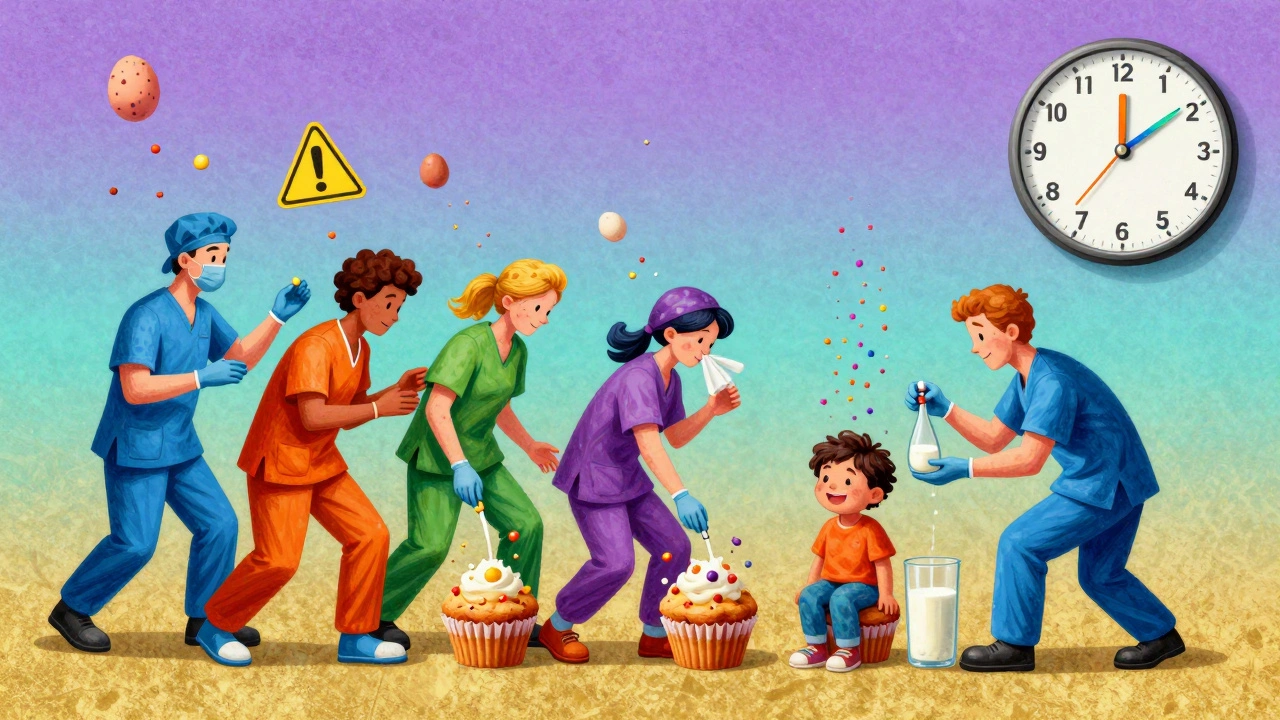
What Happens Before the Challenge?
Preparation matters. If you’re taking antihistamines, you need to stop them 5 to 7 days before the test. They can hide early signs of a reaction. Same with asthma medications - if you’re wheezing or have a cold, the challenge gets postponed. Respiratory infections can make reactions worse. Patients are also told to get a good night’s sleep and eat a normal meal before coming in. Wearing loose clothing helps. Bring distractions - tablets, books, toys - especially for kids. One parent tip from a support group: "Bring their favorite snack that’s safe. It helps them feel in control." Clinicians need training too. The AAAAI recommends at least 10 supervised OFCs before a provider can do them alone. That’s because reading subtle signs - a slight change in voice, a tiny flush on the cheeks - takes experience.How OFC Compares to Other Tests
Here’s the truth: no blood test or skin test can replace an OFC. Skin prick tests measure how your skin reacts to a drop of allergen. But they don’t tell you if you’ll react when you eat it. They’re good at ruling out allergies - if it’s negative, you’re likely not allergic. But a positive? It could be a false alarm. Blood tests for IgE levels give numbers. Higher numbers mean higher risk - but not certainty. For peanut, a level above 15 kUA/L is often considered high risk. But some people with that level can eat peanuts without issue. Others with much lower levels react badly. Component-resolved diagnostics (CRD) look at specific proteins in the food. They’re more precise than standard IgE tests. But even they only get about 85% accuracy. An OFC? It’s nearly 100% when done right. The bottom line: OFC doesn’t predict. It proves.What Patients and Families Say
The anxiety before an OFC is real. Surveys show 78% of parents feel moderate to high stress before the test. Kids often cry. Some refuse to eat. But after? The satisfaction rate is 89%. One mother wrote on Reddit: "I thought my daughter would never eat eggs again. We avoided them for three years. The challenge was hard - she screamed, I cried. But the doctor said she passed. Now she eats scrambled eggs every morning. It’s freedom." On the flip side, some families report unexpected reactions. One parent shared: "We were told it was low risk. But she went into anaphylaxis. It scared us for months." That’s why proper preparation and setting matter. Not every clinic is equipped. Not every provider has the same experience.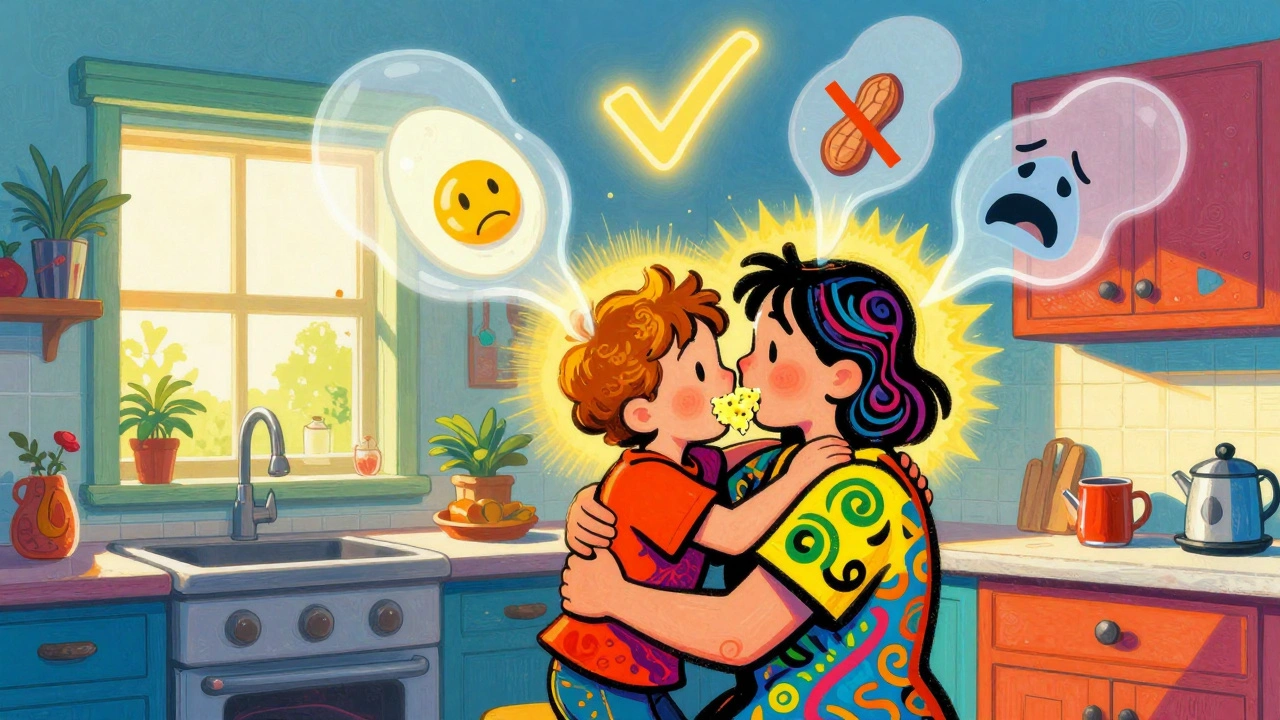
Future of Oral Food Challenges
Research is moving fast. In 2023, the NIH launched a study to create safer, more standardized dosing protocols for high-risk foods like peanuts and tree nuts. The goal? Lower the reaction rate during challenges without losing accuracy. Another big shift: home-based OFCs. The AAAAI now allows them for low-risk cases - like children with mild egg allergies who’ve been avoiding it for years. But only under strict conditions: a doctor’s approval, a clear emergency plan, and a trained adult present. This could make OFCs more accessible, especially in rural areas. Still, experts agree: no test is coming close to replacing OFC. Dr. Kari Nadeau of Stanford says, "OFC will remain the gold standard for the foreseeable future."Who Should Avoid an Oral Food Challenge?
OFC isn’t for everyone. You shouldn’t do one if:- You’ve had a severe reaction (anaphylaxis) to the food in the last 6 to 12 months
- You’re sick with a cold, flu, or asthma flare-up
- You’re taking antihistamines or other allergy meds
- You have uncontrolled asthma or other serious health conditions
Final Thoughts
An oral food challenge isn’t just a test. It’s a turning point. For families living in fear of a food they might not even be allergic to, it’s a path to freedom. For those who truly need to avoid a food, it’s a confirmation that keeps them safe. It’s not perfect. It’s time-consuming. It’s expensive. It requires resources. But when it comes to food allergies, there’s no better way to know the truth.Are oral food challenges safe for children?
Yes, oral food challenges are safe for children when performed in a medical setting by trained professionals. Mild reactions like hives or stomach upset occur in about half of cases, but severe reactions needing epinephrine happen in only 1-2% of challenges. Most pediatric allergy clinics perform hundreds of these safely each year. Preparation, including stopping antihistamines and ensuring the child is healthy, reduces risks.
How long does an oral food challenge take?
An oral food challenge typically takes 3 to 6 hours. The first 1 to 2 hours involve giving small, increasing doses of the food every 15 to 30 minutes. After the last dose, you stay for another 2 to 3 hours for observation because some reactions can be delayed. The total time depends on how many doses are needed and whether a reaction occurs.
Can you do an oral food challenge at home?
Home-based oral food challenges are now allowed for low-risk cases under strict guidelines from the American Academy of Allergy, Asthma & Immunology. This applies only to patients with mild, well-documented histories and no past anaphylaxis. A doctor must approve it, and the family must have an emergency plan, including epinephrine and access to immediate medical help. Most challenges are still done in clinics for safety.
What happens if I react during the challenge?
If a reaction occurs, the challenge stops immediately. Medical staff treat it right away - usually with antihistamines for mild symptoms like hives, or epinephrine for more serious reactions like trouble breathing or low blood pressure. Most reactions are mild and resolve quickly. After treatment, you’ll be monitored until stable. The results still count: a reaction confirms the allergy.
Do I need to stop my allergy medications before an oral food challenge?
Yes. Antihistamines, including over-the-counter ones like Benadryl or Claritin, must be stopped 5 to 7 days before the challenge because they can mask early signs of a reaction. Asthma inhalers and other medications may need to be adjusted too - always check with your allergist. Never stop prescribed medications without their guidance.
How accurate is an oral food challenge?
Oral food challenges are nearly 100% accurate when performed correctly. Unlike blood or skin tests, which show immune system activity but not actual tolerance, OFCs observe the body’s real-time response to eating the food. This makes them the only test that can definitively confirm or rule out a food allergy. Studies show they’re far more reliable than any lab test.
Can an oral food challenge help me eat more foods?
Yes. Many people avoid foods based on outdated or inaccurate test results. An OFC can confirm that an allergy has been outgrown - especially common with milk, egg, wheat, and soy allergies in children. Studies show 25-30% of people who think they’re allergic to a food are actually not. An OFC can lift unnecessary restrictions and improve nutrition and quality of life.
Is an oral food challenge covered by insurance?
Most insurance plans cover oral food challenges when ordered by a board-certified allergist for diagnostic purposes. However, coverage varies. Some plans require pre-authorization or limit the number of challenges per year. Always check with your insurer and ask your allergist’s office to help with the paperwork. The procedure is considered medically necessary, not elective.



Saket Modi
December 3, 2025 AT 14:26Saurabh Tiwari
December 4, 2025 AT 15:48Sheryl Lynn
December 5, 2025 AT 09:06Zoe Bray
December 7, 2025 AT 07:08Paul Santos
December 8, 2025 AT 00:20John Morrow
December 8, 2025 AT 16:37Kristen Yates
December 10, 2025 AT 14:23Shubham Pandey
December 12, 2025 AT 01:22