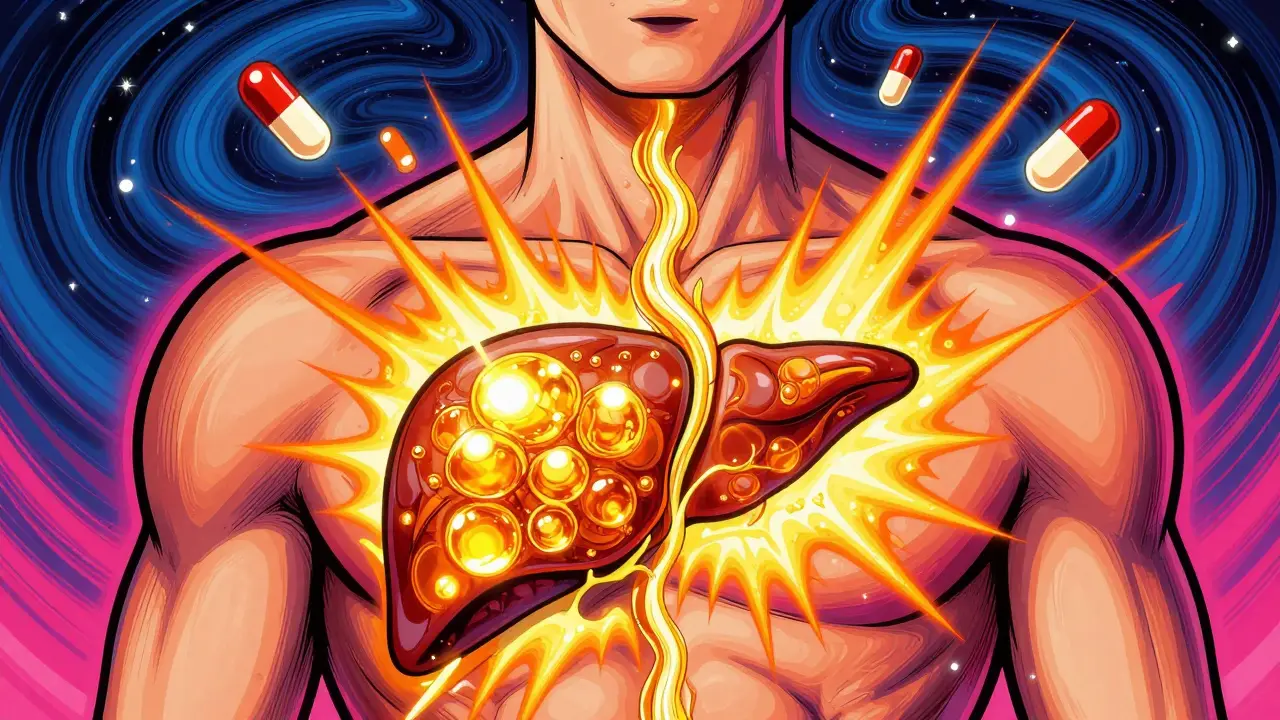
Itching that won’t go away-no rash, no bug bites, just relentless, deep skin irritation-is one of the most frustrating symptoms in liver disease. For people with cholestasis, where bile doesn’t flow properly from the liver, this itch isn’t just annoying. It can wreck sleep, destroy concentration, and make daily life unbearable. About 20-70% of patients with primary biliary cholangitis (PBC) experience it. Even in primary sclerosing cholangitis (PSC), up to 15% struggle with it. And in intrahepatic cholestasis of pregnancy, it hits nearly 1 in 4. Yet, many doctors still reach for antihistamines first-even though they don’t work.
Why Antihistamines Don’t Help
It’s a common mistake. When someone says they’re itching, the automatic response is to prescribe an antihistamine. But cholestatic pruritus isn’t caused by histamine. It’s driven by bile acids building up in the blood and triggering nerve signals in the skin. A 2022 AASLD review confirmed: antihistamines have no proven benefit in this condition. Yet, a 2022 survey showed 68% of primary care doctors still prescribe them. That’s like treating a broken leg with a bandage. The real culprits? Bile acids, lysophosphatidic acid (LPA), and endogenous opioids-all signaling the brain to feel itch without any skin irritation.First-Line Treatment: Bile Acid Resins
The go-to first step? Cholestyramine (Questran). It’s a powdered resin that binds bile acids in the gut, stopping them from being reabsorbed and sending them out in the stool instead. Standard dose: 4 grams once a day, slowly increased to 16-24 grams daily in divided doses. It works for about 50-70% of people, reducing itch by half or more. But here’s the catch: it tastes like chalk mixed with sand. A 2020 Liver International survey found 78% of patients hate the taste. Many quit within three months. Patients report mixing it with apple juice or pudding to make it bearable, but even then, the gritty texture is hard to swallow. Side effects? Constipation, bloating, nausea. And it binds to other meds-antibiotics, thyroid pills, birth control-so you have to take it at least one hour before or four to six hours after anything else.Second-Line: Rifampin
If cholestyramine fails, the next move is rifampin (Rifadin). Originally an antibiotic for tuberculosis, it turns out to be a powerful liver enzyme inducer that helps clear bile acids from the blood. Dose: 150-300 mg daily. In PBC patients, it works in up to 75% of cases within four weeks. One patient on Reddit wrote: “Rifampin turned my urine orange but dropped my itch from 8/10 to 3/10 in two weeks.” For many, that’s worth the discoloration. But it’s not risk-free. About 15-20% of users develop elevated liver enzymes, so monitoring is required. It also speeds up the breakdown of dozens of other drugs-blood thinners, antidepressants, birth control-so interactions are a real concern. Still, it’s more effective than cholestyramine and better tolerated long-term, with only 10-15% stopping due to side effects.Third-Line: Naltrexone and Sertraline
When both cholestyramine and rifampin don’t cut it, clinicians turn to naltrexone or sertraline. Naltrexone (Revia), used for opioid addiction, blocks the brain’s opioid receptors that contribute to itch. Dose: start at 6.25 mg, increase weekly to 50 mg. About 50-65% of patients see improvement. But the first few days? Rough. About 30% feel like they’re going through opioid withdrawal-nausea, anxiety, sweating-even if they’ve never used opioids. One patient in a 2022 focus group said: “The first three days felt like I was detoxing. I had to stop.” Sertraline (Zoloft), an SSRI antidepressant, works off-label. It’s dosed at 75-100 mg daily. It helps about 40-50% of PBC patients, especially those with depression. But it doesn’t work well in PSC or other forms of cholestasis. It’s not a magic bullet, but for some, it’s the only thing that brings relief.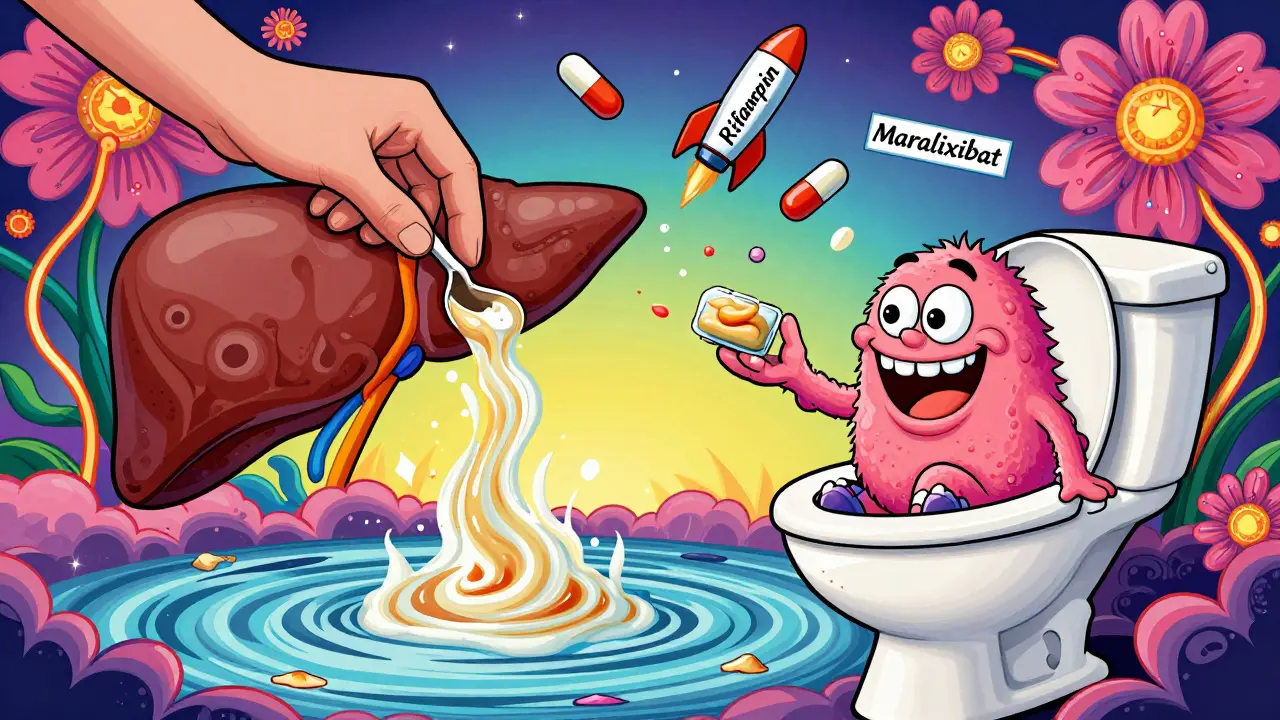
New Hope: Maralixibat and IBAT Inhibitors
The biggest shift in recent years? The arrival of targeted drugs. Maralixibat (Mytesi), approved by the FDA in September 2021 for Alagille syndrome, is now being used off-label for other cholestatic conditions. It blocks the ileal bile acid transporter (IBAT), preventing bile acids from being reabsorbed in the gut. Dose: 1.25-6.25 mg daily. In trials, it reduced itch by 47% on a visual scale-comparable to cholestyramine-but with far fewer side effects. Only 12% of patients stopped taking it, compared to 35% with cholestyramine. Patients love it because it’s a pill, not a powder, and has no taste. Cleveland Clinic’s 2023 survey showed an 82% continuation rate at six months. It’s expensive-$12,500 a month-but for many, it’s life-changing. Other IBAT inhibitors like volixibat are in phase 3 trials, showing even better results: 52% itch reduction with only 18% discontinuation.The Future: Targeting Autotaxin and LPA
The most exciting frontier? Blocking the autotaxin-LPA pathway. Autotaxin is an enzyme that makes lysophosphatidic acid (LPA), a molecule now known to be a major driver of itch in cholestasis. In 2023, a phase 2 trial of IONIS-AT332-LRx-an antisense oligonucleotide that lowers autotaxin-showed a 58% reduction in itch and a 65% drop in serum autotaxin levels. That’s not just symptom relief; it’s targeting the root cause. Experts like Dr. Marlyn Mayo say this is the most promising path forward. Other drugs in development aim to block LPA receptors directly. Within five years, we may stop using broad-spectrum agents like rifampin and start prescribing drugs that silence the exact molecular signal causing the itch.When All Else Fails: Transplant
For a small group-those with advanced liver disease and unrelenting pruritus-liver transplant is the only definitive cure. Studies show 95% of patients see their itch vanish completely after transplant. But it’s major surgery with lifelong risks. Most patients try everything else first. The goal isn’t to rush to transplant, but to use newer therapies to delay or avoid it altogether.
Practical Steps for Patients
If you’re dealing with cholestatic itch, here’s what works:- Start with lifestyle tweaks: cool showers, loose cotton clothes, fragrance-free moisturizers. Avoid hot baths and harsh soaps.
- Try cholestyramine-mix it with apple sauce or a smoothie to mask the taste. Take it 1 hour before or 4-6 hours after other meds.
- If no improvement in 4 weeks, ask your doctor about rifampin. Get liver tests before and during treatment.
- If rifampin doesn’t help or causes side effects, consider naltrexone or sertraline. Start low, go slow.
- Ask about maralixibat. Even if it’s not yet approved for your condition, some hepatologists prescribe it off-label.
- Track your itch daily on a 1-10 scale. Bring it to appointments. Numbers beat vague descriptions.
What’s Not Working (And Why You Should Avoid It)
Don’t waste time or money on:- Antihistamines (Benadryl, Zyrtec)-they don’t touch the real cause.
- Topical steroids-no evidence they help internal itch.
- UV light therapy-sometimes used for skin conditions, but ineffective in cholestasis.
- Herbal remedies like milk thistle-no proven benefit for itch, and some can harm the liver.
Cost and Access
Cholestyramine costs about $65 a month. Rifampin is under $100. Naltrexone and sertraline are generic and cheap. But maralixibat? $12,500 a month. Insurance often requires prior authorization, and many patients can’t get it without a specialist’s letter. In community clinics, only 45% follow the stepwise protocol-most lack access to hepatologists. Academic centers are ahead, with 78% using the AASLD guidelines. The gap is real. But as newer drugs get more data and generic versions emerge, access should improve.Final Thoughts
Cholestatic pruritus used to be a mystery. Now we know the players: bile acids, LPA, opioids. We have tools to block them. The old way-throwing antihistamines and hoping-doesn’t work. The new way is smarter, step-by-step, and increasingly effective. For the first time, patients aren’t just managing itch-they’re targeting it. And that changes everything.Why doesn’t my antihistamine help with my liver-related itching?
Cholestatic pruritus isn’t caused by histamine, which is what antihistamines block. Instead, it’s triggered by bile acids and other substances like lysophosphatidic acid (LPA) building up in your blood and stimulating nerves in your skin. Antihistamines have no effect on these pathways, which is why major liver associations like AASLD recommend against using them as first-line treatment.
How long does it take for cholestyramine to work?
Most patients notice some relief within 1-2 weeks of starting cholestyramine. Full effect usually takes 3-4 weeks, especially if you’re titrating the dose upward. If you don’t see improvement after 4 weeks, it’s time to talk to your doctor about moving to the next step-usually rifampin.
Can I take cholestyramine with my other medications?
Not at the same time. Cholestyramine binds to many drugs-including antibiotics, thyroid meds, birth control, and blood thinners-and prevents them from being absorbed. Always take it at least 1 hour before or 4-6 hours after any other medication. Write down your pill schedule and check with your pharmacist to avoid dangerous interactions.
Is maralixibat available for all types of cholestasis?
Maralixibat is FDA-approved only for Alagille syndrome, but many hepatologists prescribe it off-label for other cholestatic conditions like PBC and PSC. Clinical trials show it works well across multiple types of cholestasis. Insurance coverage varies, so you’ll need a specialist to advocate for it. It’s not a first-line option yet, but it’s becoming a go-to when older treatments fail.
What’s the most effective long-term treatment for cholestatic itch?
For now, the most effective long-term option is a stepwise approach: start with cholestyramine, add rifampin if needed, then consider naltrexone or sertraline. For patients who don’t respond, maralixibat offers better tolerability and sustained relief. In the next few years, drugs targeting the autotaxin-LPA pathway-like IONIS-AT332-LRx-may become the new standard because they attack the root cause, not just the symptoms.
Can lifestyle changes really help with the itching?
Yes, but not as a standalone fix. Cool showers, loose cotton clothing, and fragrance-free moisturizers can reduce skin irritation and make itching feel less intense. Avoiding hot water, tight clothes, and harsh soaps helps prevent flare-ups. These changes won’t eliminate the itch, but they make other treatments more effective and improve your quality of life while you’re waiting for meds to work.


Paul Huppert
December 31, 2025 AT 11:57Been dealing with this for years. Cholestyramine was a nightmare-tasted like chalk dust in a sandstorm. But I mixed it with peanut butter and it became bearable. Didn’t fix everything, but cut the itch in half. Finally switched to maralixibat last year. Worth every penny. Sleep is actually possible now.
Also, no, antihistamines did nothing. Zero. Not even a whisper of relief.
Hanna Spittel
January 1, 2026 AT 12:34Anyone else think Big Pharma is hiding the real cure? 🤔
Why is the FDA letting them charge $12k/month for a pill that just blocks a transporter? I bet there’s a cheap herb from the Amazon that cures this. They don’t want you to know. 🌿💸
Brady K.
January 2, 2026 AT 10:11So we’re telling patients to swallow sand, take a TB drug that turns their pee orange, then hop on an antidepressant like it’s a mood ring? And we call this medicine?
Meanwhile, the real solution-blocking autotaxin-is sitting in phase 2 trials. We’re treating symptoms like it’s 1998. Pathetic. The liver doesn’t itch because of histamine. It itches because we’re still using medieval tools to fight molecular warfare.
Stop bandaging broken legs. Start fixing the bone.
John Chapman
January 4, 2026 AT 02:29THIS. I’ve been there. First I tried Zyrtec. Nothing. Then cholestyramine-almost quit because I gagged every time. Then rifampin. Orange urine? Yeah, but I slept for 7 hours straight for the first time in 18 months. 🙌
Don’t give up. It gets better. Seriously.
And if your doc says ‘just use Benadryl’-find a new doc. 🚩
Robb Rice
January 4, 2026 AT 06:38Just want to clarify: cholestyramine should be taken at least 1 hour before or 4–6 hours after other medications. I missed this detail and ended up with a thyroid level crash. Took me 3 months to recover. Please, if you’re on meds, talk to your pharmacist. Seriously.
Also, maralixibat isn’t magic-it’s expensive and not covered everywhere. But it’s the best option we’ve got right now.
Stewart Smith
January 4, 2026 AT 14:41Yeah, I tried the powder. Looked like someone dumped a bag of cement in my coffee. Swallowed it once. Never again.
Maralixibat? My hepatologist said ‘it’s not approved for PSC, but I’ll write a letter.’ Two weeks later, insurance approved it. Life changed.
Still, I don’t tell anyone. Don’t want to jinx it.
Retha Dungga
January 4, 2026 AT 22:11why do we even have to suffer like this
its like the body is screaming but no one listens
we are just meat with nerves
and they give us chalk
and call it medicine
😔
Jenny Salmingo
January 6, 2026 AT 13:12I’m from a small town. My doctor didn’t even know what cholestyramine was. I had to print out the AASLD guidelines and hand them to him. He said ‘huh, interesting’ and wrote me a script.
Now I’m on rifampin. My urine is orange. My husband thinks I’m a alien. I don’t care. I can scratch less now.
Just keep going. You’re not alone.
Sara Stinnett
January 7, 2026 AT 22:45Oh please. ‘Maralixibat is life-changing’? Sure, if you’re rich and have a hepatologist who moonlights as a wizard.
Meanwhile, 80% of us are stuck with cholestyramine and a $2000 deductible. This isn’t progress-it’s a luxury product disguised as medicine. And now they’re gonna patent the next drug too? Brilliant.
Let’s just admit it: liver disease is a class issue. The itch doesn’t care. But the treatment sure does.
linda permata sari
January 9, 2026 AT 08:18I cried the first time I slept through the night without scratching. I didn’t know it was possible anymore. I thought I’d be awake forever.
Maralixibat didn’t just help my skin-it brought back my soul. I started painting again. I hugged my daughter without flinching.
This isn’t just a drug. It’s a second chance.
❤️
Brandon Boyd
January 10, 2026 AT 18:02If you’re reading this and you’re struggling-keep going. I was ready to quit after the first month of cholestyramine. I almost gave up.
Then I found a Reddit group. Then I found a hepatologist who actually listened.
Now I’m on maralixibat. I’m not cured. But I’m alive again.
You’re not broken. You’re just waiting for the right tool. Don’t stop looking.
Branden Temew
January 12, 2026 AT 07:40So we’ve got a pill that blocks bile acid reabsorption, a drug that induces liver enzymes, and another that blocks opioid receptors…
And we still don’t know why some people respond and others don’t?
That’s not medicine. That’s alchemy with a prescription pad.
Autotaxin inhibitors? Finally. Something that doesn’t just distract the nervous system. Something that says: ‘Hey, this is the actual source. Let’s turn it off.’
Take the damn pill, science.
Joy Nickles
January 13, 2026 AT 16:44Okay so I just read this whole thing and I’m like… why is no one talking about the fact that rifampin can cause hepatitis? I had a friend who got liver failure from it. And they just said ‘oh, it’s rare’? RARE? That’s not rare when you’re the one in the ICU.
Also, why is maralixibat only for Alagille? That’s just discrimination. I have PSC and I’m not a baby. Why can’t I get it? Because insurance? Because we’re not ‘special’ enough?
And why is no one talking about how the FDA is slow? This isn’t a new disease. It’s been here for decades. We’ve been screaming. They’ve been filing.
Martin Viau
January 14, 2026 AT 17:12Y’all are overcomplicating this.
Canada’s got the same drugs. Same costs. Same BS.
But we don’t get all dramatic about it. We just take the pill, deal with the side effects, and move on.
Also, maralixibat? It’s not ‘life-changing.’ It’s a drug. A good one. But don’t turn it into a cult.
And for god’s sake, stop using emojis like they’re punctuation.