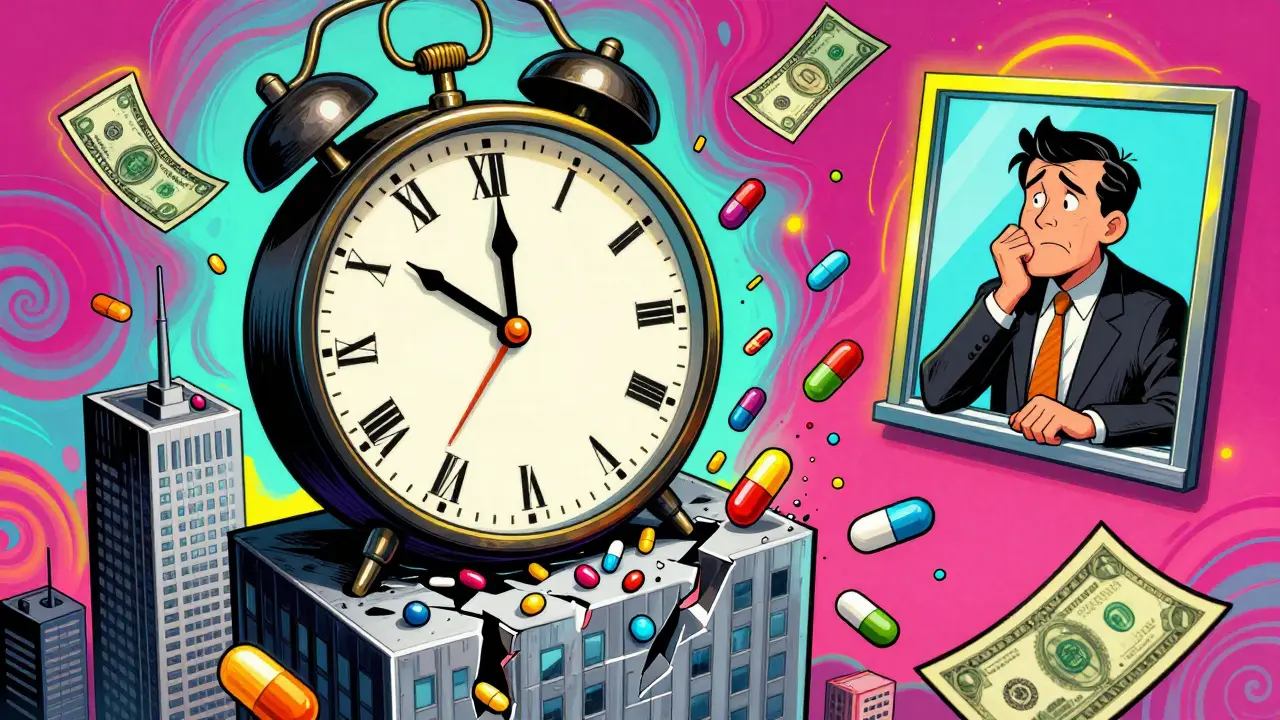
When a brand-name drug loses its patent, everything changes. The price doesn’t just drop-it collapses. A medication that cost $500 a month might suddenly be available for $20. That’s not magic. It’s the power of generic drugs. And for brand manufacturers, it’s a financial earthquake.
The Patent Cliff: When Revenue Vanishes Overnight
Every brand drug has a shelf life. Usually 10 to 12 years of patent protection. During that time, the company has a monopoly. No competition. High prices. That’s how they recoup billions spent on research, clinical trials, and marketing. But when the patent expires, the rules change. The moment generics enter the market, sales of the brand drug can drop by 80% to 90% in the first year. Take Humira, the top-selling drug in the U.S. for years. When its patent expired in 2023, its sales plummeted. Pfizer, which had been earning over $20 billion a year from it, saw revenue evaporate. That’s not an outlier. It’s the norm. This drop is called the “patent cliff.” It’s not a slow decline. It’s a freefall. Investors panic. Stock prices tumble. Companies that built their entire business model around one blockbuster drug suddenly have to scramble.Generics Are Cheap. Really Cheap.
Generic drugs aren’t cheaper because they’re low quality. They’re cheaper because they don’t need to repeat the $2 billion+ R&D costs. The FDA requires them to have the same active ingredient, strength, dosage form, and performance as the brand. That’s it. No need for new clinical trials. No need to re-prove safety. The result? Generics cost 80% to 85% less. The FDA estimates that generic drugs save consumers $8 billion to $10 billion every year just on medication costs. The Congressional Budget Office found that in 2014 alone, generics saved the U.S. healthcare system $253 billion. By 2025, that number is closer to $330 billion annually. And here’s the twist: generics make up 90% of all prescriptions filled in the U.S. But they account for only about 20% of total drug spending. That means 9 out of 10 pills you pick up are cheap. But the 1 out of 10 that are brand-name? They’re carrying the bulk of the cost.Competition Drives Prices Down-Fast
The more generic manufacturers enter the market, the lower the price goes. It’s simple economics. When the first generic hits, the price might drop to 30% of the brand’s price. After three competitors, it falls another 20%. By the time five or six companies are selling the same drug, the price can be as low as 5% to 10% of the original. The FDA tracked 2,400 new generic drugs approved between 2018 and 2020. Every single one saw steep price declines as more companies joined. The drop was steeper when measured by average manufacturer prices (AMP) than by wholesale invoices-but that’s because wholesalers and pharmacy benefit managers (PBMs) add their own layers of markup. That’s where things get messy. The system is designed to save money. But middlemen often pocket the difference.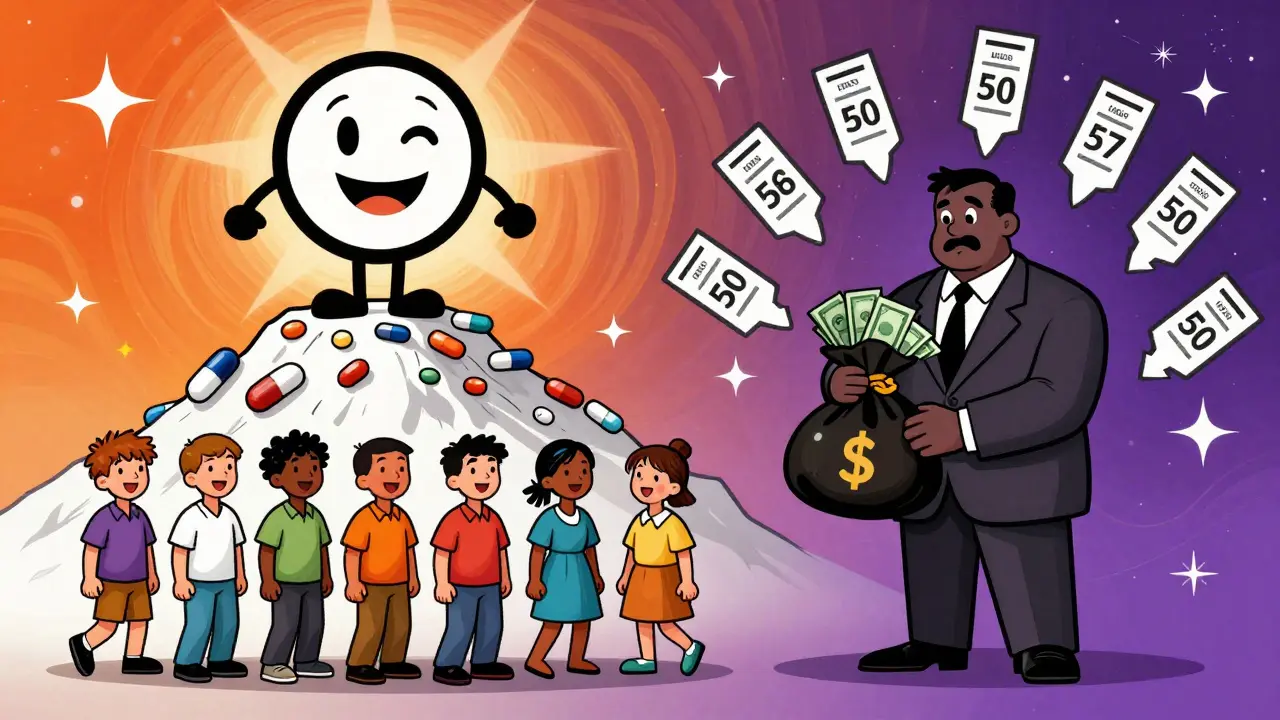
Pharmacy Benefit Managers: The Hidden Cost
PBMs are the middlemen between drug manufacturers, insurers, and pharmacies. They negotiate rebates, set formularies, and determine what you pay at the counter. On paper, generics should be cheap for you. But in practice, many patients pay more than they should. Why? Because PBMs use opaque pricing models. They may reimburse a pharmacy $15 for a generic pill, but charge your insurance $40. Then they keep the difference-or worse, charge you a copay based on the inflated price. The Schaeffer Center at USC found patients pay 13% to 20% more for generics than they should because of these practices. Pharmacists on Reddit complain daily about being paid less than the cost of the drug. Some are losing money on every generic prescription they fill. It’s a system meant to lower costs. But without transparency, it just moves money around-without saving patients anything.Brand Manufacturers Fight Back
No brand company wants to lose its revenue. So they’ve developed tactics to delay or dodge generic competition. One common trick is “pay for delay.” A brand manufacturer pays a generic company to hold off on launching its version. These deals are legal-so far. But they cost patients. A 2023 study by the Blue Cross Blue Shield Association found these settlements cost Americans nearly $12 billion a year, with $3 billion of that coming directly from patients’ pockets. Another tactic is “product hopping.” A company slightly changes its drug-switching from a pill to a capsule, or adding a new coating-and then files a new patent. Suddenly, the old version is off-patent, but the “new” one isn’t. Patients are pushed to the new version, even if it’s not better. The Congressional Budget Office estimates ending these practices would save $1.1 billion over 10 years. And banning “pay for delay” could save $45 billion over the same period.Authorized Generics: The Brand’s Own Copy
Some brand companies don’t wait to be disrupted. They become the disruptors. An “authorized generic” is a version of the brand drug, made by the same company, sold under a generic label. It hits the market the same day the patent expires. It’s cheaper than the brand-but not as cheap as a true generic from a competitor. This lets the brand manufacturer capture a slice of the generic market. It’s not a long-term strategy, but it softens the blow. Pfizer did this with its cholesterol drug Lipitor. Novartis spun off its generics division, Sandoz, as a separate company in 2022 to manage the two very different business models.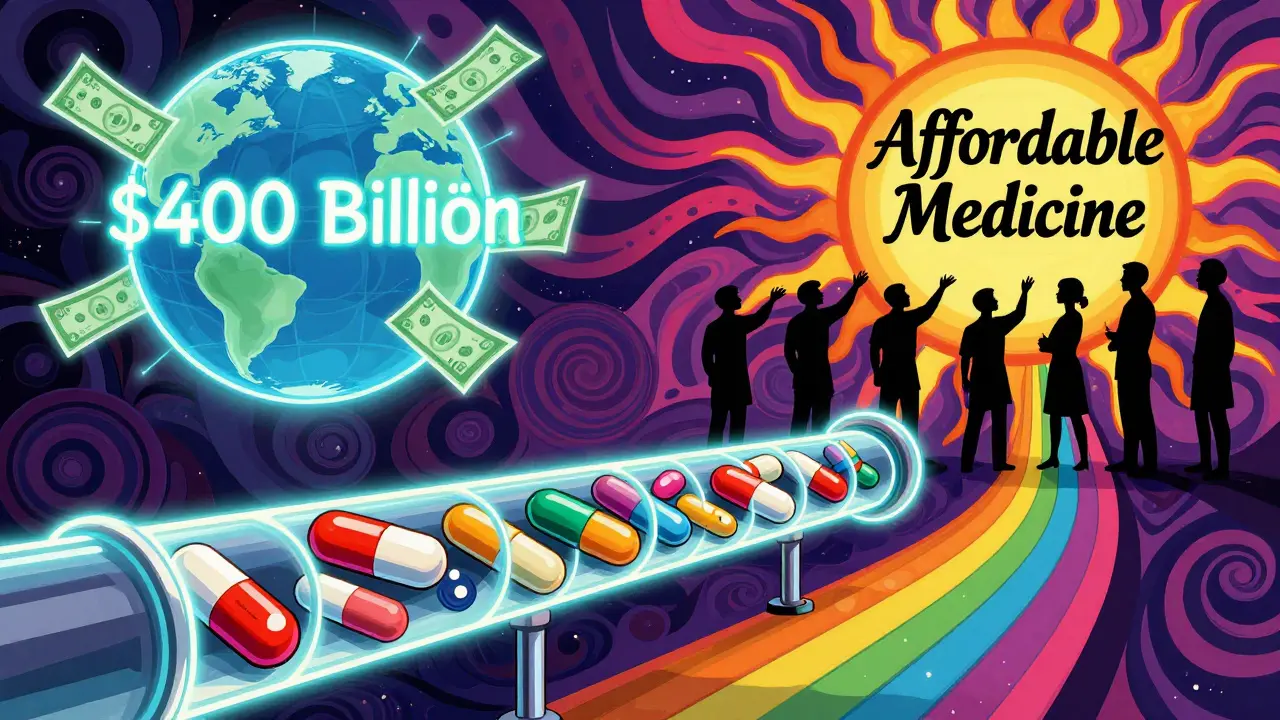

Juan Reibelo
January 24, 2026 AT 18:04Wow. Just... wow. This post broke my brain in the best way. I had no idea generics were 90% of prescriptions but only 20% of spending. That math is wild. And PBMs? I thought they were saving us money. Turns out they’re just taking a cut like a shady middleman at a flea market. 😑
Kevin Waters
January 25, 2026 AT 19:26Great breakdown. I work in pharmacy benefits and can confirm-PBMs are the real villains here. The system was designed to reduce costs, but the rebates and spread pricing? It’s a circus. Patients pay more because the formulary is rigged. We need transparency laws-stat. Seriously, this isn’t rocket science. Just fix the middleman problem.
Jamie Hooper
January 26, 2026 AT 21:31so like… brand drugs are basically the rich kid in school who gets all the attention until someone else shows up with the same lunch but cheaper?? and then everyone forgets the rich kid?? also why do we let companies pay others to NOT compete?? that’s not capitalism, that’s like… corporate blackmail?? 🤡
Husain Atther
January 27, 2026 AT 11:51It is fascinating to observe how economic principles manifest in pharmaceutical markets. The entry of generic manufacturers naturally reduces prices due to increased supply, yet structural inefficiencies introduced by intermediaries distort the intended outcome. A well-functioning market requires transparency, fair competition, and alignment of incentives with patient welfare. Without these, even the most effective policy tools fail to deliver their promise.
Izzy Hadala
January 27, 2026 AT 17:31According to the Congressional Budget Office’s 2023 analysis, the aggregate annual savings attributable to generic drug utilization in the United States exceed $330 billion. However, the distributional effects remain highly uneven due to asymmetric information and market power concentration among pharmacy benefit managers. I would recommend reviewing the FDA’s 2022 report on generic drug pricing transparency for further empirical validation.
Elizabeth Cannon
January 28, 2026 AT 06:40my mom pays $45 for her blood pressure med even though the generic costs $3 at the pharmacy. she’s on medicare. they charge her more because the pbm says so. this is criminal. someone needs to sue these companies. why are we letting them get away with this??
Phil Maxwell
January 29, 2026 AT 23:01just read this on my lunch break. kinda makes me feel bad for big pharma too. like… they spent 10 years and billions to make something that works. then poof, everyone copies it and they’re broke. but also… they’re still making billions. and the people who need the meds? they’re stuck paying too much. it’s a mess.
Tommy Sandri
January 31, 2026 AT 15:37In many developing economies, generic drugs serve as the primary access point to life-saving therapies. The U.S. system’s complexity obscures this global reality. While we debate PBM margins, millions rely on these affordable alternatives to survive. Perhaps the true metric of success isn’t corporate profit, but equitable access.
Josh McEvoy
January 31, 2026 AT 21:31so like… if i take a pill that’s literally the same as the expensive one… why am i still getting charged $40?? 🤡💸 #genericdrugs #pbmsarethefake
Heather McCubbin
February 1, 2026 AT 17:17the system is broken because we worship profit over people and no one wants to admit that the real crime isn't the patent cliff its the moral cliff we jumped off when we let corporations decide who lives and who dies based on their quarterly earnings