
Immunosuppressant Medication Interaction Checker
Your immune system's ability to fight infections depends on the medications you're taking. Combining multiple immunosuppressants dramatically increases your infection risk. Select the medications you're currently taking to see your personal risk level.
Select Your Medications
Check all medications you are currently taking
Your Infection Risk Assessment
When your immune system is weakened-whether from disease, transplant, or the drugs meant to help you-you don’t just get sick more often. You get sicker. And the way infections show up? They don’t look like the colds or flu most people recognize. Fever might be missing. Redness might be faint. Pain might be dull. This is the hidden danger for immunocompromised patients taking medications that suppress their immune system.
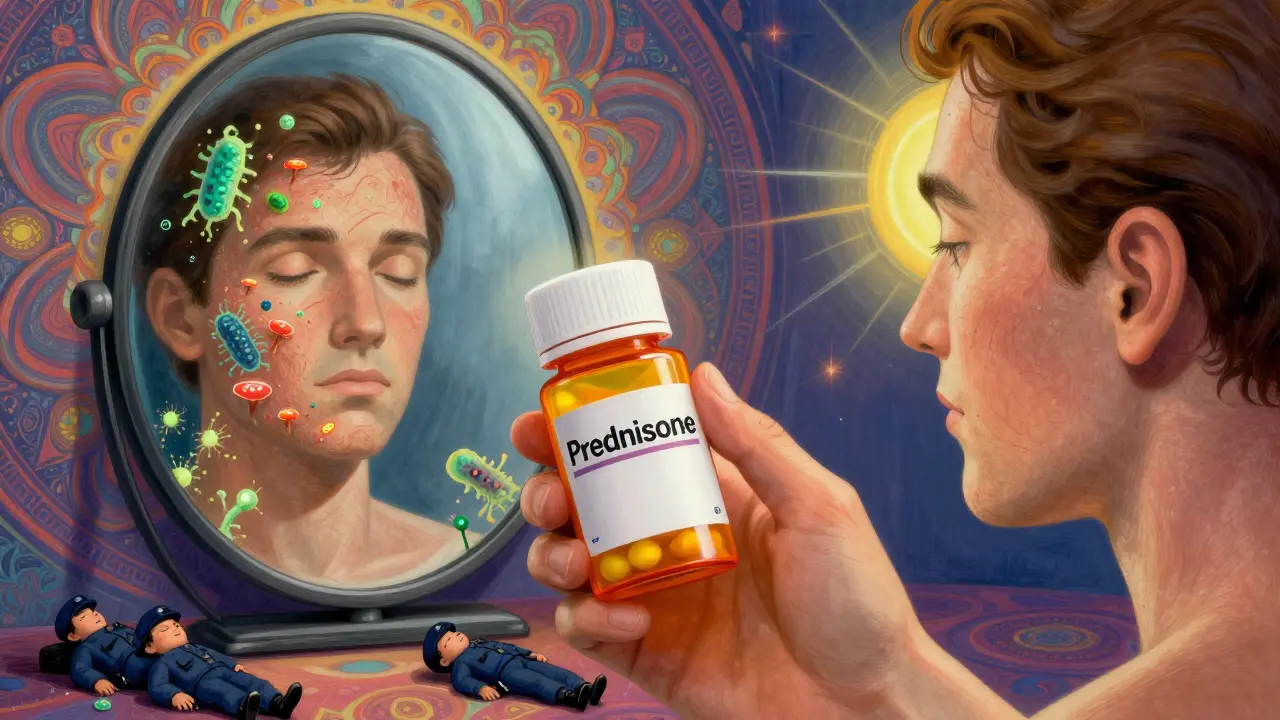
Think of your immune system like a security team. When it’s working right, it spots trouble early-germs, viruses, even strange cells-and shuts them down before they cause real damage. But when you’re on immunosuppressants, that team is half-asleep. They’re not just ignoring the bad guys-they’re not even noticing them. And that’s why a simple cut can turn into a hospital stay. A cough might be pneumonia. A headache could be a brain infection.
What Does It Mean to Be Immunocompromised?
Being immunocompromised isn’t a single condition. It’s a state. You could be living with rheumatoid arthritis, lupus, Crohn’s disease, or have had an organ transplant. You might be on chemotherapy. Or taking long-term steroids for asthma or a flare-up. All of these can reduce your body’s ability to fight off infection.
The Cleveland Clinic defines it simply: your immune system isn’t working as well as it should. That means you’re more likely to get infections, and when you do, they’re harder to treat. The risk isn’t the same for everyone. Someone on low-dose methotrexate for arthritis has a very different risk than someone on high-dose prednisone plus a biologic after a kidney transplant.
How Medications Silence Your Defenses
Not all immunosuppressants work the same way-and that changes the kind of danger you face.
Corticosteroids like prednisone, dexamethasone, and methylprednisolone are common. They’re cheap, fast-acting, and effective. But they’re also sneaky. At doses above 20mg a day (the prednisone equivalent), they start to seriously dampen your immune response. A 2012 meta-analysis of over 4,000 patients showed steroid users had a 12.7% chance of developing an infection-compared to 8% in people not on steroids. That’s a 60% higher risk. And here’s the twist: if you’re on steroids for less than two weeks, the risk is low. But if you’re on them for months? That’s when things get dangerous.
And because steroids mask fever and inflammation, doctors can miss infections. You might feel fine-no fever, no chills-while your body is quietly being taken over by bacteria or fungi. Dr. Francisco Aberra’s research back in 2005 warned about this: immunosuppressed patients don’t show the usual signs. That’s why a routine check-up with blood tests is non-negotiable.
Methotrexate is the most common DMARD for autoimmune diseases. About 70% of patients say it controls their disease well. But nearly half stop taking it within a year-not because it doesn’t work, but because of side effects: fatigue, nausea, mouth sores, hair thinning. It also hits the liver and bone marrow. That’s why monthly blood tests are standard: to catch drops in white blood cells before you get sick.
Azathioprine works by killing off certain immune cells. It’s effective for transplant patients and those with severe autoimmune conditions. But it comes with a dark side: it can trigger serious infections like Pneumocystis pneumonia, hepatitis B flare-ups, and even a rare brain infection called PML caused by the JC virus. Leukopenia-a drop in white blood cells-is its most dangerous side effect. If your counts dip too low, you’re at high risk.
Biologics like Humira, Enbrel, or Remicade are targeted. They block specific parts of the immune system-like TNF-alpha-that drive inflammation. But because they’re so precise, they leave holes elsewhere. Studies show biologics carry a higher infection risk than older DMARDs. People on these drugs report herpes zoster (shingles) outbreaks, tuberculosis reactivation, and fungal infections. One Reddit user in r/RheumatoidArthritis shared how she spent three weeks in the hospital after a minor skin infection turned into sepsis while on a TNF inhibitor.
Cyclosporine and tacrolimus are used after transplants. They prevent organ rejection but make you vulnerable to viruses like EBV (which can cause lymphoma) and polyomavirus (which can damage kidneys). These drugs don’t just weaken immunity-they change how it responds. A simple cold can become a lung infection. A urinary tract infection can spread to the bloodstream.
The Hidden Danger: When Drugs Combine
Most people don’t take just one immunosuppressant. It’s common to be on a combo: steroids + methotrexate + a biologic. And that’s where the real risk spikes.
The PMC article on infections in immunocompromised hosts says it plainly: combining drugs doesn’t just add risks-it multiplies them. A patient on prednisone and azathioprine doesn’t get a 20% infection risk. They might get 30%, 40%, even higher. The immune system doesn’t handle multiple hits well. It shuts down in layers.
Chemotherapy drugs like cyclophosphamide are even more brutal. They wipe out rapidly dividing cells-including immune cells. Patients on chemo for cancer often have white blood cell counts so low they’re at risk for infections from things most people brush off: a dog lick, a cut on the hand, even breathing in dust.
What Infections Should You Fear?
Not all infections are the same. Some are common. Some are rare. But all are dangerous if your immune system is down.
- Bacterial infections: Staph, strep, pneumonia. These are the most frequent. Often start as skin infections or sinusitis.
- Viral infections: Herpes zoster (shingles) is the #1 infection linked to biologics. Hepatitis B can flare up silently. CMV (cytomegalovirus) can cause blindness or colitis.
- Fungal infections: Candida (thrush), Aspergillus (lung infection), and Pneumocystis jirovecii pneumonia (PCP). PCP used to be an AIDS-defining illness. Now, it’s a risk for transplant patients on long-term steroids.
- Opportunistic infections: Nocardia (lung and brain), Listeria (from deli meats), and even tuberculosis. These don’t normally harm healthy people-but they can kill someone on immunosuppressants.
- Vector-borne diseases: The CDC warns that ticks and mosquitoes pose a bigger threat. Lyme disease, West Nile virus, dengue-these can become severe or even fatal if your immune system can’t respond.
What About COVID-19? New Evidence Changes Everything
At the start of the pandemic, everyone assumed immunocompromised people would die at higher rates. The fear was real. But a 2021 study from Johns Hopkins surprised doctors: outcomes for immunocompromised patients on biologics or steroids were surprisingly similar to those without immune suppression.
Why? Researchers think it’s because the immune overreaction-cytokine storms-wasn’t happening as much. In healthy people, the body’s violent response to the virus often causes more damage than the virus itself. In immunocompromised patients, that storm doesn’t happen. So they don’t crash as hard.
That doesn’t mean they’re safe. It means the risk profile changed. Vaccines still matter. Boosters still matter. But blanket fear isn’t accurate anymore.

How to Stay Safe: Practical Steps
There’s no magic shield. But there are clear, doable steps that cut risk dramatically.
- Wash your hands like your life depends on it. At least 20 seconds. Pay attention to nails, between fingers, under rings. Use alcohol-based sanitizer if soap isn’t available.
- Wear a mask in crowded places. Hospitals, public transport, grocery stores during flu season. It’s not about paranoia-it’s about physics. Masks block droplets.
- Get vaccinated-before you start immunosuppressants. Pneumococcal, flu, Hepatitis B, HPV, shingles (if eligible). Live vaccines (like MMR or nasal flu) are off-limits once you’re on these drugs.
- Avoid high-risk foods. No raw eggs, undercooked meat, unpasteurized cheese, or deli meats. Listeria doesn’t care how healthy you feel.
- Check your skin daily. A red spot, a blister, a cut that won’t heal-don’t wait. Call your doctor the same day.
- Know your blood work. If you’re on methotrexate, you should have a CBC and liver test every month. If you’re on azathioprine, watch for low white counts. Ask for your numbers. Don’t assume your doctor will bring it up.
- Don’t ignore "minor" symptoms. A low-grade fever. A persistent cough. Unexplained fatigue. These aren’t "just tiredness." They could be your body’s last signal before things spiral.
It’s Not All Bad News
Yes, the risks are real. But so are the benefits.
One Reddit user in r/Transplant wrote: "Tacrolimus saved my life. I was dying from kidney failure. Now I hike, play with my kids, go to work. Yes, I’m scared of infection. But I’m alive. And that’s worth the vigilance."
Many patients with autoimmune disease go from being bedridden to living normally. Methotrexate lets someone with RA hold a cup of coffee. Biologics let someone with Crohn’s eat without pain. Steroids let someone with lupus walk again.
The goal isn’t to stop treatment. It’s to manage it wisely. To know the signs. To test regularly. To speak up when something feels off.
What Comes Next?
The future of immunosuppression is moving toward precision. Researchers are testing drugs that target only the overactive parts of the immune system-leaving the rest alone. JAK inhibitors like tofacitinib are one step in that direction. Blood tests that predict infection risk before it happens are being developed. Pharmacogenomics might one day tell you: "This drug will work for you, but it’s too risky. Try this one instead."
For now, the message is simple: know your risks, track your health, and never downplay a symptom. The immune system doesn’t shout when it’s failing. It whispers. And if you’re immunocompromised, you have to listen.
Can immunosuppressants cause infections even if I feel fine?
Yes. Many immunosuppressants, especially corticosteroids, mask the signs of infection like fever, swelling, or pain. You might feel perfectly normal while your body is fighting a serious infection. That’s why regular blood tests and checking for subtle changes-like a new cough, unexplained fatigue, or a small skin sore-are critical. Don’t wait for symptoms to get bad.
Are all vaccines safe for immunocompromised patients?
No. Live vaccines-like MMR, varicella (chickenpox), and the nasal flu vaccine-are dangerous and should be avoided once you’re on immunosuppressants. Inactivated vaccines (flu shot, pneumonia shot, Hepatitis B, COVID-19 shots) are safe and recommended. The best time to get vaccinated is before starting immunosuppressive therapy. Even then, effectiveness may be reduced, so boosters are important.
How often should I get blood tests while on immunosuppressants?
It depends on the drug. For methotrexate, monthly CBC (complete blood count) and liver function tests are standard during the first year. For azathioprine, blood counts should be checked every 2-4 weeks initially, then every 3 months. Cyclosporine and tacrolimus require regular kidney and liver tests, plus drug level checks. Always follow your specialist’s protocol-don’t skip tests because you feel fine.
Can I still go to restaurants or travel while immunocompromised?
Yes, but with caution. Avoid raw or undercooked foods. Stick to bottled water when traveling. Use hand sanitizer often. Wear a mask in airports or crowded terminals. Avoid areas with known outbreaks (like dengue or malaria zones). Talk to your doctor before international travel. Some destinations require extra vaccines or medications that aren’t safe with your current treatment.
Why do some people on immunosuppressants get sick more than others?
It’s not just the drug-it’s the dose, the combination, your age, other health conditions, and how long you’ve been on treatment. Someone on low-dose prednisone for asthma might rarely get sick. Someone on high-dose steroids plus a biologic after a transplant is at much higher risk. Genetics, nutrition, and even where you live (urban vs. rural, climate, exposure to animals) play a role too. Risk is personal. There’s no one-size-fits-all answer.
What should I do if I think I have an infection?
Call your doctor immediately. Don’t wait for a fever. Don’t try to tough it out. Even a mild symptom-like a new rash, a sore throat, or feeling unusually tired-could be the first sign of something serious. If you can’t reach your specialist, go to urgent care or the ER. In immunocompromised patients, infections can turn life-threatening in hours. Speed matters.


Scott Easterling
March 7, 2026 AT 13:38Mantooth Lehto
March 8, 2026 AT 08:25Melba Miller
March 10, 2026 AT 03:32Katy Shamitz
March 12, 2026 AT 02:04Nicholas Gama
March 13, 2026 AT 10:21Mary Beth Brook
March 14, 2026 AT 12:51Neeti Rustagi
March 16, 2026 AT 04:46Dan Mayer
March 17, 2026 AT 08:01Janelle Pearl
March 17, 2026 AT 17:47