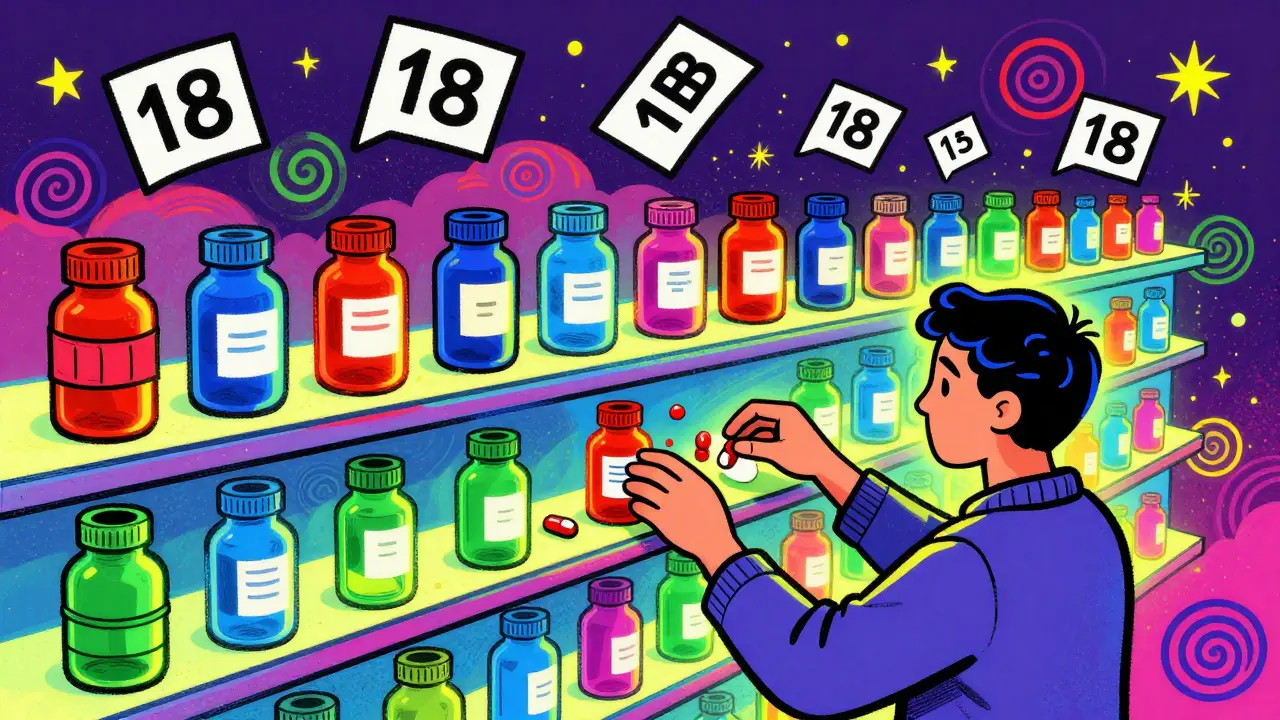
Imagine opening your medicine cabinet and not being able to tell which pill is which. All the bottles look the same-white, oval, no markings you can read. You take one, hoping it’s the blood pressure pill, not the sleeping pill. That’s not a hypothetical. It’s a daily reality for over 1.8 million people in the UK with low vision, and millions more with hearing loss who can’t hear pharmacy instructions or alarm reminders.
Why Medication Safety Is a Silent Crisis
Most people assume pharmacies label pills clearly. They don’t. Standard prescription labels use 7- to 10-point font. That’s unreadable for someone with low vision. Colors and shapes that seem obvious to sighted people? To someone with impaired vision, a white oval and a light blue oval are identical. A 2019 study found that 73% of visually impaired adults couldn’t confirm they’d taken the right pill. Nearly 60% had accidentally taken expired medication. And 68% never told their doctor or pharmacist-because they thought no one could help. For people with hearing loss, the problem is different but just as dangerous. Pharmacists give verbal instructions in noisy stores. Hearing aids can’t filter out background noise. Medication alarms? They beep. If you can’t hear them, you miss doses-or take double. A Guide Dogs UK survey showed 58% of visually impaired users couldn’t tell their medicine containers apart. And 67% couldn’t read refill instructions on their own. This isn’t about convenience. It’s about survival. People with low vision are 1.67 times more likely to have a medication error than those with full sight. These errors lead to hospital visits, organ damage, even death. And the system isn’t built to stop them.What Makes Medications Hard to Use?
The challenges fall into three clear categories: reading, identifying, and timing. Reading labels is impossible with standard print. Fonts are too small. Backgrounds are too shiny. Colors blend together. Even if you have magnifiers, most labels aren’t designed for them-text wraps awkwardly, and spacing is cramped. Identifying pills relies on color, shape, and markings. But generics change colors all the time. A pill that was blue last month is now white. Without labels, you’re guessing. A 2022 Reddit post from a user named u/PharmaPatient said it plainly: “I almost took my blood pressure meds at bedtime because the new generic looked exactly like my sleeping pill.” Timing doses is harder still. Liquid medicines need measuring cups. Eye drops require steady hands and clear sight. A Malaysian study found only 39% of visually impaired people could reliably use eye or ear drops. For those with hearing loss, missing a reminder beep means skipping a dose-or taking two at once.What Works: Low-Tech Solutions That Save Lives
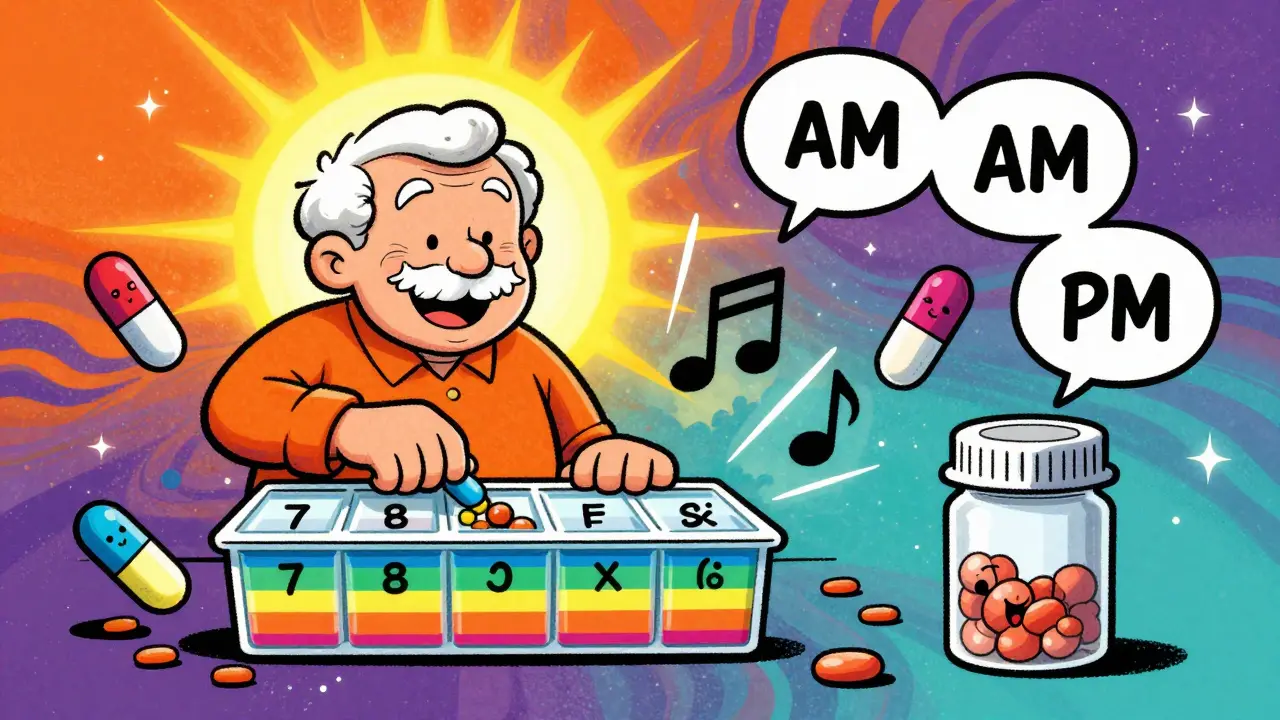
You don’t need fancy gadgets. Simple, cheap fixes work-when they’re done right.- Color-coding by time of day: Use bright, distinct colors. Red for morning, blue for night, green for afternoon. Wrap a rubber band around the bottle. Or stick on colored stickers. One pharmacist survey found this method works 78% of the time.
- Label with a marker: Use a thick black permanent marker to write “AM” or “PM” directly on the bottle. Takes 30 seconds. Costs nothing.
- Use a pill box: Buy a simple 7-day box with compartments for morning, afternoon, evening, and night. Fill it once a week. It removes guesswork. Works best for 2-3 daily doses.
- Ask for large-print labels: The American Foundation for the Blind recommends 18-point font minimum, high contrast (black on white), no glare. Most pharmacies can print this. Ask. If they say no, ask again. This is your right.
High-Tech Tools: When Gadgets Make a Difference
If you’re comfortable with technology, these tools offer more independence.- Talking pill dispensers: Devices like Talking Rx or Hero Health say your medication name, dose, and time out loud. Hero Health also connects to your phone and sends alerts. One study showed 92% improvement in adherence.
- Smart pill boxes: PillDrill and MedMinder beep, flash lights, and send text alerts to caregivers if a dose is missed. They cost $30-$200. Some NHS programs or charities offer them for free or discounted.
- Screen reader apps: Apps like Seeing AI (free from Microsoft) can scan a pill bottle and read the label aloud. Works with most standard labels if the text is clear enough.
What Doesn’t Work-and Why
Not all “solutions” are helpful. Some create more confusion.- Braille labels: Only 15% of adults who lose vision later in life read braille. Putting braille on a bottle doesn’t help if you can’t read it.
- Color-coding without consistency: If your pharmacist uses red for morning, but your neighbor uses red for painkillers, you’ll mix them up. Always confirm what each color means with your pharmacist.
- Relying on family: Asking your daughter to sort your pills every week isn’t sustainable. It creates dependence. And what if she’s away? What if she’s tired? What if she makes a mistake?
How to Talk to Your Pharmacist
Pharmacists want to help. But most aren’t trained in accessibility. Here’s what to say:- “I have low vision. Can you print my labels in 18-point font, black on white?”
- “I can’t hear well. Can you write down my instructions or use a tablet to show me?”
- “I use a talking pill dispenser. Can you make sure the label matches what the device says?”
- “I need my pills in a 7-day box. Can you fill it for me?”
What’s Changing-and What’s Not
Progress is slow. In 2022, only 32% of U.S. pharmacies offered any accessibility accommodations. In the UK, just 12% followed the full AFB labeling standards. The MHRA (UK medicines regulator) says it’s reviewing packaging rules. The FDA has draft guidance but no mandates. The AFB plans to launch a pharmacy certification program in 2024. RNIB is designing a standard labeling system for rollout in 2025. But until laws require it, change will be patchy. Don’t wait for the system to fix itself. Advocate for yourself now.
Your Action Plan: 5 Steps to Safer Medications
1. Write down your meds: List every pill, liquid, cream, and patch. Include name, dose, time, and purpose. Keep a copy in your wallet and on your phone. 2. Ask for large-print labels: Call or visit your pharmacy. Demand 18-point font, high contrast, no glare. If they refuse, ask for a supervisor. 3. Use color-coding: Assign one color per time of day. Use stickers or rubber bands. Confirm the system with your pharmacist. 4. Get a pill organizer: Buy a simple 7-day box. Fill it weekly. If you take complex doses, consider a smart box with alerts. 5. Teach one person: Give a trusted friend or family member your med list and instructions. Ask them to check in once a week. Not to do it for you-but to make sure you’re okay. You don’t need to fix everything at once. Start with one step. Do it today.What to Do If You’ve Already Made a Mistake
If you took the wrong pill-don’t panic. Don’t hide it. Call your pharmacist or GP immediately. Say: “I think I took the wrong medication. Here’s what happened.” They’ve seen this before. They know what to do. Hiding it puts you at greater risk. Also, report the error. Tell your pharmacy. Tell RNIB or the AFB. Your story helps push for change.Final Thought: You Deserve to Take Your Medicine Safely
Medication safety isn’t a luxury. It’s a basic right. Whether you can’t see the label or can’t hear the alarm, you shouldn’t have to rely on luck, family, or guesswork to stay healthy. The tools exist. The guidelines are clear. The problem isn’t your vision or hearing. It’s that the system forgot you were in it. Start small. Speak up. Demand better. Your life depends on it.Can I get free large-print labels from my pharmacy?
Yes. Under the Equality Act 2010 in the UK and the ADA in the US, pharmacies must provide reasonable accommodations for disabilities. This includes printing labels in large print (minimum 18-point font, high contrast). You don’t need a doctor’s note. Just ask. If they refuse, ask for the manager or contact RNIB for support.
Are talking pill dispensers covered by the NHS?
The NHS doesn’t routinely fund talking pill dispensers, but some local health trusts or charities may provide them for free if you qualify. Contact RNIB or your local social services to ask about assistive technology grants. Some models like PillDrill also offer payment plans or discounts for low-income users.
What if my pills change color or shape?
Generic medications often look different each time you refill them. Always check the name on the label, not the pill’s appearance. If you’re unsure, call your pharmacist before taking it. Keep a photo of each pill on your phone with its name and purpose. This helps you spot changes quickly.
How can I tell if a pill is expired?
Check the expiration date on the label. If you can’t read it, ask your pharmacist to write it in large print on the bottle or on a separate card. Never guess. Expired pills can lose potency or become unsafe. If you’re unsure, take the bottle to the pharmacy-they’ll dispose of it safely and replace it if needed.
Can I use my smartphone to identify pills?
Yes. Apps like Seeing AI (free from Microsoft) or Google Lookout can scan pill bottles and read the label aloud. Some apps can even identify pills by taking a photo of the tablet itself. These work best with clear, flat lighting and when the pill has a printed imprint. They’re not perfect, but they’re better than guessing.
Why don’t all pharmacies offer these services?
Most pharmacies are under pressure to process prescriptions quickly. They’re paid a fixed fee per prescription-no extra money for extra time. Many staff simply haven’t been trained in accessibility. But that’s changing. As more people speak up, pharmacies are starting to adopt better practices. Your asking for help pushes them to improve.

Hanna Spittel
January 2, 2026 AT 08:04Brady K.
January 4, 2026 AT 01:40Kayla Kliphardt
January 4, 2026 AT 16:06John Chapman
January 5, 2026 AT 22:24Urvi Patel
January 6, 2026 AT 05:41anggit marga
January 6, 2026 AT 14:06Robb Rice
January 8, 2026 AT 04:58Bennett Ryynanen
January 10, 2026 AT 00:58Chandreson Chandreas
January 10, 2026 AT 05:50Darren Pearson
January 12, 2026 AT 00:40Jenny Salmingo
January 13, 2026 AT 15:40Frank SSS
January 15, 2026 AT 13:13Paul Huppert
January 15, 2026 AT 16:42Joy Nickles
January 17, 2026 AT 10:08Emma Hooper
January 18, 2026 AT 23:51