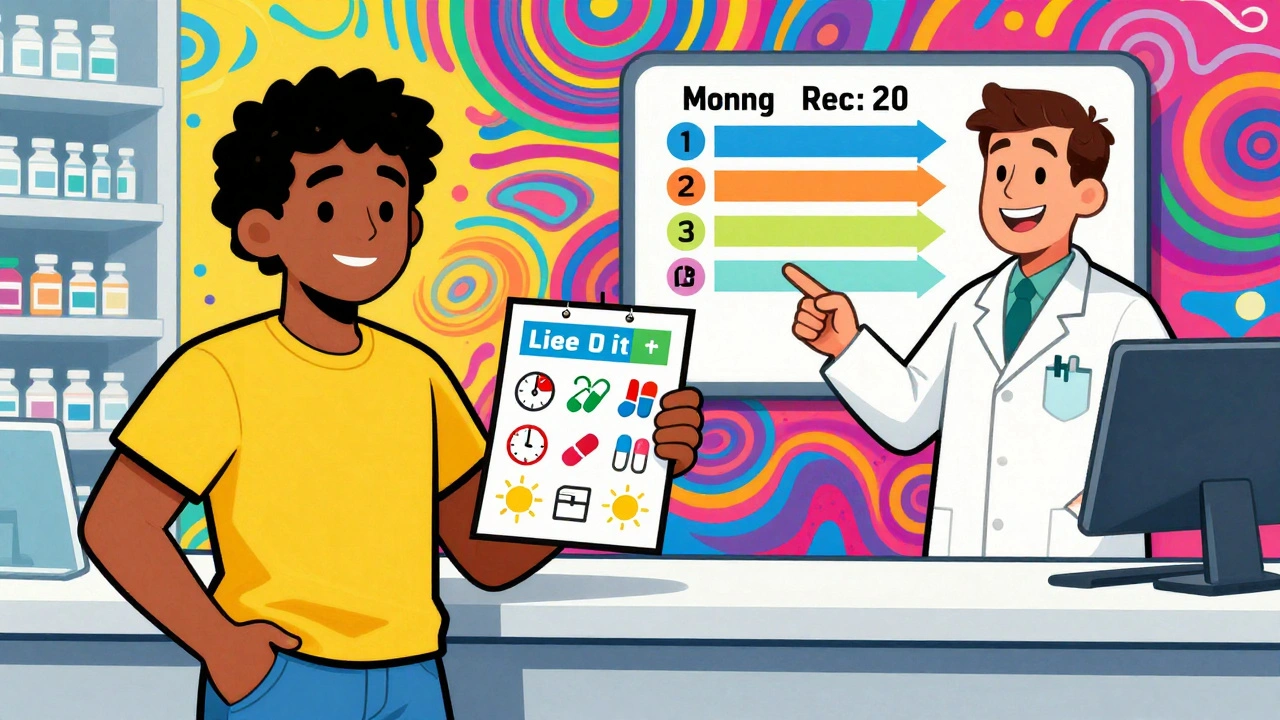
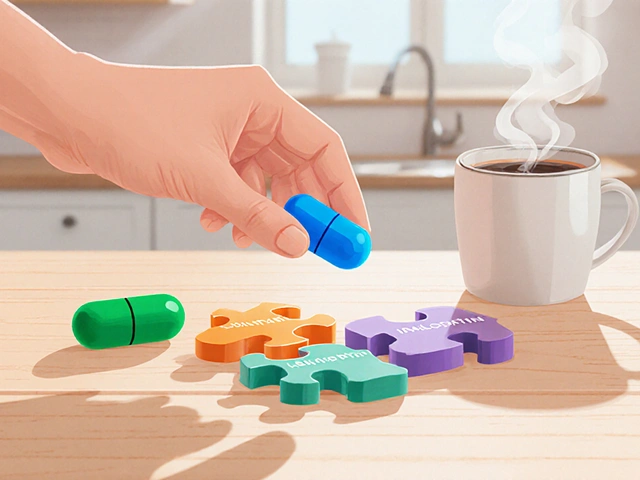
Getting a new prescription shouldn’t feel like solving a puzzle in a foreign language. Yet too many people leave the pharmacy with a small paper slip full of medical jargon they can’t read, let alone follow. You might see terms like bid, qhs, or PO-and wonder if you’re supposed to take it before bed, after food, or with a glass of water. If you’ve ever stared at your pill bottle and felt confused, you’re not alone. And here’s the truth: you have the right to understand your own medication instructions.
You Don’t Have to Guess What Your Medication Does
Pharmacies in the U.S. aren’t legally required to give you clear, written instructions in plain language. That’s not a typo. There’s no federal law forcing them to print simple, easy-to-read directions with every prescription. But that doesn’t mean you’re out of options. You have rights-and they’re backed by ethics codes, state laws, and patient bills of rights from hospitals and pharmacies across the country. The American Medical Association says you have the right to ask questions and get answers you can understand. Tennessee Oncology, AmerisourceBergen, and Vivo Health Pharmacy all list it clearly: you’re entitled to information in a way that makes sense to you. That means no more cryptic abbreviations. No more 2-page brochures full of terms like “adverse reactions” or “hepatic metabolism.” You deserve a one-page summary that says exactly what to do, when, and why.Why This Matters More Than You Think
Poorly written instructions aren’t just annoying-they’re dangerous. A 2022 report from the Institute for Safe Medication Practices found that 63% of medication errors happen because patients didn’t understand what they were supposed to do. That’s more than half of all mistakes tied to confusion, not forgetfulness or bad habits. Think about it: if you’re told to take “one tablet by mouth twice daily,” but you don’t know what “by mouth” means-or if you’re told to take it “every 12 hours” but your clock is off by an hour-you’re at risk. People end up in the hospital because they took too much, too little, or at the wrong time. The cost? Over $528 billion a year in the U.S. alone, according to JAMA Internal Medicine. And 30% of that is directly linked to people not understanding their meds. This isn’t about being “bad at reading.” It’s about systems designed for professionals, not patients. The average U.S. prescription label is written at a 10th-grade reading level. But most Americans read at a 7th- to 8th-grade level. That gap isn’t accidental. It’s a design flaw-and you’re the one paying for it.What Clear Instructions Look Like
Good instructions aren’t fancy. They’re simple. They use words you already know. Here’s what to ask for:- A one-page sheet, not a booklet
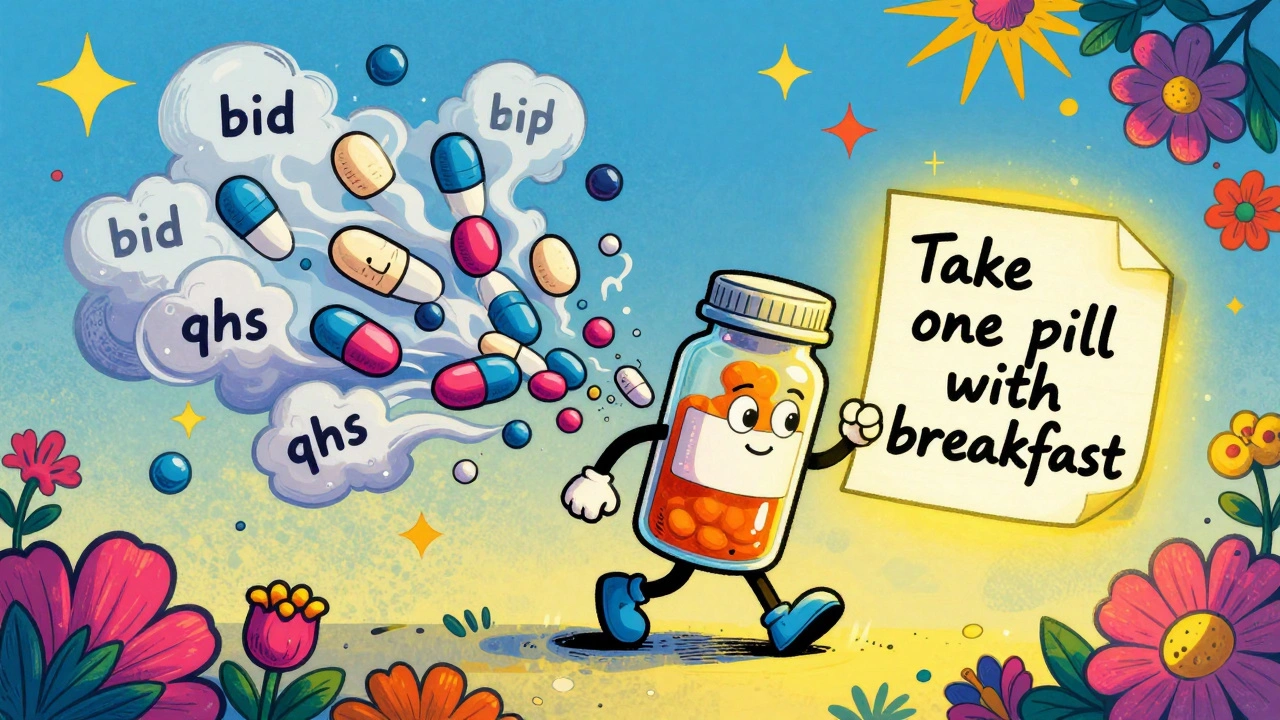
- Plain English: “Take one pill every morning with breakfast” instead of “Take one tablet PO daily with food”
- Visuals: pictures of pills, clocks showing times, or a weekly chart
- No Latin abbreviations: no “bid,” “tid,” or “q4h”
- Clear warnings: “Don’t drink alcohol,” “May cause drowsiness,” “Avoid sunlight”
- What to do if you miss a dose
How to Ask for It (Without Being Pushy)
Asking for better instructions can feel awkward. You might worry you’ll sound demanding. But here’s the secret: when you use the right words, pharmacists don’t see you as a hassle-they see you as someone who’s informed. And they’re more likely to help. Use this five-step approach:- Ask for the pharmacist, not the technician. Technicians often can’t change the printed label. Pharmacists can. At chain pharmacies, 73% of policies require technicians to hand off these requests to a pharmacist.
- Use exact language from your rights. Say: “I’m exercising my right under the AmerisourceBergen Patient Rights document to receive education in a language I understand.” Or: “I have the right to receive information in a manner that is easily understood, as stated in the Tennessee Oncology Patient Bill of Rights.” This isn’t just polite-it’s powerful. Studies show patients who cite specific rights are 3.7 times more likely to get what they need.
- Ask for a visual schedule. “Can you make me a simple chart with pictures of my pills and times I need to take them?” Research shows visual aids improve adherence by 42% for people on multiple medications.
- Ask for a read-back. “Can I repeat the instructions back to you to make sure I got it right?” Johns Hopkins found this cuts errors by 63%. Pharmacists love this. It shows you’re engaged and helps them catch misunderstandings before you leave.
- Say you’re documenting it. “I’m writing this down for my medical records.” A 2023 survey found pharmacies are 58% more likely to give you a written copy if you say you’re keeping it for your files.
What If They Say No?
Sometimes, you’ll get pushback. Maybe they say, “This is what we always give.” Or, “We don’t have time.” Here’s what to do next:- Ask if they can print a custom sheet from their computer system. Many pharmacies have templates they just don’t use unless asked.
- Request a phone call from the pharmacist later that day. Most will call you if you ask.
- Use your phone to record the conversation (check your state’s laws first-some allow it with one-party consent).
- If you’re still not getting help, ask for the pharmacy manager. They’re more likely to know the rules.
- For Medicare patients: remind them that CMS now requires “culturally and linguistically appropriate” medication info. That includes clear instructions.
Special Cases: Language, Memory, and Disability
If English isn’t your first language, you have a federal right under Title VI of the Civil Rights Act to get medication instructions in your language. Say: “I need medication instructions in Spanish, Mandarin, or [your language] per federal law.” 92% of pharmacies will provide this when asked. If you have memory issues, dementia, or a learning disability, ask for:- A pill organizer with your name and times printed on it
- A caregiver copy of the instructions
- A phone reminder service-some pharmacies offer free weekly calls
What’s Changing-and When
The system is slowly getting better. In 2024, the FDA released draft guidance saying all prescription labels should include plain language and standardized icons. Walgreens is rolling out QR codes linking to video instructions in 20 languages by the end of 2024. CVS is expanding its pictogram-based system to more stores. Congress is also moving. H.R. 1173, the Patients’ Right to Know Their Medication Act, has 147 bipartisan co-sponsors. If it passes, every prescription in the U.S. will come with a one-page, FDA-approved, easy-to-read guide. It’s not law yet-but it’s coming.What You Can Do Today
You don’t have to wait for Congress or the FDA to fix this. You have power right now:- Next time you pick up a new prescription, ask for a plain-language sheet.
- Write down your questions before you go: “When do I take this?” “What if I feel sick?” “Can I drink coffee?”
- Bring a friend or family member to help you ask.
- Take a photo of the instructions you get. Compare them to what your doctor told you.
- Share your experience. If you got good help, tell others. If you didn’t, leave feedback on the pharmacy’s website or social media.
Frequently Asked Questions
Can I ask for my medication instructions in a different language?
Yes. Under Title VI of the Civil Rights Act of 1964, pharmacies that receive federal funding must provide language assistance services at no cost. Just say: “I need my medication instructions in [your language] per federal law.” Most pharmacies will provide a translated sheet or arrange for a translator.
What if my pharmacy says they don’t have time to help me?
Pharmacists are trained to counsel patients, and they’re paid to do it. If they say they’re too busy, ask to speak with the manager. You can also ask if they can call you later with the instructions. Many pharmacies have systems to send text or email summaries. If they refuse, file a complaint with your state’s pharmacy board-they’re required to respond.
Are there apps or tools that can help me understand my meds?
Yes. Apps like Medisafe, MyTherapy, and MyMedications let you input your prescriptions and get daily reminders in plain language. Some pharmacies also offer digital tools-like Walgreens’ video instructions via QR code. You can also ask your pharmacist if they use a system like Meds 2.0, which generates personalized, easy-to-read guides.
Can I get written instructions for my refills too?
Absolutely. You’re not just entitled to instructions for new prescriptions-you have the right to clear information every time you refill. If you’ve been taking a medication for years and still don’t understand it, ask again. Your needs may have changed, or your pharmacist may have new tools available.
What if I can’t read at all?
You still have rights. Ask for a visual schedule with pictures of pills and times. Many pharmacies now use color-coded icons: red for morning, blue for night, green for with food. You can also ask for a phone call, video instruction, or in-person demo. Pharmacists are trained to teach patients with low literacy-they just need you to ask.


Elizabeth Grace
December 2, 2025 AT 03:57Ugh I just got back from the pharmacy and they handed me a tiny slip with 'q6h' and 'PO' like I'm supposed to know Latin. I asked for plain English and they acted like I was asking for a unicorn. This post? Lifesaver.
मनोज कुमार
December 2, 2025 AT 08:15Why are we even debating this. Pharma uses jargon to keep patients confused. It's business model. You think they want you to understand? They want you to take it. Period.
Steve World Shopping
December 2, 2025 AT 16:08Let's be real. If you can't parse 'bid' or 'tid' you shouldn't be managing your own meds. That's not a system failure-that's a cognitive failure. Maybe get a caregiver or a pill dispenser with alarms. Stop blaming the pharmacy.
Joel Deang
December 2, 2025 AT 18:35omg yes!! i asked for pics of my pills last week and the pharmacist was like 'we dont do that' and i was like 😑 but then i asked for the manager and they printed me a whole chart with smiley faces for when to take it. i cried. not even kidding. 🥹
Ella van Rij
December 3, 2025 AT 03:51Oh please. The average American can't even read a microwave manual. You want a 6th-grade label? Next you'll be asking for emojis on your insulin syringes.
ATUL BHARDWAJ
December 3, 2025 AT 08:39Simple solution. Ask. Most pharmacists want to help. But they wait for you to speak up. I asked for a chart. Got it. Done.
Lynn Steiner
December 3, 2025 AT 10:11They don't care. They're paid by the pill, not by the person. I asked for clear instructions in Spanish and they gave me a pamphlet in English with a Google Translate sticker on it. This system is broken. And it's killing people.
Alicia Marks
December 5, 2025 AT 02:19You got this. Just walk in and say 'I need this in words I understand.' No apology needed. You're not being difficult-you're being smart.
Paul Keller
December 5, 2025 AT 21:11Let's not romanticize this. The issue isn't just language-it's systemic deprofessionalization. Pharmacists are overworked, underpaid, and treated as glorified cashiers. The onus shouldn't be on the patient to navigate bureaucratic negligence. We need structural reform, not just polite requests. The fact that you have to cite federal statutes just to get basic care is a national disgrace.
Shannara Jenkins
December 7, 2025 AT 13:27I started asking for visual charts for my mom with dementia. The pharmacy printed one with big clocks and color-coded pills. She hasn't missed a dose since. It’s not magic-it’s just human. Ask for it. They’ll do it.
Jay Everett
December 7, 2025 AT 18:46Imagine if your car manual was written in hieroglyphics and the dealership said 'just figure it out.' That's what this is. We treat people like they're supposed to decode medical Latin like it's some kind of riddle. It's not. It's basic dignity. And honestly? If your meds come with a QR code that links to a video of a pharmacist saying 'take one after breakfast' in plain English... that's the future. And it's beautiful. 🙌
dave nevogt
December 8, 2025 AT 06:18There's a deeper layer here. It's not just about literacy-it's about power. The medical system was designed to make patients dependent, not empowered. When you ask for plain language, you're not just asking for clarity-you're challenging a hierarchy that profits from confusion. And that's why so many resist it. It's not about time or training. It's about control. And the fact that you're even reading this means you're already breaking the cycle.
Steve Enck
December 10, 2025 AT 00:38While the moral imperative to provide comprehensible medication instructions is undeniable, one must also acknowledge the structural disincentives embedded within the current healthcare reimbursement paradigm. The fee-for-service model does not remunerate pharmacists for extended patient counseling, thereby creating a latent conflict between ethical obligation and economic viability. Moreover, the absence of federally mandated plain-language labeling standards constitutes not merely a regulatory gap, but a systemic failure of bioethical governance. The cited legislative proposals, while laudable, remain insufficient without concurrent investment in pharmacist training, multilingual infrastructure, and standardized iconography. Until these elements are codified, the burden of epistemic justice will continue to fall disproportionately upon the patient-a moral hazard of the highest order.