Prescription Label Safety Quiz
Most patients miss critical information on their drug labels. Test if you can spot the dangers before they happen.
You open the bottle, pop a pill, and hope for the best. But have you actually read what’s on that label? Most people glance at the dosage instructions and ignore everything else. That is a mistake. The Prescription Drug Label is not just paperwork; it is a legal document mandated by the U.S. Food and Drug Administration (FDA). It contains critical data about risks that could save your life or land you in the emergency room.
Think of the safety section as a roadmap of potential hazards. If you skip it, you are driving blind. Medication errors cause roughly 350,000 hospital admissions every year in the United States alone. Many of these happen because patients misunderstood a warning or missed an interaction. You don’t need a medical degree to decode this information. You just need to know where to look and what the specific terms mean. This guide breaks down the complex language of drug labels into plain English so you can take charge of your health.
The Anatomy of a Modern Drug Label
Before you can interpret the warnings, you need to understand the structure. Since the Physician Labeling Rule of 2006, the FDA has standardized how prescription information is presented. While doctors see a detailed "Full Prescribing Information" document, patients usually interact with the pharmacy-applied label and the manufacturer’s package insert.
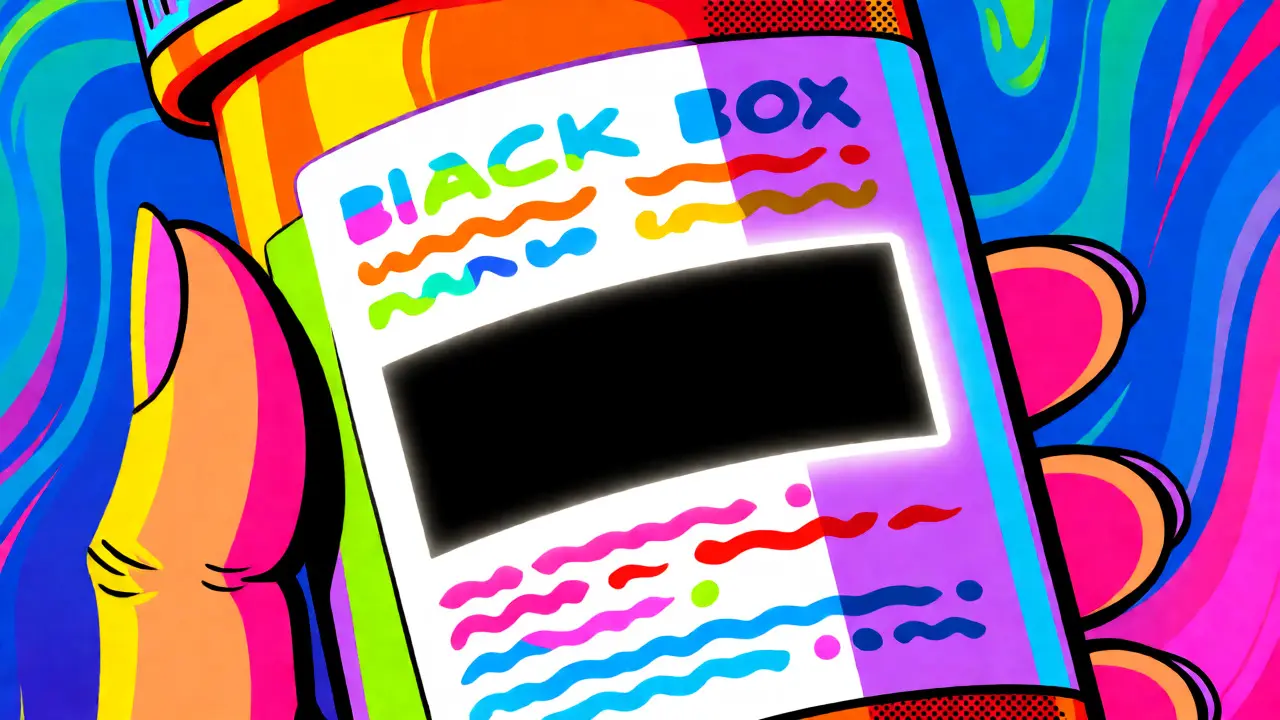
The most critical part for patient safety is often buried in the fine print. However, certain elements are designed to stand out. The Boxed Warning, commonly called a "black box warning," is the highest level of alert. It appears inside a literal black rectangle on the label. This isn't a suggestion; it indicates that clinical studies show serious or life-threatening risks associated with the drug. For example, if you see a boxed warning on your antidepressant, it likely refers to an increased risk of suicidal thoughts in young adults. Ignoring this section is risky business.
Beyond the boxed warning, the label follows a strict hierarchy. After the highlights, you will find the Warnings and Precautions section. This is Section 5 in the official format. Here, the FDA lists clinically significant adverse reactions. The language here is precise. Phrases like "may cause" indicate a known side effect, while "has been associated with" suggests a possible link that requires further monitoring. Understanding these nuances helps you distinguish between common annoyances and rare dangers.
Decoding Boxed Warnings and Critical Alerts
Why do some drugs get a black box while others don’t? The FDA reserves this designation for medications where the benefit outweighs the risk only under strict conditions. Approximately 400 medications carry this warning as of 2023. When you spot one, stop and read carefully. These warnings often mandate specific actions, such as blood tests or lifestyle changes.
Consider Clozapine, an antipsychotic used for treatment-resistant schizophrenia. Its boxed warning requires regular blood monitoring because of a 1-2% risk of agranulocytosis, a severe drop in white blood cells. Without this warning, patients might miss early signs of infection until it becomes fatal. Similarly, many painkillers carry warnings about respiratory depression. If you combine them with alcohol or other sedatives, the risk skyrockets.
A study published in JAMA Internal Medicine found that physicians recognize boxed warnings 78% of the time. However, patient recognition drops to just 42%. This gap is dangerous. To bridge it, treat the boxed warning as a non-negotiable instruction manual. If the label says "do not drive," believe it. If it says "monitor for bleeding," check your gums and skin daily. Your vigilance acts as a second layer of safety behind the pharmacist’s check.
Navigating Drug Interactions and Contraindications
Section 7 of the prescribing information covers Drug Interactions. This is where things get complicated for people taking multiple medications. Polypharmacy-taking five or more drugs-is common among older adults, yet it increases the chance of harmful interactions exponentially. The label doesn’t just list random combinations; it explains the mechanism.
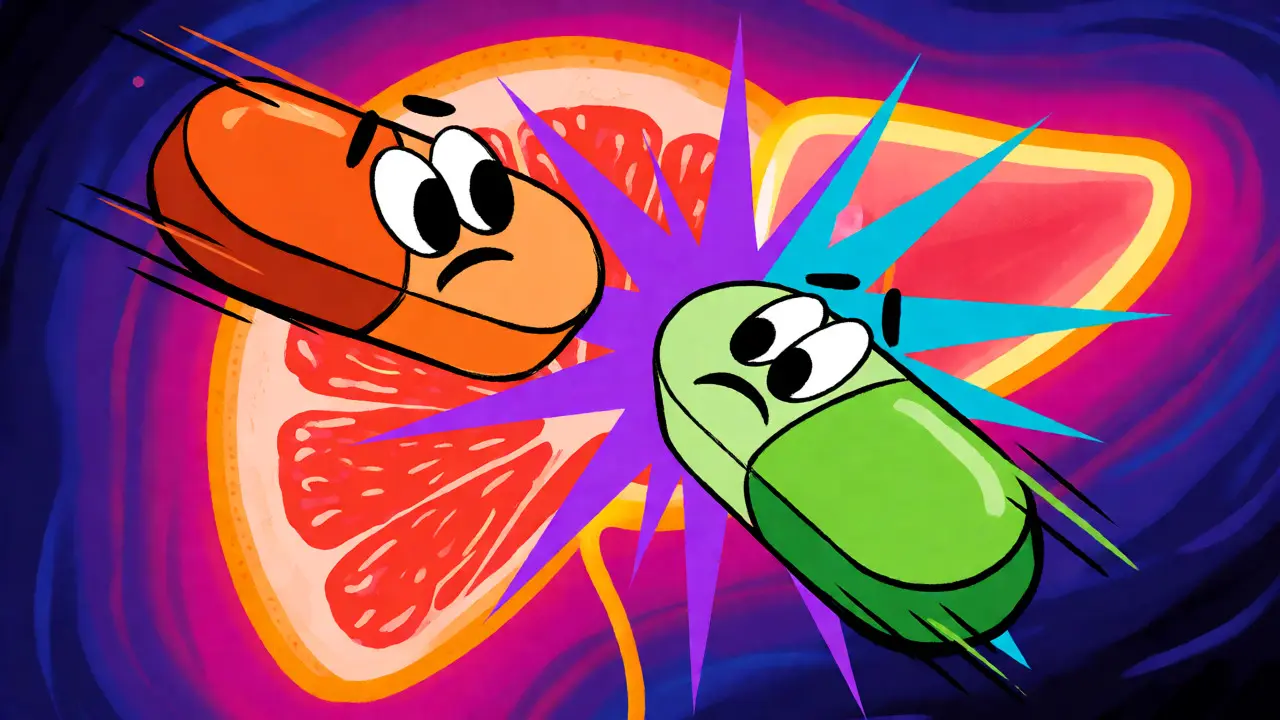
Look for phrases involving enzymes, specifically CYP3A4 inhibitors. Many drugs are processed by this liver enzyme. If you take a strong inhibitor alongside a drug metabolized by CYP3A4, the concentration of the latter can increase by up to 400%. This turns a standard dose into a toxic overdose. Grapefruit juice is a classic natural inhibitor that interacts with statins and calcium channel blockers. The label will specify if you need to avoid grapefruit entirely or just limit consumption.
Contraindications are different from interactions. An interaction means two drugs clash. A contraindication means you should never take the drug due to a specific condition, such as pregnancy or a history of heart failure. If your label states "contraindicated in patients with severe renal impairment," and you have kidney issues, do not assume your doctor caught it. Double-check. Pharmacists catch most errors, but they work with limited information. Your knowledge of your own medical history is vital context they might lack.

Understanding Side Effects vs. Adverse Events
People often use "side effects" and "adverse events" interchangeably, but the label distinguishes them. Side effects are expected, manageable reactions like nausea or dry mouth. Adverse events are unexpected or severe harms. The Adverse Reactions section (Section 6) lists these based on frequency and severity.
Pay attention to the percentages. If a side effect occurs in ">10% of patients," it is very common. Don’t panic if you experience it; it’s part of the deal. However, if a reaction is listed as "rare" (<1%) but severe, such as Stevens-Johnson Syndrome (a serious skin rash), you need to know what it looks like. Early detection prevents hospitalization. The label provides descriptions, but searching online for images of specific rare side effects can help you identify them quickly.
Temporal warnings also trip people up. Instructions like "take 2 hours before meals" are crucial for absorption. A study by the Institute for Safe Medication Practices showed that 52% of patients misunderstand these timing cues. If you take a thyroid medication with coffee instead of waiting an hour, you might absorb less than half the dose. Treat timing instructions with the same seriousness as dosage amounts.
Practical Strategies for Better Comprehension
Reading the label once isn’t enough. You need active engagement. Health literacy plays a huge role here. Patients with low health literacy are 3.2 times more likely to misinterpret warning labels. Use the "teach-back" method. Ask your pharmacist to explain the top three risks in simple terms, then repeat them back to ensure you understood correctly. This simple step reduces medication errors by 27%.
Create a personal warning log. If you manage multiple prescriptions, write down the key warnings for each drug on a single sheet of paper. Highlight conflicts. For instance, if Drug A causes drowsiness and Drug B does too, note that the combined effect might be stronger than either alone. Digital tools like Medisafe can help track these interactions, but a physical checklist remains reliable when batteries die or screens break.
| Warning Type | Meaning | Patient Action |
|---|---|---|
| Boxed Warning | Serious or life-threatening risk | Mandatory monitoring or avoidance of triggers |
| Warnings and Precautions | Clinically significant adverse reactions | Monitor symptoms; report changes to doctor |
| Drug Interactions | Effect altered by other substances | Avoid specific foods/drugs; adjust timing |
| Common Side Effects | Frequent but usually manageable | Expect occurrence; manage comfort |
Finally, ask for clarification. If the font is too small or the wording is confusing, request a large-print version or a verbal explanation. Pharmacists are trained to simplify this jargon. Remember, a properly understood warning can reduce serious adverse events by up to 50% for high-risk medications. You are the final checkpoint in your healthcare journey. Make it count.
What is a black box warning?
A black box warning, formally known as a Boxed Warning, is the most serious type of warning required by the FDA. It appears in a bold, bordered box on the drug label. It indicates that the medication carries a risk of serious or life-threatening adverse effects, such as organ damage or death, which must be balanced against the benefits of the drug.
Why do I need to read the 'Warnings and Precautions' section?
This section details clinically significant risks that require monitoring. Unlike general side effects, these warnings highlight conditions that may worsen or new problems that may arise. Reading it helps you know what symptoms to watch for and when to seek immediate medical attention, potentially preventing hospitalization.
What does 'contraindicated' mean on a drug label?
If a drug is contraindicated for you, it means you should not take it at all. This is usually due to a specific medical condition, allergy, or physiological state (like pregnancy) that makes the drug dangerous. It is different from an interaction, where a drug might still be taken with caution or dose adjustment.
How can I remember all the warnings on my labels?
Use the teach-back method: ask your pharmacist to explain the top three risks, then repeat them back to confirm understanding. Additionally, keep a personal 'warning log' listing key precautions for each medication. Using apps like Medisafe can also provide automated alerts for interactions and reminders for specific monitoring requirements.
Do food interactions appear on prescription labels?
Yes, significant food interactions are included in the Drug Interactions section. Common examples include avoiding grapefruit with certain statins or taking antibiotics on an empty stomach. Always check if the label specifies 'with food' or 'without food,' as this affects absorption and effectiveness.



ARPIT SAHU
September 6, 2026 AT 02:24Big Pharma doesn't want you reading the fine print because they know it's a legal shield, not a safety guide. The FDA is basically a rubber stamp for corporations that pay them billions in user fees. You think those 'warnings' are there to help you? No, they're there so when your liver explodes, the lawyers can say 'we told you so.' It's all theater. The real active ingredients are often just fillers and synthetic dyes designed to keep you dependent. Stop trusting the label; start questioning the supply chain.
michael colasi
September 7, 2026 AT 05:02This is such a solid breakdown! 🌟 I always forget about the grapefruit interaction thing until my pharmacist yells at me 😂 but seriously, the teach-back method is gold. My grandma uses it with every new script she gets and it’s saved her from some scary mix-ups. Also, love the reminder about the black box warnings-it’s wild that patients only recognize them 42% of the time. We gotta do better as consumers! 💊📝
Jack Lanham
September 8, 2026 AT 11:02Oh, please... let me stop you right there!! Because clearly, you haven’t considered the absolute absurdity of expecting the average person-who can barely figure out their own tax returns-to decipher complex pharmacokinetic data?! It’s ridiculous!!! The idea that we should be responsible for catching interactions that even specialized AI systems miss sometimes is laughable!! And don’t get me started on the font size-why is everything printed in microscopic text?! It’s like they WANT us to miss it!! It’s a conspiracy of convenience, plain and simple, and pretending otherwise is just naive optimism dressed up in medical jargon!!! 😤😡💢
Emma Garub
September 8, 2026 AT 13:54I appreciate the structural analysis provided here. However, I must respectfully interject regarding the distinction between adverse events and side effects. In clinical pharmacology, the terminology is precise for a reason: 'side effect' implies an expected pharmacological action, whereas 'adverse event' denotes harm. Conflating these terms in public discourse dilutes the severity of true adverse reactions. Furthermore, the reliance on patient vigilance assumes a baseline health literacy that many populations simply do not possess, necessitating systemic changes rather than individual behavioral adjustments.
Camryn Matis
September 9, 2026 AT 15:03Hey everyone, great points raised here! I totally agree with the need for clearer communication, but i think we also have to look at the philosophical aspect of autonomy vs paternalism in healthcare?? Like, how much responsibility *should* lie with the patient?? Its tricky, ya know?? If we push too much onto the consumer, we absolve the system of its duty to simplify things... but if we oversimplify, we lose nuance!! Maybe its about creating a collaborative ecosystem where doctors, pharmacists, and patients share the cognitive load equally?? Just thinking out loud here!! 🤔✨
Sophia Calimbahin
September 10, 2026 AT 06:02This whole article is typical American over-explanation. In other countries, you trust your doctor and move on. Here, you need a PhD to take an aspirin. But whatever, if people are dumb enough to ignore the black box warning, that’s on them. Don’t blame the system when you’re too lazy to read two paragraphs. We lead the world in medicine, deal with it.
Deepak Sharma
September 11, 2026 AT 10:28Love this energy!! Reading labels is empowering!! You take control of your health journey one pill at a time!! Don't be afraid to ask questions!! Your body is your temple, treat it with respect!! Go get 'em!! 💪🔥
Elizabeth Lucero
September 13, 2026 AT 01:15The author is patently incorrect in suggesting that laypeople can effectively decode CYP3A4 interactions without professional oversight. This is elitist nonsense masquerading as practical advice. Most patients lack the cognitive bandwidth to process enzyme inhibition kinetics while managing chronic pain or depression. Suggesting they 'double-check' contraindications ignores the reality of physician gatekeeping. Doctors prescribe what they know; patients are merely recipients, not partners, in most modern clinical settings. The agency implied here is illusory.
Ste Gomez
September 13, 2026 AT 03:10If you cannot distinguish between a boxed warning and a precautionary note, you are unfit to manage your own medication regimen. Period. The failure rate isn't due to poor labeling; it is due to poor attention spans. People scroll through their phones while swallowing pills. They expect magic results from minimal effort. Read the label. Twice. Or accept the consequences of your negligence.
Aliyu Summaiyya
September 14, 2026 AT 14:50honestly this is useless advice for anyone who actually lives in poverty or has limited english proficiency. telling people to 'read carefully' when the font is tiny and the language is academic is gaslighting. nobody reads the insert. nobody. its waste paper. the real issue is cost and access, not literacy. fix the price first then talk about reading comprehension.
Michelle Wright
September 16, 2026 AT 05:26ugh so annoying. why do i have to do the work??
James Clarke
September 16, 2026 AT 07:35I really hope we can find a middle ground here!! While it is true that the system places a heavy burden on patients, blaming individuals for systemic complexity feels harsh!! Perhaps we can advocate for standardized, simplified icons alongside the text?? That way, visual learners and non-native speakers can still grasp critical alerts quickly!! Small steps toward clarity could bridge the gap between expert knowledge and patient understanding!! Let's stay hopeful and constructive!! 🌈🤝