
When you’re pregnant, even a simple headache can feel like a life-or-death decision. Should you take that painkiller? Is that cold medicine safe? The truth is, first trimester medication safety isn’t about avoiding all drugs-it’s about understanding when and how they can affect your baby. The first 12 weeks of pregnancy are when your baby’s body forms its major organs. That’s a narrow, high-stakes window. And what you take during those weeks matters more than at any other time.
Why the First Trimester Is So Sensitive
It’s not just a rumor that early pregnancy is risky. It’s science. Between days 17 and 56 after conception, your baby’s heart, brain, limbs, eyes, and ears are all being built. This is called organogenesis. One missed dose of a drug, or one accidental pill, can interfere with that process. The CDC says 90% of major birth defects happen during this time. That’s not a scare tactic-it’s a fact backed by data from over 5,000 pregnancies.
Think of it like building a house. If you’re laying the foundation and someone drops a tool on the steel beams, the whole structure could be compromised. That’s what happens with certain medications during weeks 3 to 8. Neural tube defects form between days 18 and 26. Heart problems show up between days 20 and 40. Limb differences happen between days 24 and 36. There’s no room for guesswork.
What Medications Are Actually Used?
You might assume most pregnant women avoid meds entirely. But that’s not true. The National Birth Defects Prevention Study found that over half of pregnant women take at least one medication in the first trimester. Some take four or more. Here’s what’s most common:
- Acetaminophen (Tylenol): Used by 30.2% of women. Still the go-to for pain and fever.
- Amoxicillin: 3.1% use it. A common antibiotic for infections.
- NSAIDs like ibuprofen and naproxen: 4.5% and 0.9% respectively. Often taken for cramps or headaches.
- Pseudoephedrine (Sudafed): 2.9% use it for congestion.
- Progestins and estrogen: 2.8% and 1.5%-often from leftover birth control pills taken before they knew they were pregnant.
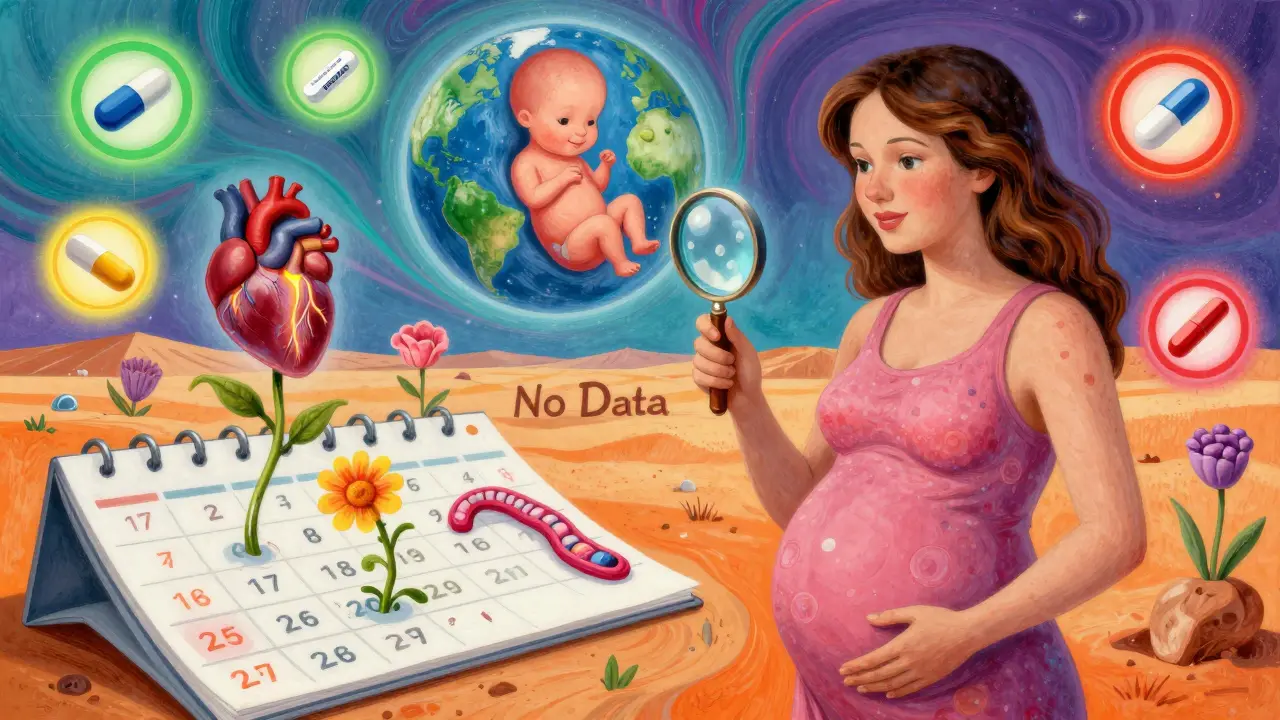
What’s surprising? Many of these are OTC. People think, "It’s just a pill," but that doesn’t mean it’s safe. And here’s the real problem: only two of the 54 most commonly used medications have solid, reliable data on their safety. That’s it. Two. The rest? We’re flying blind.
Acetaminophen: The "Safe" Choice That’s Not So Clear Anymore
For decades, acetaminophen was the gold standard. Doctors told pregnant women: "Take it. It’s fine." And for good reason-it doesn’t cause the kind of structural birth defects linked to NSAIDs or antidepressants. But new research is changing the game.
A 2023 study from the Birth Injury Center found that prolonged use-especially over 20 days-was linked to a 30% higher chance of ADHD and a 20% higher chance of autism spectrum disorder in children. That doesn’t mean every pill causes harm. But it does mean taking it every day for weeks, just because you’re uncomfortable, isn’t risk-free.
So what’s the advice now? Use the lowest dose for the shortest time. If you need it for a fever or severe headache, go ahead. But don’t make it part of your daily routine. And if you’re taking it for chronic pain? Talk to your provider about alternatives.
NSAIDs: Ibuprofen, Naproxen, Aspirin-Why Avoid Them
NSAIDs are tricky. In early pregnancy, they’re not as dangerous as once thought. But they’re still risky. A 2011 Canadian study of nearly 5,000 pregnancies found that taking ibuprofen or naproxen in the first trimester raised the risk of miscarriage by 60%. That’s a 1.6-fold increase.
And it gets worse later. The FDA warns that after 20 weeks, NSAIDs can cause fetal kidney damage, leading to low amniotic fluid. That’s serious. It can mean preterm labor or even stillbirth.
So here’s the rule: skip NSAIDs in the first trimester unless your doctor says otherwise. If you’ve already taken one or two doses before realizing you were pregnant? Don’t panic. One or two pills won’t cause harm. But don’t keep taking them.
Antidepressants: The Balancing Act
This is one of the hardest decisions. Stopping antidepressants can mean worsening depression, which carries its own risks: poor nutrition, missed prenatal visits, even suicide. But some drugs carry known risks.
Paroxetine (Paxil) is the big one. Studies from 2005 to 2010 show it increases the risk of heart defects-especially ventricular septal defects-by 1.5 to 2 times. Fluoxetine (Prozac), sertraline (Zoloft), and citalopram (Celexa) don’t show the same pattern. They’re considered safer.
But here’s the catch: even "safe" antidepressants can cause neonatal adaptation syndrome in newborns-jitteriness, feeding problems, breathing trouble. That’s not a birth defect. It’s temporary. Still, it means your baby might need extra care after birth.
Bottom line: Don’t stop cold turkey. Work with your doctor. If you’re stable on an SSRI, switching mid-pregnancy might be riskier than staying on it.
Antibiotics: What’s Safe, What’s Not
Most infections during pregnancy are bacterial-and most need antibiotics. The good news? Many are safe.
- Penicillins (amoxicillin): No known risk. First choice.
- Cephalosporins: Also low risk.
- Erythromycin: Safe, though can cause stomach upset.
Now the bad:
- Tetracyclines: Cause permanent tooth staining and bone growth issues. Avoid after week 15.
- Fluoroquinolones (Cipro, Levaquin): Animal studies show joint damage. Human data is limited, but we don’t take chances.
One thing to remember: untreated infections like UTIs or pneumonia can be far more dangerous than the antibiotics. Don’t skip treatment because you’re afraid of side effects.
What About Allergies, Colds, and Stomach Issues?
Here’s what’s actually safe:
- Diphenhydramine (Benadryl): Safe for allergies and sleep.
- Loratadine (Claritin) and cetirizine (Zyrtec): Non-drowsy options. Also safe.
- Pseudoephedrine (Sudafed): Avoid in the first trimester. One 2002 study linked it to gastroschisis-a rare abdominal wall defect.
- Docusate (stool softeners): Safe. No evidence of harm.
Watch out for:
- Bismuth subsalicylate (Pepto-Bismol): Contains salicylate-same class as aspirin. Avoid.
- Loperamide (Imodium): One study found a possible link to heart defects. Too little data to be sure. Skip it unless absolutely necessary.
- H2 blockers (famotidine, ranitidine): Animal studies say they’re fine. Human data? Almost none. Use with caution.
The Hard Truth: We Don’t Know Most of It
Here’s the reality no one talks about: 96% of medications commonly used during pregnancy have no solid human data on fetal safety. The FDA says 98% of prescription labels lack clear pregnancy risk info. That’s not a bug-it’s the system.
Pharmaceutical companies aren’t required to test drugs on pregnant women. So we’re left with animal studies, tiny case reports, and guesswork. Dr. Christina Chambers from UC San Diego calls it a "prescription information desert." Imagine trying to drive across a desert with no map. That’s what it feels like for many pregnant people.
And it’s not just about drugs. It’s about chronic conditions. If you have epilepsy, stopping your seizure meds increases the risk of fetal death by 400%. If you have diabetes, uncontrolled blood sugar raises the chance of birth defects from 2-3% to 10-15%. In those cases, the risk of not taking the medication is far greater than the risk of taking it.
What Should You Do? A Simple 5-Step Plan
There’s no perfect answer. But there’s a smart way to handle it. Follow this:
- Confirm your dates. Use your last period and ultrasound. You need to know exactly how far along you are.
- Identify the timing. Was the exposure before day 17? Probably low risk. Between days 17 and 56? High risk. After day 56? Mostly low risk for major defects (though growth and brain development still matter).
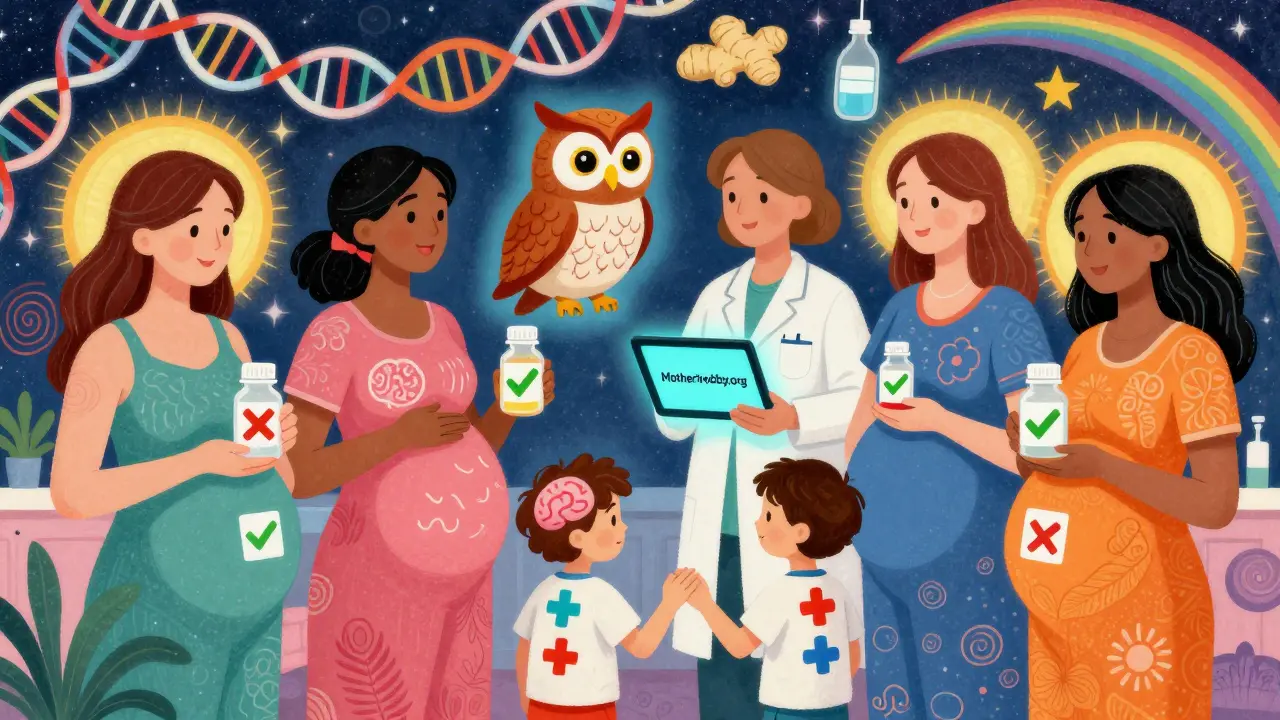
- Check with experts. Use MotherToBaby.org or call your local Teratology Information Service. They’ve handled over 15,000 calls a year. They know what the data says-and what it doesn’t.
- Try non-drug options first. For nausea: ginger, acupressure. For heartburn: smaller meals, avoid lying down. For sleep: better sleep hygiene.
- If you need medication, use the lowest dose for the shortest time. No more than 4,000 mg of acetaminophen per day. No NSAIDs unless approved. No new prescriptions without review.
Final Thought: You’re Not Alone
68% of pregnant people worry about medication risks. 42% have stopped taking something they needed because they were scared. 31% have gotten conflicting advice from different doctors. You’re not crazy for feeling confused. The system is broken.
But you’re not powerless. Knowledge is your tool. Use it. Talk to your provider. Ask for the data. Ask for alternatives. And remember: sometimes, doing nothing is riskier than doing something.
Is it safe to take acetaminophen during the first trimester?
Acetaminophen is still considered the safest pain reliever for pregnancy, but recent research links prolonged use (more than 20 days) to a 30% higher risk of ADHD and 20% higher risk of autism spectrum disorder in children. Use the lowest effective dose for the shortest time possible. Avoid daily use unless medically necessary.
Can ibuprofen cause miscarriage in the first trimester?
Yes. A 2011 study of 4,705 pregnancies found that taking ibuprofen or naproxen in the first trimester increased the risk of miscarriage by 60%. While occasional use before knowing you were pregnant is unlikely to cause harm, ongoing use should be avoided. Switch to acetaminophen instead.
Are antidepressants safe during early pregnancy?
Paroxetine (Paxil) carries a 1.5-2.0 times higher risk of heart defects like ventricular septal defects. Fluoxetine (Prozac), sertraline (Zoloft), and citalopram (Celexa) show no consistent major birth defect risk. However, all SSRIs may cause temporary neonatal adaptation syndrome after birth. Never stop antidepressants without medical supervision-untreated depression can be more dangerous.
Is Sudafed safe in the first trimester?
No. Pseudoephedrine (Sudafed) has been linked to a 1.2-1.3 times higher risk of gastroschisis-a rare abdominal wall defect-when taken in the first trimester. Use saline nasal spray or a humidifier instead. If you must use a decongestant, wait until after week 12 and use the lowest dose possible.
What should I do if I took medication before I knew I was pregnant?
Don’t panic. Most medications taken before you knew you were pregnant won’t cause harm, especially if it was just one or two doses. The biggest risks come from ongoing exposure during weeks 3-8. Contact your provider or call MotherToBaby (1-866-626-6847) for a personalized risk assessment. They can help you understand what, if any, risk exists based on timing and dosage.

Aisling Maguire
February 28, 2026 AT 11:36Just took my first prenatal vitamin and accidentally grabbed my old ibuprofen instead-panicked for like 10 minutes. Then remembered I’d only taken one last week before I knew I was pregnant. Called MotherToBaby and they said it’s fine. Seriously, y’all, this info needs to be handed out at every OB appointment. Not just shoved into a 40-page PDF no one reads.
bill cook
March 1, 2026 AT 10:16I’m not saying the system’s broken but I took Zoloft for 3 years before getting pregnant and my doctor just said ‘it’s fine’-no data, no warnings, no nothing. Then I read this and realized I could’ve been doing irreversible damage. Why isn’t this common knowledge? Why are we left to Google this stuff at 2 a.m.?
Byron Duvall
March 2, 2026 AT 01:3096% of meds have no data? LOL. Of course they don’t. Pharma companies don’t want to test on pregnant women because if something goes wrong, they get sued into oblivion. Meanwhile, we’re the guinea pigs. And the FDA? They’re just here to look pretty while Big Pharma writes the rules. I’m not taking anything unless it’s been approved by a 1980s Soviet scientist. At least they had morals.
Eimear Gilroy
March 3, 2026 AT 07:26Acetaminophen being linked to ADHD? That’s wild. My sister took it daily for her migraines during both pregnancies. One kid has ADHD, the other doesn’t. So is it the drug? The genetics? The stress? The fact she ate sushi every week? We’ll never know. But I’m definitely not taking anything unless it’s literally just water and a prayer now.
Ajay Krishna
March 5, 2026 AT 01:44As someone from India where prenatal care is patchy at best, I’ve seen women take everything from Ayurvedic herbs to leftover antibiotics because no one told them it might be dangerous. This article is a lifeline. I’m sharing it with my cousin who’s 8 weeks in. Knowledge shouldn’t be a privilege. Everyone deserves to know what’s in that pill they’re about to swallow. Thank you for writing this.
Gigi Valdez
March 5, 2026 AT 17:52The suggestion to use non-drug alternatives is prudent. However, one must acknowledge that for individuals with chronic conditions such as epilepsy or severe depression, the risk of discontinuation far outweighs theoretical fetal risks. Clinical judgment must be individualized. Evidence-based decision-making requires access to accurate data, which is currently lacking. Therefore, reliance on anecdotal information is unwise.
Sneha Mahapatra
March 5, 2026 AT 23:35I cried reading this. Not because I’m scared-I’m not. But because I realized how much I’ve been carrying alone. The guilt. The fear. The shame of taking a pill because I couldn’t sleep. The way my partner said, "Just don’t take anything," like it was that simple. We’re told to be careful, but no one tells us how. This is the first time I’ve felt seen. Thank you.
Katherine Farmer
March 6, 2026 AT 17:19Oh please. Let’s not pretend this is about safety. It’s about liability. Hospitals don’t want to be sued. Doctors don’t want to be blamed. So they tell you to "avoid everything"-even though half the population takes something and their kids turn out fine. Meanwhile, the real issue? No one funds proper studies. And now we’re all just terrified of a Tylenol. Wake up. This isn’t science-it’s fearmongering dressed up as care.
Full Scale Webmaster
March 7, 2026 AT 16:55Okay, so let me get this straight. We’re told acetaminophen is safe, then suddenly it’s linked to autism? And NSAIDs? Oh, they cause miscarriage? And Sudafed? Gastroschisis? And antidepressants? Neonatal adaptation syndrome? And we’re supposed to just… stop? But what if I’m on 300mg of sertraline and my anxiety turns into a full-blown panic attack? Do I just lie there and cry while my baby develops a heart defect? Or do I take the pill and risk my child being labeled autistic at age 5? This isn’t medicine. This is Russian roulette with a prescription pad. And the worst part? No one’s gonna tell you which one to pick. Because if you pick wrong, they’ll say you should’ve read the article. But what if you’re just a single mom working two jobs and you don’t have time to read 12 pages of medical jargon? Who’s protecting us? Not the system. Never the system.
Brandie Bradshaw
March 7, 2026 AT 20:15Let’s be brutally honest: the fact that we’re even having this conversation means the entire maternal healthcare system has failed. We have women self-diagnosing drug risks on Reddit because their OB-GYNs won’t give them a straight answer. We have researchers begging for funding to study pregnancy pharmacology-and getting laughed out of the room. We have pharmaceutical companies that treat pregnant women as an afterthought. And now, we’re left to Google "is ibuprofen safe in week 6" at 3 a.m. while crying into a pregnancy test. This isn’t a public health issue. It’s a moral catastrophe. And until we stop treating pregnancy like a liability and start treating it like a human experience, we’re just putting Band-Aids on a hemorrhage.
Aisling Maguire
March 8, 2026 AT 20:48Wow. I didn’t even know about MotherToBaby. Just called them. They walked me through my Sudafed use-said it was low risk. Then they sent me a PDF with alternatives. I’m crying. Not because I’m scared. Because someone finally answered me. Thank you.