Antibiotic-Dairy Interaction Checker
Check Your Medication Safety
Select your antibiotic type and enter the time you took your dose to see safe dairy consumption windows.
Quick Reference
- High Risk Tetracyclines + Dairy
- High Risk Fluoroquinolones + Dairy
- Low Risk Beta-lactams + Dairy
Calcium binds to certain antibiotics, forming insoluble complexes that cannot be absorbed by your body.
Interaction Analysis
Risk Level
Absorption Reduction
Safe Window
Next Safe Time
Hidden Calcium Sources to Avoid:
You just got a prescription for an infection. You pop the pill with your morning coffee and milk, expecting to feel better soon. But what if that glass of milk is actually stopping the medicine from working? It’s not just a myth or an old wives’ tale. For several common types of antibiotics, dairy products can significantly reduce how much of the drug enters your bloodstream. This isn’t about making you uncomfortable; it’s about ensuring the medication actually fights the bacteria causing your illness.
The interaction between antibiotics and dairy products is a well-documented pharmacokinetic phenomenon. Calcium and other minerals in milk, cheese, and yogurt bind to specific antibiotic molecules in your gut. They form large, insoluble complexes that your body simply cannot absorb. If the drug stays in your stomach instead of entering your blood, it can’t reach the site of infection. This leads to treatment failure, prolonged illness, and potentially contributes to the growing crisis of antibiotic resistance.
The Science Behind the Interaction: Chelation
To understand why this happens, we need to look at chemistry. The process is called chelation a chemical reaction where metal ions bind to organic molecules. In this case, calcium ions (Ca²⁺) found in dairy act like magnets. They latch onto the antibiotic molecules-specifically at certain positions on the drug’s molecular structure. Once bound, these new complexes are too large and insoluble to pass through the intestinal wall into your bloodstream.
This mechanism was first documented in the 1950s with the introduction of tetracycline antibiotics. Research published in the Journal of Clinical Pharmacology in 1957 showed how calcium forms these stubborn complexes. Today, clinical guidelines from organizations like the American College of Physicians list this as a high-priority medication safety concern. The Institute for Safe Medication Practices even ranks tetracycline-dairy interactions among its Top 10 High-Alert Medication Combinations. The stakes are high because under-dosing antibiotics doesn’t just mean you stay sick longer; it can allow bacteria to survive and develop resistance.
Which Antibiotics Are Affected?
Not every antibiotic reacts to dairy. Knowing which class of drugs you are taking is crucial. The two main groups most severely affected are tetracyclines a class of antibiotics including doxycycline and minocycline and fluoroquinolones a class of antibiotics including ciprofloxacin and levofloxacin.
- Tetracyclines: These include tetracycline, doxycycline, and minocycline. They show the most pronounced interaction. Studies indicate that co-ingestion with milk can reduce bioavailability by 20% to 75%. Yogurt can cause even greater reductions due to its higher calcium bioavailability.
- Fluoroquinolones: Drugs like ciprofloxacin and levofloxacin are also highly sensitive. Ciprofloxacin plasma concentrations have been shown to drop by up to 92% when taken with yogurt. Even milk can reduce peak plasma concentration by 30-36%.
- Beta-lactams: This group includes penicillins and cephalosporins. Their response is variable. Some, like cefalexin, see absorption decreases of over 40%. However, others like amoxicillin demonstrate minimal interaction and are generally safe to take with dairy.
If you are unsure which class your prescription belongs to, check the label or ask your pharmacist. Amoxicillin, azithromycin, and most cephalosporins are typically safe with food, but tetracyclines and fluoroquinolones require strict separation.
Timing Is Everything: The Golden Window
So, does this mean you have to give up dairy entirely while on antibiotics? No. It just means you need to manage the timing carefully. The goal is to ensure your stomach is empty of dairy when you take the pill, and vice versa.
| Antibiotic Class | Examples | Separation Time Before Dairy | Separation Time After Dairy |
|---|---|---|---|
| Tetracyclines | Doxycycline, Minocycline | 2 hours | 4 hours |
| Fluoroquinolones | Ciprofloxacin, Levofloxacin | 2 hours | 2 hours |
| Beta-lactams (Most) | Amoxicillin, Azithromycin | No restriction | No restriction |
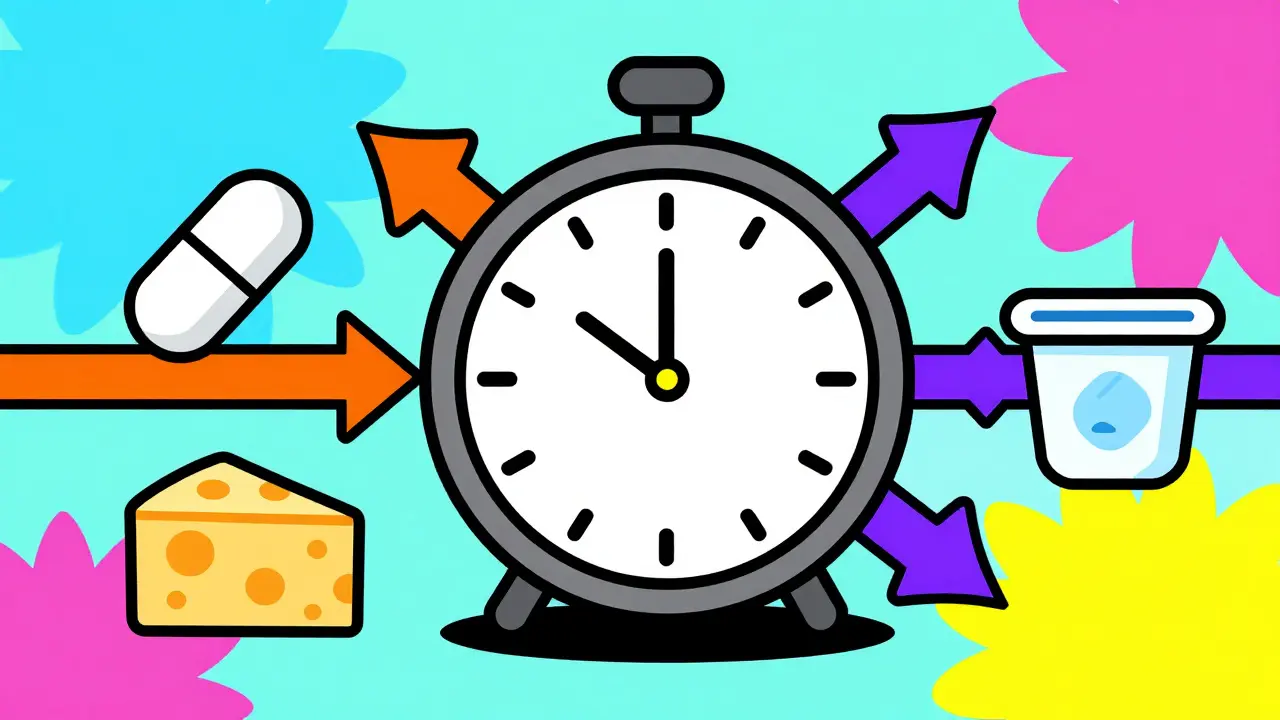
For tetracyclines, the rule is strict: take the antibiotic at least two hours before or four hours after consuming any dairy product. Fluoroquinolones require a minimum two-hour gap on either side. These windows are based on pharmacokinetic studies that track how long it takes for the drug to be absorbed and for the dairy to clear the gastrointestinal tract.
It’s important to note that "dairy" isn’t just a glass of milk. It includes cheese, yogurt, ice cream, butter, cream, and whey protein supplements. Even small amounts in coffee or cereal can trigger the chelation process if they contain enough calcium. The threshold for significant interaction is approximately 200 mg of calcium, which is roughly equivalent to six ounces of milk.
Hidden Calcium Sources to Watch For
A common mistake patients make is thinking that avoiding obvious dairy products is enough. However, calcium is present in many non-dairy sources that can cause the same interaction. If you are taking tetracyclines or fluoroquinolones, you must also separate them from:
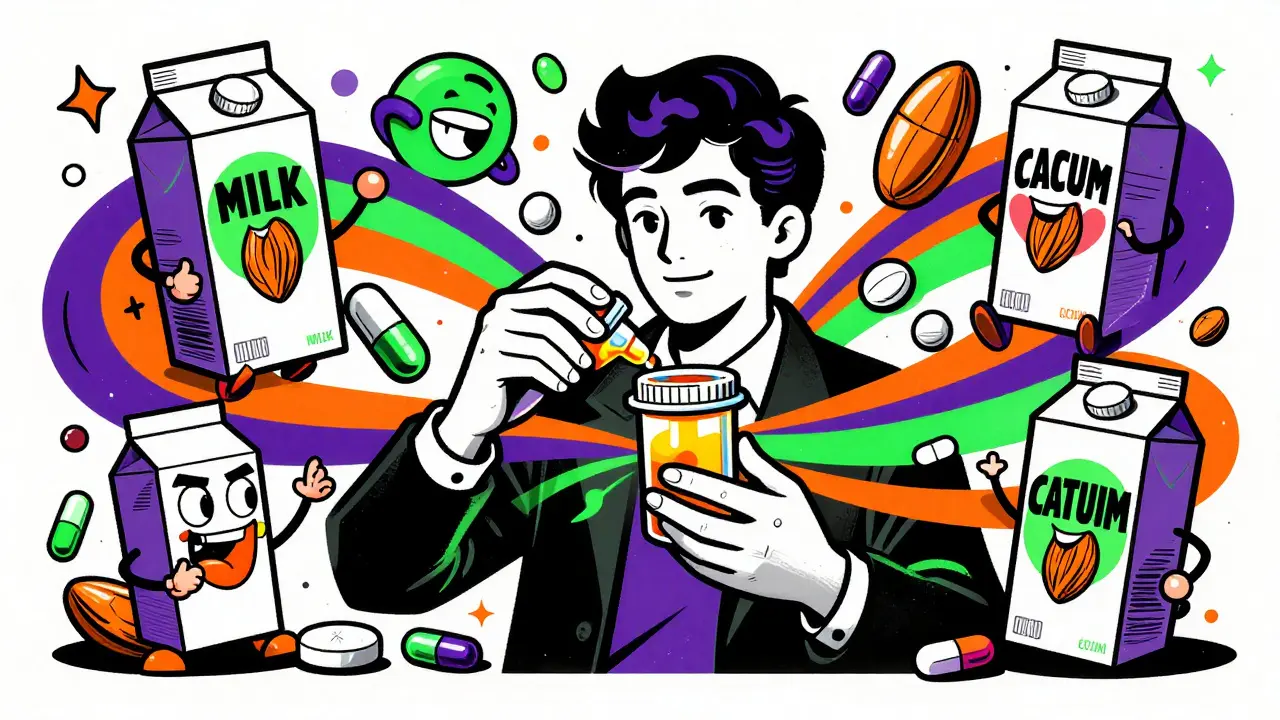
- Calcium-fortified juices: Many orange and almond milks are fortified with calcium levels comparable to cow’s milk.
- Antacids: Brands like Tums or Rolaids often use calcium carbonate as their active ingredient.
- Mineral supplements: Any multivitamin or standalone supplement containing calcium, iron, magnesium, or zinc can interfere with absorption.
Iron supplements, in particular, are notorious for binding to tetracyclines. If you take an iron supplement daily, coordinate the timing with your antibiotic schedule carefully. A simple strategy is to take your antibiotic with water on an empty stomach, wait two hours, and then have your breakfast with your usual supplements or fortified foods.
Real-World Challenges and Patient Experiences
We know the science, but life isn’t always easy to schedule around. Patient surveys reveal that this interaction is a major source of confusion and frustration. A 2022 survey by Healthline found that 63% of patients experienced gastrointestinal side effects when taking tetracyclines on an empty stomach. To combat the nausea, 29% intentionally consumed dairy, unknowingly undermining the treatment.
Pharmacists report similar issues. On pharmacy forums, professionals note that many patients misunderstand the term "dairy-free." One patient thought almond milk was safe but then drank cow’s milk in their cereal thirty minutes later. Another patient noted that the four-hour separation window disrupted their work routine, forcing them to delay their morning coffee until mid-morning.
For those with lactose intolerance, this might actually be a silver lining. Since they naturally avoid dairy, they may inadvertently maintain better antibiotic absorption rates. However, they still need to watch out for fortified plant-based milks and calcium supplements.
Practical Tips for Success
Navigating these restrictions doesn’t have to be complicated. Here are some practical steps to ensure your medication works effectively:
- Read the Label: Check your prescription insert for specific warnings about food interactions. Look for phrases like "take on an empty stomach" or "avoid antacids.""
- Use Water: Take your antibiotic with a full glass of plain water. Avoid juice, soda, or milk.
- Set Alarms: Use your phone to set reminders for your dose and for when it’s safe to eat dairy again. For example, if you take doxycycline at 8 AM, set a reminder for 12 PM to have your lunch with cheese.
- Ask Your Pharmacist: When picking up your prescription, explicitly ask, "Does this interact with food or calcium?" They can provide personalized advice based on your specific medication.
- Plan Meals Around Doses: If you take your medication twice a day, try to align doses with times when you wouldn’t normally consume dairy-heavy meals. For instance, take the morning dose before breakfast and the evening dose after dinner, ensuring the necessary gaps are met.
Newer formulations are helping ease this burden. Doxycycline monohydrate, for example, has modified-release properties that allow it to be taken with food, including dairy, without significant loss of efficacy. Always check if your specific brand or formulation has these updated instructions.
Why This Matters for Public Health
Beyond individual health, proper antibiotic absorption is a public health issue. The World Health Organization estimates that 1.27 million deaths annually are directly attributable to antimicrobial-resistant infections. Subtherapeutic dosing-where you don’t get enough of the drug in your system-contributes to this crisis. Bacteria exposed to low levels of antibiotics can survive and mutate, becoming resistant to future treatments.
By respecting the timing rules for dairy and calcium, you ensure that the full dose reaches your bloodstream. This kills the infection more effectively and helps preserve the effectiveness of these vital drugs for everyone. It’s a small inconvenience in scheduling, but it plays a huge role in fighting one of the biggest health challenges of our time.
Can I take my antibiotic with a splash of milk in my coffee?
If you are taking tetracyclines or fluoroquinolones, it is best to avoid even small amounts of milk. While a tiny splash might not cause a complete failure, it can still reduce absorption. For optimal results, stick to black coffee or tea during the critical window. If you really need milk, wait at least two hours after taking your dose.
Does almond milk or oat milk interact with antibiotics?
Plain almond or oat milk usually does not contain high levels of calcium unless it is fortified. Check the nutrition label. If the plant-based milk is fortified with calcium carbonate or tricalcium phosphate, it will interact with tetracyclines and fluoroquinolones just like cow’s milk. Unfortified versions are generally safe.
What if I accidentally took my antibiotic with yogurt?
Don’t panic, but don’t take another dose immediately. Contact your pharmacist or doctor for advice. They may suggest waiting until your next scheduled dose. Taking an extra dose can lead to toxicity. In most cases, one missed or reduced-absorption dose won’t ruin the entire course, but consistency is key for treating serious infections.
Are there any antibiotics I can take with dairy?
Yes. Most beta-lactam antibiotics, such as amoxicillin, penicillin, and azithromycin, do not have significant interactions with dairy. In fact, taking some of these with food can help reduce stomach upset. Always check the specific instructions for your prescription, as formulations can vary.
How long does it take for dairy to leave my system?
Gastric emptying times vary by person, but the general guideline of two to four hours is based on average digestion rates. Drinking water can help speed up the clearance of food from your stomach. If you have a condition that slows digestion, such as gastroparesis, you may need longer separation times. Consult your healthcare provider for personalized advice.