Imagine you pick up a prescription from the pharmacy. The bottle looks right. The name matches yours. You take it home, follow the instructions, and feel fine. Now imagine that same scenario, but the dose is ten times too high because of a decimal point error on the label. Or perhaps the pharmacist accidentally handed you your neighbor’s blood pressure medication instead of your own antibiotic. These aren’t just scary stories; they are real risks that happen every day in healthcare systems around the world.
This is where Medication Safety comes in. It isn’t just about doctors writing clear prescriptions or pharmacists double-checking labels. It is a comprehensive system designed to protect you from accidental injury caused by medical care during the entire process of using a drug. From the moment a hospital buys medicine to the second you swallow your last pill at home, medication safety aims to keep you out of harm's way.
If you have ever taken a prescription, managed a chronic condition, or cared for an aging parent, this topic affects you directly. Understanding what medication safety is-and why it often fails-can literally save your life.
The Hidden Cost of Mistakes
We tend to think of hospitals as places where everything is sterile, precise, and error-free. But when it comes to drugs, human error is surprisingly common. According to data from the Centers for Disease Control and Prevention (CDC) in 2023, more than 1.5 million emergency department visits in the United States alone are linked to adverse drug events (ADEs). That number includes allergic reactions, side effects, and outright mistakes like giving the wrong drug or the wrong dose.
Of those incidents, about 400,000 injuries are preventable. Think about that: 400,000 people could have avoided hospitalization if a simple check had caught a mistake earlier. This doesn't just hurt patients physically; it costs the healthcare system roughly $42 billion annually. For patients, the cost is measured in pain, recovery time, and sometimes permanent damage.
The National Coordinating Council for Medicard Error Reporting Program (NCC MERP) defines a medication error as any preventable event that may cause inappropriate medication use or patient harm. This definition is crucial because it shifts the blame from "who messed up?" to "what part of the system failed?" Whether the drug is in the hands of a doctor, a nurse, a pharmacist, or you, the goal is to stop the error before it reaches your body.
The Nine Stages Where Things Go Wrong
Medication safety covers the entire lifecycle of a drug. Experts break this down into nine distinct stages, and each one is a potential point of failure:
- Procurement: Buying the right drug from a verified supplier.
- Storage: Keeping drugs at the correct temperature and away from look-alike packages.
- Prescribing: The doctor selects the drug and dose.
- Transcribing: The order is entered into the system (formerly handwritten notes).
- Preparing: Compounding or mixing the drug if needed.
- Dispensing: The pharmacist gives the drug to the patient or nurse.
- Administration: The nurse or patient takes the drug.
- Documentation: Recording that the drug was given.
- Monitoring: Checking if the drug is working and watching for side effects.
Data from The Joint Commission shows that prescribing errors account for 38% of all medication errors, while administration errors make up 26%. Dispensing errors comprise another 16%. This means the biggest risks happen when the decision is made and when the drug actually enters your body. If you are a patient, the stages most relevant to you are prescribing, dispensing, and monitoring. If you are a caregiver, you play a huge role in administration and documentation.
High-Alert Medications: Know the Risks
Not all drugs carry the same level of risk. Some medications are labeled as "high-alert" because even a tiny mistake can lead to serious harm or death. The Institute for Safe Medication Practices (ISMP) tracks these closely. In 2023, their data highlighted four major categories:
- Insulin: Involved in 17% of serious medication errors. Confusion between units and milliliters, or looking at the wrong dial on a pump, is common.
- Opioids: Account for 14% of errors. Overdosing due to incorrect dosing calculations is a frequent issue.
- Anticoagulants (Blood Thinners): Make up 12% of errors. Too much can cause dangerous bleeding; too little can lead to strokes.
- Intravenous Oxytocin: Specifically risky in obstetric settings for inducing labor.
If you or a loved one is taking any of these, do not assume the system will catch every slip-up. Ask questions. Verify the dose. Understand why you are taking it.
| Medication Class | Percentage of Serious Errors | Primary Risk Factor |
|---|---|---|
| Insulin | 17% | Dose calculation errors, unit confusion |
| Opioids | 14% | Overdose, respiratory depression |
| Anticoagulants | 12% | Bleeding or clotting complications |
| IV Oxytocin | Varies | Uterine hyperstimulation in labor |
Who Is Most Vulnerable?
Medication safety issues do not affect everyone equally. Certain groups face higher risks due to physiology, complexity of care, or communication barriers.
Elderly Patients (65+): This group represents 50% of ADE-related hospitalizations. Older adults often take multiple medications (polypharmacy), which increases the chance of dangerous interactions. Their bodies also metabolize drugs differently, meaning standard doses can be toxic.
Children: Kids account for 20% of ADEs. Dosing for children is weight-based, not age-based, which creates room for calculation errors. Liquid medications require precise measurement, and parents often struggle with converting teaspoons to milliliters.
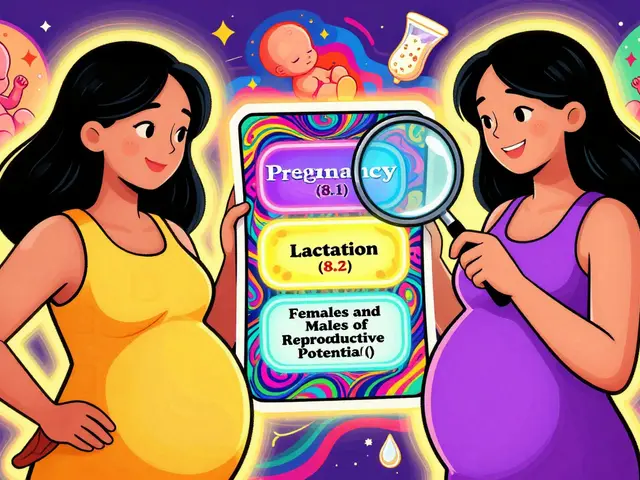
Pregnant Women: Many drugs can cross the placenta and cause birth defects (teratogenic effects). What is safe for the mother might not be safe for the fetus.
If you fall into one of these categories, or care for someone who does, you need to be extra vigilant. Do not rely solely on memory. Write things down.
Technology: Help or Hindrance?
You might think computers solve all problems. In many ways, they do. Electronic Health Records (EHRs) equipped with clinical decision support systems have reduced serious medication errors by 48%, according to a 2022 study in the Journal of the American Medical Informatics Association. Barcode-assisted medication administration (BCMA) systems have cut administration errors by 65% in hospitals.
However, technology introduces new risks. One major issue is "alert fatigue." When a computer warns you about every minor interaction, you start ignoring the warnings. Studies show that effectiveness drops by 30% when a patient encounter triggers more than 25 alerts. Doctors and nurses learn to click "OK" without reading the message, missing the one critical warning that matters.
Also, telehealth has exploded in recent years, leading to a 300% increase in medication errors reported between 2022 and 2023. Without a physical exam or direct observation, providers may miss signs of adverse reactions or misunderstand patient history.
Your Role in the Safety Chain
Here is the hard truth: You cannot control what happens in the hospital pharmacy or the doctor’s office. But you are the final checkpoint. Before you swallow any pill, ask yourself:
- Is this the right medication?
- Is this the right dose?
- Why am I taking it?
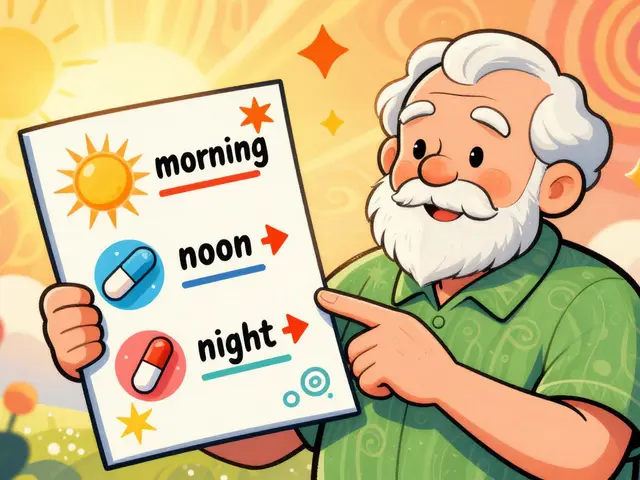
The CDC’s "Keep a List" campaign encourages patients to maintain an updated list of all medications, including over-the-counter drugs and supplements. Patients who did this saw a 45% reduction in reconciliation errors during care transitions (like moving from hospital to home). Keep this list in your wallet or phone.
When you get a new prescription, read the label. If it looks different from usual, call the pharmacist. If you feel strange after starting a new drug, report it immediately. Do not skip doses or alter amounts without consulting your provider-a survey found that 42% of older adults admit to doing this due to cost or side effects, creating "self-induced medication errors" that can be just as dangerous as professional mistakes.
The Future of Medication Safety
The industry is evolving. The FDA recently mandated standardized numeric dosing on all prescription labels to reduce decimal point errors, which dropped by 32% in pilot programs. The World Health Organization’s "Medication Without Harm" challenge aims to cut severe, avoidable medication harm by 50% globally by 2027. Early results show an 18% average reduction in participating countries.
Looking ahead, AI-powered systems are being tested to predict potential errors by analyzing EHR data, showing a 40% reduction in potential adverse events in trials. Blockchain technology is also being explored to verify medication supply chains, reducing counterfeit drugs by 65% in European tests.
But technology alone won’t fix the culture. Dr. Lucian Leape, a pioneer in patient safety, noted that medication safety is no longer just about catching errors-it’s about designing systems where errors are impossible to commit. Until then, awareness remains your best defense.
What is the difference between a medication error and an adverse drug event?
A medication error is any preventable mistake in the medication-use process, such as prescribing the wrong dose. An adverse drug event (ADE) is the actual injury or harm that results from a medication, whether caused by an error or a known side effect. Not all errors lead to ADEs, but all ADEs involve some form of drug-related harm.
How can I prevent medication errors at home?
Maintain an updated list of all your medications, including supplements. Use a pill organizer or blister packs provided by your pharmacy. Always verify the label against your prescription before taking a dose. Ask your pharmacist to explain how to measure liquid medications correctly. Never change doses without consulting your doctor.
Why are elderly patients at higher risk for medication errors?
Older adults often take multiple medications (polypharmacy), increasing interaction risks. Their kidneys and liver may process drugs slower, making standard doses toxic. Additionally, vision or cognitive decline can lead to misreading labels or forgetting doses. They represent 50% of ADE-related hospitalizations.
What are high-alert medications?
High-alert medications are drugs that carry a heightened risk of causing serious patient harm when used in error. Common examples include insulin, opioids, anticoagulants (blood thinners), and intravenous potassium. Even small mistakes with these drugs can be fatal.
Does technology completely eliminate medication errors?
No. While electronic health records and barcode scanning reduce errors significantly, they introduce new issues like alert fatigue, where staff ignore too many warnings. Telehealth has also seen a rise in errors due to lack of physical examination. Human oversight remains essential.