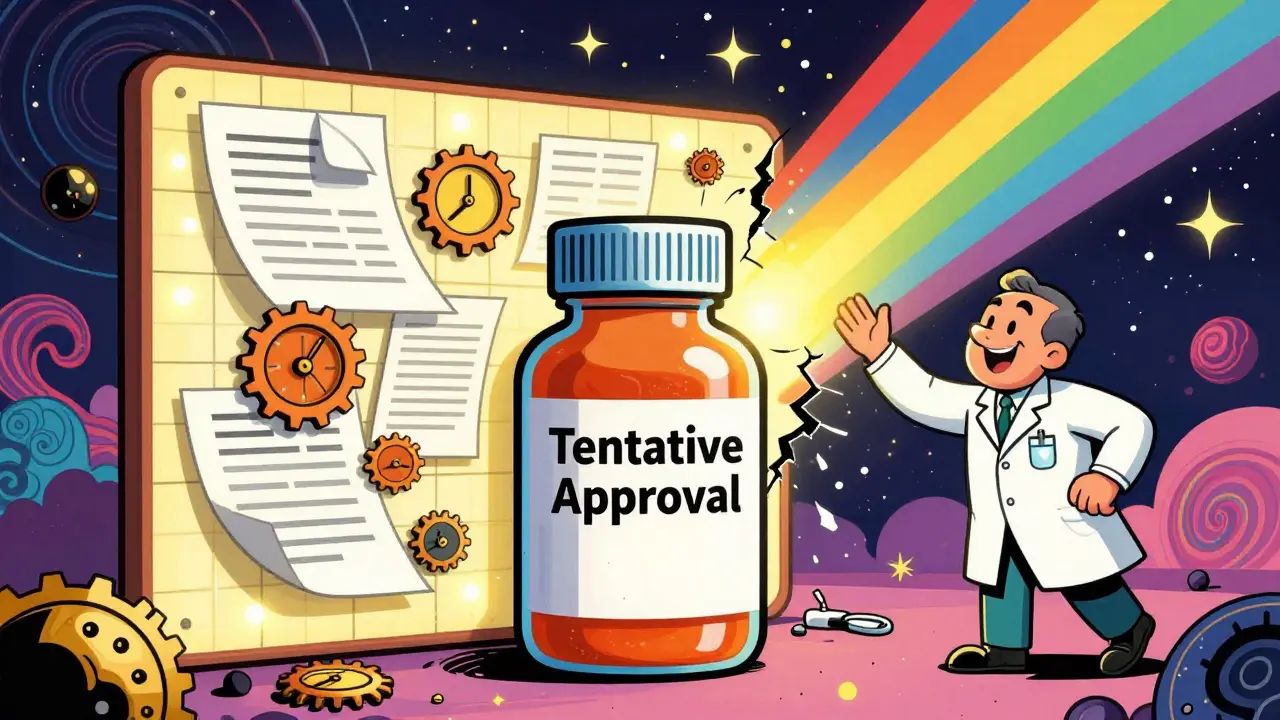
When a generic drug gets tentative approval from the FDA, it doesn’t mean it’s ready to hit the shelves. It means the agency has confirmed the drug is safe, effective, and manufactured to the same standards as the brand-name version - but something is still blocking its release. For many generic manufacturers, this is a frustrating limbo. They’ve done the work, passed every test, and yet the drug sits on a shelf in regulatory purgatory. Why? Because the system is full of hidden roadblocks, and most of them have nothing to do with science.
Why Tentative Approval Isn’t Final Approval
Tentative approval isn’t a reward - it’s a placeholder. It was created under the Hatch-Waxman Act of 1984 to let generic companies prepare in advance while brand-name drugs still hold patents. The FDA reviews the application just like a full approval: chemistry, bioequivalence, manufacturing, labeling. Everything checks out. But if the original drug is still under patent or exclusivity, the FDA can’t let the generic go to market. So they give it a green light on paper, but lock the door until the patent expires. By 2023, over 2,500 generic applications had received tentative approval. But according to Harvard Medical School’s Aaron Kesselheim, nearly one in five of those drugs never launched at all. That’s not a manufacturing failure. It’s a system failure.Review Cycles: The Long, Slow Dance with the FDA
The biggest delay isn’t always patents - it’s the FDA’s own review process. Before the Generic Drug User Fee Amendments (GDUFA) started in 2012, only 1% of generic applications got approved on the first try. Even by 2017, that number had only climbed to 9%. Today, it’s still just 28%. That means most applicants get hit with a Complete Response Letter (CRL) - a list of deficiencies - and have to resubmit. The most common reasons? Chemistry, Manufacturing, and Controls (CMC) issues. These aren’t minor typos. They’re major gaps: missing stability data, poorly validated testing methods, or incomplete descriptions of how the drug is made. In 2022, 35% of all CRLs cited CMC problems. Another 28% were about bioequivalence studies that didn’t meet FDA standards. And 22% lacked proper analytical method validation. Manufacturing facilities are another big hurdle. In 2022, 41% of CRLs came from inspection findings - not because the drug was unsafe, but because the factory didn’t meet quality standards. Common issues? Inadequate environmental monitoring, unqualified equipment, or poor quality control systems. One company spent over a year fixing their cleanroom procedures just to get a single product approved. And then there’s the response time. The FDA says applicants should reply to a CRL within six months. In 2022, the average time was 9.2 months. Some applicants wait even longer, hoping the market will improve or that the patent will expire soon. But every month of delay costs money - and sometimes, the window closes before they’re ready.Patents: The Legal Wall That Blocks Everything
Even if the FDA says yes, the brand-name company can say no - legally. When a generic applicant files a Paragraph IV certification (saying a patent is invalid or won’t be infringed), the brand company can sue. And when they do, the FDA is legally required to block final approval for up to 30 months. This is called the 30-month stay. According to the Commonwealth Fund, 68% of tentatively approved generics between 2010 and 2016 were held up by this exact process. In some cases, the lawsuit is legitimate. In others? It’s a tactic. Brand companies file weak patents just to trigger the stay. Or they file multiple patents on minor changes - like switching the pill color or adding a coating - to reset the clock. This is called “product hopping.” The FTC found it affected 17% of top-selling drugs. Then there’s the “pay-for-delay” scheme. Sometimes, the brand company pays the generic maker to stay off the market. Between 2009 and 2014, over 980 such deals happened, delaying generic entry and costing consumers billions. These deals are now illegal under court rulings, but they still happen under different names - like “licensing agreements” or “distribution partnerships.” Citizen petitions are another tool. Brand companies file petitions asking the FDA to delay approval, claiming the generic isn’t equivalent. Between 2013 and 2015, 67 petitions were filed - and only three were approved. But the damage was done: each petition added an average of seven months to the timeline. The FDA itself admitted in 2017 that 72% of these petitions were scientifically unsupported.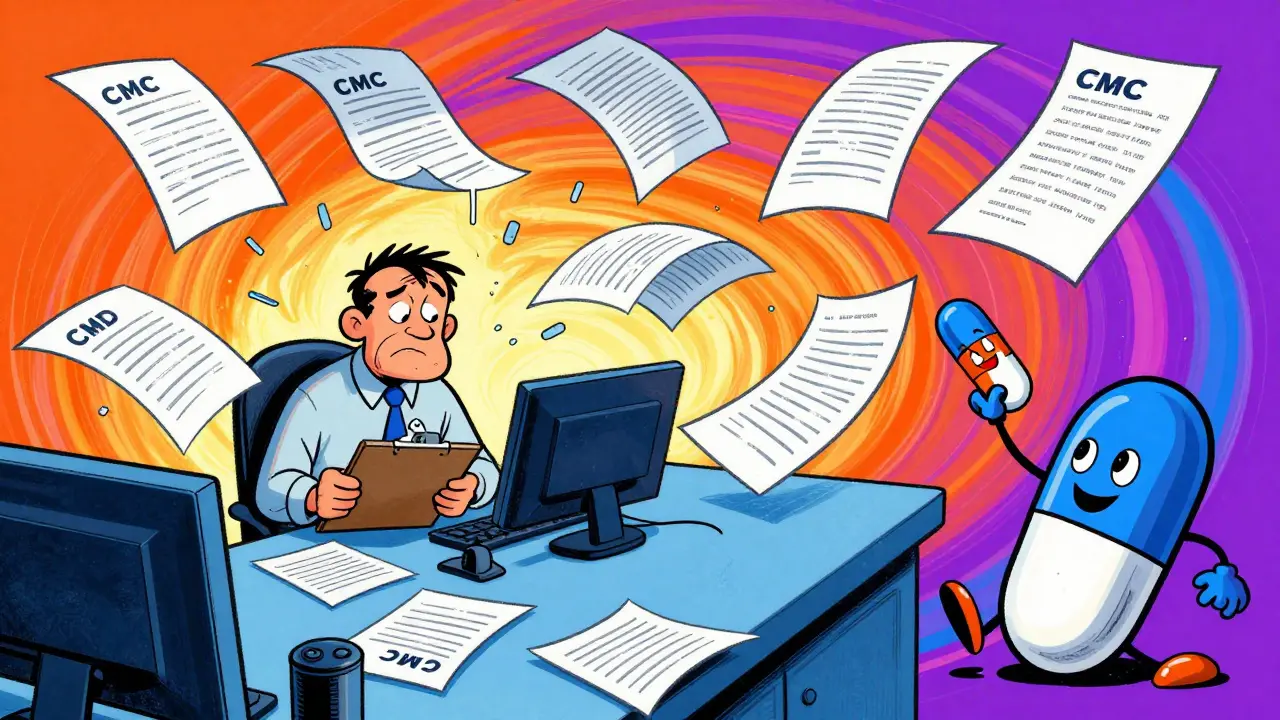
Complex Drugs: The Forgotten Frontier
Not all generics are created equal. A simple tablet? Easy. An inhaler? A topical cream? A long-acting injection? These are complex generics - and they’re where delays pile up. The FDA’s own data shows complex products take 2.3 times longer to review than simple pills. In 2022, topical products averaged 3.7 review cycles - nearly a full cycle more than oral solids. Why? Because they’re harder to test. How do you prove a cream absorbs the same way? How do you match the spray pattern of an inhaler? The science is still evolving, and the FDA’s guidance isn’t always clear. A 2021 report found only 12% of complex generic applications met the FDA’s targeted 10-month approval window. Even after tentative approval, manufacturers often need more time to scale up production. One company spent 18 months just to build enough supply for a single inhaler product - and by then, the market had shrunk.Market Forces: When the FDA Says Yes, But No One Wants to Buy
Sometimes, the problem isn’t the FDA - it’s the market. Drugpatentwatch found that 30% of tentatively approved generics never launch. For drugs with annual U.S. sales under $50 million, that number jumps to 47%. Why? Because the profit margin is too thin. If a drug sells for $2 a pill and only 10,000 people take it a year, the revenue isn’t worth the cost of manufacturing, compliance, and legal risk. Even when generics launch, they don’t always drive prices down. A 2019 JAMA study found that when only one generic enters the market, prices stay at 80% of the brand price for two full years. Why? Because the brand company still controls distribution. And if no other generic companies enter - because the market looks unprofitable - prices stay high. Some manufacturers wait months - even years - to launch. They’re waiting for the brand company to drop its price. Or for a competitor to enter first. Or for a pharmacy benefit manager to change its formulary. The FDA can’t force them to act. And in the meantime, patients keep paying more.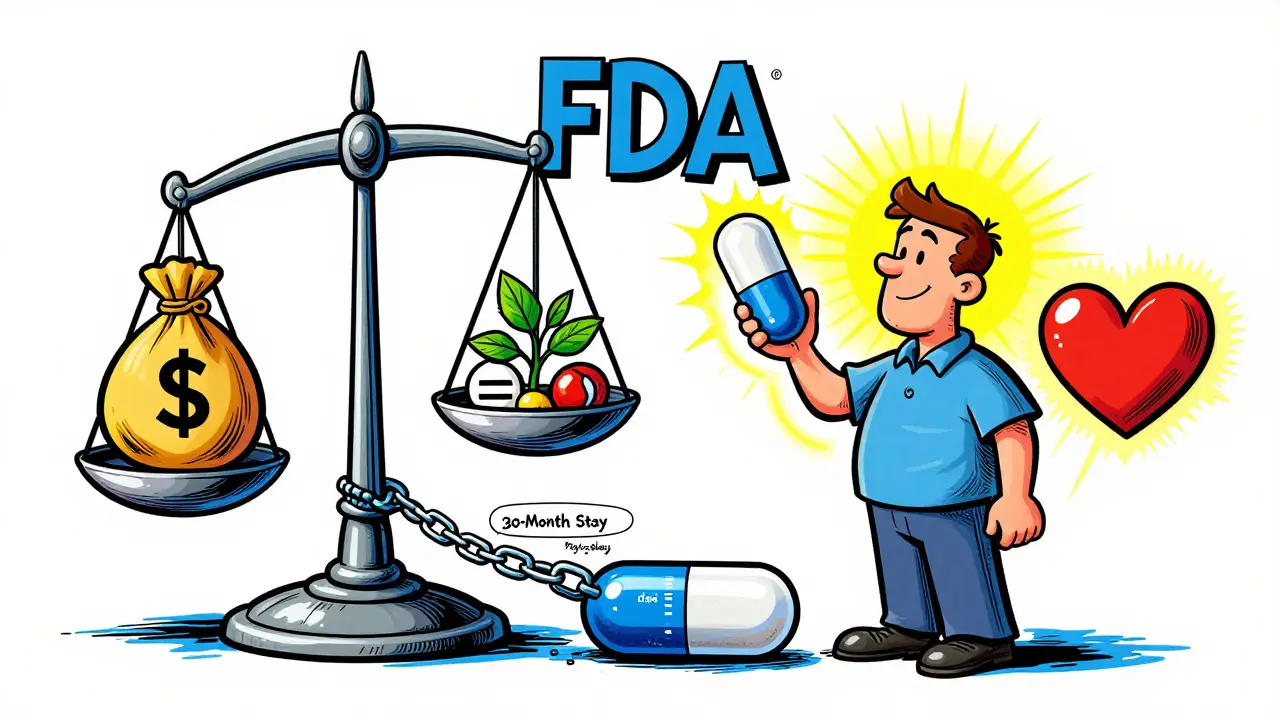
What’s Being Done - And What’s Not
The FDA knows the system is broken. GDUFA III (2023-2027) set a goal to raise first-cycle approval rates to 70% by 2027. They’re trying to speed up reviews for complex drugs and prioritize applications where no generic exists. The Competitive Generic Therapy (CGT) pathway has helped: 78% of CGT-designated drugs got tentative approval in under eight months. But progress is slow. In 2022, the median time from tentative approval to market launch was still 16.5 months - almost the same as in 2016. The FDA’s own 2023 report admits delays will continue through at least 2025. Congress has tried too. The CREATES Act (2019) forces brand companies to provide samples so generics can test their products. The Affordable Drug Manufacturing Act (2023) aims to boost domestic production. But these laws take time to work. And they don’t fix the core problem: the system still lets brand companies delay competition with legal tricks, not science.What This Means for Patients
Behind every delayed generic is a patient paying more than they should. A drug that could cost $50 a month instead of $500. A cancer treatment. A diabetes pill. A heart medication. People don’t care if the FDA gave tentative approval. They just want the cheaper version to be available. The system is designed to balance innovation and access. But right now, it’s tilted too far toward protecting profits. Tentative approval should be a stepping stone - not a dead end. And until patents, review delays, and market incentives are fixed, millions of Americans will keep waiting for drugs they’ve already paid for - through higher insurance premiums, out-of-pocket costs, and lost time.What does tentative approval mean for a generic drug?
Tentative approval means the FDA has confirmed the generic drug meets all scientific and quality standards for safety, effectiveness, and manufacturing - but it cannot be sold yet because of an active patent or regulatory exclusivity on the brand-name version. It’s a pre-approval status that allows the manufacturer to prepare for market entry once legal barriers expire.
How long does it take to go from tentative approval to market launch?
The median time from tentative approval to market launch is 16.5 months, according to FDA data from 2022. Some drugs launch within months of patent expiration; others never launch at all. Delays are often caused by patent litigation, manufacturing scale-up issues, or strategic decisions by generic manufacturers waiting for better market conditions.
Why do some generic drugs never launch after tentative approval?
About 30% of tentatively approved generics never reach the market. For drugs with low annual sales (under $50 million), that number rises to 47%. Reasons include low profit margins, high manufacturing costs, complex formulations, or strategic decisions by manufacturers to wait for competitors to enter first. Sometimes, patent litigation or citizen petitions also make the market too uncertain to risk investment.
Can the FDA approve a generic drug if a patent is still active?
No. Even with tentative approval, the FDA cannot grant final marketing authorization until all patents and exclusivities on the brand-name drug have expired. If a brand company sues over a patent challenge, the law requires the FDA to delay final approval for up to 30 months - regardless of whether the patent is valid or not.
What is the Competitive Generic Therapy (CGT) pathway?
The Competitive Generic Therapy (CGT) pathway is a fast-track process created by Congress in 2017 for generic drugs that have little or no competition. Drugs in this pathway get priority review, with 78% receiving tentative approval within eight months - compared to the standard 18 months. The goal is to encourage more manufacturers to enter markets where patients have few affordable options.
How do citizen petitions delay generic approvals?
Citizen petitions are formal requests to the FDA asking it to delay approval of a generic drug, often on technical or safety grounds. Between 2013 and 2015, 67 petitions were filed by brand-name companies - but only three were granted. Still, each petition added an average of 7.2 months to the approval timeline. The FDA has found that 72% of these petitions were based on scientifically unsupported claims, making them a legal tactic to extend monopoly pricing.
What are the most common reasons for FDA deficiency letters on generic applications?
The most common reasons are incomplete Chemistry, Manufacturing, and Controls (CMC) data (35% of deficiencies), inadequate bioequivalence study protocols (28%), and insufficient analytical method validation (22%). Facility inspection findings - like poor quality control or environmental monitoring - caused 41% of Complete Response Letters in 2022. Complex dosage forms, such as inhalers or topical creams, are especially prone to these issues.
Does tentative approval guarantee a lower drug price?
No. Tentative approval only means the drug is ready to be sold once patents expire. Price drops depend on how many manufacturers enter the market. If only one generic launches, prices may stay at 80% of the brand price for two years. Real savings happen when multiple companies compete - but many markets stay uncompetitive due to low profit potential or legal barriers.
For patients, the path to affordable drugs isn’t just about science - it’s about law, money, and timing. Tentative approval is a step forward, but it’s not the finish line. Until the system stops rewarding delay over access, the cost of waiting will keep falling on the people who need these medicines the most.
Shelby Price
February 3, 2026 AT 18:27Jesse Naidoo
February 4, 2026 AT 00:15Sherman Lee
February 5, 2026 AT 20:35Lorena Druetta
February 7, 2026 AT 18:15Zachary French
February 8, 2026 AT 06:43Coy Huffman
February 9, 2026 AT 09:16Caleb Sutton
February 10, 2026 AT 02:42Jamillah Rodriguez
February 11, 2026 AT 20:51Joy Johnston
February 12, 2026 AT 23:52Amit Jain
February 13, 2026 AT 00:18Kunal Kaushik
February 13, 2026 AT 14:02