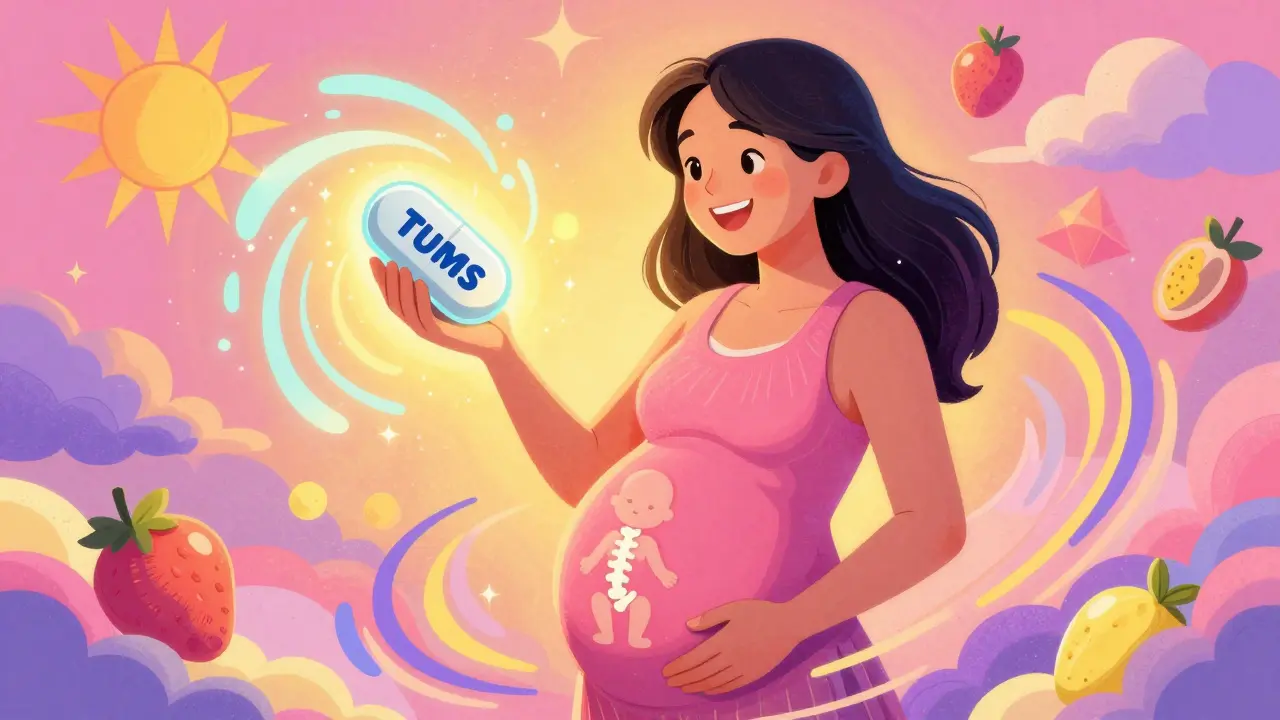
Heartburn during pregnancy isn’t just uncomfortable-it’s common. Up to 80% of pregnant people experience it, especially in the second and third trimesters. The growing baby presses up against the stomach, and hormones like progesterone relax the valve that keeps acid down. You’re not alone. But when your chest burns after every meal, you start wondering: What can I safely take?
First-Line Treatment: Antacids Like Tums
When it comes to heartburn relief in pregnancy, calcium carbonate antacids like Tums are the go-to choice. Why? Because they work fast and offer a bonus: extra calcium for your baby’s developing bones. Tums, Rolaids, and similar brands neutralize stomach acid right where it’s causing trouble. You feel relief within minutes, and it lasts about 1 to 2 hours.
Not all antacids are created equal. Avoid products with aluminum or magnesium trisilicate-these have been flagged for potential risks. Mylanta is okay because it uses aluminum hydroxide and magnesium hydroxide, but only in standard doses. Too much magnesium can cause diarrhea, and too much aluminum might lead to constipation. Stick to the label. Most experts say you can safely take up to 1,500 mg of calcium carbonate every 4 to 6 hours as needed. That’s about 2-4 regular Tums tablets.
Here’s the real win: calcium isn’t just good for your baby. It’s also good for you. Pregnancy increases your need for calcium, and Tums helps meet that need while calming your heartburn. That’s why doctors often recommend it as the first step-before you even think about pills that change how your body makes acid.
Second-Line: H2 Blockers Like Famotidine
If antacids aren’t cutting it after a few days, your provider might suggest an H2 blocker. These medications don’t neutralize acid-they reduce how much your stomach makes. Famotidine (Pepcid) is the most commonly recommended in pregnancy. It starts working in about an hour and lasts up to 12 hours. That means you can take it before bedtime to prevent nighttime heartburn.
What about Zantac? Ranitidine used to be popular, but it was pulled from the U.S. market in April 2020 after the FDA found unsafe levels of NDMA, a potential carcinogen. Don’t use it. Even if you find it in an old medicine cabinet, toss it. Famotidine is the new standard. It’s been studied in thousands of pregnant women, and no clear link to birth defects has been found. Side effects are rare but can include headaches or dizziness in about 3-5% of users.
Other H2 blockers like cimetidine (Tagamet) are also considered safe, but famotidine is preferred because it’s less likely to interact with other medications. Always check with your provider before starting any new drug-even if it’s over-the-counter.
Third-Line: Proton Pump Inhibitors (PPIs) Like Omeprazole
If you’re still struggling with heartburn after trying antacids and H2 blockers, your doctor might consider a proton pump inhibitor (PPI). These are stronger. They shut down the acid pumps in your stomach lining, cutting production almost completely. Omeprazole (Prilosec), lansoprazole (Prevacid), and pantoprazole (Protonix) fall into this category.
Of these, omeprazole has the most safety data in pregnancy. Studies involving over 10,000 pregnancies haven’t shown a consistent increase in birth defects. But it’s not risk-free. A 2019 study in JAMA Pediatrics found a small possible link between first-trimester PPI use and childhood asthma-but that doesn’t mean PPIs cause asthma. It just means the connection needs more study. Doctors only recommend PPIs when symptoms are severe and other options have failed.
Long-term use of PPIs can affect calcium absorption, which matters during pregnancy. That’s why they’re not a first choice. They’re a backup. If your provider prescribes one, they’ll likely start you on the lowest effective dose and keep an eye on how long you’re taking it.

Medications to Avoid Completely
Not all heartburn remedies are safe. Some are dangerous.
Pepto-Bismol and other bismuth subsalicylate products? Avoid them. They contain aspirin-like ingredients that can affect fetal development and increase bleeding risk during delivery.
Aluminum hydroxide in high doses can cause constipation and, in rare cases, aluminum buildup in the baby’s brain. Stick to recommended amounts.
Nonsteroidal anti-inflammatories (NSAIDs) like ibuprofen (Advil, Motrin) or naproxen (Aleve) are off-limits after 20 weeks of pregnancy. They can harm the baby’s kidneys and reduce amniotic fluid. Even if you think it’s just for heartburn, don’t use them.
And never assume an OTC label means “safe for pregnancy.” Always double-check with your provider-even if it’s been recommended by a friend or posted online.
When to Skip Medication Altogether
The first trimester is the most sensitive time for fetal development. That’s why experts like those at Northeast Georgia Physicians Group recommend avoiding all OTC medications-especially in the first 14 weeks. If you can manage heartburn with lifestyle changes, do it.
Here’s what works:
- Eat smaller meals, 5-6 times a day instead of 3 big ones.
- Avoid spicy, fatty, fried, or acidic foods (citrus, tomatoes, coffee, chocolate).
- Don’t lie down for at least 3 hours after eating.
- Elevate your head while sleeping-use a wedge pillow or stack two regular pillows.
- Wear loose clothing. Tight waistbands push up on your stomach.
- Chew gum after meals. Saliva helps neutralize acid.
These aren’t just “tips.” They’re evidence-based strategies that reduce acid reflux without any drugs. And they’re free.

What About Breastfeeding?
Good news: most of these medications are safe while breastfeeding. Calcium carbonate passes into breast milk in tiny, harmless amounts. Famotidine and omeprazole also appear in breast milk at very low levels-far below what would affect a baby. The American Academy of Pediatrics considers both safe for nursing mothers.
Still, don’t assume safety just because you’re breastfeeding. Talk to your provider. They’ll help you choose the lowest effective dose and monitor your baby for any unusual symptoms like fussiness or loose stools.
When to Call Your Doctor
Heartburn is normal. Pain that feels like a heart attack? Not normal.
Call your provider if you experience:
- Heartburn that doesn’t improve with medication or lifestyle changes
- Difficulty swallowing or pain when swallowing
- Vomiting blood or black, tarry stools
- Unexplained weight loss
- Severe chest pain radiating to your arm or jaw
These could signal something more serious-like GERD complications, ulcers, or even preeclampsia. Don’t wait. Get checked.
Bottom Line: Safety First, Relief Second
There’s no one-size-fits-all solution. What works for one person might not work for another. But the general rule is simple: start low, start slow, and always check with your provider.
Antacids with calcium carbonate? Safe and smart first step.
H2 blockers like famotidine? Good next step if antacids aren’t enough.
PPIs like omeprazole? Only if symptoms are severe and other options have failed.
And never forget: the best medicine isn’t always a pill. Sometimes, it’s a change in how you eat, how you sleep, and how you listen to your body.



Henry Ip
January 18, 2026 AT 09:21Tums saved my life in the third trimester. No joke. I was eating like a squirrel hoarding nuts and still felt like I swallowed a jalapeño. Calcium bonus? Yes please. My baby’s bones were happy and so was my esophagus.
Stephen Tulloch
January 18, 2026 AT 23:58LMAO you people are still using Tums like it's 2012? 😂 PPIs are the real MVP. Omeprazole’s been studied in 10k+ pregnancies and you're still scared of a pill that works for 12 hours? 🤦♂️ Antacids are just temporary band-aids. Get with the program.
Corey Sawchuk
January 20, 2026 AT 22:16I tried everything. Antacids helped but didn't last. Famotidine at night was a game changer. No more waking up choking on acid. Just took a while to find what worked. Everyone's body's different.
Riya Katyal
January 21, 2026 AT 11:32Oh wow so Tums are actually good for you now? I thought they were just sugar-coated chalk. Guess I'll stop hoarding them like gold bars then 😏
kanchan tiwari
January 22, 2026 AT 20:14THEY KNOW. THEY KNOW WHAT THEY'RE DOING. PPIs cause autism. I read it on a forum. My cousin's neighbor's sister took omeprazole and her kid didn't speak until age 5. It's not coincidence. The pharmaceutical industry is poisoning our babies. 🚨
Bobbi-Marie Nova
January 24, 2026 AT 02:58Same. First trimester I survived on ginger tea and sleeping upright. By week 28? I was on Tums like a pro. And yes, I ate 6 small meals. No, I didn't regret it. Yes, I still dream about pizza.
Allen Davidson
January 25, 2026 AT 07:05People need to stop treating pregnancy like a disease. Heartburn is normal. But if you're in pain, take what works. Don't let fear stop you from feeling human. Famotidine is fine. Omeprazole is fine. Tums are fine. Talk to your doc, not Reddit.
Ryan Hutchison
January 26, 2026 AT 11:28Canada and India are full of people who think OTC means 'free for all.' In the US we know better. If you're not from here, maybe don't post about meds you don't understand. Tums? Fine. But PPIs? Only if you're a doctor.
Samyak Shertok
January 27, 2026 AT 10:25Is heartburn just the universe’s way of reminding us that we’re all just meat sacks with faulty plumbing? 🤔 We evolved to eat raw flesh and run from tigers. Now we’re stuck eating quinoa at 2am and wondering why our esophagus is on fire. The real question: are we the problem… or is capitalism?
evelyn wellding
January 27, 2026 AT 12:58YESSSS TUMS ARE A LIFESAVER!! 🙌 I took them like candy and my baby came out with a full head of hair. Coincidence? I think not. Also, chew gum after meals!! It's magic!! 💪
Chelsea Harton
January 28, 2026 AT 07:46antacids good. ppi bad. famotidine ok. avoid pepcid if you have kidney issues. dont trust reddit. trust your dr.
Bianca Leonhardt
January 29, 2026 AT 12:26Of course you’re taking Tums. You’re the type who thinks calcium is a cure-all. You’ll probably take vitamin D gummies next and call it prenatal care. You’re lucky your doctor didn’t fire you.
vivek kumar
January 30, 2026 AT 06:25Study in JAMA Pediatrics showed correlation, not causation. PPIs and asthma link is statistically weak and confounded by maternal BMI and smoking. The real risk is untreated GERD leading to esophagitis. Don't let fear override evidence. Famotidine is safer than you think.
Nick Cole
January 31, 2026 AT 15:30I had severe heartburn and was terrified to take anything. My OB said Tums were fine. I took them every day. My daughter is 3 now, healthy as can be. Don’t overthink it. Your body knows what it needs. Just listen.