
Managing allergies during pregnancy isn’t just about sneezing or itchy eyes-it’s about making choices that protect both you and your baby. Around 20-30% of pregnant people deal with allergic rhinitis, hives, or conjunctivitis, and many need medication to function normally. But not all allergy drugs are created equal when you’re expecting. Some are safe. Others carry risks you can’t afford to ignore.
First Trimester: The Most Sensitive Time
The first 12 weeks of pregnancy are when your baby’s organs are forming. That’s why doctors recommend avoiding all non-essential medications during this time-even if you think they’re harmless. If your allergies are mild, start with non-drug options: rinse your nose with saline spray or a neti pot, use a HEPA air filter, keep windows closed during high pollen seasons, and wash your bedding weekly in hot water. These steps reduce exposure without any drug risk. If symptoms are severe enough to disrupt sleep or daily life, talk to your provider. Some medications are still considered low-risk even in the first trimester. Nasal corticosteroids like Rhinocort (budesonide) and Flonase Allergy Relief (fluticasone propionate) have been studied in over 200,000 pregnancies and show no increased risk of birth defects. Rhinocort is often preferred because it’s the most thoroughly studied nasal steroid in pregnancy.Oral Antihistamines: First-Gen vs. Second-Gen
Antihistamines are the most common oral treatment for allergies. But not all are equal when you’re pregnant. First-generation antihistamines like diphenhydramine (Benadryl) and chlorpheniramine (Chlor-Trimeton) have been used for decades. Studies tracking hundreds of thousands of pregnancies found no link to birth defects. They’re effective, but they cause drowsiness-sometimes so much that driving or working becomes unsafe. Many pregnant people still use them because they’re cheap, available over the counter, and well-documented. Second-generation antihistamines like cetirizine (Zyrtec), loratadine (Claritin), and fexofenadine (Allegra) are non-sedating and preferred by many for daytime use. Cetirizine and loratadine have strong safety data from multiple large studies. Fexofenadine is trickier: it’s labeled Pregnancy Category C by the FDA, meaning animal studies showed possible risks, but human data is limited. Still, no clear danger has been found in human pregnancies. Most doctors feel comfortable prescribing it after the first trimester. Important: Avoid combination products. If you see a product labeled Claritin-D, Zyrtec-D, or Allegra-D, don’t take it. The “D” means it contains pseudoephedrine-a decongestant that’s risky in early pregnancy.Decongestants: The High-Risk Category
Pseudoephedrine (Sudafed) is the most common oral decongestant. It’s effective for stuffy noses-but dangerous in the first trimester. A 2009 study found that taking pseudoephedrine between weeks 3 and 8 of pregnancy was linked to a 2.4 times higher risk of gastroschisis, a serious abdominal wall defect. Because of this, most experts advise avoiding it entirely during the first 12 weeks. After the first trimester, some providers may allow limited use: no more than 30-60 mg every 4-6 hours, not exceeding 240 mg in 24 hours. But even then, it’s not first-line. Pseudoephedrine can raise blood pressure, which is risky if you’re already prone to pregnancy-induced hypertension. Phenylephrine, another decongestant found in many cold meds, has even less safety data. It’s also Pregnancy Category C. Avoid it unless absolutely necessary. Nasal spray decongestants like Afrin (oxymetazoline) are sometimes used for short-term relief-no more than 3 days. But they’re not recommended for routine use. They can cause rebound congestion and have not been studied well in pregnancy. The American College of Allergy, Asthma, and Immunology says there’s not enough evidence to call them safe.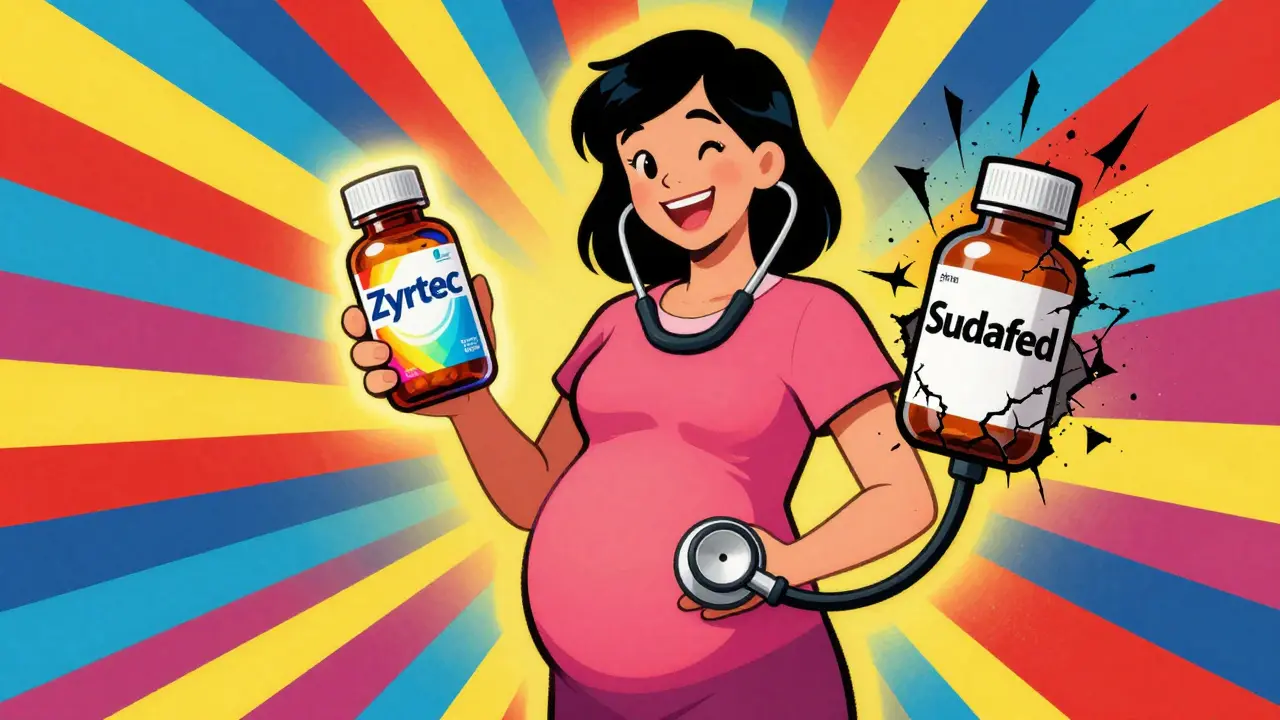
What About Nasal Sprays?
Nasal corticosteroids are the gold standard for allergic rhinitis during pregnancy. They work locally in the nose, so very little enters your bloodstream-and even less reaches the baby. Safe options include:- Rhinocort (budesonide) - most studied, preferred choice
- Flonase Sensimist (fluticasone furoate)
- Nasonex (mometasone)
- Flonase Allergy Relief (fluticasone propionate)
Immunotherapy and Asthma Medications
If you were already getting allergy shots before pregnancy, you can usually continue them. The American College of Allergy, Asthma, and Immunology says stopping them could cause worse symptoms-and that’s riskier than continuing. But never start allergy shots while pregnant. Your immune system is already changing, and introducing new allergens could trigger unpredictable reactions. For asthma, which affects about 8% of pregnant people, inhaled corticosteroids like budesonide or fluticasone are safe and recommended. Oral steroids (like prednisone) should only be used if absolutely necessary, and then only under close supervision. Uncontrolled asthma poses a greater risk to the baby than most asthma medications.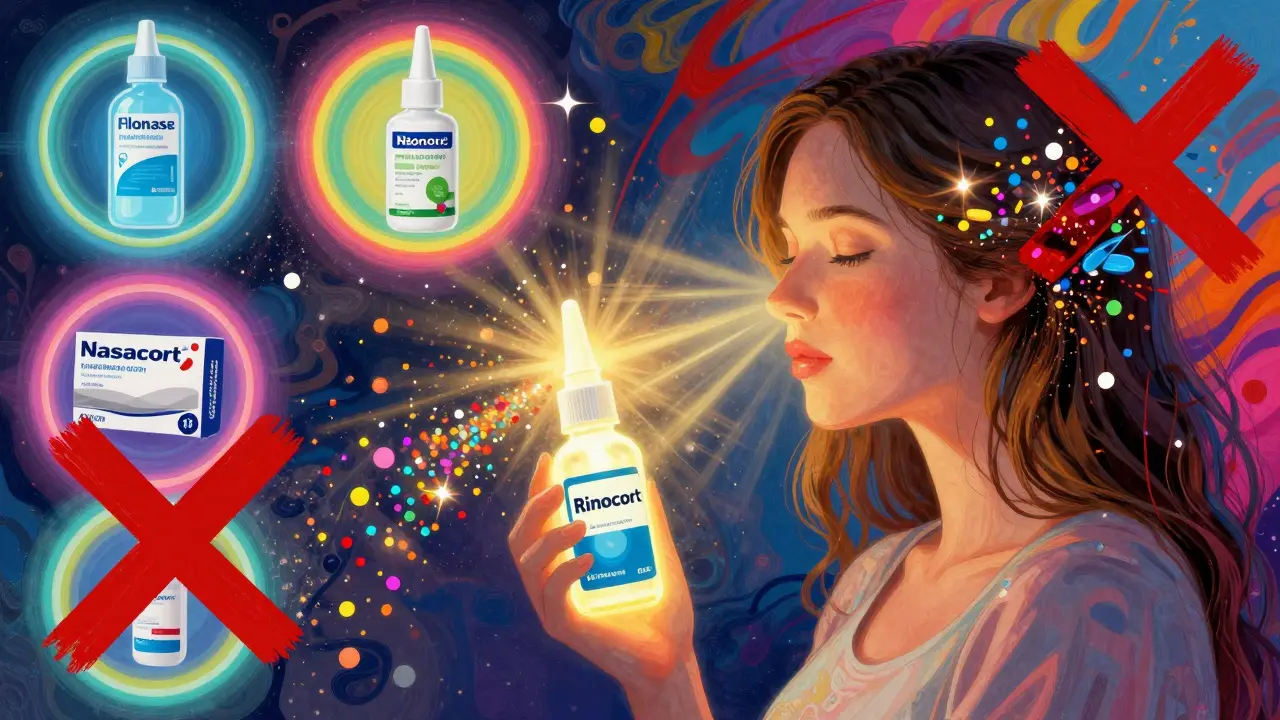
Dosing and Formulations to Watch For
Even safe medications can become risky if misused.- Use the lowest effective dose. For cetirizine, that’s 10 mg once daily. For loratadine, also 10 mg daily.
- Avoid extended-release (ER) or sustained-release (SA) versions. These release medication slowly, increasing exposure.
- Stay away from multi-symptom cold and allergy pills. They often combine antihistamines with decongestants or pain relievers you shouldn’t take.
- Don’t assume “natural” or “herbal” remedies are safe. Many lack testing in pregnancy and can interfere with hormones or blood flow.
What’s Changing in 2025?
The FDA stopped using the old A, B, C, D, X pregnancy risk categories in 2018. Now, labels include detailed narratives about risks, benefits, and data sources. But many doctors and websites still refer to the old system-so you might see conflicting info. Always ask: “Is this based on human data or just animal studies?” A major shift is coming. The NIH’s Pregnancy Exposure Registry, which has tracked over 15,000 pregnant women taking allergy meds since 2018, is expected to release preliminary results in late 2024. These findings will likely shape the next round of guidelines in 2025.When to Call Your Doctor
You don’t need to suffer through allergies-but you also shouldn’t guess about meds. Call your provider if:- Your symptoms are worse than usual or not improving with safe options
- You’re considering any new medication, even if it’s “over the counter”
- You’ve taken a medication you’re unsure about, especially in the first trimester
- You have asthma or high blood pressure along with allergies
Is Zyrtec safe during pregnancy?
Yes, cetirizine (Zyrtec) is generally considered safe during pregnancy, especially after the first trimester. Multiple studies involving tens of thousands of pregnancies have found no increased risk of birth defects. It’s non-sedating and effective for runny nose, sneezing, and itchy eyes. The standard dose is 10 mg once daily. Always confirm with your provider before starting.
Can I take Benadryl while pregnant?
Yes, diphenhydramine (Benadryl) has been used safely for decades during pregnancy. Large studies show no link to birth defects. But it causes strong drowsiness, which can affect your ability to drive or care for other children. Use it at night if possible. Avoid long-term daily use unless directed by your doctor.
Is Sudafed dangerous in pregnancy?
Pseudoephedrine (Sudafed) should be avoided during the first trimester due to a 2.4-fold increased risk of gastroschisis, a serious abdominal birth defect. After the first trimester, some providers may allow limited use (up to 240 mg per day) if no other options work and you don’t have high blood pressure. But nasal sprays or antihistamines are safer first choices.
What nasal spray is safest during pregnancy?
Rhinocort (budesonide) is the most studied and preferred nasal steroid during pregnancy. Flonase Allergy Relief (fluticasone propionate) and Nasonex (mometasone) are also considered safe. Avoid Nasacort (triamcinolone) because of insufficient safety data. Always use the lowest effective dose and rinse your nose with saline before spraying.
Can I continue allergy shots if I get pregnant?
Yes, if you were already receiving allergy shots before becoming pregnant, you can usually continue them at the same dose. Stopping abruptly could lead to worse symptoms, which are riskier than the shots themselves. But never start allergy shots during pregnancy-your immune system changes, and new allergen exposure could trigger unpredictable reactions.
Are antihistamines linked to miscarriage?
No. A major 2010 meta-analysis of over 200,000 pregnancies found no increased risk of miscarriage with antihistamine use. This includes both first-generation (like Benadryl) and second-generation (like Zyrtec and Claritin) options. The biggest concern isn’t miscarriage-it’s potential birth defects from decongestants like pseudoephedrine in early pregnancy.
Should I stop my allergy meds if I just found out I’m pregnant?
Don’t stop abruptly unless your provider advises it. If you’re taking a safe medication like loratadine or Rhinocort, continuing may be better than letting symptoms flare. Untreated allergies can lead to poor sleep, stress, or asthma flare-ups-all of which affect your baby. Talk to your doctor about whether to continue, adjust, or switch to non-drug methods.


Cheryl Griffith
January 15, 2026 AT 12:49I was so nervous about taking anything during my first trimester, but my doctor reassured me that Zyrtec was fine. I took it daily and had zero issues. My baby is now 2 years old and healthier than most kids I know. Don’t let fear scare you out of feeling human.
swarnima singh
January 17, 2026 AT 10:55lol so now we’re giving out medical advice like its tiktok trends? everyone knows benadryl makes u sleep like a rock but also makes u feel like u got hit by a truck next day. why are we even debating this? just drink ginger tea and cry in the shower like the rest of us.
waneta rozwan
January 17, 2026 AT 16:02Okay but let’s be real-why do we treat pregnant people like fragile glass dolls who can’t handle a single pill? I took Sudafed at 10 weeks because I couldn’t breathe and guess what? My kid is now a straight-A student who plays violin. Stop scaring people with vague ‘risks’ that aren’t even proven in humans. If you’re going to say ‘avoid,’ at least say WHY with actual data-not fearmongering dressed up as science.
And Nasacort? Please. It’s literally the same molecule as the others. The only difference is someone didn’t fund a big enough study. That’s not a reason to ban it. That’s a reason to stop letting Big Pharma dictate what’s ‘safe.’
I’m not anti-med. I’m anti-guilt. You’re not a bad mom for needing help. You’re a smart one for asking questions.
Also-why is everyone still using the FDA letter system? It’s been dead for 6 years. If your OB is still saying ‘Category B,’ they’re reading 2012 blogs. Time to update your sources.
And yes, I’m that mom who brought a 3-page printout of NIH registry data to my appointment. They were shocked. I was just tired of being talked down to.
Allen Davidson
January 18, 2026 AT 00:37My OB told me to avoid all meds until 14 weeks. I did. I cried every night from sinus pressure. My baby came out perfectly fine. But I still feel guilty. Why does society make us choose between being a good mom and being a functional human?
Nick Cole
January 19, 2026 AT 09:29Just want to add: if you're on asthma meds, don't stop them. Uncontrolled asthma is way riskier than budesonide. I had a flare at 28 weeks and ended up in the ER. My daughter was born at 37 weeks-healthy as hell. Your lungs matter too.
Samyak Shertok
January 19, 2026 AT 11:28Oh so now we’re all medical experts because we read a blog? Next thing you know, someone’s gonna say ‘I took turmeric and my baby grew wings.’ This whole post is just a marketing brochure for Big Pharma’s ‘pregnancy-safe’ line. What about the 500-year-old Ayurvedic remedies? No? Too ‘unscientific’? Funny how only Western meds get the green light while everything else is ‘dangerous.’
Also-why is no one talking about the fact that 80% of these ‘studies’ are funded by drug companies? Coincidence? I think not.
Isabella Reid
January 20, 2026 AT 18:55As someone who moved from India to the US and had to navigate both systems, I can say this: the fear around pregnancy meds is way more cultural than scientific. In my family, we used neem and saltwater rinses. Here, everyone’s on Zyrtec. Neither is perfect. The key is listening to your body and your provider-not Reddit strangers or fear-based headlines.
Also, if you’re using saline sprays and still struggling? You’re not weak. You’re human. And you deserve relief.
Joie Cregin
January 20, 2026 AT 19:22My sister took Claritin-D at 8 weeks because she was desperate. Baby’s now 4, plays soccer, loves dinosaurs. No defects. No issues. But she still apologizes to strangers on the street for it. That’s the real tragedy here-not the meds. It’s the shame.
We need to stop treating pregnancy like a prison sentence where the only ‘good’ mom is the one who suffers silently. You’re not a bad mom for needing help. You’re a bad mom if you ignore your health and let it spiral.
Also-can we PLEASE stop calling nasal sprays ‘natural’? They’re steroids. Just because they’re in your nose doesn’t mean they’re magic fairy dust. Be honest about what they are.
And if you’re reading this and feeling guilty? Breathe. You’re doing better than you think.
Henry Ip
January 22, 2026 AT 10:53My wife took Rhinocort all three trimesters. No issues. We saw the NIH registry data too. The real risk isn’t the med-it’s the stress from worrying about it. Don’t let uncertainty paralyze you. Talk to your doc. Make a plan. Move on.
Stephen Tulloch
January 23, 2026 AT 14:08Bro. I’m not even pregnant but I read this whole thing like it was a Netflix doc. 🤯 Zyrtec is basically the oat milk of allergy meds-safe, chill, everyone’s drinking it. But why are we still using the word ‘safe’? Nothing’s 100%. Just say ‘low risk’ and move on. Also-Nasacort is fine. Stop gatekeeping.
Also why is everyone so obsessed with the first trimester? It’s not a magic bullet. Your body’s changing the whole time. Chill.
Also also-emoji for relief: 🌬️🫁💤
Allen Davidson
January 23, 2026 AT 15:36Thanks for the comment about the NIH registry. I just checked their site-the 2024 data drop is coming next month. I’ll update this thread when it drops. No speculation. Just facts.