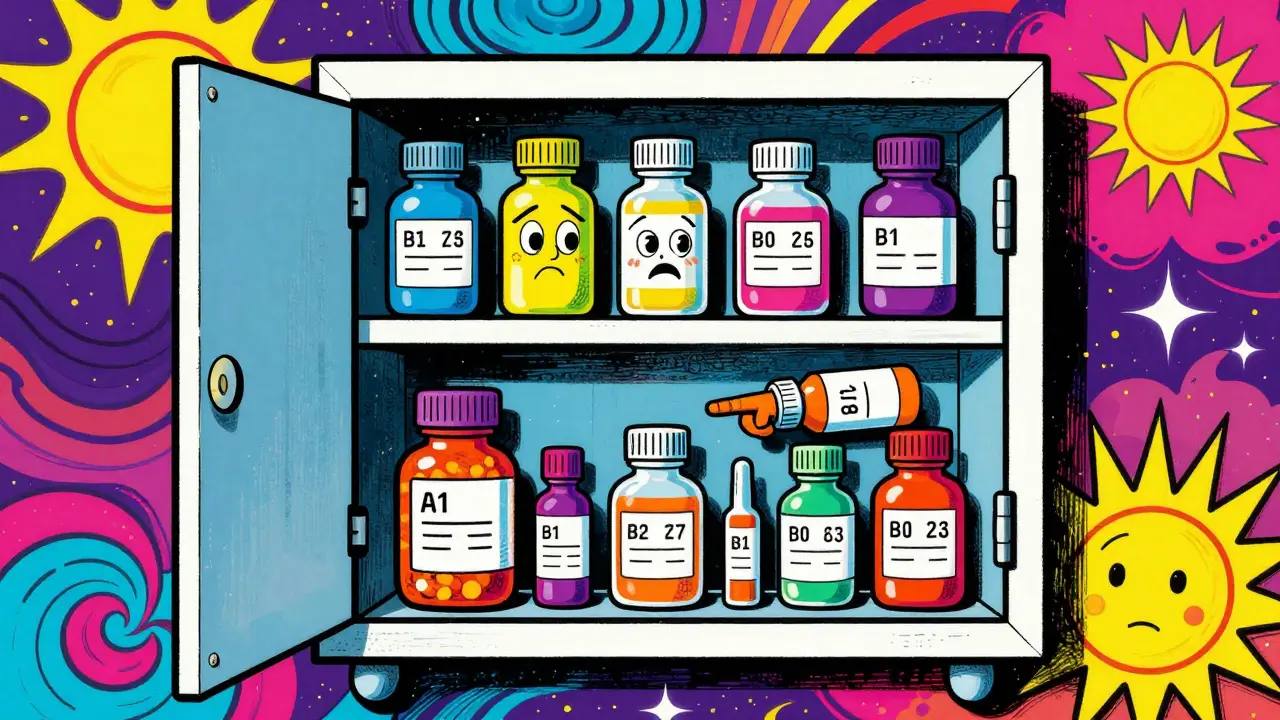
Most of us have a medicine cabinet filled with half-used bottles and old prescriptions. For a bottle of ibuprofen or a generic cough syrup, using it a few months past the date might not be a big deal. But for life-saving drugs, that date isn't a suggestion-it's a hard deadline. When you're dealing with expired medications like insulin, epinephrine, or nitroglycerin, a loss in potency isn't just a minor inconvenience; it can be the difference between a quick recovery and a trip to the ER.
Why Some Expiration Dates Matter More Than Others
You might have heard that many drugs are still effective years after their expiration date. While some studies, including an FDA and Military Shelf Life Extension Program report, found that about 90% of certain drugs stay potent for a decade, that rule does not apply to biologics or highly unstable compounds. These "critical" medications degrade chemically and physically in ways that make them unpredictable.
The FDA U.S. Food and Drug Administration mandates expiration dates to guarantee a drug's purity and strength. For medications used in emergencies, you need 100% of the promised dose. If a drug is only 60% potent, it might not stop an anaphylactic shock or lower a dangerous blood sugar spike, leaving you in a life-threatening situation despite thinking you've taken your medicine.
Insulin: The Protein Problem
Insulin a protein-based biologic hormone used to manage blood glucose levels is incredibly sensitive. Because it's a protein, it can literally unravel or clump together if it gets too warm or too old. This molecular degradation happens fast. Research from the American Diabetes Association shows that insulin stored at room temperature can lose up to 50% of its efficacy just six months after expiring.
The real danger is the "double expiration" trap. Most people only look at the date printed on the vial, but there's a second clock that starts the moment you puncture the seal. While an unopened vial is stable in the fridge (2-8°C) until the print date, most insulins expire within 28 to 42 days once opened. Using a vial that has been open too long can lead to unpredictable blood sugar swings. In one 2023 case, a patient at Swedish Medical Center ended up in intensive care with diabetic ketoacidosis after using insulin glargine that was only three months past its date.
EpiPens: The Race Against Time
When you're having a severe allergic reaction, every second counts. Epinephrine a hormone and neurotransmitter used to treat anaphylaxis is the active ingredient in EpiPens medical autoinjectors designed to deliver a precise dose of epinephrine, and it loses its punch surprisingly quickly. Data from Mylan Pharmaceuticals suggests that epinephrine can lose about 10% of its potency every year even before the expiration date hits.
By the time an EpiPen is 12 months past its expiration, it might only deliver 52% to 68% of the required dose. That's a massive drop. However, there is a crucial piece of nuanced advice here: the American College of Allergy, Asthma, and Immunology notes that using an expired EpiPen is still better than using nothing at all during a total airway collapse. If it's all you have, use it, but call 911 first and tell the paramedics exactly how old the device was.
| Medication | Estimated Potency Loss | Primary Trigger | Critical Risk |
|---|---|---|---|
| Insulin | Up to 50% (6 months) | Temperature/Time | Hyperglycemia/DKA |
| EpiPen | ~30-50% (12 months) | Light/Time | Anaphylaxis failure |
| Nitroglycerin | Rapid (up to 20% in 30 days) | Air/Moisture/Heat | Heart attack progression |
Nitroglycerin: The Most Volatile of All
Nitroglycerin a vasodilator used to treat angina and chest pain is arguably the most unstable of the three. It doesn't just degrade after the expiration date; it starts disappearing the moment you open the bottle. A study in the Journal of Pharmaceutical Sciences found that these tablets can lose 20% of their potency within 30 days of opening, even if the expiration date is years away.
Why is it so unstable? Nitroglycerin is highly sensitive to light, moisture, and heat. If you move your tablets from the original amber glass bottle into a plastic pill organizer, you're essentially inviting the drug to evaporate. A 2023 Baptist Health study found that 78% of patients who used expired nitroglycerin during chest pain episodes ended up in the emergency room, compared to only 22% of those with fresh medication. When your heart is struggling for oxygen, a "mostly effective" pill isn't enough.
Pro Tips for Safe Medication Management
To avoid "expiration date blindness," you need a system. Relying on your memory when you're in a crisis isn't a strategy; it's a risk. Here is how to actually manage these high-stakes meds:
- The Two-Calendar Rule for Insulin: Mark the manufacturer's date on your calendar, but also write the date you first opened the vial directly on the box. Set a phone alert for 28 days later.
- The Glass-Only Rule for Nitro: Never transfer nitroglycerin to a daily pill box. Keep it in the original amber glass container and replace the entire bottle every 3 to 6 months after opening.
- The Visual Check for EpiPens: Before using or storing an EpiPen, hold it up to the light. The liquid should be clear. If it's cloudy, discolored, or has tiny particles floating in it, toss it immediately, regardless of the date.
- Safe Disposal: Don't flush these meds. The FDA recommends taking expired insulin and epinephrine to a pharmacy for hazardous waste disposal to protect the water supply.
The Future: Smart Packaging
The industry is finally moving toward a solution for this problem. We're seeing the rise of "smart packaging" with time-temperature indicators. Some newer insulin products now feature tech that tells you if the drug has been exposed to heat for too long, which is often more dangerous than the expiration date itself. There are even Phase 3 trials for "smart nitroglycerin" that changes color when potency drops below 90%.
Until those become standard, the responsibility falls on us. If you're struggling with the cost of replacing these medications-which is a real issue for many-reach out to patient assistance programs or your pharmacist. Using expired insulin because of cost is a dangerous gamble that can lead to permanent health complications.
Can I use an expired EpiPen in an emergency?
Yes, but only as a last resort. Experts from the ACAAI state that an expired EpiPen is better than no medication during anaphylaxis. However, you must call 911 first and inform the emergency responders that the medication used was expired, as you may need additional doses due to reduced potency.
How do I know if my insulin has gone bad before the expiration date?
Check for cloudiness, clumps, or discoloration. More importantly, track the time since you opened the vial. Most insulins expire 28-42 days after the first puncture, even if the printed date is months away. Also, if insulin is exposed to temperatures above 30°C (86°F), it can lose effectiveness in hours.
Why does nitroglycerin expire so quickly after opening?
Nitroglycerin is highly volatile and sensitive to air, moisture, and light. It essentially evaporates over time. This is why it must be kept in its original amber glass bottle and replaced every 3 to 6 months regardless of the manufacturer's expiration date.
What happens if I use expired insulin?
The primary risk is that your blood sugar will not be controlled, which can lead to severe hyperglycemia or diabetic ketoacidosis (DKA). Because the protein degrades, you might get an unpredictable response, causing your glucose levels to swing wildly, which can require hospitalization.
Should I trust a friend who said their expired meds worked fine?
No. Anecdotal success in a mild reaction is not a scientific guarantee. For critical medications, you need full potency to stop a life-threatening event. Relying on a "maybe" when your life is on the line is an unacceptable risk.



Rob Newton
April 5, 2026 AT 07:15Total scare tactics. Most of these dates are just for profit.
Divine Manna
April 5, 2026 AT 21:33The naive tendency to dismiss pharmaceutical stability as a mere corporate ploy is truly lamentable. One must understand that molecular degradation is not a social construct, but a fundamental law of thermodynamics. To suggest that a volatile compound like nitroglycerin remains stable indefinitely is to ignore the very essence of chemical entropy. It is a profound failure of intellect to prioritize a contrarian stance over the empirical reality of protein unfolding in biologics. True wisdom lies in respecting the precision of science rather than clinging to a misplaced sense of skepticism that borders on the absurd.
Mark Zhang
April 7, 2026 AT 18:33I really appreciate the detailed breakdown here. Managing these meds can be so overwhelming for people, especially when you're dealing with a chronic illness on top of everything else. The tip about the two-calendar rule for insulin is a lifesaver for anyone who struggles with organization!
The Charlotte Moms Blog
April 8, 2026 AT 13:22Absolutely terrified!!! Why isn't this taught in every single primary school??? My kids' school nurse barely checks the dates!!! This is a complete failure of the system!!!
simran kaur
April 9, 2026 AT 03:51Funny how the FDA just "mandates" these dates. It's a perfect way to keep people paying for replacements every few months while the big pharma giants laugh all the way to the bank. Why do we trust the same people who push these drugs to tell us when they stop working? It's all a planned obsolescence scheme for your health. They probably want us terrified so we don't look into natural alternatives that don't "expire" every few weeks. Totally rigged system designed to drain our wallets and keep us dependent on their chemical cocktails.
Brian Shiroma
April 9, 2026 AT 09:22Oh sure, let's just trust the government's timeline on everything. Truly inspiring stuff.
Ace Kalagui
April 10, 2026 AT 15:30I've spent a lot of time volunteering in different community clinics and it's just so heartwarming to see people helping each other navigate these complex medical requirements, because really, at the end of the day, we are all just trying to take care of our loved ones and make sure they stay safe and healthy in a world that feels increasingly complicated and fast-paced, so I think sharing these kinds of tips is just wonderful for the collective well-being of the neighborhood!
Jenna Carpenter
April 11, 2026 AT 00:01Yall need to focus on the energy of your body and not just some chemical in a bottle. If your spirit is align, your body knows how to heal itselff without this panic.
Joey Petelle
April 12, 2026 AT 20:09Imagine thinking your "spirit energy" is gonna stop an anaphylactic shock. Pure comedy. This is why we have the greatest medical infrastructure on the planet while the rest of the world is basically playing doctor with dirt and hopes. If you want to gamble with your life, go ahead, but don't act like your little crystals are gonna fix a blocked airway. It's a special kind of delusions to think that a bottle of amber glass is the enemy and not your own staggering lack of common sense.