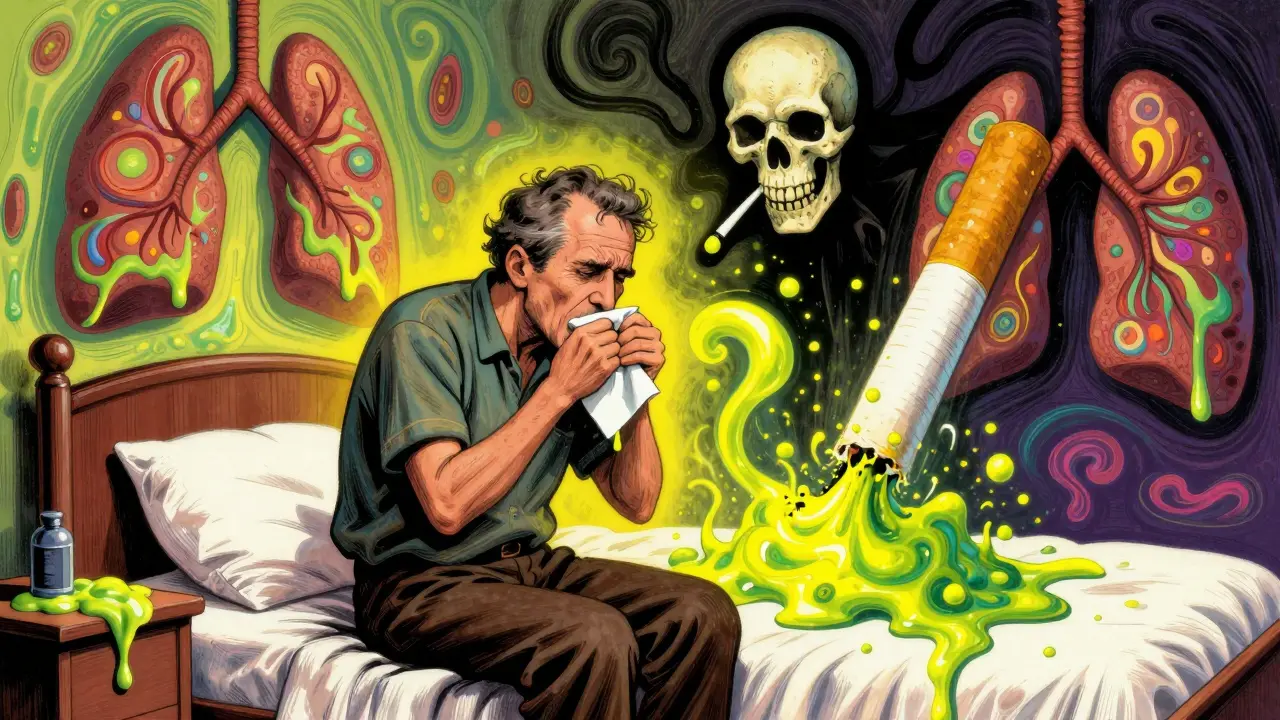
When you’ve been coughing up phlegm every morning for years - not just a few weeks, but three months a year, for two years in a row - you’re not dealing with a cold. You’re living with chronic bronchitis. It’s not something you catch. It’s something you build, slowly, over time. And for most people, it started with a cigarette.
Chronic bronchitis is one of the two main forms of COPD, the other being emphysema. It’s not a single event. It’s a slow, steady breakdown of your airways. The lining of your bronchial tubes gets swollen, irritated, and coated in thick mucus. Your body tries to clear it out, so you cough. A lot. You might not even notice anymore. But your lungs? They’re working harder than ever just to get air in and out. And if you keep smoking, it only gets worse.
What You’re Actually Feeling: More Than Just a Cough
People think chronic bronchitis is just a persistent cough. It’s not. It’s a full-body burden. You’re not just hacking. You’re dealing with:
- A cough that won’t quit - often worse in the morning, but sometimes all day
- Thick, sticky sputum you have to spit out - sometimes clear, sometimes yellow or green
- Shortness of breath when walking up stairs or carrying groceries
- Chest tightness or pressure that feels like someone’s sitting on your ribcage
- Wheezing when you breathe out - a whistling sound your lungs make trying to force air through narrowed tubes
- Fatigue that doesn’t go away, even after a full night’s sleep
According to the Mayo Clinic, 82% of people with chronic bronchitis feel breathless during physical activity. That’s not normal aging. That’s your lungs telling you they’re drowning in mucus. And if you’ve been smoking for 20 years or more, your odds of having this are 42% - meaning nearly half of long-term smokers will develop it. That’s not luck. That’s biology.
Why Smoking Is the Real Culprit - And Why Quitting Is the Only Cure
Let’s be clear: there is no medicine that cures chronic bronchitis. No pill. No inhaler. No spray. The only thing that stops it from getting worse? Quitting smoking.
Here’s what the data says:
- Over 90% of people diagnosed with chronic bronchitis have smoked - or still do
- Former smokers still have a 26% chance of developing it - meaning damage sticks around
- People who quit smoking slow disease progression by 60% compared to those who keep smoking
- Every year you don’t smoke, your lung function improves slightly. It’s not magic. It’s your body healing itself
Dr. John Walsh from the COPD Foundation says it plainly: “Smoking cessation remains the single most effective intervention.” No drug comes close. No surgery helps. No inhaler reverses the damage. Only stopping smoking does.
And it’s not about willpower. It’s about support. People who try to quit on their own? Only 7% succeed. Those who get help - counseling, nicotine patches, varenicline, or a structured program? 45% quit within six months. That’s a six-fold increase. You don’t have to do this alone.
What Happens When You Quit - Even After Decades of Smoking
One woman from Bristol, 58, started smoking at 16. She quit at 52 - after 36 years. She thought it was too late. But here’s what happened:
- After three months: Coughing less. Sputum turned clear instead of thick and yellow
- After six months: Could walk to the end of her street without stopping - something she hadn’t done in years
- After one year: Her doctor said her lung function had improved by 12%
That’s not rare. It’s science. Within weeks of quitting, your cilia - the tiny hairs in your lungs that sweep out mucus - start working again. Your lungs begin cleaning themselves. The cough doesn’t vanish overnight, but it does get better. And your risk of a life-threatening flare-up drops fast.
A 2022 study found that people who quit smoking had 37% fewer hospital visits for COPD flare-ups in the first year after quitting. That’s not just comfort. That’s saving your life.
Medications Help - But They’re Not the Answer
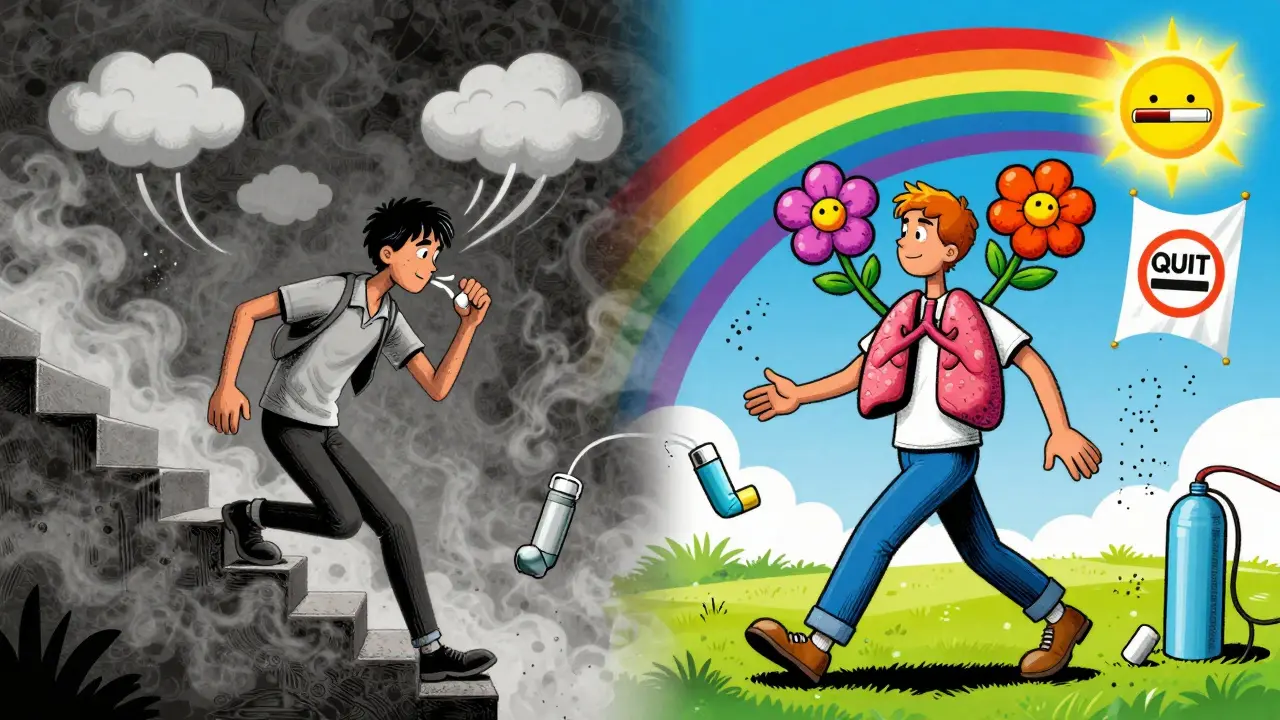
Doctors will give you inhalers. Bronchodilators. Steroids. Antibiotics. But here’s the truth: none of them fix the root problem.
Short-acting bronchodilators like albuterol can open your airways in 15 minutes. They help you breathe easier - temporarily. Long-acting ones? They last 12 hours. Useful. But they don’t stop mucus from building up. They don’t heal your lungs.
Inhaled steroids? They reduce swelling. But they come with risks: 23% higher chance of bone loss, 18% higher risk of high blood pressure, and 15% more likely to develop diabetes. These aren’t side effects you can ignore. They’re trade-offs.
And antibiotics? Only useful when you get a lung infection - which happens 3.2 times more often if you have chronic bronchitis. But antibiotics don’t help if you’re just coughing with no infection. Overuse leads to resistance. That’s why the American College of Chest Physicians says not to use them routinely.
So what’s left?
Pulmonary Rehabilitation: The Most Underused Tool
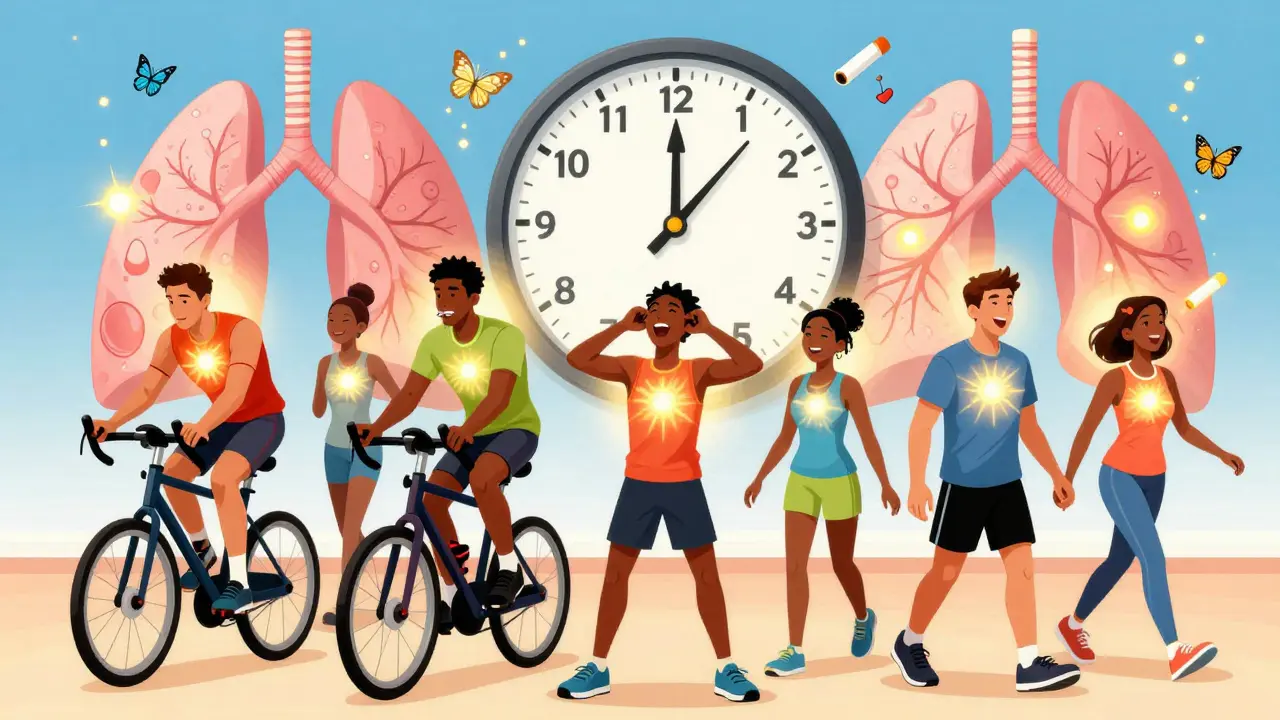
Imagine a program that helps you breathe better, move easier, and feel less tired - all without drugs. That’s pulmonary rehab. It’s not fancy. It’s simple:
- Exercise training - walking, cycling, arm movements - to build endurance
- Breathing techniques - like pursed-lip breathing - to slow down fast breathing
- Nutrition advice - because being underweight or overweight makes breathing harder
- Education - how your lungs work, how to avoid triggers, how to spot a flare-up early
Studies show people who do rehab improve their 6-minute walk distance by 78 meters on average. That’s the distance from your front door to the mailbox - and suddenly, you can do it without stopping. Hospital visits drop by 37%. Quality of life? Improves.
And here’s the kicker: every major medical group - from the American Lung Association to the Global Initiative for Chronic Obstructive Lung Disease (GOLD) - says this should be offered to everyone with chronic bronchitis. But only 1 in 5 patients actually get referred. Why? Because it’s not a pill. It takes time. It takes effort. But it works.
Other Triggers You Can’t Ignore
Smoking is the main cause - but not the only one. If you’ve never smoked but still have chronic bronchitis, ask yourself:
- Do you work around dust, fumes, or chemicals? (Construction, farming, welding?)
- Do you live near heavy traffic or industrial areas?
- Did you grow up around secondhand smoke?
These factors explain 18-20% of cases in non-smokers. And they’re avoidable. If you’re exposed to air pollution, use an air filter. If you’re around chemicals, wear a mask. You can’t undo smoking, but you can reduce other damage.
There’s also a rare genetic condition called alpha-1 antitrypsin deficiency. It causes about 2% of cases. If you were diagnosed young, had no smoking history, and your family has lung disease, ask your doctor about testing. It’s simple. And if you have it, there are specific treatments.
What’s New in Treatment - And What Still Doesn’t Work
In 2023, the FDA approved a new drug called ensifentrine. It’s the first new COPD medication in years. It helps open airways and reduces flare-ups by 15%. Sounds great? Maybe. But it costs $5,000 a year. And it doesn’t replace quitting smoking. It just adds to it.
There’s also new research into gene variants that affect mucus production. Someday, we might have personalized mucus-thinning drugs. But that’s years away. Right now, the best tools are still:
- Quitting smoking
- Pulmonary rehab
- Vaccines - flu shot every year, pneumonia shot every 5-7 years
- Oxygen therapy - if your blood oxygen drops below 88%
And none of them work unless you stick with them. Only 54% of people take their inhalers as prescribed. Only 62% use oxygen as directed. And 41% quit exercise programs within three months. That’s the real problem - not the medicine. It’s consistency.
How to Get Real Help - Not Just a Prescription
You don’t need to figure this out alone. Here’s how to start:
- Ask your GP for a referral to a pulmonary rehab program. It’s covered by Medicare and most private insurers.
- Call your local health department. They often run free smoking cessation classes with counselors and nicotine patches.
- Use apps like Smokefree or MyQuit - they track your progress and give daily support.
- Ask about varenicline (Chantix) or bupropion (Zyban). These aren’t nicotine. They change how your brain craves cigarettes.
- Join a support group - online or in person. Talking to others who’ve been there makes quitting less lonely.
People who get structured support quit at a rate of 68%. Those who go it alone? Only 22%. That’s not a coincidence. It’s science.
Final Reality Check
Chronic bronchitis isn’t a death sentence. But it is a warning. Your lungs are telling you they’ve had enough. And the only thing that can turn things around? Stopping smoking - now.
Every cigarette you don’t smoke today gives your lungs a chance to heal. Every rehab session you attend helps you breathe easier tomorrow. Every vaccine you get reduces your risk of a hospital trip.
You can’t undo the past. But you can change what happens next. And that’s worth fighting for.
Is chronic bronchitis the same as COPD?
Chronic bronchitis is one type of COPD - chronic obstructive pulmonary disease. The other main type is emphysema. Both involve airflow blockage, but chronic bronchitis is defined by long-term cough and mucus production. Many people have both conditions together.
Can you reverse chronic bronchitis?
No, the damage to your airways can’t be fully reversed. But quitting smoking and joining pulmonary rehab can stop it from getting worse - and even improve your breathing and quality of life. Many people regain the ability to walk, climb stairs, and do daily tasks they couldn’t before.
Do I need to take antibiotics for my cough?
Only if you have signs of a bacterial infection - like fever, green or dark yellow sputum, or sudden worsening. Most coughs in chronic bronchitis are not caused by bacteria. Taking antibiotics when you don’t need them can lead to resistance and side effects. Always check with your doctor before taking them.
How long does it take to see results after quitting smoking?
Within 2-3 weeks, your cilia (lung cleaning hairs) start recovering. After 3 months, coughing and mucus production often improve. After a year, lung function can improve by up to 12%. The biggest benefit? A 37% drop in hospital visits for flare-ups in the first year after quitting.
Are inhalers the best treatment for chronic bronchitis?
Inhalers help manage symptoms, but they don’t stop the disease. Bronchodilators open airways. Steroids reduce swelling. But neither fixes the root cause - mucus buildup and inflammation from smoking. The most effective treatment is quitting smoking, combined with pulmonary rehab.
Can I still exercise if I have chronic bronchitis?
Yes - and you should. Exercise helps your lungs work better. Start slow: 5-10 minutes of walking a day. Use pursed-lip breathing (breathe in through your nose, out slowly through pursed lips). Many people find they can do more than they thought after joining a pulmonary rehab program. Movement doesn’t hurt your lungs - it helps them.


Shivam Pawa
March 1, 2026 AT 16:09tatiana verdesoto
March 1, 2026 AT 19:54Justin Rodriguez
March 2, 2026 AT 03:00Siri Elena
March 3, 2026 AT 13:58Divya Mallick
March 3, 2026 AT 21:18Callum Duffy
March 5, 2026 AT 01:48Jeff Card
March 5, 2026 AT 11:50Matt Alexander
March 5, 2026 AT 22:27Gretchen Rivas
March 6, 2026 AT 01:17Mike Dubes
March 7, 2026 AT 20:14