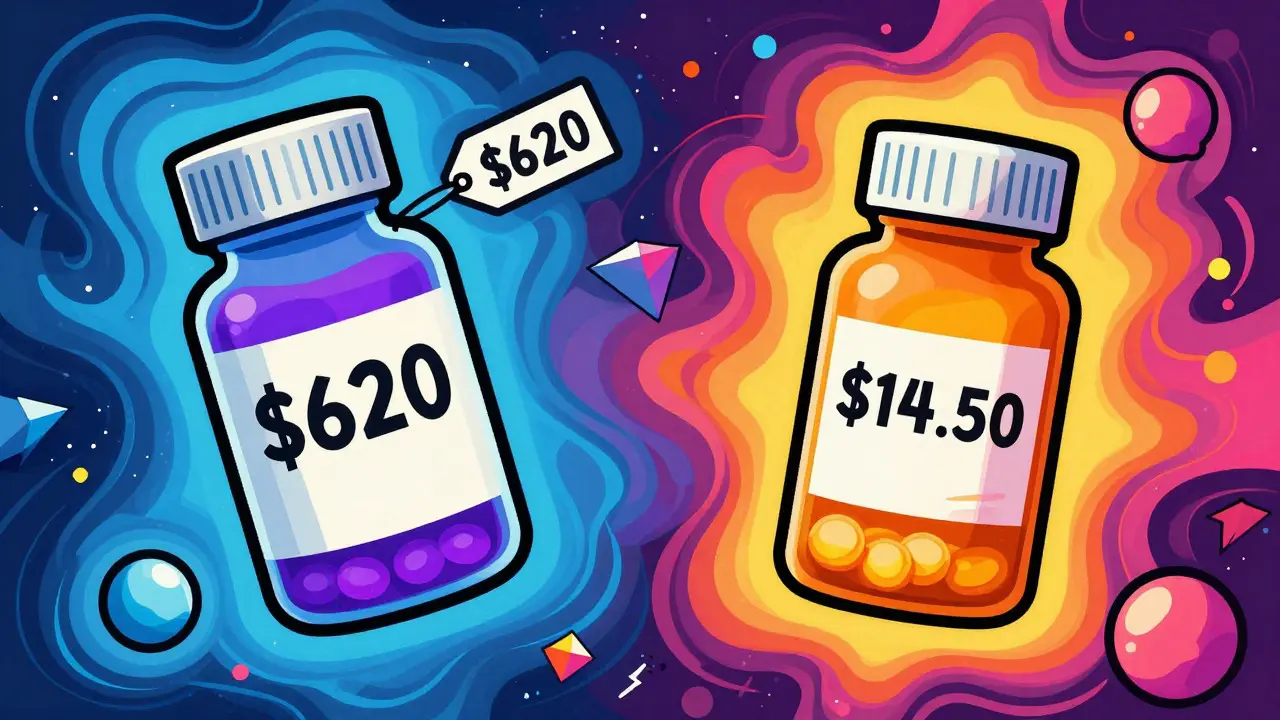
Imagine paying $620 for a heart medication when you could get the exact same active treatment for $14.50. That isn't a hypothetical scenario; it is the daily reality for millions of patients who choose generic medications over their brand-name counterparts. Yet, despite these massive savings, a lingering doubt often keeps people sticking to expensive brands: "Will the cheaper pill actually work?" The short answer is yes, but the full story requires understanding how regulators like the U.S. Food and Drug Administration (FDA) ensures that generic drugs meet identical standards for safety, efficacy, and quality as brand-name medications approve these alternatives.
This guide cuts through the noise. We will look at the hard data on safety, identify the specific exceptions where caution is needed, and give you practical steps to save money without risking your health. Whether you are managing chronic conditions or simply trying to lower your monthly pharmacy bill, knowing how generics work empowers you to make smarter healthcare decisions.
The Science Behind Generic Equivalence
To understand why generics are safe, we have to look at what they actually are. A generic drug contains the same active ingredient, in the same strength and dosage form, as the original brand-name drug. When a pharmaceutical company develops a new drug, they hold a patent that typically lasts about 14.5 years from approval. Once that patent expires, other manufacturers can produce the same medication. This process was formalized by the Hatch-Waxman Act of 1984, which created the Abbreviated New Drug Application (ANDA) pathway.
The key requirement for approval is bioequivalence. This doesn't mean the pills are carbon copies down to the color or shape-they often differ in inactive ingredients like dyes or binders. Instead, bioequivalence means the generic performs identically in the body. The FDA requires studies showing that the generic's absorption rate and extent fall within 80-125% of the brand-name drug's pharmacokinetic profile. For most drugs, this range is tight enough that any difference is clinically insignificant.
| Feature | Brand-Name Drug | Generic Drug |
|---|---|---|
| Active Ingredient | Original formulation | Identical chemical compound |
| Cost (Average) | $620 per prescription | $14.50 per prescription |
| Bioequivalence Standard | N/A (Reference standard) | 80-125% of brand profile |
| Manufacturing Oversight | cGMP compliant | cGMP compliant (identical standards) |
| Market Share (US, 2023) | ~10% | ~90% |
In 2023, approximately 90% of all prescriptions filled in the United States were generics. This widespread adoption has generated roughly $370 billion in annual healthcare savings. The sheer volume of usage provides a massive real-world dataset confirming their safety and effectiveness for the vast majority of patients.
When Caution Is Warranted: Narrow Therapeutic Index Drugs
While generics are generally equivalent, there is a critical exception you must know about: Narrow Therapeutic Index (NTI) drugs. These are medications where a small change in blood concentration can lead to serious side effects or loss of efficacy. Examples include warfarin (a blood thinner), levothyroxine (for thyroid issues), and phenytoin (an anti-seizure medication).
For NTI drugs, the FDA applies stricter bioequivalence limits, requiring the generic to fall within 90-111% of the brand-name profile rather than the standard 80-125%. Even with tighter controls, individual responses can vary. A 2012 study in the Journal of Clinical Pharmacology found that 30% of patients experienced clinical improvement, no change, or side effects when switching between brands and generics of certain medications. More specifically, a 2023 meta-analysis highlighted potential risks with generic statins compared to brand-name versions regarding major adverse cardiac events, although other cardiovascular drugs like ACE inhibitors showed equivalent safety.
If you take an NTI drug, do not switch manufacturers casually. Consistency is key. Research shows that multiple switches can destabilize conditions. For instance, a single switch in warfarin therapy increased INR instability by 18%. If your doctor prescribes a generic NTI drug, ask your pharmacist to keep you on the same manufacturer whenever possible. Monitor your symptoms closely during any transition period.
Real-World Cost Savings and Adherence
The financial argument for generics is undeniable. Consider atorvastatin (Lipitor). A 30-day supply of the brand-name version costs around $450, while the generic costs less than $1 at many major pharmacies. Similarly, clopidogrel (Plavix) drops from $380 per month to just $1.20 for the generic. These aren't marginal differences; they are life-changing amounts for households on fixed incomes.
High costs are a primary driver of non-adherence-the failure to take medication as prescribed. GoodRx data from early 2024 revealed that 89% of users who switched to generics maintained their medication regimen, compared to only 67% of those who stayed on brand-name drugs due to cost concerns. In other words, generics help people stay healthy by making treatment affordable. A survey by the Generic Pharmaceutical Association found that 72% of patients saved $500 or more annually by using generics, with 86% reporting satisfaction with their effectiveness.
Addressing Common Misconceptions
Despite the data, skepticism remains. Some patients report feeling different effects after switching to generics. While anecdotal experiences are valid, they don't always reflect pharmacological differences. Factors like the placebo effect, changes in diet, stress levels, or even the appearance of the pill (color and shape) can influence perception.
A landmark 2020 study published in Nature Communications analyzed 17 cardiovascular drugs and found that generic formulations were associated with significantly fewer deaths in 10 of the 17 drugs studied. However, patient reports on platforms like Drugs.com show some concerns. For example, 23% of reviews for generic levothyroxine mentioned inconsistent symptom control, compared to 8% for the brand-name Synthroid. This highlights that while generics are statistically safe, individual variability exists. It reinforces the need for open communication with your healthcare provider rather than blind adherence to either brand or generic.
Practical Steps for Safe Generic Use
You can maximize savings and minimize risk by taking an active role in your medication management. Here is a checklist to follow:
- Ask Your Pharmacist Three Questions: Does this generic come from an FDA-inspected facility? Are there multiple manufacturers for this drug (which drives prices down)? Is this a narrow therapeutic index drug requiring special monitoring?
- Check the Manufacturer: Use the FDA's Orange Book database to verify the manufacturer of your generic. If you notice a change in pill color or imprint, confirm if the manufacturer has changed. Unexpected manufacturer changes account for 65% of adverse event reports related to generics, often due to lack of information rather than product defects.
- Maintain Consistency for NTI Drugs: If you take warfarin, levothyroxine, or similar meds, request the same manufacturer every time. Ask your doctor to write "Dispense As Written" if you find a specific generic works best for you, though insurance may require prior authorization.
- Monitor Your Health: After switching to a generic, pay attention to how you feel for the first two weeks. Keep a simple log of symptoms. If you notice significant changes, contact your doctor before stopping the medication.
- Leverage Patient Assistance Programs: If even generic costs are high, look into programs offered by the manufacturer or nonprofit organizations. Many states also have assistance funds for low-income residents.
A 2023 University of Michigan study found that patients who received structured counseling from pharmacists about generics had 32% higher adherence rates and 27% fewer medication-related problems. Don't be afraid to ask questions. Pharmacists are highly trained experts who can explain the specifics of your prescription.
The Future of Generic Medications
The landscape of generic drugs is evolving. The FDA launched the Generic Drug Shortage Task Force in 2024 to address supply chain vulnerabilities exposed during recent shortages of antibiotics and ADHD medications. Regulatory requirements are also tightening. The Generic Drug User Fee Amendments (Gdufa III) mandate that 95% of generic applications include continuous manufacturing data by 2026, aiming to improve quality and reduce disruptions.
Additionally, the rise of biosimilars-generic versions of complex biologic drugs used for cancer and autoimmune disorders-is set to generate $300 billion in savings by 2030. With 32 biosimilars already approved, the principles of generic equivalence are expanding to more complex therapies. This trend suggests that saving money without sacrificing safety will become even more accessible in the coming years.
Are generic drugs exactly the same as brand-name drugs?
They contain the same active ingredient, strength, and dosage form. However, they may differ in inactive ingredients like colors, flavors, and binders. The FDA requires them to be bioequivalent, meaning they perform identically in the body within strict statistical limits.
Which generic drugs should I be cautious about?
Be particularly careful with Narrow Therapeutic Index (NTI) drugs such as warfarin, levothyroxine, phenytoin, and lithium. Small variations in blood levels can have significant effects. Consult your doctor before switching manufacturers for these medications.
Why do generic drugs cost so much less?
Generic manufacturers do not incur the billions of dollars spent on initial research, development, and clinical trials required for brand-name drugs. They only need to prove bioequivalence. Additionally, competition among multiple generic manufacturers drives prices down significantly.
Can I switch back to brand-name if my generic isn't working?
Yes, but it may require a prior authorization from your insurance provider. Talk to your doctor about your experience. They can document medical necessity if you genuinely need the brand-name version for optimal health outcomes.
How do I know if my generic is from a reliable manufacturer?
All generic drugs sold in the US must be approved by the FDA. You can check the manufacturer details using the FDA's Drugs@FDA database or the Orange Book. Reputable pharmacies source from FDA-inspected facilities that comply with Current Good Manufacturing Practices (cGMP).
Do generic drugs expire faster than brand names?
No. Both generic and brand-name drugs undergo rigorous stability testing to determine their expiration dates. The shelf life is determined by the chemical stability of the active ingredient and the packaging, not by whether it is generic or brand.
What should I do if my generic pill looks different?
First, check the imprint code on the pill using a reliable online database or ask your pharmacist. Different manufacturers use different shapes and colors. If the manufacturer has changed, ensure it is still an FDA-approved generic. If you suspect an error, contact your pharmacy immediately.
Are biosimilars the same as generic drugs?
Biosimilars are similar to generics but for biologic drugs, which are made from living cells and are more complex. They are highly similar to the reference biologic with no clinically meaningful differences in safety, purity, and potency. They offer significant savings for treatments like cancer and rheumatoid arthritis.