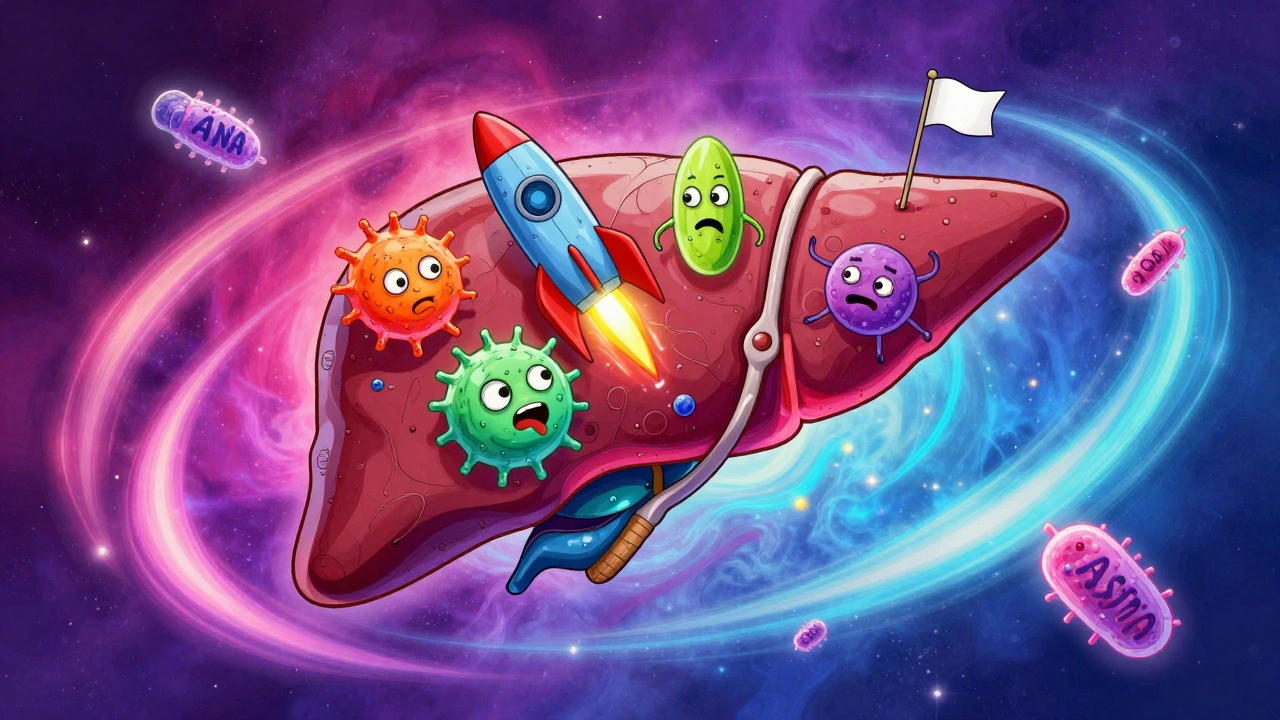
Autoimmune hepatitis isn’t caused by alcohol, viruses, or fatty foods. It’s your own immune system turning against your liver. Instead of fighting off germs, your body attacks healthy liver cells, causing inflammation that can quietly destroy your liver over years-if left untreated. This isn’t rare. Around 17 in every 100,000 people in the U.S. and Europe live with it. Most are women. Many don’t know they have it until their blood tests show strange results or they collapse from extreme fatigue.
How Your Immune System Turns on Your Liver
Normally, your immune system recognizes what belongs in your body and what doesn’t. With autoimmune hepatitis, something goes wrong. For reasons still unclear, your immune system starts seeing liver cells as invaders. It sends in white blood cells and antibodies to attack them. The result? Inflammation. Over time, this leads to scarring-fibrosis-and eventually cirrhosis, where the liver hardens and loses function.
There are two main types. Type 1 is the most common-making up 80 to 90% of cases. It often shows up in teens and young adults, especially women. Type 2 is rarer and mostly affects children between 2 and 14. Both types cause the same damage, but they show different antibodies in blood tests. Type 1 usually has antinuclear antibodies (ANA) or anti-smooth muscle antibodies (ASMA). Type 2 shows anti-LKM-1 or anti-LC-1 antibodies. These aren’t just labels-they help doctors confirm the diagnosis and rule out other liver diseases.
What Symptoms to Watch For
Autoimmune hepatitis doesn’t always scream for attention. Some people feel fine until their liver is badly damaged. Others have clear warning signs. The most common symptoms include:
- Extreme tiredness that doesn’t go away with rest
- Joint pain or swelling, often mistaken for arthritis
- Yellowing of the skin or eyes (jaundice)
- Dark urine and pale stools
- Loss of appetite and unexplained weight loss
- Abdominal discomfort, especially on the right side
One in four people with autoimmune hepatitis suddenly feels sick like they have the flu-fever, nausea, vomiting. That’s called acute onset. Another 40 to 50% have slow, creeping symptoms over months or years. About 15 to 20% have no symptoms at all. They’re found during routine blood work because their liver enzymes are sky-high.
How Doctors Diagnose It
There’s no single test for autoimmune hepatitis. Diagnosis is like solving a puzzle. Doctors look at four things: blood tests, antibodies, liver biopsy, and ruling out other causes.
Blood tests show elevated ALT and AST-liver enzymes that leak out when cells are damaged. In autoimmune hepatitis, these levels are often 5 to 10 times higher than normal. IgG, a type of antibody, is also raised-usually more than 1.5 times the normal level. That’s a big clue.
The next step is antibody testing. Finding ANA or ASMA points to Type 1. LKM-1 or LC-1 points to Type 2. But here’s the catch: some people with drug-induced liver injury (from medications like antibiotics or NSAIDs) show similar results. About 15 to 20% of autoimmune hepatitis cases are misdiagnosed as drug reactions at first.
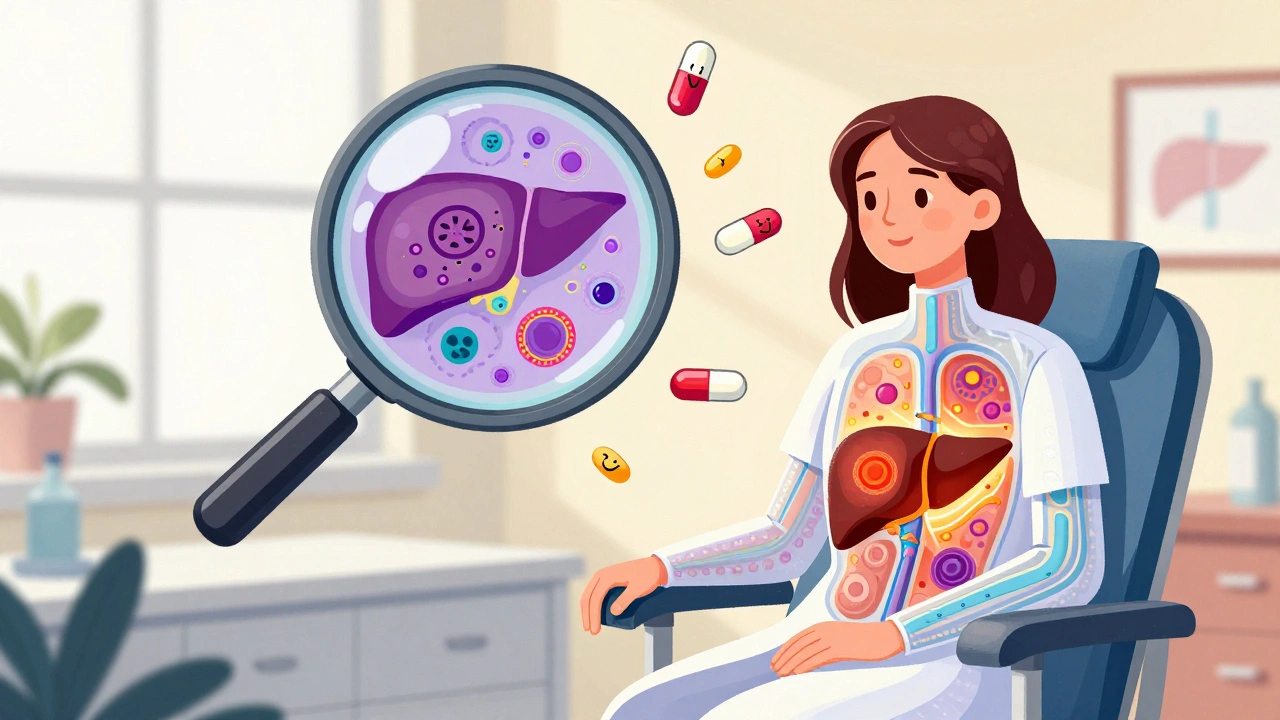
The gold standard is a liver biopsy. A tiny sample of liver tissue is taken with a needle and looked at under a microscope. In autoimmune hepatitis, you’ll see interface hepatitis-where immune cells eat away at the edge of liver lobules. You’ll also see lymphoplasmacytic infiltration and sometimes rosette formations, where liver cells arrange in circles. These patterns don’t show up in viral hepatitis or fatty liver disease.
The Revised International AIH Group Scoring System is used to tie all this together. It gives points for symptoms, blood markers, antibodies, and biopsy findings. When used by experienced hepatologists, it’s 97% accurate at confirming autoimmune hepatitis.
Treatment: Getting Your Immune System Back in Line
The goal isn’t to cure autoimmune hepatitis-it’s to stop the attack and prevent scarring. That means suppressing the immune system. The standard treatment is a combo of two drugs: prednisone and azathioprine.
Prednisone is a steroid. It works fast. Doctors usually start with 0.5 to 1 mg per kilogram of body weight daily-up to 60 mg. Within weeks, liver enzymes drop. But steroids come with a price: weight gain, mood swings, insomnia, bone thinning, and higher infection risk. That’s why azathioprine is added. It’s a slower-acting immunosuppressant that lets doctors reduce the steroid dose over time.
Most people see improvement in 3 to 6 months. Complete remission-normal liver enzymes and IgG levels-is reached in 65 to 80% of patients within 18 to 24 months. Once remission is stable for two years, doctors may try to taper off azathioprine. But many need low-dose maintenance for life.
If azathioprine doesn’t work or causes side effects (like nausea or low white blood cells), mycophenolate mofetil is the next option. It works well in 70 to 80% of those patients. For the 10% who don’t respond to any drug, liver transplant becomes the only option.
What Happens If You Don’t Treat It
Without treatment, autoimmune hepatitis is deadly. Studies show only 10% of untreated patients survive 10 years. The liver keeps getting damaged. Scar tissue builds up. Eventually, the liver fails. You’ll develop ascites (fluid in the belly), confusion from toxins, bleeding from swollen veins, and jaundice that won’t go away.
With treatment, survival jumps to 94% over 10 years. That’s nearly normal life expectancy. But it’s not just about living longer-it’s about living better. People who start treatment early avoid cirrhosis. Those who wait often end up needing a transplant.
Side Effects and Life on Immunosuppressants
Living with autoimmune hepatitis means living with medication side effects. Prednisone causes weight gain in 82% of users. Insomnia hits 67%. Mood changes, including anxiety and depression, affect 58%. Many patients say they feel like prisoners to their pills.
Long-term immunosuppression also raises the risk of infections. Pneumonia, urinary tract infections, and even shingles become more common. Bone density drops fast on steroids. That’s why doctors push calcium and vitamin D supplements-and sometimes prescribe drugs like bisphosphonates to protect bones.
Adherence is a huge challenge. One in five patients skip doses because they feel fine or hate the side effects. But stopping treatment-even for a few weeks-can trigger a flare. Liver enzymes spike. Inflammation returns. It’s like lighting a fire in your liver again.
What’s New in Treatment
There’s hope on the horizon. The FDA hasn’t approved a new drug for autoimmune hepatitis since 2002. But that’s changing. Clinical trials are testing biologics like rituximab (which targets B cells) and vedolizumab (which blocks immune cells from entering the liver). Early results are promising.
Obeticholic acid, originally developed for another liver disease, got orphan drug status in Europe in 2022. In trials, it helped 45% of patients reach remission in 24 weeks-almost double the placebo rate.
Genetics is the next frontier. Scientists have found that people with certain HLA gene variants-HLA-DRB1*03:01 and *04:01-are more likely to get autoimmune hepatitis and respond better to certain drugs. In the next 5 to 7 years, doctors may use genetic testing to pick the best drug for each patient, reducing side effects and improving outcomes.
Living With Autoimmune Hepatitis
It’s not just about medicine. It’s about lifestyle. Avoid alcohol completely. It speeds up liver damage. Eat a balanced diet. Don’t overload your liver with processed foods or excess sugar. Get vaccinated-flu, pneumonia, hepatitis A and B. Your immune system is already compromised.
Regular blood tests are non-negotiable. Every 2 to 4 weeks during treatment, then every 3 months once stable. Monitoring IgG and liver enzymes tells your doctor if the treatment is working or if you’re relapsing.
Emotionally, it’s tough. A 2022 survey of over 1,000 patients found 71% worried constantly about disease progression. Over half said their symptoms made it hard to keep their job. Support groups help. Talking to others who get it-like on the American Liver Foundation’s forum-makes a real difference.
One patient, Sarah K., shared her story: her ALT was 480 when diagnosed. Six weeks after starting treatment, it dropped to 32. She’s been in remission for five years. That’s the goal. Not perfection. But control. Stability. Life.
When to Think About a Transplant
Liver transplant isn’t a failure-it’s a second chance. About 5 to 10% of autoimmune hepatitis patients eventually need one. It’s usually because they didn’t respond to drugs or developed cirrhosis too early.
The good news? Transplant success rates for autoimmune hepatitis are among the highest of all liver transplant causes. Over 85% of patients survive five years post-transplant. The disease rarely comes back in the new liver.
But transplant isn’t a cure-all. You still need lifelong immunosuppressants. And you’re still at risk for infections, kidney problems, and certain cancers. It’s a trade-off-but for many, it’s the only way to survive.
Is autoimmune hepatitis the same as hepatitis B or C?
No. Hepatitis B and C are caused by viruses. Autoimmune hepatitis is caused by your immune system attacking your liver. That means the treatment is completely different. Viral hepatitis uses antiviral drugs. Autoimmune hepatitis uses immunosuppressants like steroids and azathioprine. Mixing up the two can be dangerous.
Can autoimmune hepatitis go away on its own?
Rarely. In a small number of cases, the immune system may calm down without treatment, and liver enzymes normalize. But this is unpredictable and risky. Most people who stop treatment without medical supervision relapse-and the damage often comes back worse. Treatment is almost always necessary to prevent long-term harm.
Are there any natural remedies or diets that cure autoimmune hepatitis?
No. There’s no evidence that supplements, herbs, or special diets can stop the immune system from attacking the liver. Some people claim success with milk thistle or turmeric, but these don’t change disease progression. In fact, some herbs can harm the liver further. Always talk to your doctor before taking anything-even if it’s labeled "natural."
How often do I need blood tests?
During the first few months of treatment, you’ll need blood tests every 2 to 4 weeks to check liver enzymes and drug levels. Once you’re stable and in remission, testing usually drops to every 3 months. If your doctor suspects a flare or you feel unwell, they may test more often. Skipping tests is one of the biggest risks to long-term health.
Can I still work and have a normal life with autoimmune hepatitis?
Yes, but it takes effort. Many people with well-controlled autoimmune hepatitis work full-time, raise families, and travel. Fatigue and medication side effects can be challenging, so pacing yourself matters. Some adjust their hours or work remotely. The key is staying on treatment, getting regular checkups, and communicating with your employer about your needs. You’re not defined by your diagnosis.
What’s the risk of liver cancer with autoimmune hepatitis?
If you develop cirrhosis, your risk of liver cancer (hepatocellular carcinoma) increases. About 1 to 2% of people with cirrhosis from autoimmune hepatitis develop cancer each year. That’s why doctors recommend regular ultrasound scans every 6 months once cirrhosis is diagnosed. Early detection saves lives. If your liver is still healthy, your cancer risk is very low.
Next Steps If You Suspect Autoimmune Hepatitis
If you have unexplained fatigue, joint pain, or abnormal liver tests, don’t wait. See a hepatologist-a liver specialist-not just your GP. General doctors often miss autoimmune hepatitis because it’s rare and symptoms overlap with many other conditions.
Ask for: a full liver panel, ANA and ASMA blood tests, and a referral for a liver biopsy if needed. Bring a list of all medications and supplements you take-even vitamins-because drug-induced liver injury can mimic autoimmune hepatitis.
Early diagnosis means early treatment. And early treatment means you can live a full, active life. This isn’t a death sentence. It’s a chronic condition you can manage-with the right care, the right team, and the right mindset.



Casey Mellish
December 14, 2025 AT 04:08Just read this after my sister’s diagnosis last month. The part about Type 1 vs Type 2 antibodies? Total game-changer. We were stuck for months thinking it was viral hepatitis. Turns out, her ANA was through the roof. Doctors missed it because she’s only 22 and ‘too young for liver issues.’
Now she’s on prednisone and azathioprine. Side effects? Yeah. She gained 15 pounds and cries at commercials. But her ALT dropped from 512 to 41 in six weeks. This isn’t just medical info-it’s life-saving.
Tyrone Marshall
December 14, 2025 AT 16:39There’s something deeply human about how our bodies turn against themselves. It’s not a flaw-it’s a tragedy of biology. We evolved to protect, yet here we are, our own immune system becoming the enemy. And yet, we’ve built treatments that can quiet that rebellion. That’s not just science. That’s grace.
For anyone reading this feeling alone: you’re not broken. You’re a battleground-and you’re still standing.
Emily Haworth
December 15, 2025 AT 06:30Wait… so are you saying the government is secretly poisoning people with glyphosate and it’s causing this?? 😳 I read on a forum that the FDA hides the real cause because pharma makes more money off steroids than curing it… 🤔 #Conspiracy #LiverTruth
Tom Zerkoff
December 16, 2025 AT 13:22While the clinical management of autoimmune hepatitis is well-documented, one must not overlook the psychosocial burden borne by patients. The chronicity of immunosuppressive therapy, coupled with the stigmatization of steroid-induced phenotypes-weight gain, mood lability, and insomnia-creates a multidimensional challenge beyond hepatology. Adherence rates are not merely behavioral but existential. Patients are not noncompliant; they are exhausted.
Further, the absence of FDA-approved biologics since 2002 reflects a systemic neglect of autoimmune liver diseases in drug development pipelines. This is not an oversight-it is a moral failure.
Yatendra S
December 17, 2025 AT 02:21Life is a paradox, bro. Our immune system is supposed to protect us… but sometimes, it’s the one killing us. 🤯 Like, why? Why does the universe do this? Is it punishment? Or just… randomness? I don’t know. But I do know: if you’re reading this, you’re stronger than you think. 💪
Himmat Singh
December 17, 2025 AT 21:20It is an undeniable fact that the prevailing medical paradigm regarding autoimmune hepatitis is predicated upon an unproven hypothesis: that the immune system is the primary aggressor. This assumption, however, lacks rigorous mechanistic validation. Alternative etiologies, including environmental mycotoxins and endocrine disruptors, are systematically ignored due to institutional inertia. The reliance upon prednisone, a glucocorticoid with well-documented metabolic toxicity, represents not therapy, but palliative suppression.
One must question: if the body is attacking the liver, why is the liver the target? The answer, I submit, lies not in immunology, but in toxicology.
kevin moranga
December 18, 2025 AT 03:01I’ve been living with this for 8 years now. Started with fatigue so bad I’d nap on the toilet. Then jaundice. Then the diagnosis. I thought my life was over. But here’s the thing-treatment didn’t just save my liver. It saved my soul.
Yeah, prednisone made me feel like a zombie with a side of hunger. Azathioprine gave me nausea like a drunk squirrel. But I’m alive. I’m working. I’m hiking. I’m watching my niece grow up.
Don’t let fear stop you from starting treatment. I know it’s scary. I was scared too. But you’re not alone. And you’re not done yet. Keep going. One pill at a time.
Alvin Montanez
December 19, 2025 AT 01:38People think they can just pop pills and live normally. But this isn’t diabetes. This isn’t high blood pressure. This is your body betraying you. And the drugs? They make you fat, depressed, and weak. You become a shadow of yourself. And for what? To live 10 more years in a chemical haze?
They tell you it’s ‘manageable.’ But what’s manageable about losing your identity to a steroid-induced moon face? What’s manageable about being too tired to hold your kid? This isn’t medicine-it’s slow surrender.
And don’t get me started on the ‘support groups.’ Everyone’s just posting their lab results like they’re winning a game. It’s performative suffering.
Lara Tobin
December 20, 2025 AT 19:54I just want to say… I see you. I know how hard it is to wake up every day and take pills that make you feel worse than the disease. I’ve been there. The fatigue. The fear. The way people say, 'But you look fine!' and you just want to scream.
You’re not weak for needing help. You’re not broken for struggling. You’re human. And you’re not alone. I’m here. I’m rooting for you. 💛
Jamie Clark
December 22, 2025 AT 14:34Stop romanticizing this. It’s not a ‘journey.’ It’s a prison sentence with a side of side effects. They give you steroids to save your liver, then blame you for gaining weight. They tell you to ‘stay positive’ while you’re on suicide watch because your dopamine crashed. This isn’t resilience porn. This is medical negligence dressed up as hope.
If you’re not angry, you’re not paying attention.
Keasha Trawick
December 23, 2025 AT 23:20Let’s talk about the *drama* of autoimmune hepatitis-this isn’t just a disease, it’s a full-on Shakespearean tragedy with a side of immunoglobulins. 🎭 The liver, noble and silent, betrayed by its own court of T-cells and rogue antibodies. ANA? The villainous queen. Prednisone? The toxic king who rules with an iron fist and a moon face. And Azathioprine? The loyal knight, slow to act but steadfast.
And then… the biopsy. The sacred scroll of liver tissue, whispering secrets in histology. Interface hepatitis? That’s the bloody dagger in the hallway. Lymphoplasmacytic infiltration? The ghostly chorus singing your immune system’s betrayal.
This isn’t medicine. It’s mythology with lab reports.
Webster Bull
December 24, 2025 AT 03:17Man, this post hit hard. I got diagnosed last year. Thought I was gonna die. Now I’m in remission. Still take my pills. Still tired. But I’m here. And I’m not giving up. 💪
Bruno Janssen
December 24, 2025 AT 08:02Why does no one talk about the loneliness? You sit there, taking pills, watching your body change, and everyone else is living. Parties. Travel. Eating whatever they want. You’re stuck. No alcohol. No junk food. No spontaneity. And you can’t even explain it because they think you’re just ‘being dramatic.’
I don’t want to be strong. I just want to be normal.
Scott Butler
December 24, 2025 AT 11:21Why are we giving steroids to American women? In my country, we treat this with traditional herbal remedies and fasting. No drugs. No science. Just discipline. This whole system is broken. You’re being sold a lie. Your liver doesn’t need chemicals-it needs purity. And discipline. And patriotism.