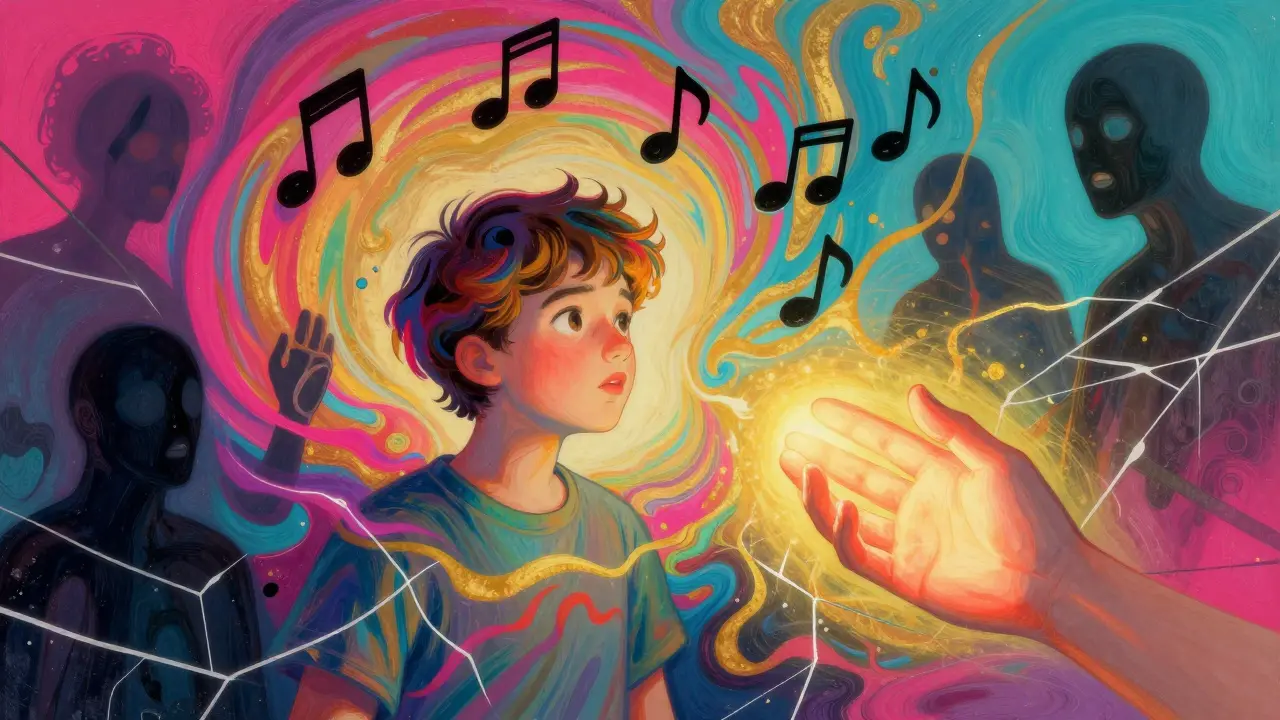
When someone experiences their first episode of psychosis, everything changes-fast. They might hear voices no one else can hear, believe things that aren’t true, or struggle to speak clearly. Their world becomes confusing, frightening, and isolating. But here’s the truth most people don’t know: first-episode psychosis is not a life sentence. With the right help, delivered quickly, most people recover and go on to live full, meaningful lives. The difference between recovery and long-term struggle often comes down to one thing: timing.
What Happens During a First Episode of Psychosis?
A first episode of psychosis isn’t just feeling stressed or having a bad day. It’s when the brain starts misfiring in ways that blur the line between reality and imagination. Someone might see shadows moving when no one’s there, hear whispers telling them they’re in danger, or become convinced that strangers are plotting against them. They might withdraw from friends, stop showering, or talk in ways that don’t make sense. These aren’t choices-they’re symptoms of a medical condition affecting brain function. It’s not rare. About 1 in 100 people will experience psychosis before age 30. For many, it starts in late teens or early twenties-a time when school, work, and relationships are just getting started. Left untreated, psychosis can lead to job loss, broken relationships, hospitalization, and even homelessness. But the good news? The brain is still highly adaptable during this early stage. This is called the window of opportunity, and it lasts roughly 12 weeks after symptoms first appear.Why Waiting Makes Things Worse
Delaying treatment is one of the biggest mistakes families and doctors make. Every week without help increases the risk of long-term damage. Research shows that if someone waits more than three to six months to get care, their ability to return to school, work, or normal social life drops sharply. The brain’s plasticity-the ability to heal and rewire-starts to fade after that point. The RAISE study, led by the National Institute of Mental Health, tracked over 400 people with first-episode psychosis. Those who got help within 12 weeks were twice as likely to keep their jobs or stay in school. They had fewer hospital visits. Their symptoms improved faster. And they stayed in treatment longer. Those who waited? Many dropped out of care entirely. Their symptoms worsened. Their lives unraveled. The World Health Organization says treatment should start within 12 weeks of the first signs. But in the U.S., the average delay is 78 weeks. That’s almost two years. In some rural areas, people wait over a year just to get seen. By then, the chance of full recovery has already slipped.What Works: Coordinated Specialty Care
There’s a proven solution: Coordinated Specialty Care (CSC). It’s not one treatment-it’s a team approach designed specifically for first-episode psychosis. CSC teams include psychiatrists, therapists, case managers, employment coaches, and family specialists-all working together under one roof. CSC has five core parts:- Medication management: Antipsychotics are used, but at lower doses than for chronic schizophrenia. High doses (over 400mg chlorpromazine equivalent) are avoided because they cause more side effects without better results.
- Psychotherapy: Cognitive behavioral therapy tailored for psychosis helps people understand their symptoms, manage distress, and build coping skills. Weekly sessions are standard.
- Case management: A case manager helps with housing, transportation, insurance, and appointments. They call twice a week during early stages to make sure no one falls through the cracks.
- Supported employment and education: This isn’t job training-it’s real-world coaching. People get help applying for jobs, adjusting to school schedules, or returning to college. Programs using the Individual Placement and Support (IPS) model get 50-60% of participants into paid work or school. Traditional programs? Only 20-30%.
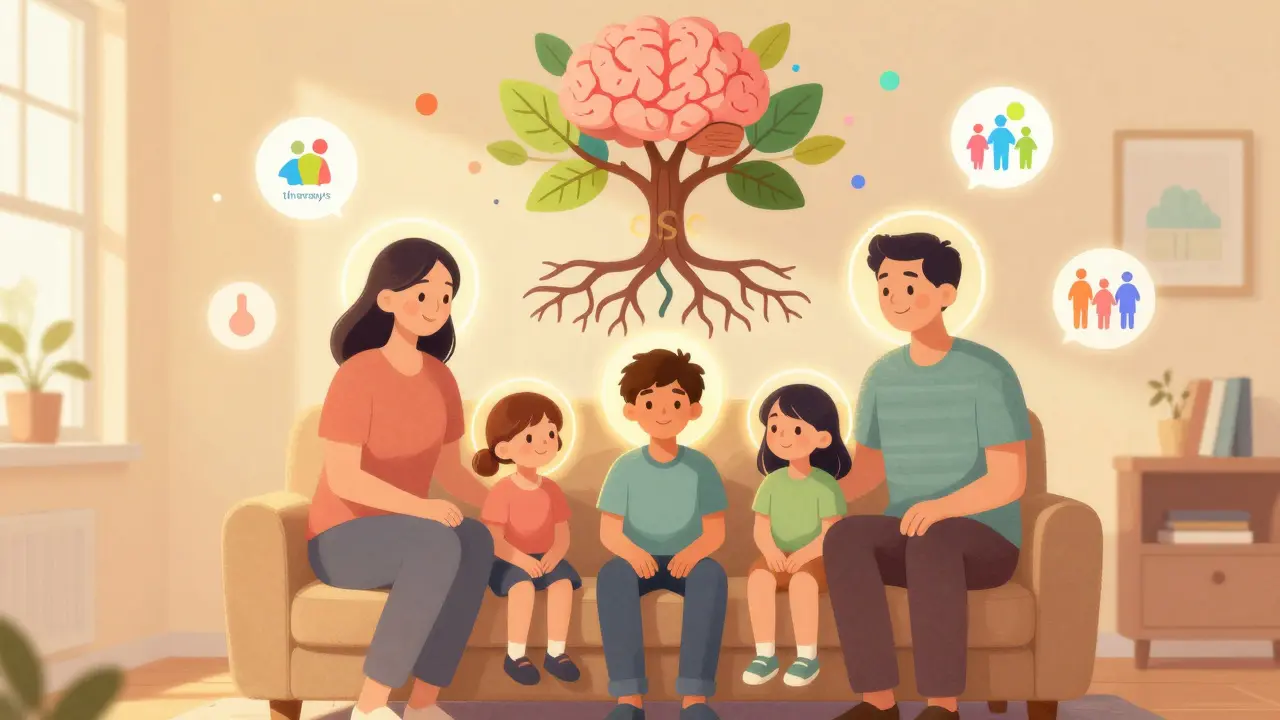
- Family psychoeducation: This is where many programs fail-and where they should shine. Families are taught what psychosis is, how to respond to symptoms, and how to reduce stress at home. Just 8-12 sessions over six months can cut relapse rates by 25%.
Family Support Isn’t Optional-It’s Essential
Families don’t cause psychosis. But they can make recovery easier-or harder. When a loved one is in crisis, parents, siblings, or partners often feel helpless, scared, or guilty. They might yell, punish, or try to reason with delusions. That’s natural. But it makes things worse. Family psychoeducation changes that. Instead of blaming or avoiding, families learn how to communicate calmly, recognize early warning signs, and set healthy boundaries. They’re taught not to argue with delusions, but to say, “I know this feels real to you, and I’m here to help.” In Washington State’s New Journeys program, 95% of teams met fidelity standards. Why? Because they made family involvement part of the contract. They didn’t just invite families-they trained them. They offered sessions in the evening, over Zoom, even in the home. And it worked: family participation jumped from 55% to over 80% in some areas. In Louisiana, mobile crisis teams showed up at homes within 14 days of a call. That’s faster than most emergency rooms. And when families were involved from day one, patients stayed in treatment 50% longer.Barriers to Getting Help
Even though CSC works, most people still don’t get it. Why? First, money. CSC costs $8,000-$12,000 per person per year. Standard care? $5,000-$7,000. Insurance doesn’t always cover all parts-especially employment support or family therapy. Only 31 states have Medicaid waivers that fully fund CSC. Second, access. Only 35% of U.S. counties have a certified CSC program. In rural areas, it’s worse. 62% have zero access. People drive hours just to see a psychiatrist. Some never make it. Third, workforce. CSC teams need specialized training. But turnover is high-22% a year. Clinicians burn out. There aren’t enough trained therapists, case managers, or peer support specialists. And fourth, stigma. Many families still think psychosis means “crazy” or “dangerous.” They hide it. They delay. They wait for it to “pass.” But psychosis doesn’t pass. It progresses.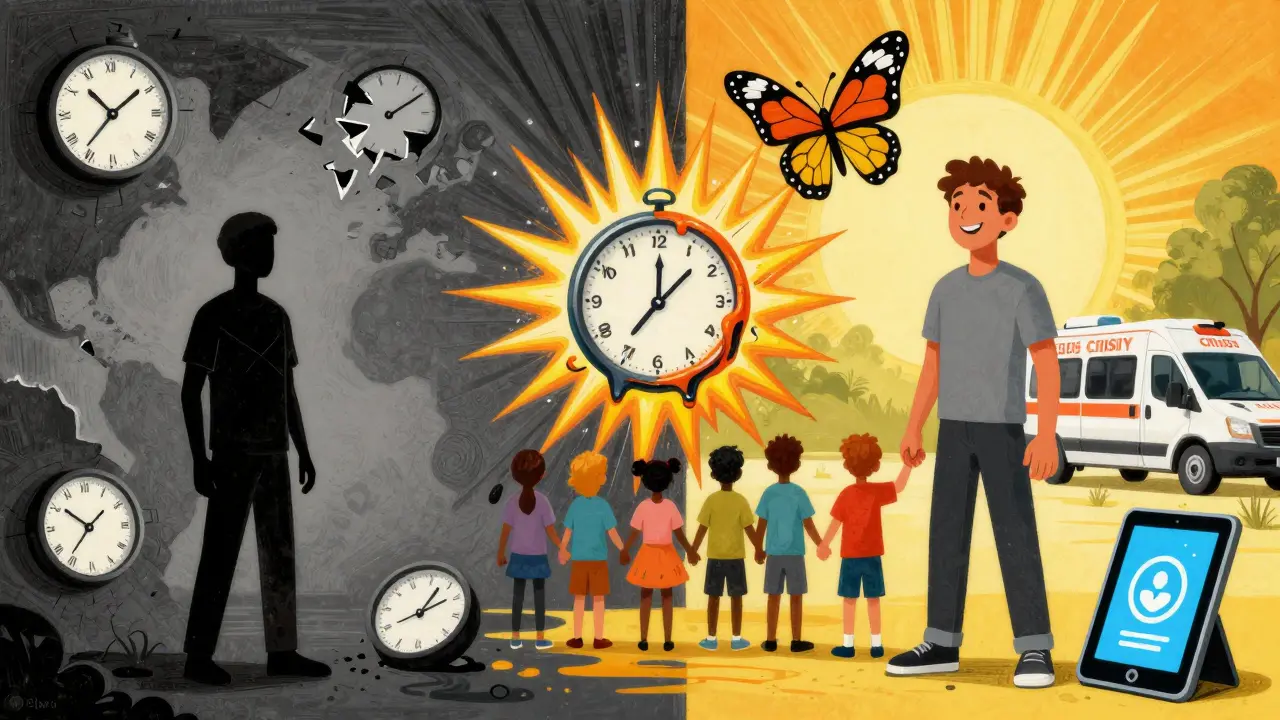
What’s Changing-and What’s Next
There’s progress. In 2010, there were 15 CSC programs in the U.S. Today, there are 347. The federal government gave $25 million in 2023 to expand them. The VA/DOD updated their guidelines in 2023 with 41 evidence-based recommendations. The National Institute of Mental Health is investing $50 million through 2026 to find early warning signs using brain scans and AI. New tools are emerging too. Apps like PRIME Care let people track moods, sleep, and symptoms daily. Early trials show a 30% drop in hospitalizations. Telehealth is helping families join sessions from home. Mobile crisis units are cutting response times from weeks to days. But here’s the hard truth: without sustainable funding, 80% of people with first-episode psychosis won’t get the care they need by 2027. Grants run out. Programs close. People fall through.What You Can Do
If you suspect someone you love is having a first episode of psychosis:- Don’t wait. Don’t assume it’s just stress or teenage mood swings.
- Look for signs: social withdrawal, strange beliefs, disorganized speech, sleep changes, paranoia.
- Call a local mental health crisis line. Ask: “Do you have a Coordinated Specialty Care program for first-episode psychosis?”
- Encourage-but don’t force-treatment. Offer to go with them.
- Join a family support group. You’re not alone.
Hope Is Real
A 2023 meta-analysis of 28 studies found that people in CSC programs had 35% fewer relapses and significantly better quality of life than those who didn’t get early help. One woman in Minnesota, diagnosed at 19, went from dropping out of college to earning her master’s degree within five years. A young man in Oregon went from sleeping on his friend’s couch to managing his own apartment and working part-time at a coffee shop. Recovery isn’t about erasing the past. It’s about building a future. And it starts with one decision: to act now.What are the early signs of first-episode psychosis?
Early signs include social withdrawal, unusual beliefs (like thinking someone is spying on you), hearing or seeing things others don’t, trouble concentrating, disorganized speech, sleep changes, and a drop in school or work performance. These aren’t normal teenage behavior-they’re warning signs that need attention.
How soon should treatment start after symptoms appear?
Treatment should begin within 12 weeks of the first symptoms. Research shows that delays longer than three to six months lead to irreversible declines in functioning. The sooner care starts, the better the chances of full recovery.
Is medication always necessary for first-episode psychosis?
Medication is usually part of treatment, but it’s not the only part. Antipsychotics are used at lower doses than for chronic schizophrenia, and only after discussing risks and benefits with the person. High doses (over 400mg chlorpromazine equivalent) are avoided because they increase side effects without improving outcomes. The goal is to use the least amount needed to reduce symptoms.
Can family members really make a difference in recovery?
Yes. Family psychoeducation reduces relapse rates by 25%. When families learn how to respond calmly, avoid arguing with delusions, and reduce stress at home, the person with psychosis is more likely to stay in treatment and recover. Supportive families are one of the strongest predictors of long-term success.
Where can I find a Coordinated Specialty Care program?
Check the Early Psychosis Intervention Network (EPINET) registry, which lists all certified CSC programs in the U.S. You can also call your local mental health authority, university hospital, or NAMI chapter. Ask specifically if they offer CSC for first-episode psychosis-not just general mental health services.
Is CSC covered by insurance?
Medicaid covers CSC components in 31 states, but coverage varies. Private insurance often covers therapy and medication, but may not pay for employment coaching or family sessions. Ask the program directly-they often have financial counselors who help navigate billing and find funding.
What if someone refuses treatment?
Forcing someone into treatment rarely works. Instead, focus on building trust. Offer to go with them to a first appointment. Share stories of people who recovered. Connect them with peer support groups. Sometimes, just knowing someone cares enough to help-even if they’re scared-can be the first step toward accepting care.


suhani mathur
December 24, 2025 AT 10:48Oh wow, a post that doesn’t end with ‘just pray harder’? Revolutionary. I’m from India, and let me tell you-our families still think psychosis is karma from a past life. But hey, at least we’re starting to talk about it instead of locking people in basements. CSC sounds like the only thing that doesn’t sound like a cult. Still waiting for someone to explain why we pay $12k/year when a good chai and a long chat works 70% of the time. Just saying.
Also-why is no one talking about how the system fails BIPOC communities? Because yes, 35% of US counties have CSC, but 90% of them are in zip codes where people own Tesla’s and know what ‘fidelity scores’ mean. Just saying.
Also also-family psychoeducation? Yes. But what if your family thinks you’re possessed? Then what? Just sayin’.
Diana Alime
December 25, 2025 AT 03:48ok so i just read this and i’m crying?? like not fake crying but actual ugly tears?? i have a cousin who had a first episode and we waited like 14 months bc we thought it was ‘just anxiety’ and now she’s on disability and barely talks to us. why does it take a whole system to fix something that should be as simple as ‘go to the doctor’??
also why is medication always the first thing people think of?? like can’t we just give them yoga and a hug??
also why is the internet so full of people who think this is ‘woke nonsense’?? i’m so mad. i need a nap.
bharath vinay
December 25, 2025 AT 11:18Let’s be real. Psychosis isn’t a medical condition-it’s a government mind-control experiment gone wrong. The voices? They’re not in their head. They’re from the satellites. The ‘window of opportunity’? That’s just the window they give you before the neural implants activate. CSC teams? They’re not therapists-they’re recruiters for the pharmaceutical-industrial complex. Lower doses? Of course. They don’t want you cured. They want you compliant. And don’t get me started on ‘family psychoeducation.’ That’s just the state conditioning you to accept surveillance as love.
Also, why is no one asking who funds these ‘research studies’? The same people who profit from lifelong antipsychotic prescriptions. Wake up.
And the ‘meta-analysis’? 28 studies? All funded by NIMH. Coincidence? I think not.
They’re not helping you. They’re harvesting you.
claire davies
December 25, 2025 AT 22:51Oh my god, I’m sitting here in my London flat with a cup of Earl Grey and tears in my eyes because this is the most beautifully written, human, and desperately needed piece I’ve read in years. I work with refugee teens here, and so many come in with symptoms no one recognizes-because no one’s trained, no one’s funded, and no one’s willing to admit that mental health isn’t a luxury. I’ve seen kids go from whispering to screaming in three weeks because the waiting list was six months. Six months.
And the family part? I’ve watched grandmas sit in silence for 45 minutes while a therapist explains ‘delusions aren’t lies’-and then, slowly, they start asking questions. That’s the magic. Not the meds. Not the apps. The quiet, messy, stubborn act of showing up and saying, ‘I don’t understand, but I’m not leaving.’
Also, can we just rename ‘Coordinated Specialty Care’ to ‘Human Care’? Because that’s what it is. And if we can’t fund that, then we’re not a society. We’re a spreadsheet with a flag.
Chris Buchanan
December 27, 2025 AT 12:19Okay, so I work in HR and we had a guy last year who started muttering about ‘the algorithm’ during meetings. We thought he was just weird. Turned out he was having a first episode. We got him into a CSC program in 11 days-thanks to a coworker who read this exact article and yelled ‘IT’S NOT JUST STRESS’ at the boss. He’s back now, doing data entry, and he brought me cookies. Cookies.
Here’s the thing: this isn’t a ‘mental health issue.’ It’s a *systemic failure*. We treat psychosis like it’s a surprise party no one invited you to. But it’s not. It’s a medical emergency with a 12-week clock. And we’re all just sitting there like, ‘Hmm, maybe he’ll snap out of it.’
Teachers, coaches, pastors-you are the first responders. Learn the signs. Stop being polite. Say ‘I’m worried’ before you say ‘maybe it’s just puberty.’
Wilton Holliday
December 28, 2025 AT 16:35Just wanted to say thank you for writing this. I’m a peer support specialist in Ohio and I’ve seen this play out too many times. One girl, 17, stopped eating, stopped talking, started drawing the same symbol over and over. Her mom thought it was ‘a phase.’ Took 9 months to get her in. She’s doing great now-college, part-time job, even started a podcast about recovery.
But here’s the thing: it wasn’t the meds. It wasn’t even the therapy. It was her little brother sitting with her every night, watching anime, not saying a word. Just being there.
Family support isn’t a ‘component.’ It’s the heartbeat.
Also-yes, funding is broken. But you don’t need a grant to say ‘I’m here.’
❤️
Rachel Cericola
December 28, 2025 AT 22:18Let me cut through the fluff. This article is 95% accurate. The other 5%? It’s the part where they pretend this is a solvable problem with current funding. It’s not. We’re talking about a population that’s largely young, poor, and marginalized-and we’re giving them a ‘team’ that’s underpaid, overstretched, and often replaced every 14 months because burnout is a feature, not a bug.
And don’t get me started on ‘family psychoeducation.’ What if your family is abusive? What if your mom blames you for ‘bringing this on’? What if your dad says ‘real men don’t hear voices’? Then what? You get a pamphlet and a Zoom call? No. You get abandoned.
And yes, CSC works-but only if you’re white, middle-class, and live near a university hospital. For everyone else? Good luck. We’ve built a system that rewards privilege and punishes poverty. And then we pat ourselves on the back for ‘early intervention.’
Real change? Defund the police. Fund CSC. Everywhere. Now.
Paula Villete
December 29, 2025 AT 11:59so i just finished reading this and i’m thinking… what if psychosis isn’t a disease at all? what if it’s a signal? a way the brain says ‘this world is too much, i need to rewrite the rules’? and we’re medicating the messenger instead of fixing the message?
don’t get me wrong-i’m not saying we shouldn’t help. i’m saying we’re using a hammer when we need a symphony.
the ‘window of opportunity’? maybe it’s not about fixing the brain. maybe it’s about fixing the world around it.
also-typo: ‘recovery isn’t about erasing the past’ - i think you meant ‘not about erasing’? just saying 😊
but honestly? this is the most honest thing i’ve read all year. thank you.
Georgia Brach
December 29, 2025 AT 13:39There is no such thing as ‘first-episode psychosis’ as a distinct diagnostic entity. It’s a construct created by the DSM-5 to expand pharmaceutical markets. The symptoms described are indistinguishable from severe depression with psychotic features, bipolar disorder with mood-congruent delusions, or even substance-induced psychosis. Labeling it as a separate condition allows for the creation of expensive, proprietary treatment protocols that lack longitudinal evidence.
The ‘window of opportunity’ is a marketing slogan, not a biological truth. The RAISE study was funded by the NIMH, which has a 78% conflict-of-interest rate with pharmaceutical sponsors. The ‘CSC model’ is a profit center disguised as compassion.
And family psychoeducation? It’s social control under the guise of support. The goal is not recovery-it’s normalization.
Stop pathologizing human distress. Start addressing poverty, trauma, and systemic neglect.
Payson Mattes
December 30, 2025 AT 16:45Hey, I’ve been thinking about this a lot since I read your post. I used to work at a county clinic and I swear-every single person who came in with psychosis had been through the foster system. Every. Single. One.
And no one ever asked why. They just gave them meds and sent them on their way.
Here’s the thing: psychosis isn’t a brain glitch. It’s a trauma response. The voices? They’re echoes of abuse. The paranoia? It’s what happens when you’ve been betrayed too many times.
So yeah, CSC helps-but only if you fix the childhood first. Otherwise, you’re just putting a bandaid on a bullet wound.
Also, I’ve seen the same 3 people cycle through 5 different CSC programs. No one ever asks what happened before age 12.
Just saying.
Steven Mayer
January 1, 2026 AT 14:44The neurobiological underpinnings of first-episode psychosis are characterized by dysregulation of dopaminergic signaling in the mesolimbic pathway, with concomitant reductions in prefrontal cortical gray matter volume and altered functional connectivity within the default mode network. The window of opportunity hypothesis posits that neuroplasticity is maximally malleable during the prodromal and early symptomatic phases, prior to the consolidation of maladaptive neural circuits.
However, the efficacy of CSC is confounded by high rates of non-adherence, particularly among populations with comorbid substance use disorders and low socioeconomic status, which introduce significant effect modifiers that are rarely accounted for in fidelity metrics.
Furthermore, the assertion that family psychoeducation reduces relapse by 25% is statistically significant but clinically modest when contextualized against the effect size of antipsychotic monotherapy (Cohen’s d = 0.82).
Resource allocation must prioritize scalable pharmacological interventions over labor-intensive psychosocial models, given current workforce deficits and fiscal constraints.
TL;DR: Meds work. People don’t show up. Fix the system, not the symptoms.
suhani mathur
January 2, 2026 AT 17:29Wow. Someone actually said it. The foster system. I’ve been in it. I was 15 when I started hearing voices. No one asked why. They just gave me risperidone and told my caseworker to ‘monitor.’
My caseworker? She had 80 kids. She didn’t even know my name.
So yeah. CSC helps. But what if you never had a home to go back to?
This isn’t about timing.
This is about who gets to be worth saving.