
NSAID Medication Safety Checker
Result will appear here
Enter a medication name to check its safety for heart failure patients.
When you have heart failure, even a simple headache or sore knee can become a dangerous decision. Many people reach for over-the-counter painkillers like ibuprofen or naproxen without realizing they might be pushing their heart closer to failure. The truth is, NSAIDs - the class of drugs that includes common pain relievers - can trigger sudden, life-threatening fluid buildup in people with heart failure. This isn’t a rare side effect. It’s a well-documented, predictable danger that affects thousands every year.
How NSAIDs Trigger Fluid Retention
NSAIDs work by blocking enzymes called COX-1 and COX-2, which reduce inflammation and pain. But those same enzymes play a critical role in keeping your kidneys working properly. When you take an NSAID, you disrupt the production of prostaglandins - natural chemicals that help your kidneys release sodium and water. Without them, your kidneys hold onto more salt and fluid than they should.
This extra fluid doesn’t just sit around. It floods your bloodstream, increasing the volume your heart has to pump. For a healthy heart, that’s no big deal. But if your heart is already weak from heart failure, this extra load can push it into acute decompensation. Within days, you might notice swelling in your ankles, sudden weight gain, or trouble breathing while lying down. These aren’t random symptoms. They’re direct signs your heart is struggling under the added pressure.
Research from 2003 by Dr. Gysèle Bleumink showed that NSAIDs can reduce kidney blood flow by 20-30% in heart failure patients. That’s not a small drop. It’s enough to make your kidneys think your body is dehydrated - so they hang onto even more fluid. The effect is worse in older adults, people with diabetes, or those already on diuretics. Even a few days of ibuprofen can be enough to trigger hospitalization.
All NSAIDs Carry the Same Risk - Even the "Safer" Ones
For years, people thought COX-2 inhibitors like celecoxib (Celebrex) were safer for the heart. They were marketed as gentler on the stomach and, by extension, safer overall. But that’s not true when it comes to heart failure. The same 2003 review by Bleumink found that COX-2 inhibitors affect kidney function just like traditional NSAIDs. They cause the same sodium retention, same fluid buildup, same risk of worsening heart failure.
Recent studies confirm this. A 2022 analysis of over 100,000 people with type 2 diabetes in Denmark found that even short-term use of celecoxib, diclofenac, ibuprofen, or naproxen raised the risk of heart failure hospitalization by 24% to 88%. The highest risk came in the first week - meaning you don’t need to take these drugs for months to be in danger. Just two or three doses can be enough.
Some doctors still tell patients naproxen is the "safest" NSAID. While it may have a slightly lower risk of heart attack compared to others, it still causes fluid retention just like the rest. There is no NSAID that’s truly safe for someone with heart failure. The European Society of Cardiology and the American Heart Association both classify NSAIDs as absolutely contraindicated - meaning they should never be used.
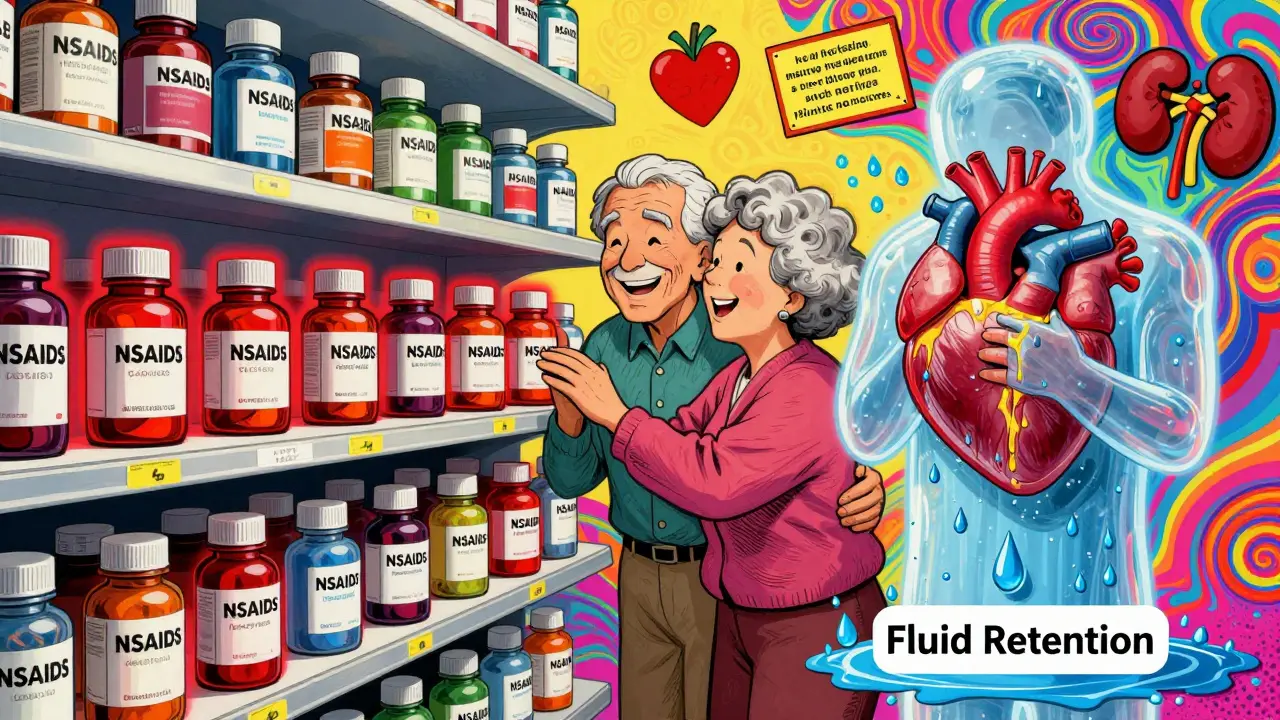
Real People, Real Consequences
Behind the statistics are real stories. One patient in the r/heartfailure subreddit shared that after taking two 400mg pills of ibuprofen for a backache, he gained 10 pounds in 72 hours. His legs swelled so badly he couldn’t walk. He ended up in the ER with fluid around his lungs.
A 2018 American Heart Association survey found that 37% of heart failure patients had taken NSAIDs without knowing the risk. Of those, 62% had a worsening of symptoms that required medical care. Many didn’t realize that Advil or Aleve counted as NSAIDs. They thought only prescription painkillers were dangerous.
Family members often don’t know either. A wife might give her husband ibuprofen for his arthritis, not realizing it could undo months of heart failure management. Nurses in clinics report patients coming in with sudden weight gain, blaming it on "eating too much" - not knowing it’s the painkiller they took for a headache.
What Should You Take Instead?
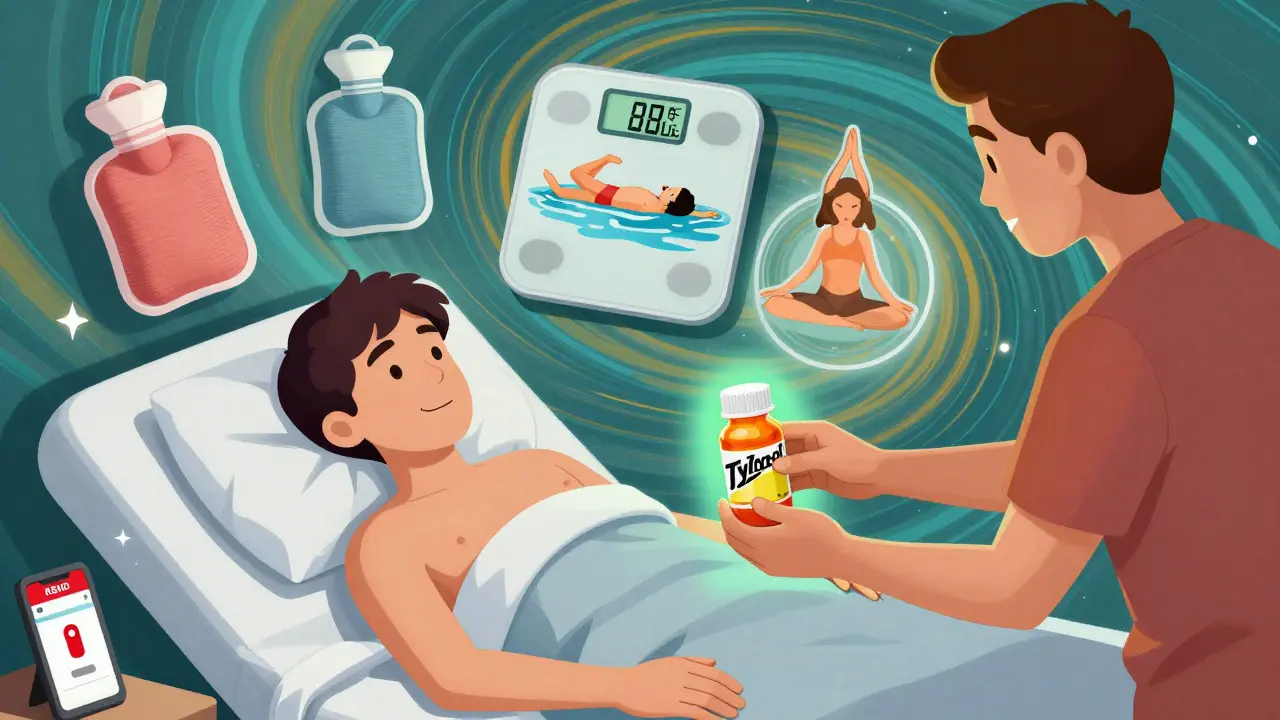
Acetaminophen (Tylenol) is the go-to alternative. It doesn’t affect kidney prostaglandins the way NSAIDs do, so it doesn’t cause fluid retention. It’s not as strong for inflammation, but for pain relief - headaches, muscle aches, joint stiffness - it’s usually enough.
But even acetaminophen isn’t risk-free. Taking too much can damage your liver, especially if you’re also on other medications or drink alcohol. Always stick to the lowest effective dose. Don’t combine it with cold medicines or sleep aids that already contain acetaminophen - you might accidentally overdose.
Non-drug options matter too. Heat packs, gentle stretching, physical therapy, and massage can help with chronic pain. For arthritis, weight management and low-impact exercise like swimming or walking can reduce joint stress. If pain is severe, talk to your doctor about other options like topical creams (diclofenac gel applied to the skin has much less systemic effect) or nerve-targeted therapies.
Why Doctors Still Prescribe NSAIDs - And What You Can Do
Despite clear guidelines, a 2020 study found that nearly 16% of heart failure patients still got NSAID prescriptions within a year of diagnosis. Why? Because pain is real. Doctors are under pressure to treat symptoms quickly. Many don’t have time to review every medication during a 10-minute visit. And patients rarely mention they’re taking over-the-counter pills.
Here’s what you can do:
- Keep a written list of every medication you take - including vitamins, supplements, and OTC painkillers.
- Bring that list to every appointment. Say: "I’m on this list. Is anything here dangerous for my heart?"
- Ask your pharmacist: "Is this safe for heart failure?" Pharmacists are trained to catch these interactions.
- Never take an NSAID without asking your doctor first - even if it’s "just once."
- Teach a family member to watch for sudden weight gain (more than 2 pounds in a day) or swelling. That’s your early warning sign.
The U.S. FDA and European Medicines Agency now require warning labels on all NSAID packaging about heart failure risk. But labels are easy to miss. You need to be proactive.
The Bigger Picture: Why This Matters
Heart failure patients who take NSAIDs are 28% more likely to be readmitted to the hospital within 30 days, according to the 2024 Global Heart Failure Registry. That’s not just about health - it’s about cost, stress, and quality of life. Each hospital stay adds up: missed work, disrupted sleep, anxiety, and the risk of complications like blood clots or infections.
There’s a new mobile app in development by the American College of Cardiology, set to launch in mid-2025, that will alert heart failure patients when they try to order or scan an NSAID at the pharmacy. That’s progress. But until then, the responsibility falls on you.
NSAIDs aren’t the enemy of pain relief - they’re the enemy of heart failure stability. You don’t need to suffer. There are safer ways to manage pain. You just need to know which ones to choose - and who to ask before you take anything.
Can I take ibuprofen if I have heart failure?
No. Ibuprofen and other NSAIDs increase fluid retention and raise the risk of heart failure hospitalization, even with short-term use. Studies show a 24-88% higher risk of hospitalization within days of taking ibuprofen. Acetaminophen is the recommended alternative for pain relief.
Is naproxen safer than other NSAIDs for heart failure?
No. While some studies suggest naproxen may have a slightly lower risk of heart attack compared to other NSAIDs, it still causes fluid retention and worsens heart failure. All NSAIDs - including naproxen - are classified as absolutely contraindicated in heart failure by major medical societies. No NSAID is safe.
How quickly can NSAIDs cause heart failure symptoms to worsen?
Symptoms can worsen within 24 to 72 hours. Patients have reported sudden weight gain of 4-10 pounds, swelling in the legs, and shortness of breath after just two or three doses of ibuprofen or naproxen. The highest risk occurs in the first week of use, according to large-scale studies.
What should I do if I accidentally took an NSAID?
Stop taking it immediately. Monitor for weight gain (more than 2 pounds in 24 hours), swelling in your ankles or belly, or worsening shortness of breath. Contact your doctor or heart failure clinic right away. You may need a diuretic adjustment or urgent evaluation. Don’t wait for symptoms to get worse.
Can I use topical NSAIDs like diclofenac gel?
Topical NSAIDs like diclofenac gel are generally safer because very little enters the bloodstream. They’re often recommended for localized pain like arthritis in the knee or hand. But even these should be used cautiously and only after talking to your doctor, especially if you have advanced heart failure or kidney problems.
Are there any new treatments or tools to help avoid NSAIDs?
Yes. A mobile app from the American College of Cardiology, launching in mid-2025, will alert heart failure patients when they scan or order NSAIDs at a pharmacy. In the meantime, keep a medication list, ask your pharmacist before buying anything, and educate family members about the risks. Many pharmacies now flag NSAIDs for heart failure patients - but only if you tell them your diagnosis.

Sarah Little
January 2, 2026 AT 19:14NSAIDs inhibit COX-2-mediated prostaglandin synthesis, which compromises renal perfusion via afferent arteriolar vasoconstriction-particularly detrimental in HF patients with preexisting RAAS activation. The resulting sodium/water retention exacerbates preload, directly contributing to decompensation. This isn’t anecdotal; it’s pharmacokinetic inevitability.
innocent massawe
January 4, 2026 AT 10:14Wow... this is serious. 😔 I never knew painkillers could do this. My uncle has heart failure, I’ll tell him to avoid ibuprofen. Thank you for sharing. 🙏
veronica guillen giles
January 5, 2026 AT 18:49Oh, so that’s why my neighbor’s ‘just a little Advil’ turned into a 3-day ER stay? 🤦♀️ Let me guess-the doctor said ‘it’s fine’ because they didn’t ask about OTC meds. Classic. The system’s designed to let you die quietly while you pop pills like candy.
Ian Ring
January 6, 2026 AT 09:48Extremely well-researched piece-thank you. I’ve seen this exact scenario play out in my clinic: patients on diuretics, taking naproxen for ‘arthritis,’ then presenting with +5kg weight gain and pulmonary edema. The irony? They’re often surprised. We need better patient education-and pharmacists need to be frontline enforcers.
erica yabut
January 6, 2026 AT 17:13Of course the FDA slapped a warning label on it-after thousands of avoidable hospitalizations, after the pharmaceutical lobby had already milked billions from the gullible masses. You think they cared before the lawsuits piled up? Wake up. The system doesn’t protect you-it profits from your ignorance.
Tru Vista
January 7, 2026 AT 10:43NSAIDs bad. Tylenol good. But watch liver. Also, topical diclofenac gel is fine? Wait-what about systemic absorption? Source? 🤔
Vincent Sunio
January 8, 2026 AT 18:20It is regrettable that the medical community continues to underemphasize the pharmacodynamic risks associated with nonselective cyclooxygenase inhibition in patients with compromised cardiac function. The evidence base is unequivocal; the persistence of clinical noncompliance reflects a systemic failure in physician education and patient communication protocols.
JUNE OHM
January 10, 2026 AT 03:12Big Pharma pushed NSAIDs for decades while hiding the heart risks. Now they’re selling Tylenol like it’s a miracle cure-same company. 🤡 The FDA? Controlled. The app coming in 2025? A distraction. They want you distracted while they patent the next ‘safe’ painkiller. #MindControl
🇺🇸🔥Philip Leth
January 10, 2026 AT 14:16Man, I had no idea. I gave my dad ibuprofen for his knee last month. He’s been on heart meds for years. I’m gonna call him right now. Thanks for the heads-up-this is the kind of info that saves lives. Real talk.
Angela Goree
January 10, 2026 AT 20:33So… acetaminophen is the ‘safe’ option? But it’s toxic to the liver? So we’re just swapping one organ failure for another? What’s the point? Why don’t they just make a drug that doesn’t destroy anything?!
Shanahan Crowell
January 11, 2026 AT 04:43You’re not alone. I’ve been managing HF for 7 years. I use heat wraps, yoga, and a TENS unit. It’s not magic, but it works. And I always check with my pharmacist before grabbing anything off the shelf. You got this. 💪
Shruti Badhwar
January 12, 2026 AT 16:57While acetaminophen is preferred, its metabolism involves CYP2E1 and glutathione pathways, which may be compromised in patients with comorbid liver disease or chronic alcohol use. Thus, individualized risk stratification remains imperative, even with alternative analgesics.
Brittany Wallace
January 13, 2026 AT 04:30It’s funny how we treat pain like a bug to be exterminated… but forget that our bodies are ecosystems. Maybe the pain is trying to tell us something. Maybe we need to slow down, not just numb the signal. 🌿
Neela Sharma
January 14, 2026 AT 17:42My grandma took naproxen for her knees-then ended up in ICU with fluid in her lungs. They didn’t even know she was taking it. Now I keep a list on my fridge: NO NSAIDs. EVER. And I make sure everyone in the family knows. Pain is temporary. Your heart? Not so much.