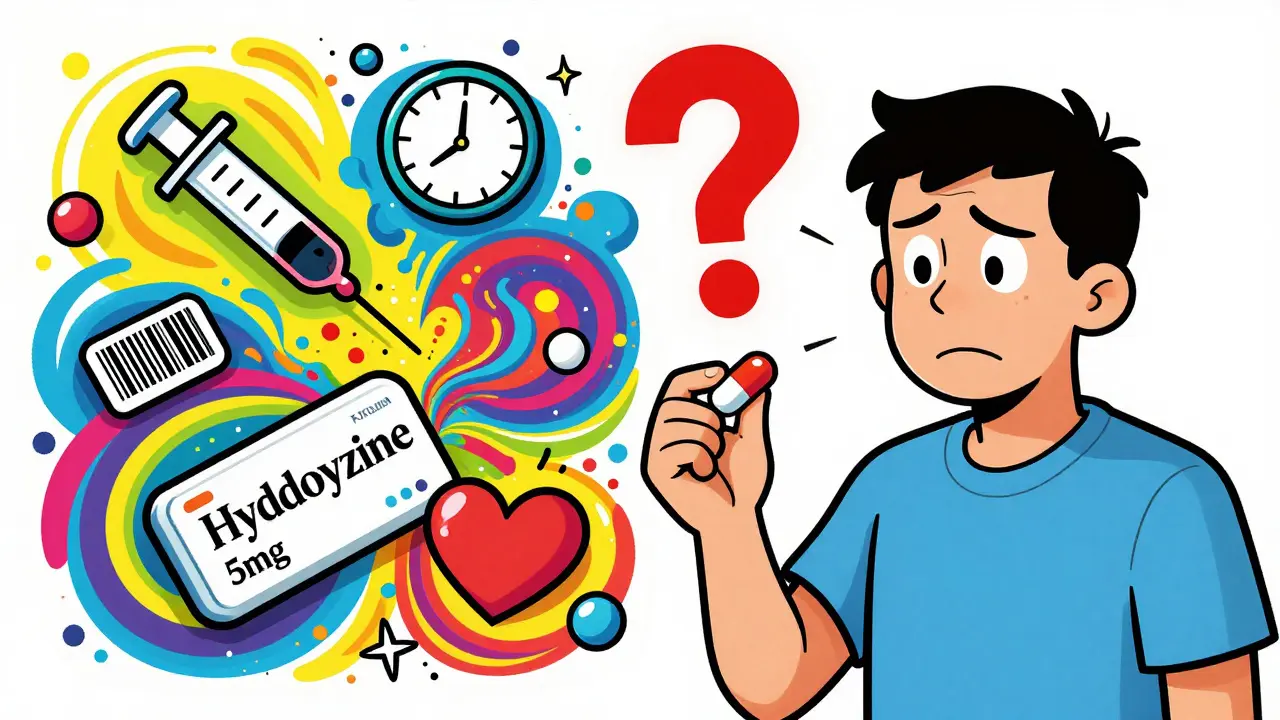
Medication Error vs. Side Effect Checker
This tool helps you determine whether a medication-related issue is a preventable error or an expected side effect. Enter a scenario to check it against the medical safety framework described in the article.
When you take a pill and feel sick, is it a medication error or just a drug side effect? It sounds like a simple question, but in hospitals, pharmacies, and even at home, people mix them up all the time. And that confusion can cost lives.
Let’s clear this up once and for all. Medication errors and side effects are not the same thing. One is a mistake - something that went wrong in the process. The other is a known, expected reaction to a drug that was given correctly. Confusing them means you’re not fixing the real problem.
What Is a Medication Error?
A medication error is anything that goes wrong between when a drug is prescribed and when it reaches the patient. It’s preventable. It’s human or system-based. And it happens way more often than you think.
According to the U.S. Food and Drug Administration, about 32% of all medication-related harm comes from errors - not from the drug itself. These include:
- Giving the wrong dose (like 50mg instead of 5mg)
- Wrong route (giving a pill orally when it’s meant to be injected)
- Wrong patient (handing someone else’s prescription to you)
- Wrong time (giving a medication 4 hours late when timing matters)
- Expired drug (pulling a bottle off the shelf that’s been sitting past its date)
- Wrong drug (confusing similar-sounding names like hydralazine and hydroxyzine)
In 2021, the Institute for Safe Medication Practices found that incorrect dosing was the most common error - making up over 32% of all incidents. Pediatric patients are especially at risk: one in five pediatric medication errors involves the wrong strength.
These aren’t rare accidents. They’re systemic. A nurse might be rushed. A doctor’s handwriting is unclear. An EHR system auto-fills the wrong dose. A pharmacy label gets smudged. None of these are the drug’s fault. They’re failures in the process.
What Is a Drug Side Effect?
A side effect is a known, predictable reaction to a drug that’s been given exactly as intended. It’s not a mistake. It’s a biological response.
The FDA defines side effects as “expected and known effects of a drug that are not the intended therapeutic outcome.” Think of it like this: if you take a blood pressure pill and your mouth gets dry, that’s a side effect. If you take the wrong pill entirely and your blood pressure crashes - that’s a medication error.
Side effects are listed in the drug’s package insert. They’re documented in clinical trials. They’re common enough that doctors expect them. For example:
- Statins can cause muscle aches
- Antibiotics like amoxicillin can cause diarrhea
- Antidepressants like SSRIs can cause nausea or sexual dysfunction
These aren’t surprises. They’re trade-offs. The drug works for its main purpose - but your body reacts in another way. That’s normal.
What’s important: not every side effect is dangerous. Some are annoying. Some are mild. Some even turn out to be useful. Minoxidil was originally developed for high blood pressure - but its side effect of hair growth led to its use in treating baldness.
What’s the Difference Between Side Effects and Adverse Drug Reactions?
There’s a technical term you’ll hear in hospitals: adverse drug reaction (ADR). It’s broader than “side effect.”
Adverse drug reactions include both predictable side effects (Type A) and unpredictable, rare, sometimes deadly reactions (Type B). Type A reactions make up 80% of all ADRs. They’re dose-dependent - the more you take, the worse it gets. Think: liver damage from too much acetaminophen.
Type B reactions are the scary ones. They’re not dose-related. They’re allergic. Immune-driven. Unpredictable. Like anaphylaxis from penicillin, or Stevens-Johnson syndrome from sulfa drugs. These can happen even if the drug was given perfectly.
So: all side effects are ADRs, but not all ADRs are side effects. And neither of these are medication errors - unless the drug was given wrong.
How to Tell Them Apart: A Simple 5-Step Check
When something goes wrong, ask yourself these five questions:
- Was the drug given as prescribed? If yes → not a medication error. If no → it’s an error.
- Is the reaction listed in the drug’s official documentation? If yes → likely a side effect or Type A ADR.
- Is the reaction sudden, severe, or unexpected? If yes → could be a Type B ADR.
- Could this have been avoided? If yes → it’s a medication error.
- Did the patient take the right drug, at the right dose, at the right time, by the right route? If any answer is no → error.
Let’s say a patient on warfarin develops bleeding. If their INR was checked regularly and the dose was correct, it’s an ADR - possibly a Type A reaction. But if the dose was doubled by accident, or the patient was given a different blood thinner, that’s a medication error.
Another example: a diabetic takes metformin and gets diarrhea. That’s a known side effect. But if they were given insulin instead - and went into hypoglycemia - that’s a medication error. Two different problems. Two different fixes.
Why This Matters: Blame vs. Systems
When people call a medication error a “side effect,” they’re not just wrong - they’re dangerous.
Why? Because if you think the problem is the drug, you stop looking at the system. You blame the patient. You say, “They must’ve taken too much.” You don’t fix the barcode scanner that didn’t scan. You don’t update the EHR alerts. You don’t train the pharmacy techs.
Dr. Robert Wachter, a leading patient safety expert, says this confusion is “one of the most persistent and dangerous misunderstandings in healthcare.” It leads to blame, not improvement.
Medication errors can be eliminated. Systems can be redesigned. Barcodes. Smart pumps. Computerized prescribing. These tools have cut administration errors by over 50% in hospitals that use them.
Adverse drug reactions? You can’t eliminate them. But you can reduce them. By screening for genetics (like HLA-B*5701 before giving abacavir), monitoring blood levels, avoiding drug combinations, and using risk stratification tools.
But if you mislabel an error as a side effect, you miss the chance to fix the system. And the same mistake happens again.
What Happens When People Get It Wrong?
It’s not theoretical. It’s happening right now.
A 2022 survey of 8,432 nurses found that 68% were unsure how to tell the difference between a medication error and an adverse reaction. Over 40% admitted they’d intentionally misclassified an error as a side effect to avoid getting in trouble.
At Johns Hopkins, a resident once saw a patient develop kidney damage from vancomycin. The chart said “side effect.” But the patient’s trough levels hadn’t been checked in three days - a clear protocol violation. That wasn’t a side effect. It was a preventable error. And because it was mislabeled, no one fixed the monitoring process.
The U.S. sees 1.3 million injuries and 128,000 deaths every year from medication-related problems. About a quarter of those are from errors. That’s like a 747 crashing every two weeks - and no one fixing the runway.
Meanwhile, the FDA’s FAERS database has over 18 million reports. Of those, 32% are medication errors - but many are buried under the wrong labels.
How to Protect Yourself
You don’t need to be a doctor to spot the difference.
When you’re given a new medication:
- Ask: “What are the common side effects?” - and write them down.
- Ask: “What happens if I take this wrong?” - like if I miss a dose or take it with food?
- Check the label. Does it match what the doctor said?
- If you feel something strange, ask: “Is this something the drug is supposed to do - or did something go wrong?”
Keep a medication list. Include names, doses, times, and why you’re taking each one. Bring it to every appointment. Pharmacists can catch errors before they happen.
If you think something went wrong - don’t assume it’s “just a side effect.” Say: “I’m not sure if this is the drug’s effect or if I got it wrong.” That opens the door to real answers.
What’s Changing in 2026?
Technology is helping. By 2026, most U.S. hospitals will use AI-powered systems that scan clinical notes and automatically flag potential medication errors vs. ADRs. Epic’s new module, launching in late 2024, can distinguish them with nearly 90% accuracy.
Pharmacogenomic testing - checking your genes to see how you’ll react to drugs - is becoming more common. By 2028, it could cut preventable ADRs by 40% for high-risk meds like antidepressants and blood thinners.
But tech alone won’t fix this. People still need to understand the difference. Training programs for nurses and pharmacists now require 4+ hours on this exact topic. The Joint Commission now penalizes hospitals that don’t report errors correctly.
The message is clear: stop calling errors side effects. Stop normalizing harm. And start fixing the system - not blaming the drug or the patient.
Can a side effect be dangerous?
Yes. Some side effects are mild, like drowsiness or dry mouth. Others can be serious - like liver damage from statins, kidney injury from NSAIDs, or dangerous drops in blood pressure. The key is whether it was expected and whether it happened because the drug was used correctly. Even dangerous side effects aren’t medication errors - unless the dose, timing, or drug was wrong.
Can a medication error cause a side effect?
Yes - but it’s not the side effect itself. If you take too much of a drug, you might get a stronger version of its known side effect. For example, taking double the dose of a blood thinner might cause severe bleeding. That’s not a side effect - it’s an overdose, which is a medication error. The bleeding is the harm, but the cause is the mistake.
Why do some doctors still say “side effect” instead of “adverse reaction”?
Because it’s easier to say - and it sounds less scary. But that’s the problem. Using “side effect” to describe a serious reaction makes patients think it’s normal or harmless. The FDA and American Society of Health-System Pharmacists now recommend avoiding the term “side effect” in clinical documentation and replacing it with “adverse drug reaction” to reflect the seriousness of unintended harm.
How can I report a medication error or adverse reaction?
If you’re a patient, tell your doctor or pharmacist right away. If you’re a healthcare worker, use your facility’s incident reporting system. In the U.S., anyone can report to the FDA’s MedWatch program online or by phone. Reporting helps track patterns and prevent future harm - whether it’s an error or a reaction.
Are some drugs more likely to cause errors than others?
Absolutely. High-risk drugs like insulin, heparin, opioids, and anticoagulants are involved in the majority of serious medication errors. That’s why hospitals use special protocols for them - like double-checking doses, using smart pumps, and restricting access. The ISMP publishes an annual “List of Error-Prone Abbreviations, Acronyms, and Symbols” to help reduce confusion - things like “U” for units (which looks like a zero) or “qd” for daily (which looks like “qod” for every other day).
If you’re taking multiple medications, especially if you’re over 65, the risk of mix-ups goes up. Keep a simple list. Ask questions. Don’t assume anything. The system isn’t perfect - but you can be the last line of defense.

matthew martin
January 27, 2026 AT 23:32Man, this post is a godsend. I work in a pharmacy and see this confusion every single day. Patients come in screaming about side effects when they got the wrong script because the barcode scanner glitched. We fix the system, not blame the drug. Seriously, if we had one more person understanding this, we could save lives.
jonathan soba
January 28, 2026 AT 18:37Interesting. But let’s be real - most ‘medication errors’ are just lazy clinicians not double-checking. The system’s broken, sure, but so are the people running it. You can’t automate away human negligence.
Irebami Soyinka
January 29, 2026 AT 11:43Y’all in the West think you’re so advanced but still messing up basic meds? 😒 In Nigeria, we don’t even have EHRs and we don’t mix up hydralazine with hydroxyzine because we say the names OUT LOUD. No auto-fill. No shortcuts. Just respect for the medicine. 🇳🇬💊
doug b
January 30, 2026 AT 14:36Love this breakdown. My grandma was on warfarin and we caught a dose error because we kept her meds list on the fridge. Simple. Free. Effective. Everyone should do this. No tech needed.
Mel MJPS
January 31, 2026 AT 02:33This made me feel so much less alone. My mom had a bad reaction to an antibiotic and the doctor just said 'side effect' - but I knew it wasn't right. She ended up in the ER. Thank you for giving me the words to explain what really happened.
Katie Mccreary
January 31, 2026 AT 04:42They're lying. The FDA knows 80% of these 'errors' are covered up. Hospitals don't report them because they'll lose funding. You think that AI tool in 2026 will fix anything? Nah. It'll just make the cover-ups look cleaner.
SRI GUNTORO
February 1, 2026 AT 12:10Why are we letting corporations control our meds? Big Pharma doesn't care if you get a side effect - they profit either way. And the system? Designed to protect them, not you. Wake up.
Kathy Scaman
February 3, 2026 AT 10:57Just had a nurse hand me my husband’s insulin by accident. I asked if it was his. She said 'probably'. That’s not a side effect. That’s a horror story waiting to happen. Thanks for this post - I’m printing it out and handing it to every provider I see.
Mindee Coulter
February 4, 2026 AT 00:15My aunt died from a wrong drug mix-up. They called it a 'rare reaction'. It wasn't. It was a misread script. I wish I'd known this five years ago. Please keep talking about this. It matters.
Rhiannon Bosse
February 5, 2026 AT 18:39AI is coming to fix this? LOL. They're gonna train it on the same corrupted data. The whole system is a lie. They want you to think tech will save you while they keep charging $500 for a pill that should cost $2. And don't get me started on the 'side effect' labels hiding deaths. This is all part of the plan.
Lance Long
February 7, 2026 AT 02:25I’ve been a nurse for 22 years. I’ve seen it all. One time, a patient got 10x the dose of morphine because the pump was set wrong - and the nurse thought it was 'just how the drug made him act'. He didn’t wake up for three days. We fixed the pump. We trained everyone. No blame. Just better systems. This post? Perfect. Keep going.
Timothy Davis
February 7, 2026 AT 20:37You missed the most critical point: pharmacists are underpaid, overworked, and not trained in differential diagnosis of adverse events. This isn’t about systems - it’s about staffing ratios. No amount of AI will fix that. The real issue? The healthcare industry treats people like disposable widgets.
fiona vaz
February 8, 2026 AT 09:57My dad’s on six meds. I keep a color-coded spreadsheet. He doesn’t understand half of them. But I do. I ask questions. I write things down. It’s not hard. It’s just not taught. Thank you for making this so clear. I’m sharing this with my whole family.
Brittany Fiddes
February 9, 2026 AT 15:09Oh, so now we’re blaming American healthcare? How quaint. In the UK, we’ve got the NHS - and still, we get this wrong. Why? Because we’re all too busy scrolling TikTok to read the damn label. It’s not the system. It’s the culture. We’ve become lazy consumers of medicine. And now we’re shocked when it backfires?