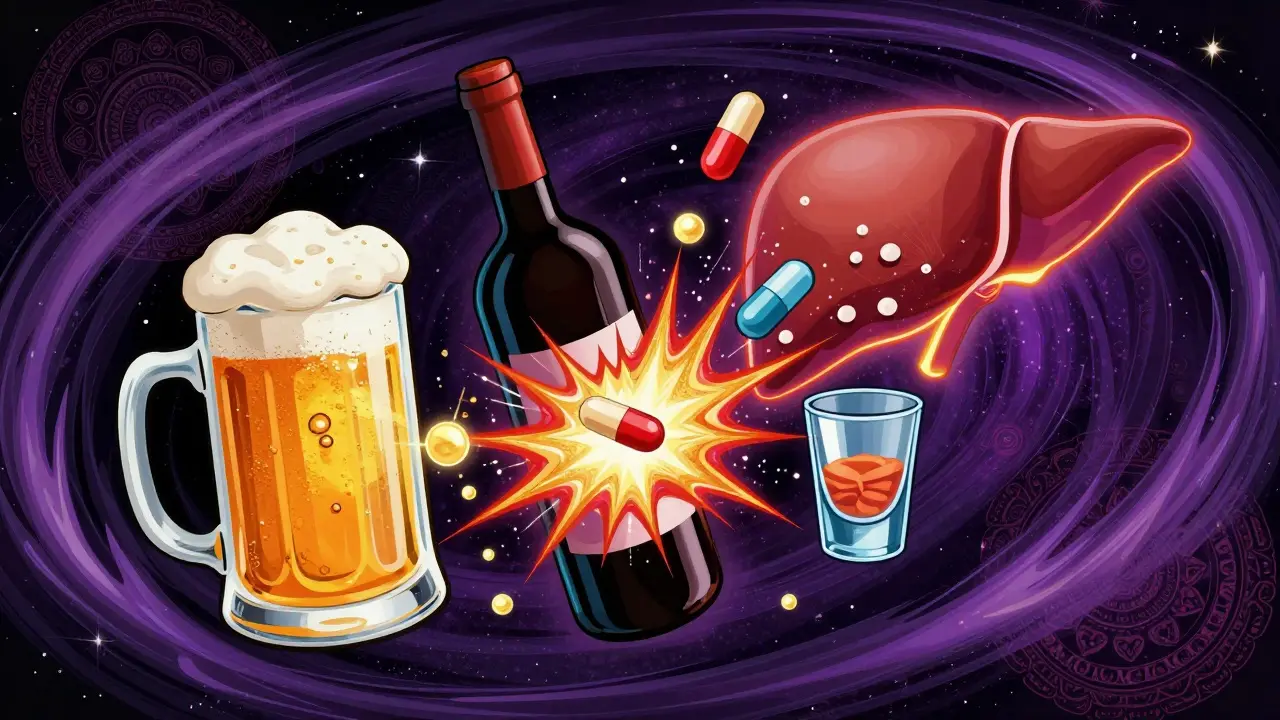
More than 40% of adults take prescription meds while drinking alcohol-without knowing the risks. It’s not just about getting drunk. It’s about your liver, your brain, and whether that nightcap could land you in the ER. And no, it’s not just about spirits. Beer and wine can be just as dangerous, sometimes more so, because people think they’re safer.
It’s Not the Type of Alcohol-It’s the Alcohol Itself
People often say, "I only had a glass of wine," or "It was just a beer." But here’s the truth: one standard drink of beer, wine, or spirits contains the same amount of pure alcohol-14 grams. That’s 12 ounces of beer, 5 ounces of wine, or 1.5 ounces of spirits. The type doesn’t change the chemical impact on your body when you’re on medication.
Your liver doesn’t care if the alcohol came from a pint of lager, a bottle of Pinot Noir, or a shot of vodka. It processes ethanol the same way every time-through enzymes called ADH and ALDH. These same enzymes are also busy breaking down your meds. When alcohol shows up, it gets first dibs. That means your medication builds up in your system, sometimes to toxic levels.
Studies show that even one standard drink can boost the sedative effects of sleep aids, anxiety meds, or painkillers by 300-500%. That’s not a typo. A blood alcohol level of just 0.08%-which you can hit with one drink-can turn a normal dose of a benzodiazepine into an overdose. You don’t need to be drunk. You just need to have had a drink.
Spirits Are Riskier-But Not Because of the Alcohol
Why do emergency rooms see so many cases involving spirits? It’s not because vodka is more toxic than beer. It’s because people drink it faster.
A shot of whiskey is consumed in seconds. A beer takes 15-20 minutes. Wine might take 30. When you down a shot, your blood alcohol spikes fast. That rapid rise overwhelms your liver’s ability to keep up with both alcohol and meds. Clinical trials show that rapid ethanol delivery-like from spirits-increases interaction severity by 40% compared to the same amount of alcohol sipped slowly.
Emergency data from U.S. hospitals shows 68% of alcohol-medication overdose cases involve spirits. Why? Because people think, "It’s just one shot." They don’t realize that one shot equals a whole beer in alcohol content-and it hits their system like a sledgehammer.
Also, spirits often come mixed with soda or juice. Carbonation speeds up stomach emptying by 25%, meaning the alcohol enters your bloodstream faster. So even if you’re drinking a "light" cocktail, you’re still getting a quick, powerful hit of ethanol right when your meds are waiting.
Beer Feels Safe-Until It Isn’t
Beer gets a bad rap as the "safe" alcohol. But here’s the problem: people drink a lot of it. And that’s where the danger hides.
The CDC says beer accounts for 52% of total alcohol consumed in the U.S. That means people aren’t just having one. They’re having three, four, five. And each one adds up. When you’re on NSAIDs like ibuprofen or naproxen, even a few beers can trigger stomach bleeding. One study found 63% of users who had "just a few beers" with painkillers ended up with internal bleeding they didn’t see coming.
And it’s not just the alcohol. Beer contains brewer’s yeast, barley, and other compounds that can irritate the stomach lining. When you add NSAIDs on top, you’re stacking two gut irritants. The result? Ulcers, bleeding, hospital visits.
People think, "I had two beers, not a whole bottle." But two beers = two standard drinks. That’s enough to interfere with blood thinners, antidepressants, or diabetes meds. The volume makes it easy to misjudge the risk.
Wine Has Secrets-And They’re Not Always Good
Red wine gets a pass because of "antioxidants." But when it comes to meds, those same compounds can cause trouble.
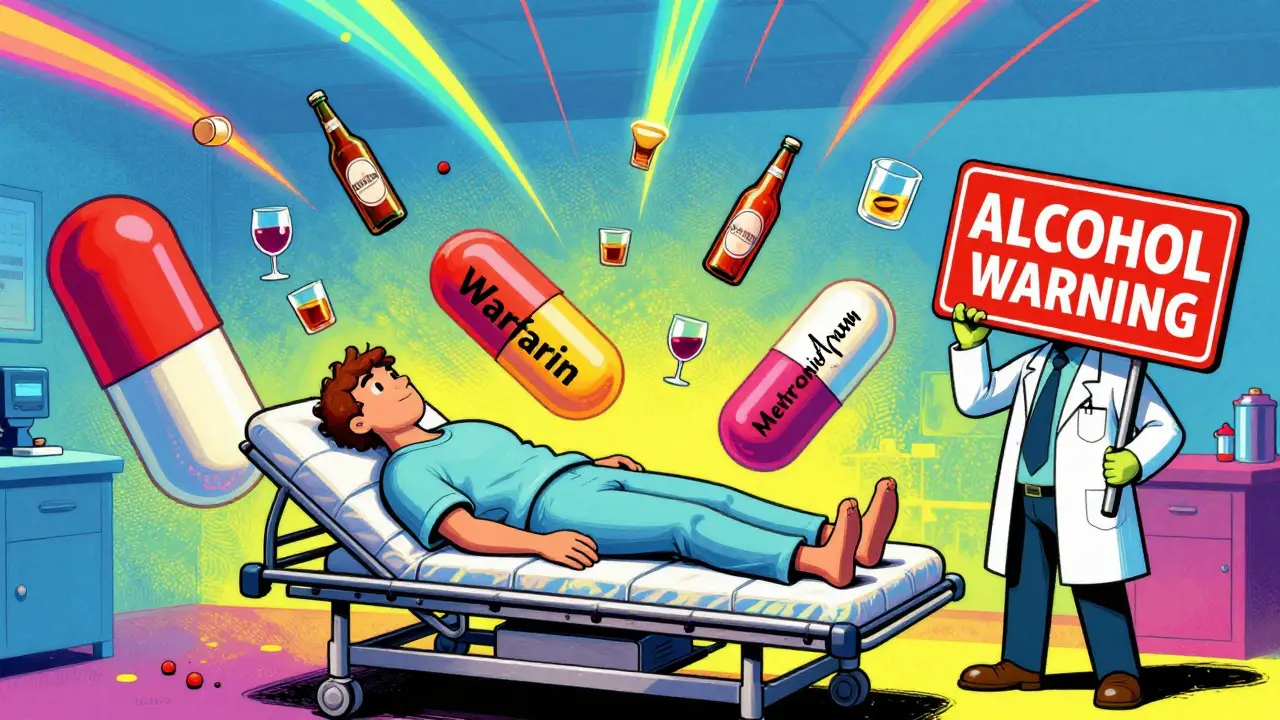
Red wine contains polyphenols and tannins-plant chemicals that act as mild blood thinners. That sounds healthy, until you’re on warfarin (Coumadin). One Mayo Clinic study found red wine increased bleeding risk by 15% compared to the same amount of ethanol from spirits. The wine wasn’t more alcoholic-it was more biologically active.
And then there’s metronidazole (Flagyl). If you’re on this antibiotic, even a sip of wine can trigger a disulfiram-like reaction: flushing, pounding heart, vomiting, dizziness. It’s terrifying. And 82% of people who’ve experienced it didn’t know wine was off-limits. They thought only hard liquor was dangerous.
There’s also a myth that red wine is "healthier" and therefore safer with meds. That’s not just wrong-it’s deadly. A 2022 NIAAA survey found 41% of people believed red wine was safer than other alcohols. Those same people had more severe reactions because they drank more, thinking they were being careful.
What About Non-Alcoholic Beer?
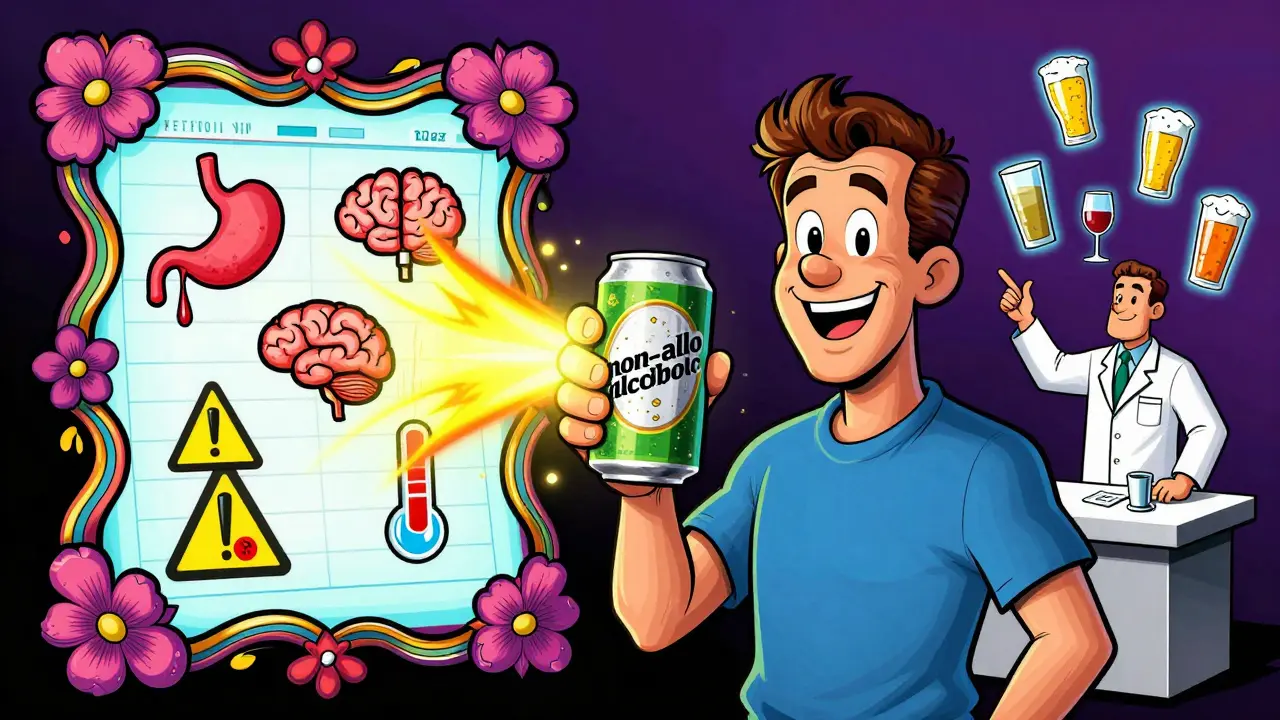
"It’s non-alcoholic," people say. "It’s fine." But here’s the catch: non-alcoholic beer still contains up to 0.5% alcohol. That’s not much-but if you’re on certain medications, even that tiny amount matters.
Take disulfiram (Antabuse), used for alcohol dependence. Even 0.5% alcohol can trigger severe reactions. Or if you’re on metronidazole, linezolid, or some antidepressants, that trace alcohol can still interfere. And most people don’t realize it.
A 2023 KFF poll found only 18% of adults knew non-alcoholic beer could still interact with meds. That’s a dangerous gap. If your doctor says "avoid alcohol," they mean any drink with ethanol-even if it’s labeled "0.5%."
What Medications Are Most Dangerous with Alcohol?
Some meds are fine with a drink. Others? Never mix.
- Benzodiazepines (Xanax, Valium, Ativan): Alcohol turns these into a respiratory depressant cocktail. Risk of coma or death skyrockets.
- Opioids (Oxycodone, Hydrocodone, Fentanyl): Combined with alcohol, they slow breathing to deadly levels. This is the #1 cause of accidental overdose deaths.
- Antidepressants (SSRIs, SNRIs): Alcohol worsens depression, increases drowsiness, and can cause serotonin syndrome.
- Antibiotics (Metronidazole, Tinidazole, Linezolid): Can cause severe nausea, vomiting, rapid heartbeat-even if you only had a sip.
- Acetaminophen (Tylenol): Just two drinks a day with regular use can triple your risk of liver failure. Doesn’t matter if it’s beer, wine, or whiskey.
- Blood thinners (Warfarin, Eliquis, Xarelto): Alcohol increases bleeding risk. Wine makes it worse.
- Diabetes meds (Insulin, Metformin): Alcohol can cause dangerous drops in blood sugar-especially if you haven’t eaten.
There are over 27 medication classes now flagged by Medicare Part D for mandatory alcohol interaction counseling in 2024. That’s how serious this is.
How to Stay Safe
You don’t need to give up alcohol forever. But you need to know when it’s not worth the risk.
- Check every new prescription. Ask your pharmacist: "Does this interact with alcohol?" Don’t assume it’s safe.
- Use the standard drink rule. One drink = 12 oz beer, 5 oz wine, 1.5 oz spirits. That’s your limit-if you drink at all.
- Never drink on an empty stomach. Food slows alcohol absorption. It’s not a cure, but it helps.
- Wait at least 4 hours after your last dose before drinking. Some meds stay in your system longer than you think.
- Use the GoodRx Alcohol Check app. It scans your meds and tells you if any alcohol is risky. Accuracy: 94%.
- When in doubt, skip it. If your med has a warning label that says "avoid alcohol," it means ALL alcohol.
Pharmacists now spend an average of 7.2 minutes per patient explaining this. That’s because they’ve seen too many people end up in the hospital thinking a glass of wine was harmless.
What’s Changing in 2025?
Big changes are coming. By 2025, all major electronic health record systems (like Epic and Cerner) will automatically flag alcohol interactions based on beverage type. That means if you’re prescribed a benzodiazepine, your pharmacy’s system will pop up: "Warning: Spirits increase risk 40% more than beer or wine due to faster absorption."
The FDA is requiring new drug applications to include detailed alcohol interaction data-not just "avoid alcohol," but specifics on beer, wine, spirits. And hospitals are already tracking alcohol-medication cases as a top cause of preventable admissions. In 2023, these incidents cost the U.S. healthcare system $1.2 billion.
Experts agree: the safest choice is no alcohol when you’re on high-risk meds. But if you do drink, know this: it’s not about the label on the bottle. It’s about how much ethanol you’ve had, how fast you drank it, and what’s in your medicine cabinet.
Is it safe to have one beer with my daily pill?
It depends on the pill. For some meds like ibuprofen or certain antidepressants, even one beer increases bleeding or drowsiness risk. For others, like statins or blood pressure pills, one drink might be okay-but only if you’re healthy and don’t drink regularly. Always check with your pharmacist. Never assume it’s safe just because it’s "just one."
Does red wine interact less than whiskey with medications?
No. One standard drink of red wine has the same alcohol content as one shot of whiskey. The ethanol affects your liver the same way. However, red wine contains polyphenols that can increase bleeding risk with blood thinners like warfarin. So while the alcohol impact is equal, wine may add extra risks you don’t expect.
Can I drink alcohol if I take my meds in the morning?
Maybe, but not always. Some meds stay in your system for 12-24 hours. For example, antidepressants and benzodiazepines build up over time. Drinking at night after taking a morning pill can still cause dangerous interactions. The timing matters less than the total amount of alcohol and how long the drug lingers in your body.
Why do some labels say "avoid alcohol" but don’t specify type?
Because the FDA’s current guidelines treat all alcohol the same-14 grams of ethanol is 14 grams of ethanol, no matter the source. But new regulations starting in 2024 will require more specific warnings for high-risk meds, especially those affected by rapid absorption, like opioids and benzodiazepines. So you’ll start seeing "avoid spirits" on some labels soon.
Is non-alcoholic beer safe with meds?
Not always. Non-alcoholic beer still contains up to 0.5% alcohol. That’s enough to trigger reactions with metronidazole, disulfiram, or some antidepressants. If your doctor says "avoid alcohol," that includes anything with ethanol-even if it’s labeled "non-alcoholic."
What should I do if I accidentally mixed alcohol with my medication?
If you feel dizzy, nauseous, have trouble breathing, or your heart is racing, seek medical help immediately. Call Poison Control (1-800-222-1222 in the U.S.) or go to the ER. Don’t wait. Even if you feel fine, some reactions can be delayed. Tell them exactly what you took and how much alcohol you consumed.

laura Drever
January 14, 2026 AT 08:43Jesse Ibarra
January 15, 2026 AT 23:24Angel Molano
January 17, 2026 AT 08:29Randall Little
January 18, 2026 AT 19:53lucy cooke
January 20, 2026 AT 00:14Robin Williams
January 20, 2026 AT 23:48Pankaj Singh
January 22, 2026 AT 03:34Kimberly Mitchell
January 22, 2026 AT 19:47Vinaypriy Wane
January 23, 2026 AT 14:25John Tran
January 24, 2026 AT 22:22Trevor Davis
January 26, 2026 AT 14:55