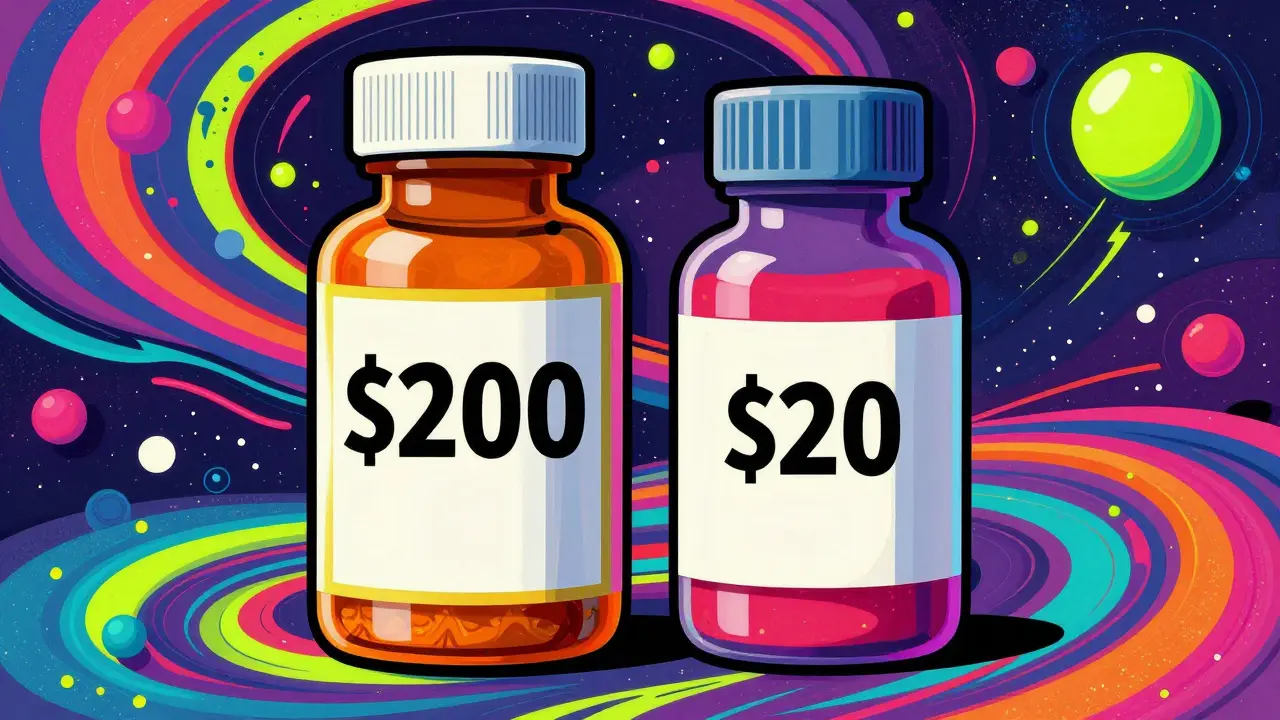
Imagine paying $200 for a medication and then discovering a version that does the exact same thing for $20. It sounds too good to be true, but that's the core of how the generic drug market works. For most people, the biggest worry is whether a cheaper pill is actually as strong or safe as the one with the fancy brand name. The short answer is yes, but the way we get to that "yes" involves some pretty strict science and a bit of legal history.
At its simplest, a generic drug is a pharmaceutical product that contains the same active chemical substance as a brand-name drug. It only hits the market after the original company's patent expires-usually around 20 years after they first filed it. This allows other companies to make the same medicine without spending billions on the original research, which is why the price drops so drastically.
The Key Takeaways
- Generics have the same active ingredients, strength, and dosage as brand names.
- They are typically 80-85% cheaper because they skip the original clinical trial costs.
- The FDA requires "bioequivalence," meaning the drug hits your bloodstream at the same rate.
- Inactive ingredients (like dyes or fillers) can differ, but they don't change how the medicine works.
How Generics Get Approved: The Hatch-Waxman Act
The reason we have so many affordable options today is thanks to a 1984 law called the Hatch-Waxman Act. This legislation created a shortcut for generic manufacturers so they didn't have to repeat the massive, expensive animal and human trials that the original brand-name company already completed. Instead, they use something called an Abbreviated New Drug Application (or ANDA), which is basically a way of proving the generic version is a mirror image of the original in terms of performance.
Think of it like a recipe. The brand-name company spent years and billions of dollars inventing the recipe. Once the patent expires, other chefs can use that same recipe. They don't need to prove the recipe works (the original company already did that); they just need to prove their version of the dish tastes exactly like the original.
What Makes a Drug "Equivalent"?
When we say two drugs are the same, the FDA doesn't just take a manufacturer's word for it. They look at several specific characteristics to ensure safety and quality.
First, there is pharmaceutical equivalence. This means the generic must have the same active ingredient, the same strength (e.g., 50mg), the same dosage form (like a tablet or a capsule), and the same route of administration (like swallowing it or an injection). If the brand name is a 10mg tablet taken orally, the generic cannot be a liquid or a 5mg dose.
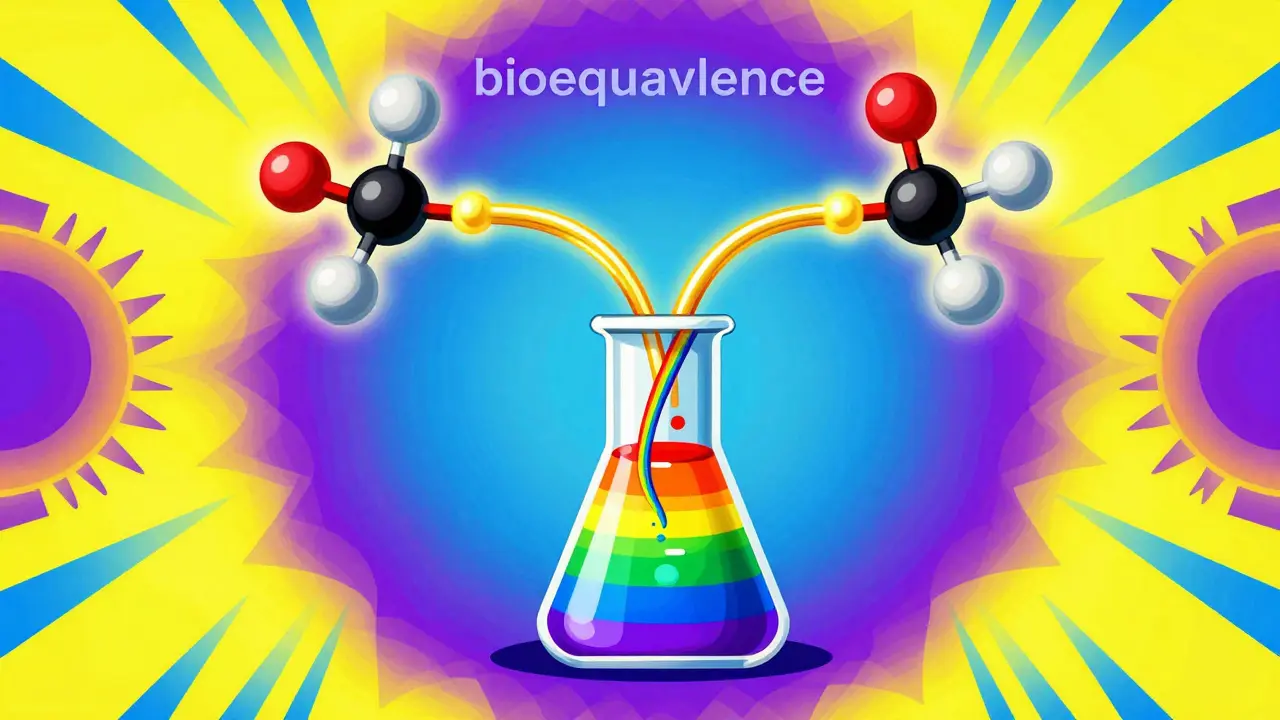
Then comes the technical part: Bioequivalence is the requirement that a generic drug delivers the same amount of active ingredient into the bloodstream in the same amount of time as the brand-name drug. To prove this, companies often test the drug on 24 to 36 healthy volunteers. The FDA looks at the "Area Under the Curve" (AUC) and the maximum concentration (Cmax) to make sure the drug's absorption is within a very tight window-specifically 80-125% of the original.
| Characteristic | Brand-Name Drug | Generic Drug |
|---|---|---|
| Active Ingredient | Original Molecule | Identical Molecule |
| Strength & Dosage | Standardized | Identical to Brand |
| Inactive Ingredients | Proprietary | May differ (fillers, colors) |
| Clinical Trials | Full scale (expensive) | Bioequivalence studies only |
| Cost to Consumer | High (Premium) | Low (Typically 80-85% less) |
Why the Huge Price Difference?
It's easy to assume that a cheaper drug is "lower quality," but the cost isn't about the quality of the chemicals-it's about the cost of the innovation. Developing a new drug from scratch is a gamble. It costs an average of $2.6 billion per approved drug because so many attempts fail during the research phase.
Generic manufacturers don't face that risk. They aren't guessing if the chemical works; they already have the blueprint. Because they don't have to fund massive clinical trials or spend millions on initial marketing, they can sell the product for a fraction of the price. In fact, when five or more generic companies compete for the same drug, prices can crash to just 9% of the original brand price.
Are There Any Exceptions?
For 99% of medications, switching to a generic is seamless. However, there is a small category called Narrow Therapeutic Index (NTI) drugs, which are medications where a tiny change in dosage or concentration can cause a serious clinical effect. Examples include warfarin (a blood thinner) or levothyroxine (for thyroid issues).
With NTI drugs, your doctor might be more cautious. Because there is a very narrow window between a dose that works and a dose that is toxic (or ineffective), switching from one brand to another-or from a brand to a generic-might require more frequent blood tests to make sure your body is reacting correctly to the slight variations permitted in manufacturing.
The Case of Biosimilars
It's important to distinguish between a standard generic and a Biosimilar. These are "generic-like" versions of biologic drugs, which are complex proteins made from living cells. Unlike simple chemical pills, biologics are too complex to be exactly identical. Therefore, a biosimilar is "highly similar" rather than identical. Because they are harder to make and require more testing, biosimilars aren't as cheap as traditional generics, usually offering only a 20-30% price reduction.
Real-World Impact and Supply Chains
The impact of generics on the healthcare system is staggering. In the U.S., roughly 90% of all prescriptions dispensed are generics. They've saved the healthcare system trillions of dollars over the last decade, making life-saving medicine accessible to people who otherwise couldn't afford it.
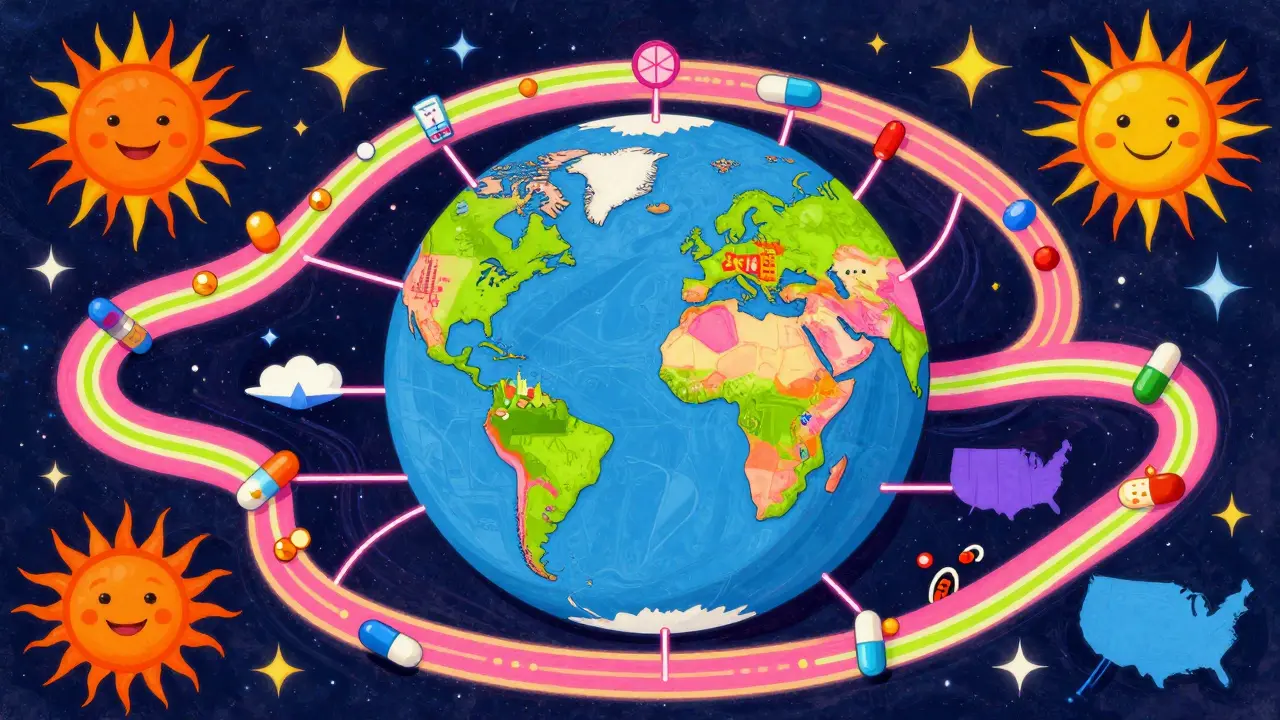
However, this efficiency has a downside: supply chain vulnerability. A huge portion of the Active Pharmaceutical Ingredients (or API), the raw chemical components of a drug, are sourced from facilities in India and China. When a factory in one of those regions has a quality issue, it can lead to widespread drug shortages across the globe, as we saw with various generic shortages in recent years.
Are generic drugs less effective than brand-name drugs?
No. The FDA requires generic drugs to be bioequivalent, meaning they provide the same clinical benefit and work in the same way in the body as the brand-name version. They use the same active ingredients and meet the same strict manufacturing standards.
Why does my generic pill look different from my brand-name pill?
Trademark laws prevent generic drugs from looking exactly like the brand-name version. This means the color, shape, and inactive ingredients (like flavors or binders) can be different. These changes do not affect how the medication works in your body.
Can my pharmacist switch my medication to a generic without asking?
In most U.S. states, pharmacists can substitute a generic for a brand-name drug unless your doctor specifically wrote "Dispense as Written" (DAW) on the prescription. However, for certain high-risk medications, the pharmacist may need to contact your doctor first.
How long does it take for a brand-name drug to become generic?
Typically, a drug becomes available as a generic after its patent expires, which is usually 20 years from the date the patent was filed. Some companies may negotiate "authorized generics," which are the brand-name company's own generic versions, occasionally released earlier.
What is the difference between a generic and a biosimilar?
Standard generics are chemical copies of simple molecules and are identical to the brand. Biosimilars are versions of complex biological medicines made from living cells; because of their complexity, they are "highly similar" but not identical, and they usually cost more than traditional generics.
Jasmin Stowers
April 13, 2026 AT 07:04this is super helpful info just glad there are cheaper options out there
Scott Lofquist
April 13, 2026 AT 18:22Actually, people love to ignore how 'bioequivalence' is just a range and not a perfect match. 🙄 It's a joke that we pretend it's identical when the FDA allows a 20% variance. If you actually care about your health, you stick to the brand name unless you enjoy playing Russian roulette with your bloodstream. 💊🤡
mimi clouet
April 14, 2026 AT 12:56Oh totally! Just a little tip for everyone: if you're using a generic and feel a difference, it's usually those inactive fillers! Some people are super sensitive to the dyes they use in the cheaper ones 🌸✨ Hope everyone stays healthy! 🥰
S.A. Reid
April 15, 2026 AT 16:52One must consider the geopolitical implications of the API sourcing mentioned here. It is quite naive to believe that the regulatory oversight in certain regions is equivalent to domestic standards. I suspect the push for generics is less about 'accessibility' and more about creating a fragile dependency on foreign chemical synthesis plants to keep populations compliant and manageable. The 'cost benefit' is merely a facade for a larger systemic vulnerability designed by those who profit from the chaos. 🧐
Mark Dueben
April 17, 2026 AT 11:10I think it's important to remember that for some, the price difference isn't just 'saving money,' it's the difference between taking their meds or not. It's a great system for inclusivity in healthcare.
Ikram Khan
April 17, 2026 AT 22:09Whoa!! The part about the 9% price crash is absolutely wild! 😱 I had no idea competition drove it down that far... it's like a total free-fall for the big pharma prices! 🚀
rupa das
April 18, 2026 AT 08:06biosimilars arent even really generics they just pretend to be
Randy Ryder
April 19, 2026 AT 19:12The pharmacokinetics here are the real story. When you look at the Cmax and AUC, you're essentially talking about the systemic exposure over time. Most people don't realize that the therapeutic window for the majority of small-molecule drugs is wide enough that these minor variances in absorption are clinically insignificant. It's basic pharmacology, but the way it's implemented via the ANDA process is actually quite an elegant regulatory shortcut to avoid redundant Phase III trials.
Kenzie Evans
April 21, 2026 AT 08:01This is such a basic explanation. Everyone knows about the Hatch-Waxman Act, but the author completely glosses over how pharmaceutical companies use 'evergreening' to extend patents by making tiny, useless changes to a drug. They just change one molecule and boom, another 20 years of overcharging. This post is way too optimistic about how 'fair' the patent system is. Absolute garbage.
David Snyder
April 21, 2026 AT 11:14It's really heartening to see how much the healthcare system has saved. Imagine how many more people have access to life-saving treatment now because of these alternatives!
Brooke Mowat
April 22, 2026 AT 13:17Srsly though, the idea of a 'recipe' is such a cool way to look at it! It's like we're all just alchemying our way thru life with these little colorful pills lol. Just vibing with the fact that science makes this stuff way more acessable for us regular folks! ✨🌈
Milo Tolley
April 23, 2026 AT 20:00The systemic fragility of the API pipeline is an absolute catastrophe!!! We are basically gambling our entire pharmaceutical infrastructure on a few overseas facilities... it's a total nightmare scenario waiting to happen!!! 😱💥
Olivia Lo
April 24, 2026 AT 09:25The distinction between small molecule generics and biologics is crucial. Since proteins are synthesized in living cells, you can't just 'copy-paste' the chemical structure. This creates a fascinating ethical dilemma regarding the balance between incentivizing high-cost innovation in biotech and the societal need for affordable therapeutic interventions. It's a delicate equilibrium that requires constant regulatory calibration to ensure patient safety isn't compromised for the sake of cost reduction.
Billy Wood
April 24, 2026 AT 17:49KEEP SAVING MONEY!!! GO GENERIC!!! BEST CHOICE EVER!!!
Becca Suttmiller
April 26, 2026 AT 08:20I appreciate the detailed breakdown of NTI drugs. It's a good reminder that while generics are great, we should always follow our doctor's specific guidance on certain medications for our own safety.