SSRI + NSAID GI Bleeding Risk Estimator
This tool is for educational purposes only and does not replace professional medical advice. Always consult your doctor or pharmacist before changing medications.
Imagine taking your daily antidepressant for anxiety and grabbing an over-the-counter painkiller for a headache. It sounds harmless, right? But for millions of people, this common combination creates a hidden danger in the stomach. When SSRIs (Selective Serotonin Reuptake Inhibitors) meet NSAIDs (Nonsteroidal Anti-Inflammatory Drugs), the risk of gastrointestinal bleeding jumps significantly. This isn't just theoretical; it's a leading cause of preventable hospitalizations.
You might be wondering why two such common drugs would clash so hard. The answer lies in how they both affect your body’s ability to clot blood and protect your stomach lining. Understanding this interaction is crucial if you are on either or both types of medication. Here is what you need to know to stay safe.
The Hidden Danger: Why This Combination Is Risky
To understand the risk, we have to look at what these drugs do individually. SSRIs, like sertraline or fluoxetine, work by increasing serotonin levels in the brain to improve mood. However, serotonin also plays a vital role in platelet function-the cells that help your blood clot. By altering serotonin availability, SSRIs can make it harder for your blood to form clots quickly when a small cut or irritation occurs in the gut.
On the other hand, NSAIDs, such as ibuprofen or naproxen, reduce pain and inflammation by blocking enzymes called cyclooxygenases (COX). While effective for pain, this process also reduces the production of prostaglandins, which normally protect the stomach lining from acid damage. So, you have one drug weakening your clotting mechanism and the other damaging the protective barrier of your stomach.
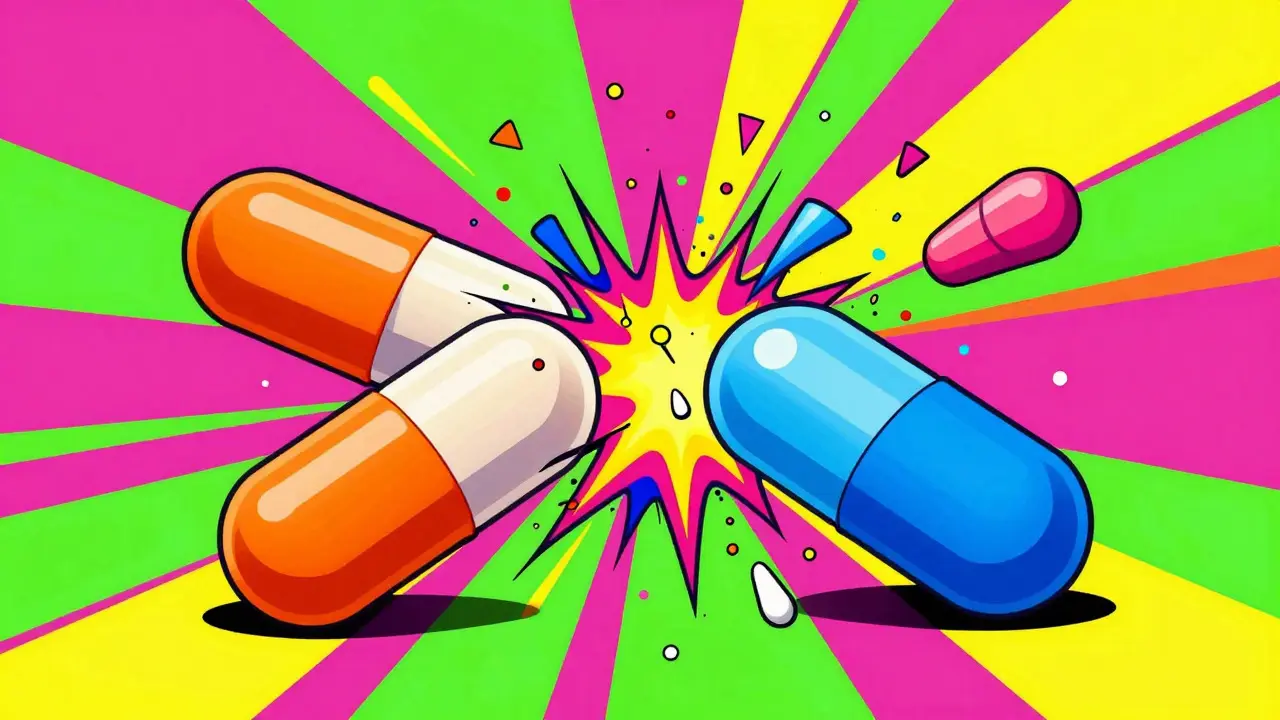
When you combine them, the effect isn't just additive; it's multiplicative. Research published in Nature Scientific Reports in 2022 confirmed that using SSRIs and NSAIDs together increases the odds of upper GI bleeding by 75% compared to using NSAIDs alone. For some patients, particularly those over 65 or with a history of ulcers, the risk can be even higher. A study in JAMA Internal Medicine found that the combined use could increase bleeding risk by more than 12-fold compared to non-users. That is a massive jump in danger for something that feels like routine self-care.
Who Is Most At Risk?
Not everyone who takes this combination will bleed, but certain factors make the risk much more likely. If you fit into any of these categories, you should talk to your doctor about preventive measures:
- Age: People over 65 have thinner stomach linings and slower healing times, making them highly vulnerable.
- Prior History: If you have had a stomach ulcer or GI bleed before, the risk returns sharply with this combo.
- Other Medications: Taking low-dose aspirin, anticoagulants (like warfarin or apixaban), or corticosteroids alongside SSRIs and NSAIDs multiplies the danger further.
- Dosage and Duration: Higher doses of NSAIDs (over 1,200 mg/day of ibuprofen equivalent) and long-term SSRI use (more than 90 days) correlate with higher bleeding events.
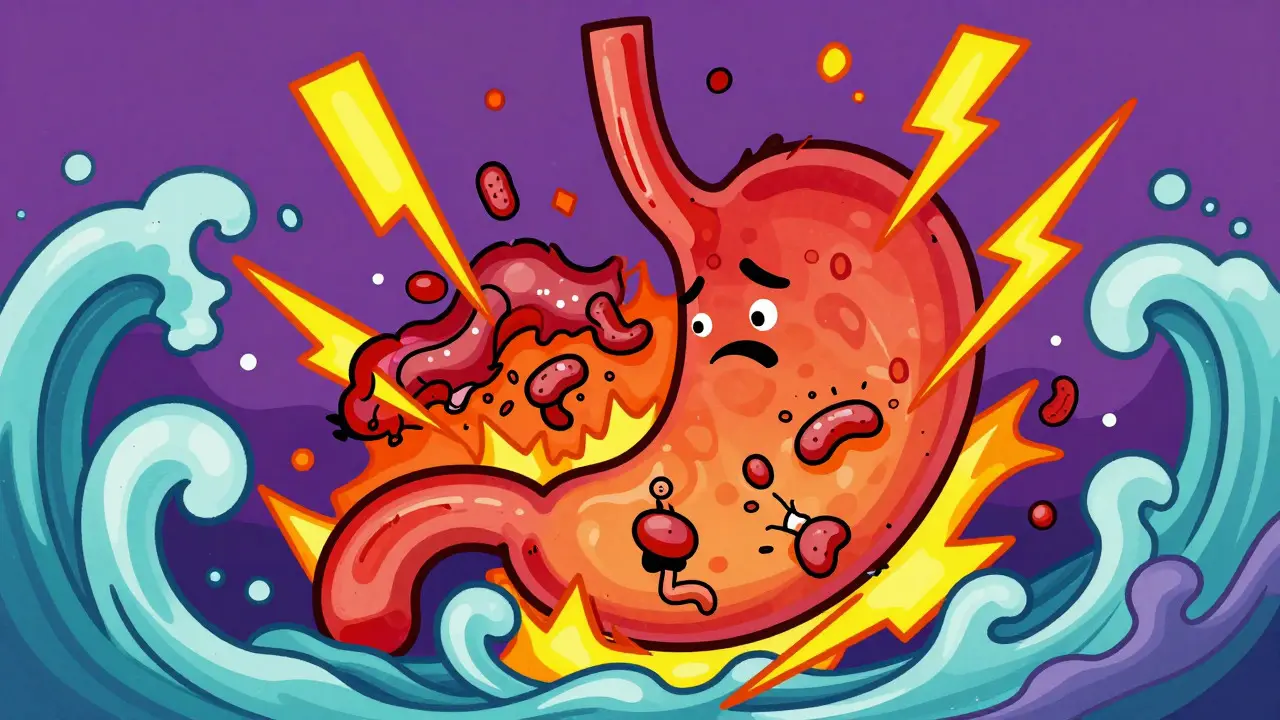
It’s easy to overlook these risks because the symptoms often start subtly. You might feel tired, have pale skin, or notice dark, tarry stools. By the time severe symptoms appear, significant blood loss may have already occurred. One patient shared their experience online, noting they were on sertraline and ibuprofen for six months before ending up in the ER for stomach bleeding-neither doctor had flagged the interaction initially.
Prevention Strategies That Actually Work
The good news is that you don’t have to choose between managing your mood and treating your pain. There are clear, evidence-based ways to mitigate this risk. The American Gastroenterological Association (AGA) provides specific guidelines for patients on this combination.
- Consider Alternative Pain Relief: Acetaminophen (paracetamol) is generally safer for people on SSRIs because it doesn’t interfere with platelets or stomach lining protection in the same way NSAIDs do. If your pain allows, switching from ibuprofen to acetaminophen is the simplest first step.
- Add a Proton Pump Inhibitor (PPI): If you must take an NSAID, adding a PPI like omeprazole or pantoprazole can reduce the absolute bleeding risk by approximately 70%. These medications lower stomach acid, giving your lining a better chance to stay intact despite the NSAID’s effects.
- Minimize NSAID Use: Use the lowest effective dose for the shortest possible time. Avoid daily NSAID use unless absolutely necessary for chronic conditions like arthritis.
- Review Your Full Medication List: Bring all your prescriptions, including supplements, to your pharmacist. They can spot interactions you might miss, especially if you’re seeing multiple doctors.
Dr. Syed Mobashshir Alam, a lead researcher on the topic, advises that if you need to start an SSRI while regularly taking NSAIDs, it is best to discuss discontinuing the NSAID first. If that’s not possible, aggressive prevention with a PPI is critical.
Comparing Your Options: A Quick Reference
Choosing the right approach depends on your specific health profile. Here is a comparison of common strategies to help you decide what to discuss with your provider:
| Strategy | GI Bleeding Risk Impact | Best For | Key Consideration |
|---|---|---|---|
| Switch to Acetaminophen | Lowest Risk | Mild to moderate pain, headaches | Watch liver dosage limits (max 3-4g/day) |
| NSAID + PPI Co-therapy | Moderate (Reduced ~70%) | Inflammation where NSAIDs are essential | Requires daily PPI adherence; adds cost ($15-$30/month) |
| NSAID Alone | High Risk | Short-term use only (< 3 days) | Avoid if age >65 or prior ulcer history |
| Topical NSAIDs | Very Low Systemic Risk | Localized joint/muscle pain | Less effective for deep internal inflammation |
Note that COX-2 selective inhibitors like celecoxib show a lower bleeding risk than traditional NSAIDs like diclofenac or naproxen. However, they are not risk-free, especially when combined with SSRIs. Always consult your doctor before switching NSAID types.
Recognizing the Warning Signs
GI bleeding doesn’t always announce itself with dramatic pain. Sometimes, it’s silent until it becomes serious. Keep an eye out for these signs, especially if you’ve recently started an SSRI or increased your NSAID intake:
- Black, Tarry Stools: This is a classic sign of upper GI bleeding, where blood has been digested.
- Bright Red Blood: Usually indicates lower GI bleeding, but can occur with heavy upper bleeds.
- Unexplained Fatigue or Weakness: A sign of anemia caused by chronic, slow blood loss.
- Dizziness or Fainting: Especially upon standing, indicating low blood volume.
- Heart Palpitations: Your heart works harder to compensate for lost blood.
If you experience any of these, seek medical attention promptly. Don’t assume it’s just indigestion or stress. Early detection can prevent the need for emergency transfusions or surgery.
Frequently Asked Questions
Can I take ibuprofen while on an SSRI?
Yes, but with caution. The combination increases GI bleeding risk. If you must take ibuprofen, use the lowest dose for the shortest time, consider adding a proton pump inhibitor (PPI), and monitor for warning signs like black stools or fatigue. For occasional headaches, acetaminophen is a safer alternative.
Which NSAID is safest to take with an SSRI?
Celecoxib, a COX-2 selective inhibitor, generally carries a lower GI bleeding risk than non-selective NSAIDs like naproxen or diclofenac. However, no NSAID is completely risk-free when combined with SSRIs. Acetaminophen remains the safest option for general pain relief if anti-inflammatory properties aren't strictly required.
Do I need a prescription for a PPI if I'm taking NSAIDs and SSRIs?
Many PPIs like omeprazole are available over-the-counter, but a prescription may be needed for higher doses or specific brands. Given the high-risk nature of the SSRI-NSAID combination, it is best to discuss this with your doctor to ensure the correct type and dose of PPI for your specific risk profile.
How long after stopping an SSRI does the bleeding risk go away?
The platelet effects of SSRIs typically resolve within a few days to a week after discontinuation, as new platelets without altered serotonin uptake enter circulation. However, if you are still taking NSAIDs, the mucosal damage risk persists. Always follow your doctor's tapering schedule when stopping SSRIs to avoid withdrawal symptoms.
Is aspirin worse than ibuprofen for this interaction?
Aspirin is an irreversible platelet inhibitor, meaning its effect lasts for the life of the platelet (about 7-10 days). Combining aspirin with SSRIs and NSAIDs creates a 'triple threat' to hemostasis, significantly increasing bleeding risk beyond the SSRI-NSAID pair alone. If you take daily aspirin for heart health, inform your psychiatrist and primary care doctor immediately.