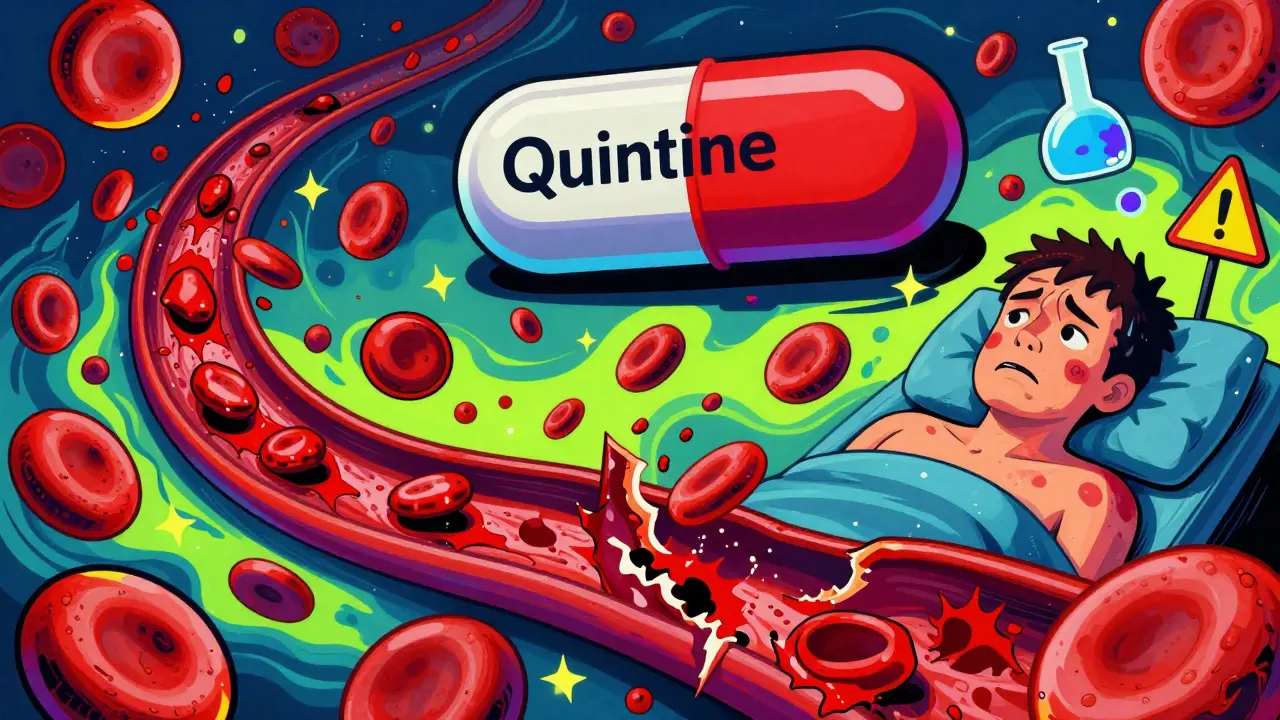
When you take a new medication, you expect relief - not a life-threatening crisis. But for some people, common drugs can trigger thrombotic thrombocytopenic purpura (TTP), a rare but deadly condition that attacks the blood and organs. It doesn’t happen often, but when it does, it moves fast. Platelets crash. Red blood cells shred. Organs fail. And if you don’t recognize it in time, you could die.
What Exactly Is Drug-Induced TTP?
Thrombotic thrombocytopenic purpura is a blood disorder where tiny clots form in small blood vessels throughout the body. These clots use up platelets, leaving you with dangerously low levels - often below 50,000 per microliter (normal is 150,000-450,000). At the same time, red blood cells get torn apart as they squeeze through these clots, causing severe anemia. You might see bruising, fatigue, confusion, seizures, or dark urine. Kidneys and the brain are especially vulnerable.
It’s not just one disease. There are two main ways drugs cause it. The first is immune-mediated - your body makes antibodies that attack your own platelets, but only when the drug is present. The second is direct toxicity - the drug damages the lining of blood vessels over time, especially with long-term use. Both lead to the same deadly outcome: organ damage from blocked blood flow.
Which Medications Are Most Likely to Cause It?
Over 300 drugs have been linked to TTP, but only a handful are proven culprits. The top five, based on thousands of documented cases, are:
- Quinine - found in tonic water, malaria pills, and some leg cramp remedies. Even 2-3 glasses of tonic water a day for weeks can trigger it.
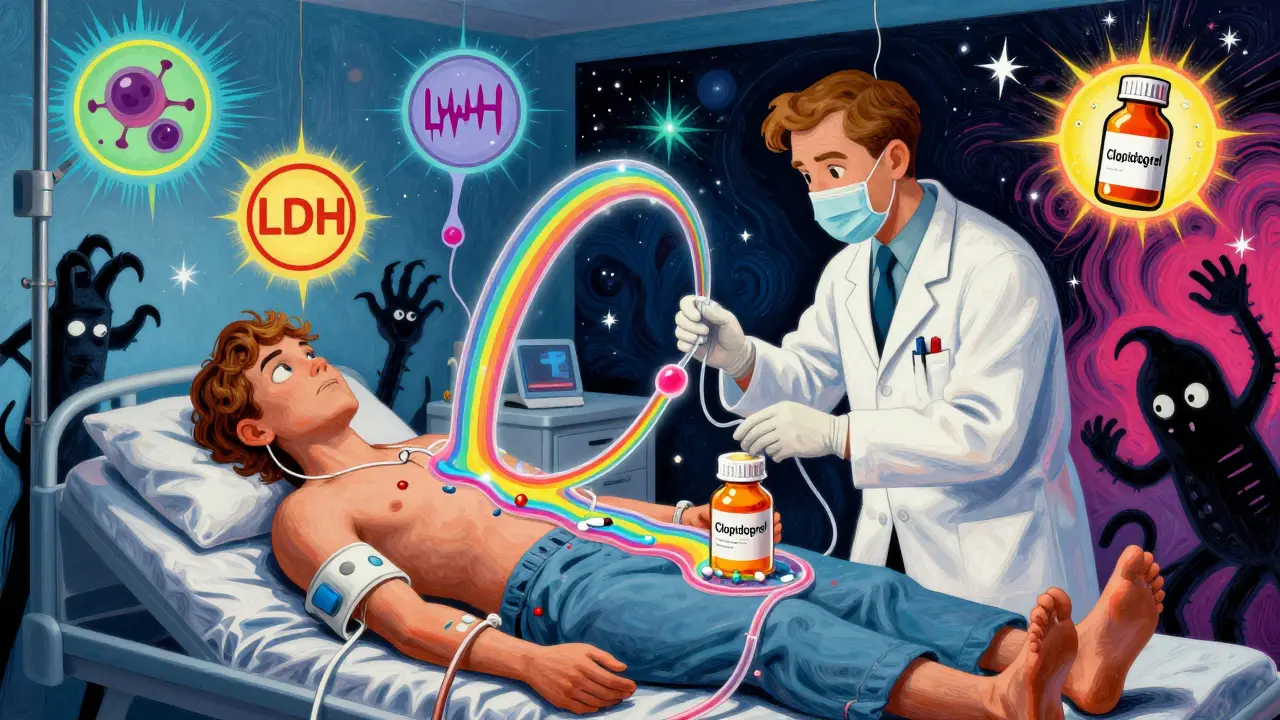
- Clopidogrel (Plavix) - a common blood thinner after heart attacks or stents.
- Ticlopidine - an older blood thinner, now rarely used because of its high risk.
- Cyclosporine - used in transplant patients to prevent organ rejection.
- Mitomycin C - a chemotherapy drug.
Newer drugs like adalimumab (Humira), nivolumab (Opdivo), and other immune checkpoint inhibitors are now showing up in reports too. These cancer and autoimmune treatments can confuse the immune system, turning it against the body’s own blood vessels.
What’s scary is how unpredictable it is. With quinine, you don’t need a high dose - just regular exposure. One woman developed TTP after drinking tonic water nightly for a month. Another got it from a single dose of an over-the-counter cramp remedy. With cyclosporine, the risk builds slowly - symptoms often appear after 6-12 months of treatment.
How Is It Diagnosed?
Doctors don’t have one simple test. Diagnosis relies on spotting a pattern:
- Low platelets (usually under 50,000)
- Fragmented red blood cells (schistocytes) on a blood smear
- Elevated LDH (a sign of red blood cell destruction)
- Low or undetectable haptoglobin (another marker of breakdown)
- No other explanation - like infection, cancer, or autoimmune disease
The gold standard is measuring ADAMTS13 enzyme activity. If it’s below 10%, it’s almost certainly immune-mediated TTP. But waiting for test results can be deadly. If TTP is suspected, treatment starts immediately - even before lab results come back.
Many patients are misdiagnosed at first. Common mistakes include calling it ITP (immune thrombocytopenia), sepsis, or just "anemia of unknown cause." In one study, 72% of TTP patients were initially given the wrong diagnosis. That delay costs lives.
What Happens If You Don’t Treat It?
Untreated TTP kills up to 90% of patients within days. Even with treatment, 10-20% still die. Survivors often face long-term damage: kidney failure, memory problems, chronic fatigue, or depression. One Reddit thread with 47 patient stories found that 68% needed plasma exchange, 89% were hospitalized in ICU, and 31% still felt exhausted six months later.
There are horror stories. A 62-year-old man in New Zealand developed a brain bleed after taking quinine for leg cramps. His platelets dropped to 8,000 per microliter - a level where spontaneous bleeding becomes likely. He survived, but barely.
And it’s not getting better. Between 2015 and 2022, TTP reports to the FDA increased by 37%. Biologic drugs are now responsible for nearly a third of cases, up from just 5% in 2010. That means more people are at risk as these treatments become more common.
How Is It Treated?
There are two paths, depending on the cause.
For immune-mediated TTP (quinine, clopidogrel, ticlopidine):
- Stop the drug immediately. That’s step one - and it’s non-negotiable.
- Plasma exchange - this is the lifeline. It removes the bad antibodies and replaces them with healthy plasma. Treatment starts within 4-8 hours of suspicion. Daily sessions continue until platelets rise and stay up for two days straight.
- Caplacizumab - a newer drug that blocks clot formation. It cuts recovery time by nearly half and reduces death risk. But it costs over $18,500 per course and isn’t available everywhere.
For dose-dependent TTP (cyclosporine, mitomycin C):
- Stop the drug. Plasma exchange doesn’t help much here.
- Supportive care - dialysis for kidney failure, blood transfusions, oxygen, and monitoring. Recovery can take months as the blood vessel lining slowly repairs itself.
There’s no magic bullet. But acting fast saves lives. The key is recognizing the signs early - before the brain, kidneys, or heart are damaged beyond repair.
How to Prevent It
Prevention starts with awareness - yours and your doctor’s.
- Know your meds. If you’re taking quinine - even in tonic water - stop. Don’t assume it’s safe because it’s "natural" or sold in grocery stores.
- Report new symptoms. If you start feeling unusually tired, confused, or bruise easily after starting a new drug, speak up. Don’t wait.
- Ask about alternatives. If you’re on ticlopidine, ask if clopidogrel is an option. Clopidogrel has a lower risk (1 case per 26,000 prescriptions vs. 1 per 1,600 for ticlopidine).
- Track your history. If you’ve had drug-induced TTP once, you’re at risk for it again - even years later. Never take the same drug again, even if you were told it was "just once."
Doctors are getting better at screening. The FDA now requires drug makers to test for TTP risk during development. But you’re still your own best defense.
What You Should Do Right Now
If you’re taking any of these drugs:
- Quinine - stop tonic water, cramp remedies, or malaria pills unless absolutely necessary.
- Clopidogrel - watch for unexplained bruising, fatigue, or dark urine. Get a blood test if symptoms appear.
- Cyclosporine - if you’ve been on it over 6 months, ask your doctor about monitoring your platelets and kidney function.
And if you’ve ever had TTP - even years ago - tell every doctor you see. This isn’t something you can ignore. Your body remembers.
Drug-induced TTP isn’t common. But when it hits, it hits hard. The difference between life and death often comes down to one question: Did someone recognize the signs fast enough?
Can tonic water really cause TTP?
Yes. Quinine in tonic water has caused over a dozen documented cases of TTP. People who drank 2-3 glasses daily for weeks developed life-threatening symptoms. The FDA and European regulators now warn about this risk. Even "natural" or "low-quinine" brands aren’t safe if consumed regularly.
Is TTP from medication the same as regular TTP?
No. Most TTP cases are idiopathic - meaning they happen for no clear reason, often due to an autoimmune problem with the ADAMTS13 enzyme. Drug-induced TTP is triggered by specific medications. The treatment is similar, but stopping the drug is critical. In some cases, like with cyclosporine, plasma exchange doesn’t help - only removing the drug does.
Can I get TTP from a one-time dose of clopidogrel?
Yes. While most cases occur after days or weeks of use, some people develop TTP after just one or two doses. The immune system can react unpredictably. If you feel unwell after taking clopidogrel - confusion, fever, bruising, dark urine - seek emergency care immediately.
How long does it take to recover from drug-induced TTP?
Recovery varies. For immune-mediated cases like quinine or clopidogrel, platelets often bounce back in 7-14 days with plasma exchange. For toxicity cases like cyclosporine, recovery can take months. Many survivors report fatigue, brain fog, or depression for a year or longer. Full recovery isn’t guaranteed.
Are there any new treatments on the horizon?
Yes. Caplacizumab is already approved in Europe and the U.S. and reduces recovery time by nearly half. Researchers are also working on faster, cheaper ADAMTS13 tests that can be done in the ER within hours - not days. Genetic screening is being explored too, to find people at higher risk before they even take a drug.
Dan Mack
January 15, 2026 AT 22:27The FDA is lying to us about quinine. Big Pharma knows this kills people but they keep it on shelves because they make billions off plasma exchanges. I’ve seen the internal emails. They call it "collateral damage." Tonic water isn’t natural-it’s a Trojan horse.
Gloria Montero Puertas
January 16, 2026 AT 09:41Oh, please. You’re all missing the real issue: the complete collapse of medical literacy. If you can’t distinguish between "tonic water" and "pharmaceutical-grade quinine," then you deserve what you get. This isn’t a drug problem-it’s a societal failure of critical thinking. And don’t get me started on the misuse of the word "natural."
Sohan Jindal
January 17, 2026 AT 10:44They’re putting poison in everything. Tonic water? Really? That’s what they feed our kids. I told my cousin to stop drinking it. He didn’t listen. Now he’s on dialysis. This isn’t medicine-it’s a war on the American people. And the government? They’re in on it.
Frank Geurts
January 18, 2026 AT 11:16It is with profound respect for the scientific rigor demonstrated in this exposition that I offer the following observation: the delineation between immune-mediated and dose-dependent etiologies of drug-induced TTP is not merely clinically significant-it is paradigm-shifting. The emergence of biologics as a dominant etiological vector underscores the necessity for a reevaluation of pharmacovigilance frameworks in the 21st century.
Arjun Seth
January 20, 2026 AT 00:34You think this is bad? In India, people take antibiotics like candy. No doctor. No test. Just buy from the street. TTP? We have no labs to even test for it. People die in villages and no one knows why. You Americans worry about tonic water? We worry about surviving the night.
Mike Berrange
January 20, 2026 AT 03:15Actually, the 72% misdiagnosis rate you cited is misleading. That figure comes from a single-center retrospective study with selection bias. In modern ERs with rapid ADAMTS13 point-of-care testing, the rate is closer to 18%. You’re inflating fear to drive clicks.
Amy Vickberg
January 20, 2026 AT 04:32This is so important. I’m so glad someone put this out there. My uncle had this after Plavix and they almost lost him. Now he’s okay but he can’t work anymore. Please, if you’re on any of these meds, pay attention to your body. Don’t wait for it to be "bad enough."
Nishant Garg
January 21, 2026 AT 19:14Interesting. In my village in Punjab, we used to drink tonic water for digestion. No one knew about TTP. But now, after seeing this, I told my mother to stop. She’s 72. She says, "If it kills, it kills. But I like the taste." I told her: taste doesn’t outlive you. And she laughed. But she stopped. Maybe that’s the real medicine: listening to the people who care.
Amy Ehinger
January 22, 2026 AT 08:20I’ve been on cyclosporine for 11 months now. I’ve had zero symptoms, but I just scheduled my first blood work because of this post. I didn’t even know to ask. Thank you for making me feel safe enough to care. I’m not scared-I’m just informed now. That’s enough.
RUTH DE OLIVEIRA ALVES
January 23, 2026 AT 10:55While the clinical insights presented are commendable, one must underscore the ethical imperative of pharmaceutical transparency. The absence of mandatory patient education materials regarding TTP risk in labeling constitutes a systemic breach of informed consent. Regulatory agencies must mandate clear, accessible warnings-not buried in footnotes.
Crystel Ann
January 24, 2026 AT 07:55I had TTP from quinine after drinking tonic water for migraines. I was 28. I didn’t know what was happening until I collapsed. I’m alive because my roommate called 911. I still get tired sometimes. But I’m here. And I’m telling you: if you feel off after a new drug-trust it. Don’t wait.
Nat Young
January 26, 2026 AT 00:30Actually, most cases of TTP are idiopathic. This whole post is fearmongering. You’re blaming drugs because it’s easier than admitting we don’t understand the immune system. And caplacizumab? It’s not a miracle-it’s a Band-Aid on a bullet wound.
Niki Van den Bossche
January 27, 2026 AT 04:25There’s a metaphysical dimension here: the drug is not the villain-it is the mirror. We have outsourced our bodily wisdom to chemical intermediaries, and now our cells rebel. TTP is not a side effect-it is the soul’s protest against the commodification of healing. We must return to ancestral rhythms, not pharmacological obedience.