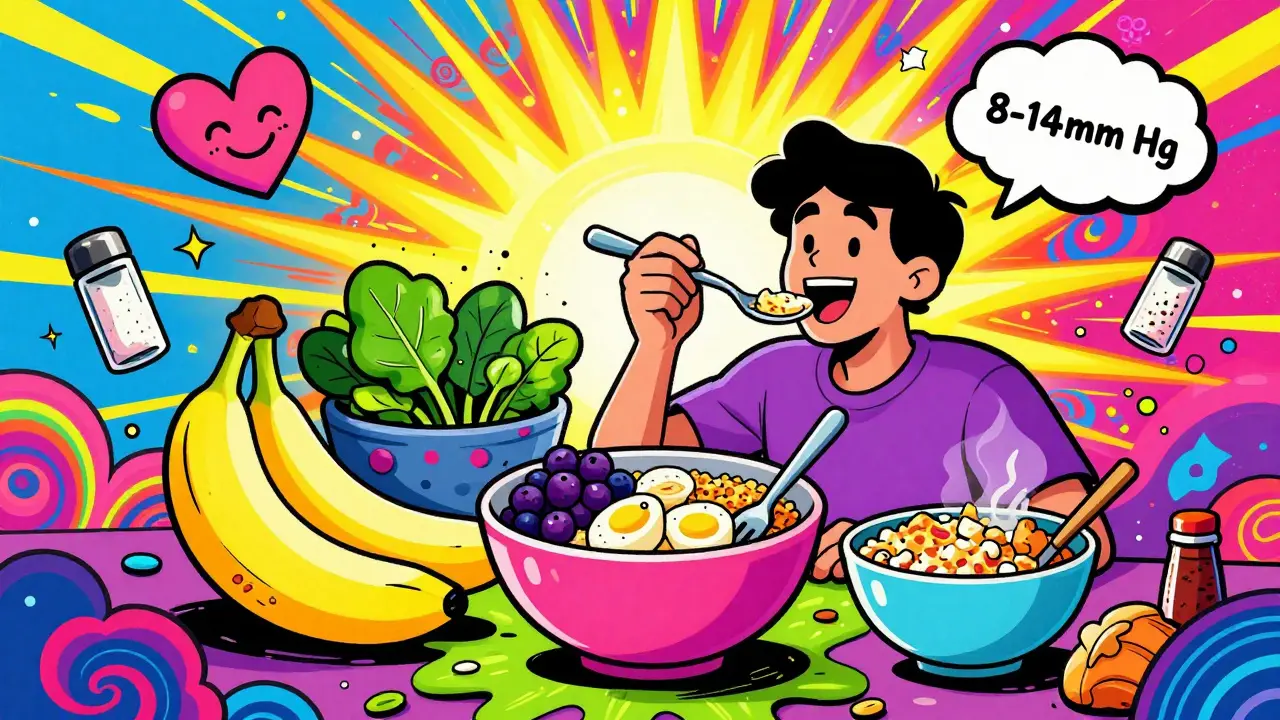
High blood pressure doesn’t always need a prescription to get under control. In fact, for many people, the most powerful tools are already in their kitchen, their shoes, and their medicine cabinet. Hypertension - defined as blood pressure consistently above 130/80 mm Hg - affects over a billion people worldwide. And while medications like ACE inhibitors and calcium channel blockers are effective, they’re not the only option. The truth? The best results come from combining smart lifestyle choices with careful medical oversight.
What Really Lowers Blood Pressure? The Science Behind Natural Strategies
Forget quick fixes. Real, lasting drops in blood pressure come from habits backed by real data. Take the DASH diet. Developed by the National Heart, Lung, and Blood Institute in 1997, it’s not a fad - it’s a proven system. People who follow it strictly for 14 days see systolic pressure drop by 8 to 14 points. That’s as effective as some medications. The secret? More fruits, vegetables, whole grains, and lean proteins. Less salt, sugar, and processed food. The numbers don’t lie: hitting 4,700 mg of potassium, 1,250 mg of calcium, and 500 mg of magnesium daily makes a measurable difference.
Then there’s salt. Most people consume 3,400 mg of sodium a day. The recommended limit? 1,500 mg. Cutting back by just half can lower systolic pressure by 5 to 6 mm Hg. It’s not about avoiding salt entirely - it’s about being aware. Processed foods, canned soups, restaurant meals - those are the real culprits. Cooking at home gives you control.
Exercise isn’t just good for your heart - it’s a direct blood pressure reducer. Just 150 minutes a week of brisk walking (about 30 minutes, five days a week) can drop systolic pressure by 5 to 8 mm Hg. You don’t need to run a marathon. A daily walk around the neighborhood, a bike ride, even gardening counts. The key is consistency. Studies show people who stick with it for months see the biggest gains.
The Supplements That Actually Work - And Which Ones Don’t
Supplements get a lot of hype, but not all are created equal. Here’s what the science says:
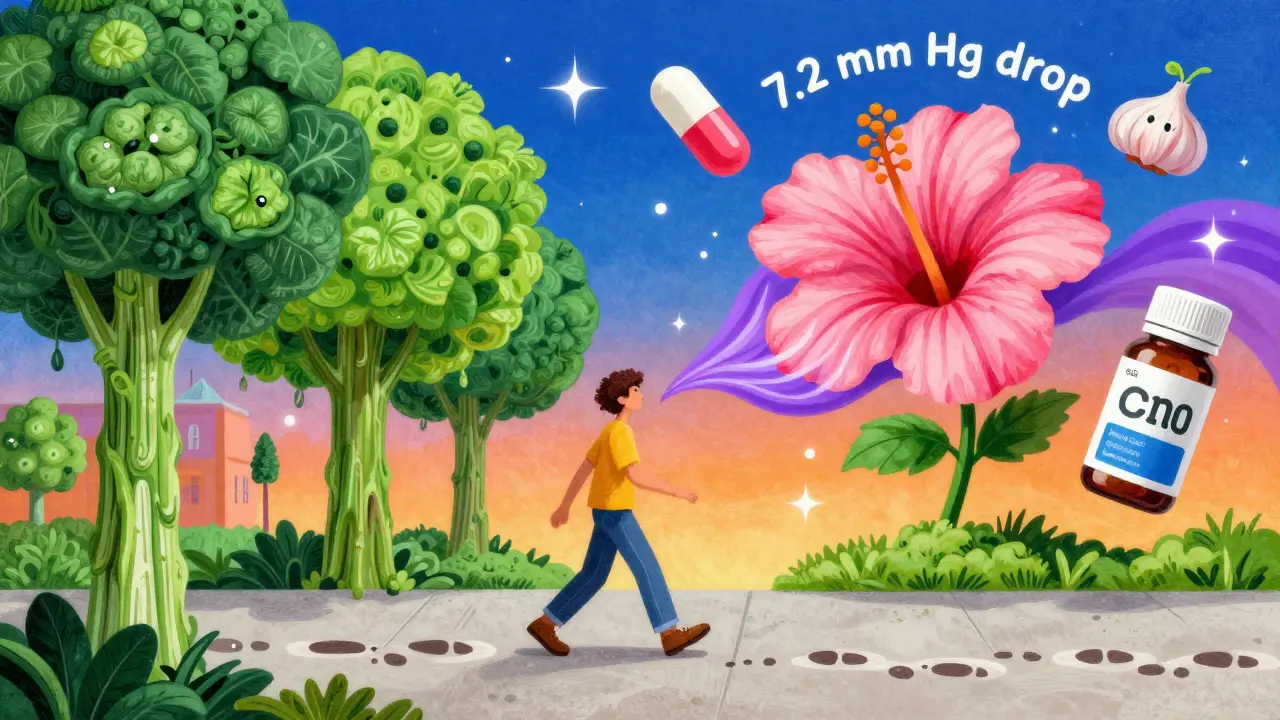
- Coenzyme Q10 - At 100-225 mg daily, it’s shown to reduce systolic pressure by 11-17 mm Hg in multiple studies. It’s especially helpful for people on statins, which can deplete natural CoQ10 levels.
- Aged garlic extract - Taking 600-1,200 mg daily lowers systolic pressure by 7-10 mm Hg in stage 1 hypertension. It’s not raw garlic - it’s the aged, odorless form that’s been studied. One Reddit user reported a drop from 148 to 135 after six weeks.
- Hibiscus tea - Three to four cups daily for six weeks reduced systolic pressure by 7.2 mm Hg compared to placebo. It’s a natural ACE inhibitor, and many users swear by it. GoodRx reviews show 78% of people noticed a difference.
- Magnesium - 368 mg daily can lower systolic pressure by 2 mm Hg and diastolic by 1.8 mm Hg. Magnesium glycinate is the most absorbable form and helps with muscle cramps too.
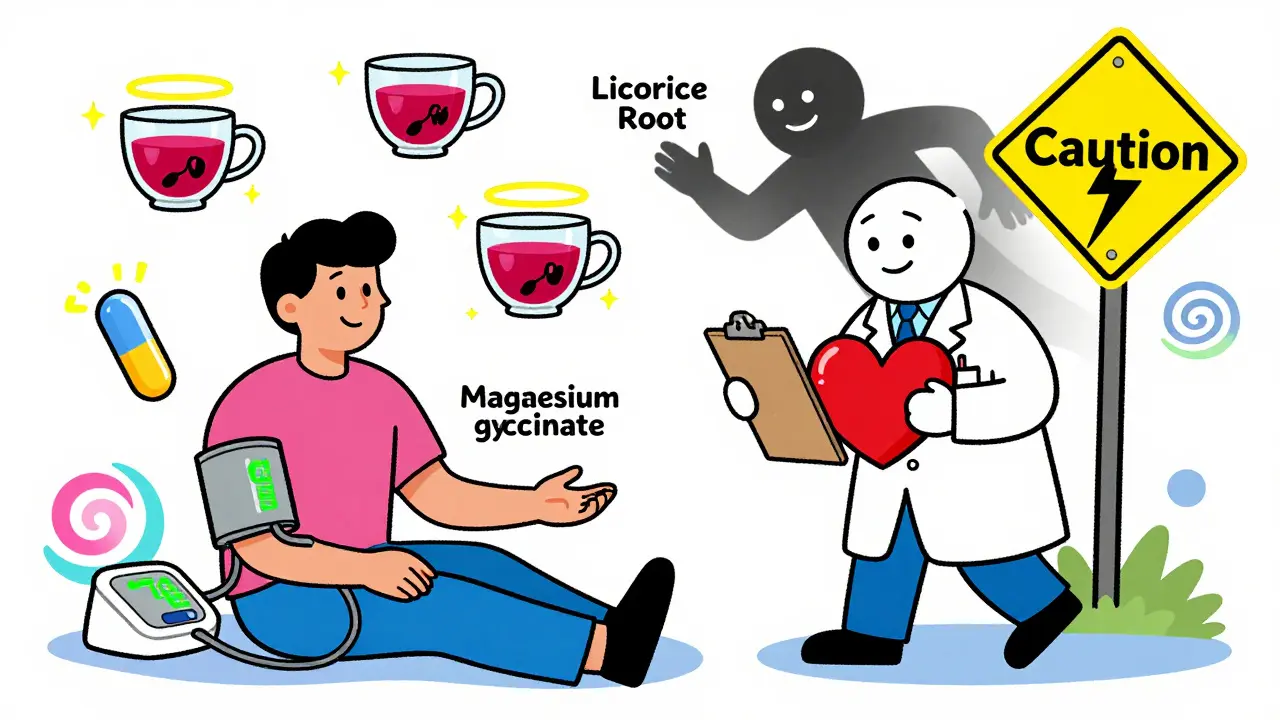
But be careful. Not all supplements are safe. St. John’s wort, licorice root, and yohimbine can actually raise blood pressure. The FDA has issued warnings to 15 supplement companies for false claims. And here’s the kicker: 42% of people taking supplements don’t tell their doctor. That’s dangerous. Garlic can thin your blood - if you’re on warfarin, that’s a risk. Licorice can mess with diuretics and cause low potassium. Always check with your provider.
Medication vs. Natural: How They Compare
Let’s be clear: medications work faster. Amlodipine, for example, can drop systolic pressure by 20-25 mm Hg in just a few weeks. Natural methods? They take time. CoQ10, garlic, and hibiscus typically show results after 4-8 weeks. That’s why doctors don’t recommend replacing meds with supplements - especially if your pressure is above 140/90.
But here’s where it gets interesting. A 2023 trial called SPRINT-2 found that people who combined lifestyle changes with lower doses of medication had the same blood pressure control as those on full doses - but with 32% fewer side effects. That’s huge. Fewer headaches, less dizziness, less fatigue.
For someone with stage 1 hypertension (130-139/80-89) and no other heart problems, a 3-6 month trial of strict diet, exercise, and targeted supplements might be a reasonable first step. But if your pressure is 160/100? Medication is non-negotiable.
Real People, Real Results
On Reddit’s r/hypertension community, over 412 comments tell the same story. One user: “Switched to DASH diet, cut salt, started hibiscus tea. In 8 weeks, I went from 152/94 to 128/82. My doctor was shocked.” Another: “Took garlic with lisinopril. Got dizzy. Stopped the garlic. Back to normal.”
Amazon reviews of magnesium glycinate show 4.1 stars from 1,200 people. Many say they sleep better and feel less tense. Hawthorn berry? Only 3.4 stars. Nearly half said it did nothing. The pattern is clear: the most consistent wins come from diet, movement, and a few well-chosen supplements - not magic pills.
How to Start - Without Overwhelming Yourself
You don’t need to overhaul your life overnight. Pick one thing. Just one.
- Start with salt. Read labels. Swap out processed snacks for fresh fruit. Aim for 2,300 mg daily for now - then work toward 1,500.
- Add 30 minutes of walking five days a week. Use a pedometer. Aim for 8,000 steps.
- Try hibiscus tea. One cup in the morning, one at night. It’s tart, but easy to drink with a bit of honey.
- Take a magnesium supplement - 300-400 mg of glycinate before bed. It helps with sleep and muscle relaxation.
- Track your pressure at home. Buy a validated upper-arm monitor. Record readings twice a week. Share the log with your doctor.
After 4 weeks, reassess. If your pressure dropped, keep going. If not, add another change. The goal isn’t perfection - it’s progress.
When to Talk to Your Doctor
Natural doesn’t mean risk-free. You should talk to your doctor before starting any supplement - especially if you’re on medication. Some interactions can be serious. Garlic + blood thinners? Risk of bleeding. Licorice + diuretics? Dangerous potassium loss. CoQ10 + beta-blockers? Possible over-lowering.
Also, if your pressure stays above 140/90 despite lifestyle changes, medication isn’t a failure - it’s a necessary tool. The American Heart Association says natural methods alone aren’t enough for stage 2 hypertension or people with heart disease. That’s not a critique of natural approaches - it’s a recognition of real risk.
And don’t forget: many insurance plans now cover lifestyle programs. Medicare Advantage plans have jumped from covering 38% of these programs in 2020 to 67% in 2023. Ask your provider if you qualify.
Final Thought: It’s Not Either/Or
Hypertension management isn’t about choosing between pills and herbs. It’s about building a system that works for your body - and your life. The most successful people aren’t the ones who quit their meds. They’re the ones who added better food, daily movement, and smart supplements - and then worked with their doctor to fine-tune everything.
Lowering blood pressure isn’t a race. It’s a marathon. And the best part? Every step you take - whether it’s swapping chips for apples, walking after dinner, or sipping hibiscus tea - is a step toward a longer, healthier life.
Sneha Mahapatra
February 28, 2026 AT 09:10Still take my meds. Not because I’m scared, but because I respect my heart too much to gamble.
bill cook
February 28, 2026 AT 22:51Byron Duvall
March 2, 2026 AT 21:45Sophia Rafiq
March 3, 2026 AT 20:46Noah Cline
March 4, 2026 AT 13:30Lisa Fremder
March 6, 2026 AT 10:00Justin Ransburg
March 8, 2026 AT 06:48Sumit Mohan Saxena
March 10, 2026 AT 03:12Vikas Meshram
March 11, 2026 AT 15:07Miranda Anderson
March 12, 2026 AT 11:57Gigi Valdez
March 13, 2026 AT 04:44