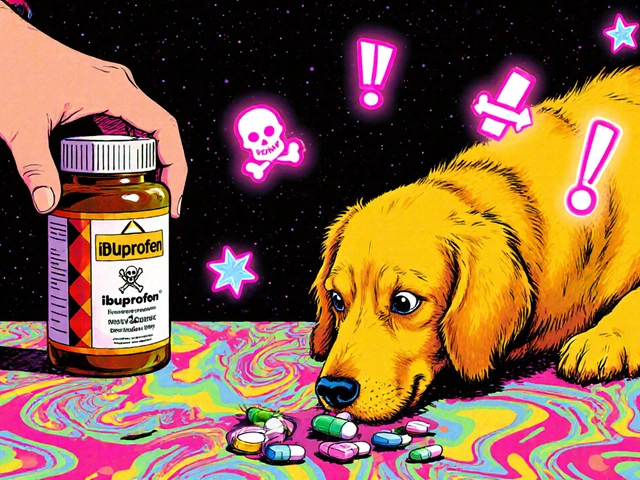
Imagine walking into three different pharmacies in one week, each handing you a pill bottle from a doctor you haven't seen in months. For many seniors juggling chronic conditions like diabetes, heart disease, and arthritis, this isn't a hypothetical scenario-it's Tuesday. The risk? One doctor prescribes a blood thinner, another adds an anti-inflammatory, and neither knows the other is involved. That’s how serious interactions happen.
Managing multiple pharmacies and prescribers safely isn’t just about organization; it’s about preventing harm. When care is fragmented, medication errors creep in. But with the right systems-whether you’re a patient, a caregiver, or a pharmacy owner-you can turn chaos into clarity. Here’s how to do it without losing your mind (or your health).
Why Fragmented Care Is Dangerous for Seniors
Seniors often see five or more doctors a year: a primary care physician, a cardiologist, a neurologist, maybe a dermatologist. Each prescriber works in a silo. They see their own slice of your health, not the whole picture. Meanwhile, you might fill prescriptions at two or three pharmacies because one is closer to home, another has better hours, and a third offers cheaper prices.
The result? Duplications, interactions, and gaps. A 2023 study published in the American Journal of Health-System Pharmacy found that 17% of multi-pharmacy medication errors stem directly from inconsistent drug naming and lack of shared records between locations. For example, one prescriber might write “Lisinopril 10mg” while another uses “Prinivil 10mg”-same drug, different name. Without a unified system, a pharmacist at Pharmacy A may not realize Pharmacy B already dispensed the same medication under a brand name.
It gets worse when prescribers don’t communicate. Dr. Linda Tyler, Chief Pharmacist at Mayo Clinic, warns that 12% of chain pharmacy medication errors occur during prescription transfers when local pharmacists skip verification steps. If your cardiologist doesn’t know your PCP started a new statin, they might prescribe something that interacts badly. No one checks. No one notices. Until you end up in the ER.
The Role of Centralized Pharmacy Systems
So how do we fix this? Enter centralized pharmacy management software. These aren’t just for big chains-they’re increasingly available to independent pharmacies and even accessible to patients through integrated platforms. Systems like EnterpriseRx by McKesson and PrimeRx by PioneerRX create a single source of truth for every patient across all locations.
Here’s what they actually do:
- Universal Drug Files: Every location uses the same standardized drug database with NDC codes, generic names, and pricing. This eliminates confusion over brand vs. generic names.
- Cross-Location Patient Profiles: A pharmacist in Bristol can see exactly what was dispensed in London last month. No more guessing.
- Real-Time Alerts: If two prescribers order conflicting meds, the system flags it before dispensing.
- Inventory Syncing: Prevents stockouts and ensures consistent availability across sites.
According to Datascan Pharmacy’s 2023 documentation, these systems have no technical limit on the number of connected locations. Data syncs daily (or more frequently if configured), and AES-256 encryption keeps patient data secure during transfers. In one case study, Datarithm’s balancing features reduced inventory-related prescription errors by 28% across multi-location pharmacies. That’s not a small number-that’s fewer hospitalizations.
Best Practices for Patients and Caregivers
You don’t need to be a pharmacy IT director to benefit from these systems. As a patient or caregiver, here’s what you can do right now:
- Pick One Primary Pharmacy. Designate one location as your “home base.” Even if you occasionally use others, keep your main records there. Most centralized systems allow you to set a “preferred pickup location,” so your history stays intact.
- Share Your Full Med List. Bring a printed or digital list of all medications, dosages, and prescribers to every appointment. Ask each doctor to review it before adding anything new.
- Use Patient Portals Wisely. Many hospitals and clinics offer portals where you can view recent prescriptions. Check them regularly. If a new med appears, call and confirm it’s intentional.
- Ask About Interactions Out Loud. At every visit, say: “Have you checked this against my current meds?” It sounds simple, but it forces a pause and a check.
- Keep a Medication Diary. Note what you take, when, and any side effects. Show it to your pharmacist monthly. They’re trained to spot patterns doctors miss.
For caregivers managing for elderly parents, consider using apps like Medisafe or PillPack (by Amazon) that integrate with pharmacy records. They send reminders and flag potential issues. Not fancy-but effective.
What Pharmacy Owners Should Know
If you run a pharmacy or work in one, adopting centralized tools isn’t optional anymore. CMS now requires multi-location pharmacies to demonstrate cross-location error tracking for Medicare Part D compliance. Since 2021, adoption of centralized systems among independent chains jumped 44%, according to the National Community Pharmacists Association.
Implementation takes time-average 8-12 weeks for a 5-10 location chain. Staff training runs 16 hours per technician and 24 hours per pharmacist. Use vendor-certified trainers; adoption rates are 12% higher than with internal-only training. Watch out for data migration errors: 27% of chains experienced prescription history discrepancies during transitions, requiring manual verification of nearly 15% of active profiles.
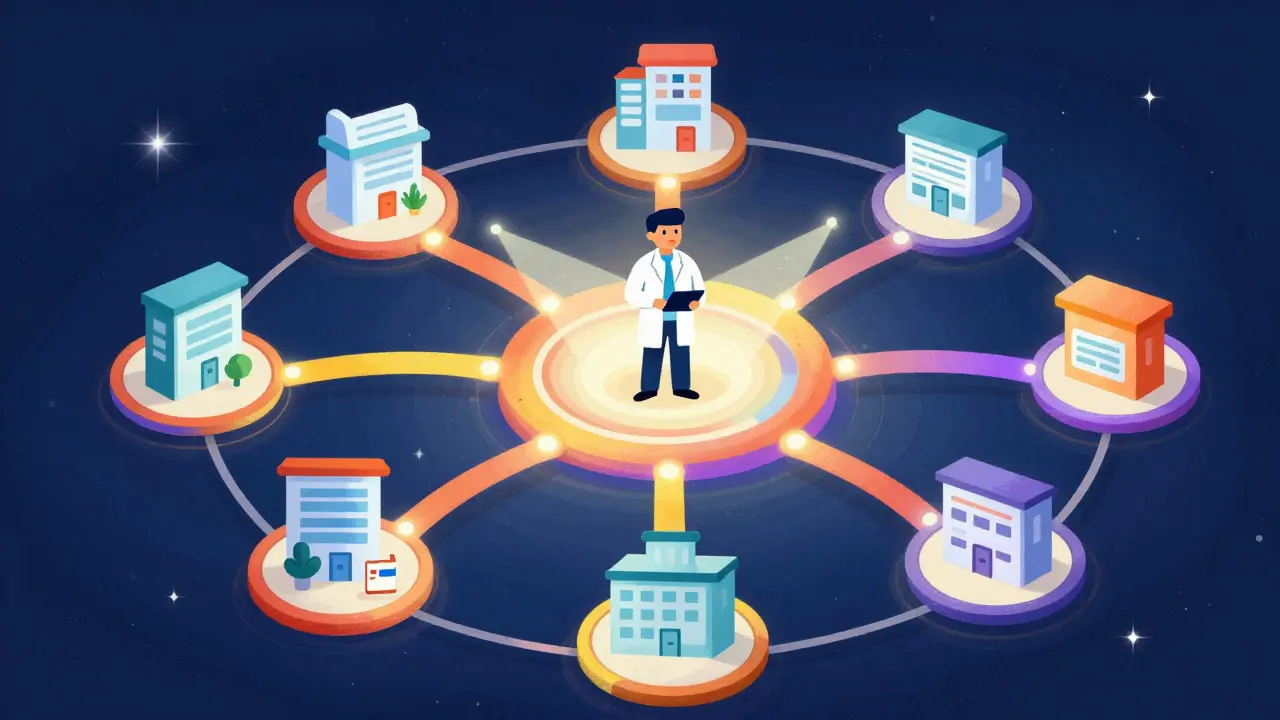
The “hub-and-spoke” model works best: one central location manages drug files and pricing, while local pharmacists retain clinical decision-making authority. A 2023 University of California study found this approach reduced medication errors by 38% compared to fully centralized clinical models. Local oversight prevents blind spots-something Dr. Tyler emphasizes strongly.
Comparing Top Management Platforms
Not all systems are created equal. Here’s how the leading options stack up for multi-location safety:
| Feature | EnterpriseRx (McKesson) | PrimeRx (PioneerRX) | Datascan Central Store |
|---|---|---|---|
| Max Locations Supported | Unlimited | Unlimited | Unlimited |
| Data Sync Frequency | Real-time + Daily Batch | Daily (Customizable) | Daily Automated |
| Error Reduction Impact | 29% fewer duplicate therapies | 89% user satisfaction on transfers | 28% fewer inventory errors |
| Security Protocol | HIPAA Compliant, Cloud-Based | AES-256 Encryption | FIDO2 Keys for Central Auth |
| Monthly Cost per Location | $450 ($325 for 15+ stores) | Varies by contract | Competitive tiered pricing |
| Best For | Large chains needing real-time processing | Patient-friendly transfer workflows | Central monitoring without remote login |
Specialty pharmacies should look elsewhere. Therigystm holds 41% market share in specialty management, with 98.7% accuracy in EHR onboarding-far above standard systems’ 82.3%. If your seniors deal with biologics or complex therapies, generic multi-location tools may fall short.

Emerging Trends: AI and Blockchain
The future is already here. Datascan launched AI Watchdog 2.0 in January 2024, which analyzes prescription patterns across locations to detect diversion with 92.4% accuracy in beta tests. EnterpriseRx is integrating with Epic EHR systems to enable real-time prescriber communication across 2,400+ hospital networks-directly tackling the 18% of errors caused by communication gaps.
Even blockchain is entering the scene. Outcomes.com piloted a blockchain-based verification system in 2023 that cut prescription fraud by 67% in multi-location trials. While still early, it points toward a world where every pill has a tamper-proof digital trail.
But beware: CMS’s 2025 FHIR API mandate will force $200,000+ upgrades for 63% of current systems. Smaller vendors may struggle. Choose platforms with long-term regulatory roadmaps, not just flashy features.
Frequently Asked Questions
Is it safe to use more than one pharmacy?
Yes, but only if all locations share a unified patient record. Without that, risks of duplication and interaction rise sharply. Always designate one primary pharmacy and ensure others access the same profile.
How do I make sure my doctors know about each other’s prescriptions?
Bring a complete medication list to every visit. Ask each prescriber to review it before adding new drugs. Use patient portals to track recent orders. Consider asking your PCP to coordinate with specialists via shared EHR notes.
What is the biggest cause of medication errors in multi-pharmacy settings?
Inconsistent drug naming and lack of shared records account for 17% of errors. Another 12% stem from unverified prescription transfers between locations. Standardized databases and mandatory verification steps reduce both significantly.
Do centralized pharmacy systems work for small independent pharmacies?
Yes. While large chains dominate adoption, independent pharmacies can join regional networks or use cloud-based platforms like Liberty Software’s PharmacyOne Chain Management, starting at $299/month per location. Look for systems that support unlimited locations without extra licensing fees.
How long does it take to implement a centralized pharmacy system?
Average deployment takes 8-12 weeks for chains with 5-10 locations. Budget 16 hours of training per technician and 24 per pharmacist. Expect some data migration hiccups-verify 10-15% of patient profiles manually during transition.