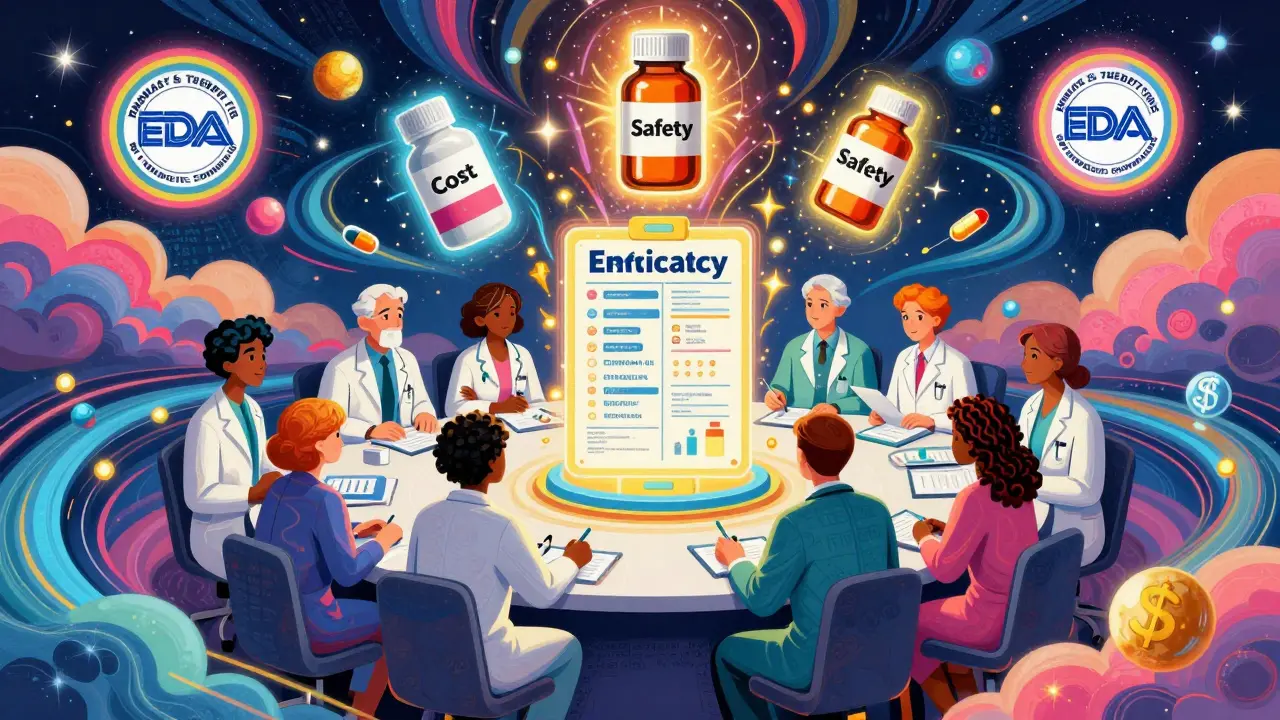
Ever wonder why your prescription for a generic drug is covered, but another one isn’t - even if they treat the same condition? It’s not random. It’s not arbitrary. It’s a tightly managed system built around cost, safety, and clinical evidence. Insurance companies don’t just pick generics because they’re cheap. They pick them because they’ve been vetted, ranked, and locked into a structure designed to save money - without sacrificing care. And if you’ve ever been denied coverage for a generic, you’ve hit a wall in this system.
How Generics End Up on the Formulary
Every health plan - whether it’s Medicare, Medicaid, or your employer’s private insurance - has a list called a formulary. This is the official catalog of drugs the plan agrees to pay for. And when it comes to generics, the rules are strict, consistent, and mostly hidden from view.
The real decision-makers aren’t claims processors or customer service reps. They’re Pharmacy & Therapeutics (P&T) committees - expert panels made up of doctors, pharmacists, and sometimes data analysts. These groups meet regularly to review new drugs and decide which ones get covered. Their job? To balance two things: keeping patients healthy and keeping costs low.
To even be considered, a generic must be approved by the Food and Drug Administration (FDA). That means it must have the same active ingredient, strength, dosage form, and route of administration as the brand-name drug. It must also be rated as “therapeutically equivalent” - meaning, in the eyes of the FDA, it works the same way.
But FDA approval is just the starting line. The P&T committee asks three critical questions:
- Is it clinically effective? Does the drug actually work better - or at least as well - than others for the condition?
- Is it safe? Are there fewer side effects, drug interactions, or risks compared to alternatives?
- Is it cost-effective? If two generics do the same thing, but one costs 40% less, the cheaper one wins.
It’s not about brand loyalty. It’s not about marketing. It’s about data. A 2023 analysis by Cigna confirmed that for a drug to be eligible, it must be prescribed by a licensed provider, purchased from a licensed pharmacy, and deemed medically necessary. After that, the P&T committee takes over.
The Tier System: Why Your Copay Is $10 and Not $100
Formularies aren’t just lists. They’re organized into tiers - like levels in a video game - and each tier has a different price for you, the patient.
Here’s how it breaks down in most plans:
- Tier 1: Preferred generics - usually $0 to $15 for a 30-day supply.
- Tier 2: Non-preferred generics or brand-name drugs - $40 to $75.
- Tier 3: Specialty drugs - $100+.
According to CMS data from 2023, 92% of Medicare Part D plans use this exact structure. And guess what? Generics are almost always in Tier 1.
Why? Because generics cost 80-85% less than brand-name drugs. The FDA estimates that generic use saved the U.S. healthcare system $1.67 trillion between 2007 and 2019. In 2019 alone, that was $141 billion. Insurers don’t cover generics out of kindness. They cover them because it’s the smartest financial move.
And it works. In 2023, American Pharmacists Association reported that 87% of all prescriptions filled in the U.S. were for generics. That’s not a coincidence. It’s policy.
Why Some Generics Are Excluded - Even If They’re FDA Approved
Here’s the twist: Just because a generic is FDA-approved doesn’t mean it gets covered.
Take insulin, for example. There are dozens of generic versions now, but not all are on every formulary. Why? Because P&T committees look at real-world data - not just lab results. One generic might work great for most people, but cause more low-blood-sugar episodes in older adults. Another might be cheaper, but have inconsistent absorption rates across batches. That’s enough to get it bumped down or left off entirely.
Also, insurers often limit coverage to one or two generics per drug class. If there are five generics for high blood pressure, they’ll pick the top two based on cost and safety. The rest? Not covered - unless you appeal.
And here’s the catch: insurers don’t have to tell you why. A 2022 study in the Journal of Managed Care & Specialty Pharmacy found that only 37% of insurers publicly share their full decision criteria. So if your generic isn’t covered, you’re left guessing.
What Happens When Your Generic Isn’t Covered?
When a drug isn’t on the formulary, you have two options: pay out-of-pocket or file an exception.
Most people don’t realize they can appeal. But you can - and you should.
The process is simple:
- Your doctor submits a request explaining why the covered generic won’t work for you - maybe you had side effects, or it didn’t control your condition.
- The insurer has three business days to respond (one day for urgent cases).
- If they don’t respond? Automatic approval.
According to the Patient Advocate Foundation, 43% of patients get denied initially - but 78% eventually get coverage after appealing. That’s a huge win if you know the system.
On Reddit’s r/healthinsurance, users report that appeals work best when the doctor includes specific details: “Patient experienced vomiting and dizziness with generic A. Switched to generic B - no improvement. Brand-name drug was effective in the past.” That kind of evidence moves the needle.
Therapeutic Substitution: When the Pharmacist Changes Your Prescription
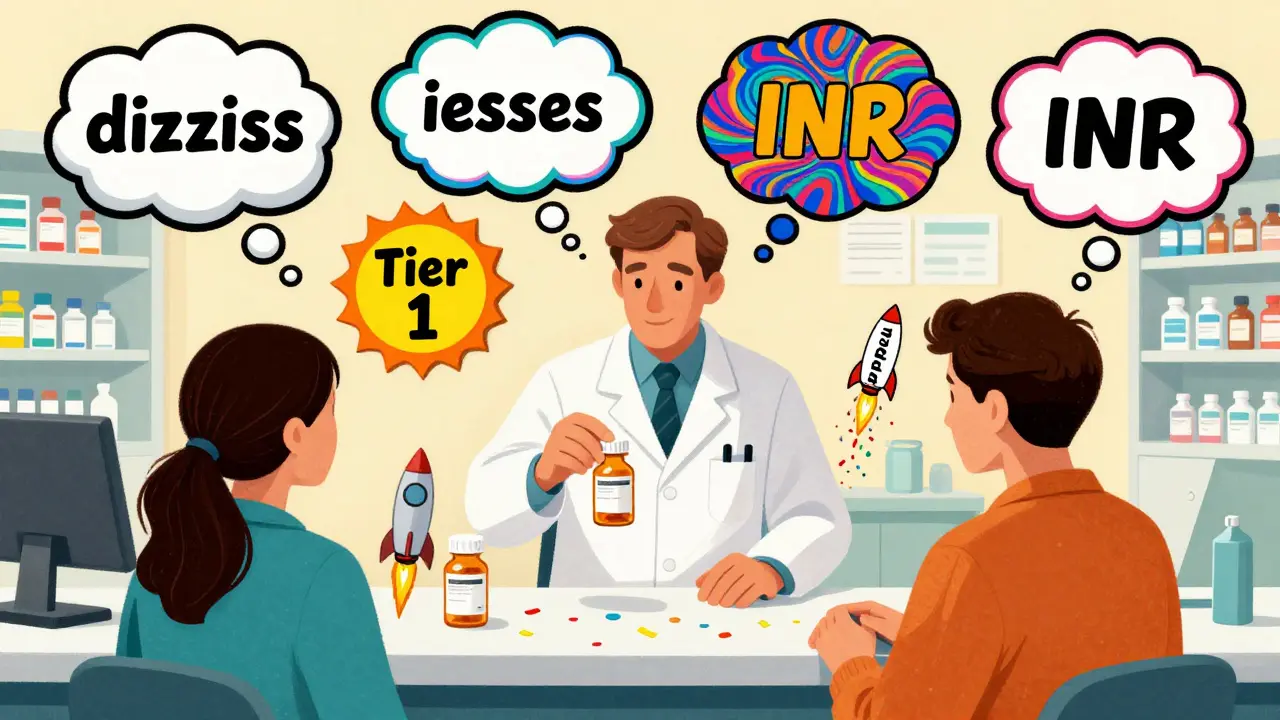
Here’s another layer: Even if your doctor prescribes a specific generic, the pharmacist might swap it for another - without telling you.
This is called therapeutic substitution. It’s legal in 78% of commercial plans, according to the Blue Cross Blue Shield Association (2023). The idea is to save money by switching to the cheapest option in the same class.
But it’s not always harmless. A 2023 survey by Drug Topics found that 31% of patients reported side effects after being switched to a different generic. One man on a blood thinner said his INR levels spiked after a substitution. Another woman with epilepsy had breakthrough seizures.
That’s why some states - like Washington - require insurers to notify patients before making substitutions. But most don’t. And that’s where the system gets frustrating.
The Bigger Picture: What’s Changing in 2025 and Beyond
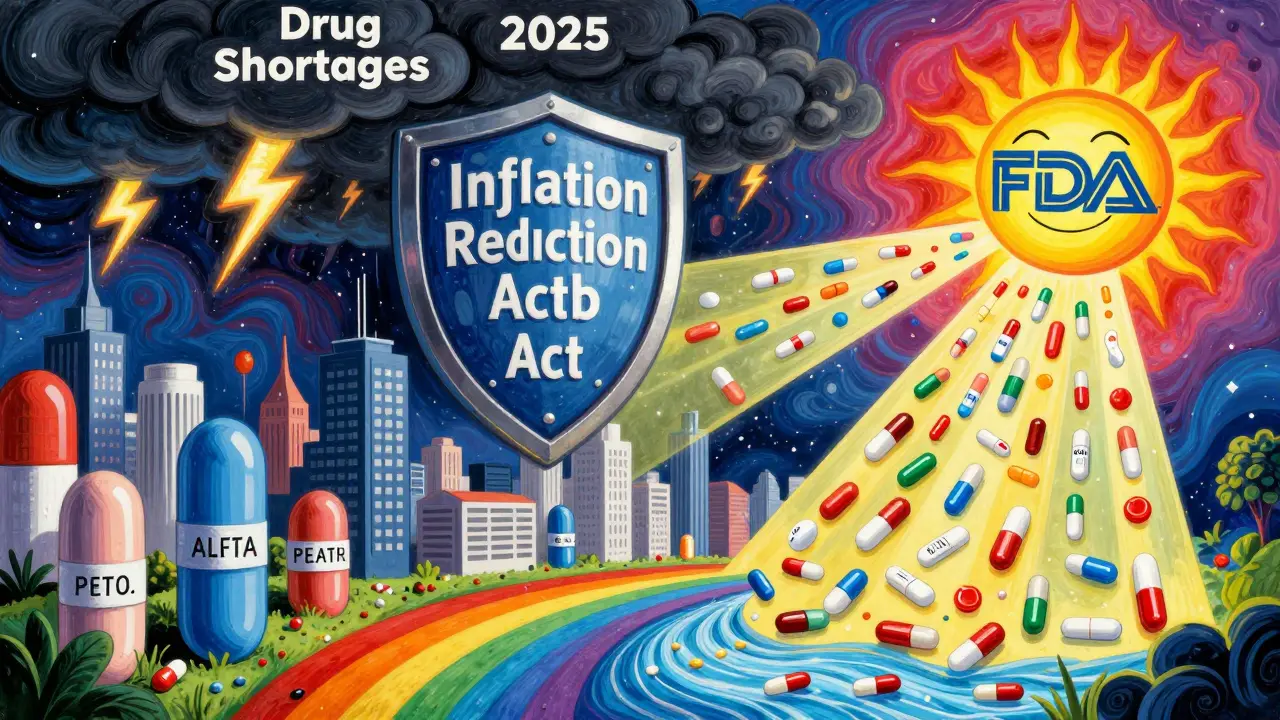
The rules are shifting. The Inflation Reduction Act of 2022 capped out-of-pocket drug costs at $2,000 per year for Medicare Part D starting in 2025. That means insurers can’t just shift all costs to patients anymore. They’ll need to be smarter about what they cover.
That’s pushing them toward high-volume, low-cost generics - the kind that save the most money across millions of prescriptions.
At the same time, the Food and Drug Administration is speeding up approval for complex generics - like inhalers, injectables, and insulins. The goal? Cut approval time from 42 months to 10 months. More generics = more choices = more competition.
But there’s a dark side. As of October 2023, the FDA reported 372 active drug shortages - and 78% of them were generics. When a generic runs out, insurers scramble. They might temporarily cover a more expensive brand-name drug. Or they might delay coverage until a new supplier is approved. That’s why your coverage can change overnight.
What This Means for You
If you take generics regularly, here’s what you need to know:
- Your copay is low because your insurer chose the cheapest option that works - not because they’re being nice.
- If a generic isn’t covered, ask your doctor to file an exception. Most get approved.
- If your pharmacist switches your drug, ask if it’s the same one your doctor prescribed.
- Keep a record of side effects - especially after switching generics.
- Check your plan’s formulary every year during open enrollment. Changes happen.
The system isn’t perfect. But it’s not broken, either. It’s designed to save money - and it does. For millions of people, generics make life-saving drugs affordable. The problem isn’t the system. It’s the lack of transparency. You deserve to know why you’re getting one drug instead of another. And now, you do.
Why is my generic drug not covered even though it’s FDA-approved?
FDA approval only means the drug is safe and works the same as the brand. Insurers use Pharmacy & Therapeutics (P&T) committees to pick which generics to cover based on cost, safety, and clinical data. Even if a generic is FDA-approved, it may not be on your plan’s formulary because the insurer chose a cheaper or more effective alternative. You can appeal this decision through a formal exception request.
Can my pharmacist switch my generic without telling me?
Yes - in 78% of commercial plans, pharmacists are allowed to substitute one generic for another without notifying you, as long as they’re considered therapeutically equivalent. This is called therapeutic substitution and is done to lower costs. Some states require notification, but most don’t. Always ask your pharmacist if the drug you received is the same one your doctor prescribed.
How do I get a non-formulary generic covered?
Your doctor can file an exception request with your insurer. You’ll need to show that the covered generic either didn’t work for you, caused side effects, or requires a dosage higher than your plan allows. Most requests are approved within three business days. If the insurer doesn’t respond, approval is automatic. The Patient Advocate Foundation reports 78% of denied requests are eventually approved after appeal.
Why do some insurance plans cover different generics than others?
Each insurer has its own P&T committee and formulary. Even two Medicare Part D plans from different companies may cover different generics based on negotiated prices, bulk discounts, or clinical preferences. There’s no national standard - only guidelines. Always check your specific plan’s formulary before starting a new medication.
Will the Inflation Reduction Act change how generics are covered?
Yes. Starting in 2025, Medicare Part D beneficiaries will pay no more than $2,000 per year out-of-pocket for drugs. This forces insurers to focus on high-volume, low-cost generics to manage total drug spending. Expect more pressure on manufacturers to lower prices and more generics to be added to formularies. But it also means insurers may limit coverage to only the cheapest options in each drug class.
Insurers don’t choose generics to control patients - they choose them to control costs. And for most people, that works. But when it doesn’t, you have rights. Know them. Use them.


phyllis bourassa
March 5, 2026 AT 16:43Pranay Roy
March 5, 2026 AT 17:27Joe Prism
March 6, 2026 AT 04:05Bridget Verwey
March 7, 2026 AT 15:13Andrew Poulin
March 8, 2026 AT 02:27Weston Potgieter
March 8, 2026 AT 03:57Vikas Verma
March 9, 2026 AT 10:06Sean Callahan
March 10, 2026 AT 13:56Ferdinand Aton
March 10, 2026 AT 20:54William Minks
March 11, 2026 AT 10:59Tim Hnatko
March 12, 2026 AT 10:16Aaron Pace
March 13, 2026 AT 18:24Joey Pearson
March 14, 2026 AT 12:48Roland Silber
March 15, 2026 AT 10:05