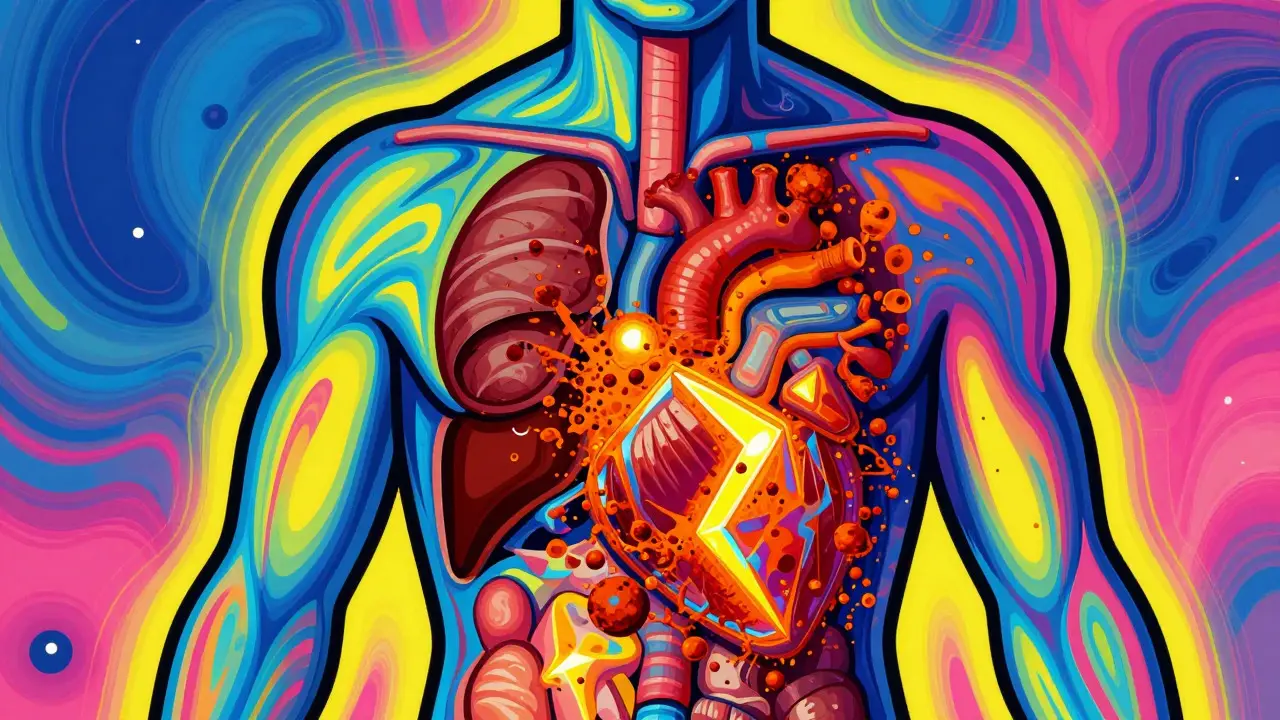
Imagine your body is a house. You need supplies to keep it running, but what happens when the delivery trucks never stop showing up? The garage fills up. The living room gets cluttered. Eventually, the furniture breaks under the weight. That is essentially what Hemochromatosis is. It is a condition where your body absorbs too much iron from the food you eat. Instead of using that extra iron, your organs store it. Over time, this excess iron acts like rust, damaging your liver, heart, pancreas, and joints. While it sounds scary, here is the good news: if caught early, it is one of the most treatable genetic conditions out there.
You might not have heard of hemochromatosis, but it is surprisingly common. In fact, it is often called "bronze diabetes" because of the skin darkening and diabetes-like symptoms it can cause in later stages. But you do not have to wait for those signs to appear. Understanding how iron overload works, recognizing the subtle early warning signs, and knowing about the simple blood-removal treatment called therapeutic phlebotomy can save your life. Let’s break down exactly what is happening inside your body and how modern medicine handles it.
What Is Hemochromatosis and Why Does Iron Build Up?
To understand hemochromatosis, you first need to know how your body normally handles iron. Most people get all the iron they need from their diet. Your body has a smart regulator called hepcidin, a hormone made by the liver. Think of hepcidin as a bouncer at a club. When your body has enough iron, hepcidin steps in and stops more iron from entering your bloodstream from your gut.
In people with hereditary hemochromatosis, that bouncer is missing or on vacation. This happens because of a mutation in the HFE gene. The most common mutation is called C282Y. If you inherit two copies of this faulty gene (one from each parent), your body loses its ability to regulate iron absorption. As a result, your intestines absorb up to three times more iron than normal. Since humans have no natural way to actively excrete excess iron, it accumulates in your tissues.
This isn't just a minor inconvenience. Normal body iron stores are around 0.8 to 1.2 grams. In untreated hemochromatosis, these stores can exceed 5 grams. That extra iron settles in vital organs, causing oxidative stress and tissue damage. It is an autosomal recessive disorder, meaning both parents must carry the gene for a child to develop the disease. However, many carriers never show symptoms, which makes family history crucial.
Early Warning Signs: What to Look For
The tricky part about hemochromatosis is that it is a slow burner. Iron builds up gradually over decades. By the time obvious symptoms appear, significant organ damage may have already occurred. This is why awareness is key. Men typically show symptoms between ages 40 and 60, while women often present later, after menopause, because menstruation naturally helps them shed excess iron.
If you are experiencing any of the following, it is worth asking your doctor about iron levels:
- Unexplained Fatigue: This is the most common complaint, affecting nearly three-quarters of patients. It is not just tiredness; it is a deep, bone-weary exhaustion that sleep doesn't fix.
- Joint Pain: Specifically in the knuckles (metacarpophalangeal joints) and knees. This pain can sometimes be the very first sign, appearing even before liver issues arise.
- Abdominal Pain: Discomfort in the upper right abdomen, where the liver sits.
- Skin Changes: A bronze or slate-gray tint to the skin, caused by iron deposits and increased melanin production.
- Loss of Libido: Low sex drive or erectile dysfunction in men, and irregular periods in women, due to hormonal gland damage.
- Heart Problems: Irregular heartbeat or heart failure in advanced cases.
Many people mistake these symptoms for aging, depression, or arthritis. A study found that patients saw an average of three to five doctors over several years before getting the correct diagnosis. Do not let your fatigue be dismissed without checking your iron status.
How Doctors Diagnose Iron Overload
Diagnosing hemochromatosis involves a combination of blood tests and genetic analysis. It starts with simple, inexpensive blood work that any primary care physician can order.
| Test | Normal Range | Hemochromatosis Indicator | Why It Matters |
|---|---|---|---|
| Transferrin Saturation | 20% - 50% | > 45% | This is the earliest and most sensitive marker. High saturation means your iron transport proteins are overloaded. |
| Serum Ferritin | Men: 30-400 ng/mL Women: 30-300 ng/mL |
Men > 300 ng/mL Women > 200 ng/mL |
Ferritin reflects total body iron stores. Levels above 1,000 ng/mL indicate high risk for cirrhosis. |
| HFE Genetic Test | No mutations | C282Y/C282Y homozygosity | Confirms the genetic cause. Found in 80-95% of clinical cases. |
If your transferrin saturation is consistently above 45% and your ferritin is elevated, your doctor will likely order an HFE gene test. This looks for the specific mutations mentioned earlier. Finding the C282Y mutation in both copies confirms the diagnosis.
In the past, a liver biopsy was the gold standard. Today, non-invasive methods like MRI with R2* technique are preferred to measure liver iron concentration accurately. Biopsies are now reserved for cases where doctors suspect advanced fibrosis or cancer. Early diagnosis is critical. If treated before ferritin exceeds 1,000 ng/mL, you can prevent nearly all serious complications like liver cirrhosis and heart failure.
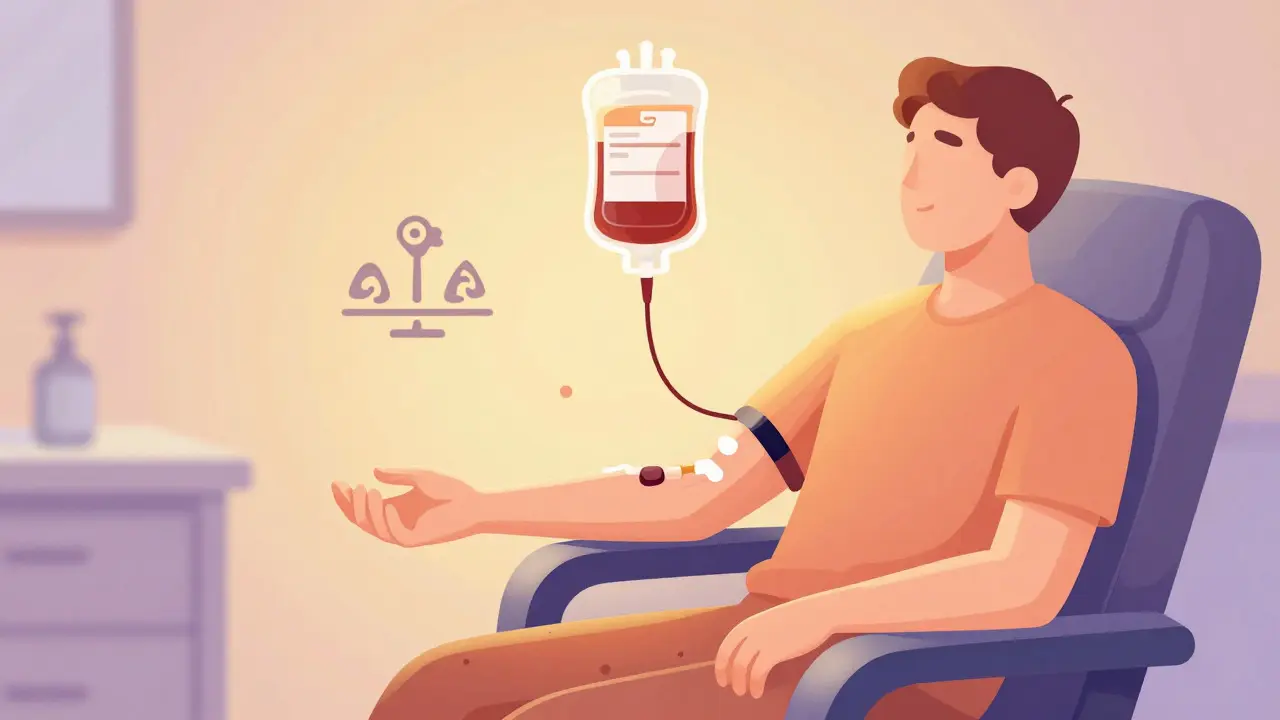
Phlebotomy: The Simple and Effective Treatment
Here is the best part: you do not need expensive drugs or complex surgeries to treat hemochromatosis. The standard treatment is therapeutic phlebotomy, which is basically the same process as donating blood. It is safe, effective, and highly affordable.
The treatment has two phases:
- Induction Phase: The goal here is to remove the excess iron quickly. You will visit a clinic weekly to have 450-500 mL of blood drawn. Each pint of blood contains about 200-250 mg of iron. Depending on how overloaded you are, this phase can take 12 to 18 months. You continue until your serum ferritin drops to a target range of 50-100 ng/mL.
- Maintenance Phase: Once your iron levels are normal, you don't stop forever. Because your body still absorbs too much iron, you need regular maintenance. Most people require a phlebotomy every 2 to 4 months for the rest of their lives. This keeps your ferritin in the safe zone.
It sounds daunting, but patients report high satisfaction rates once they start feeling better. Joint pain often improves within weeks, and energy levels return. The key is consistency. Skipping maintenance sessions allows iron to build up again, undoing the progress.
Living With Hemochromatosis: Diet and Lifestyle Tips
While phlebotomy does the heavy lifting, your daily choices support your treatment. You do not need to eliminate iron from your diet completely-your body needs some-but you should avoid boosting absorption unnecessarily.
- Avoid Vitamin C Supplements: Vitamin C significantly increases iron absorption. Avoid taking supplements with meals. Fresh fruit is fine, but skip the mega-dose pills.
- Limit Alcohol: Alcohol stresses the liver. If your liver is already storing excess iron, alcohol accelerates damage and increases the risk of cirrhosis. Moderation or abstinence is wise.
- Watch Raw Seafood: People with high iron levels are more susceptible to certain bacteria found in raw fish and shellfish, like Vibrio vulnificus. Cook your seafood thoroughly.
- Be Cautious with Iron-Fortified Foods: Check labels on cereals and breads. You do not need extra added iron.
- Exercise Regularly: Physical activity helps improve joint mobility and overall cardiovascular health, counteracting some of the systemic inflammation caused by iron overload.
Remember, cooking in cast-iron skillets adds small amounts of iron to food. For someone with hemochromatosis, it is better to use stainless steel or non-stick cookware instead.

Family Screening: Protecting Your Loved Ones
Since hemochromatosis is genetic, your diagnosis is a gift to your family. First-degree relatives-parents, siblings, and children-have a higher chance of carrying the gene. Cascade testing, where all immediate family members are tested for the HFE mutation, is strongly recommended.
If a sibling is found to have the mutation, they can start monitoring their iron levels early. Catching it in their 20s or 30s means they can prevent organ damage entirely. Many diagnosed individuals find out only after a relative is diagnosed. Encourage your family to ask their doctors for a simple transferrin saturation test. It takes minutes and could save their liver.
Future Outlook and New Therapies
Research into hemochromatosis is advancing rapidly. Scientists are looking into hepcidin mimetics, drugs that replace the missing "bouncer" hormone. Early trials show promise in reducing iron absorption without needing frequent blood draws. Additionally, polygenic risk scores are being developed to predict who will develop severe symptoms based on multiple genetic markers, not just HFE.
However, for now, phlebotomy remains the gold standard. It is proven, cheap, and effective. The biggest challenge today is not treatment, but awareness. Millions of people walk around with undiagnosed iron overload, suffering from fatigue and joint pain, thinking it is just part of getting older. It is not. Get tested. Know your numbers. Take control of your health.
Is hemochromatosis fatal if left untreated?
Yes, if left untreated for many years, hemochromatosis can lead to life-threatening complications such as liver cirrhosis, liver cancer, heart failure, and diabetes. However, with early diagnosis and regular phlebotomy treatment, life expectancy is normal.
Can I donate blood if I have hemochromatosis?
Generally, no. Blood banks screen for hemochromatosis because therapeutic phlebotomy is a medical treatment, not a donation. Your blood is discarded to lower your iron levels, not used for transfusions. Some specialized centers may accept it, but most require you to go through private phlebotomy services.
How often do I need phlebotomy for maintenance?
Maintenance frequency varies by individual, but most adults require a phlebotomy every 2 to 4 months. Your doctor will monitor your ferritin levels regularly to adjust the schedule. Some men may need it monthly, while others might manage with quarterly sessions.
Does diet alone cure hemochromatosis?
No. Dietary changes help manage iron absorption, but they are not strong enough to reduce significant iron overload. Phlebotomy is necessary to remove the stored iron from your organs. Diet supports the treatment but does not replace it.
Who is most at risk for hemochromatosis?
People of Northern European descent, particularly those with Irish, Scottish, or English ancestry, are at highest risk. Men are affected more frequently and severely than pre-menopausal women because women lose iron through menstruation. Family history is the strongest predictor.