Every time you pick up a packaged food, you’re making a decision that could be life-or-death. For the 32 million Americans with food allergies - including 5.6 million kids - reading a label isn’t just a habit. It’s a survival skill. But what if the label is misleading? What if the word "milk" hides goat milk? Or "shellfish" leaves out oysters? Since January 2025, the FDA’s updated guidance has changed everything. And if you’re managing allergies, you need to know exactly what’s changed - and why it matters.
What’s Actually in the "Milk" on Your Label?
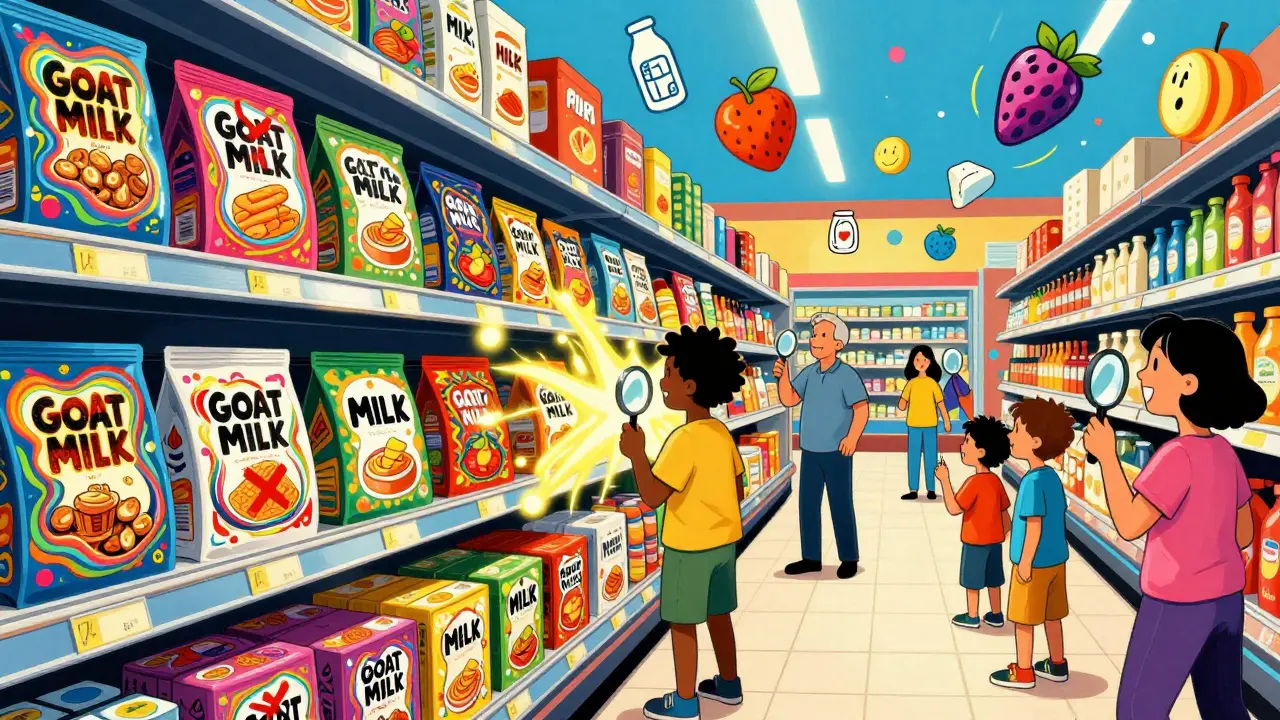
For years, "milk" on a label meant nothing specific. If you were allergic to cow’s milk but could tolerate goat or sheep milk, you had to call the manufacturer. No one had time for that. Now, under the FDA’s 2025 guidance, the word "milk" alone is no longer enough. Labels must say "goat milk," "sheep milk," or "cow milk." Same goes for eggs: "duck egg," "quail egg," or "chicken egg" - not just "egg." This isn’t bureaucracy. It’s life-saving clarity. One mom in Ohio told her story on Reddit: her son reacts badly to cow’s milk but eats goat milk yogurt without issue. Before 2025, she’d buy "milk-free" products and still get sick because the yogurt used cow’s milk protein in the flavoring. Now, she can read the label and know for sure. That’s the point.Tree Nuts Got a New Definition - Coconut Is Out
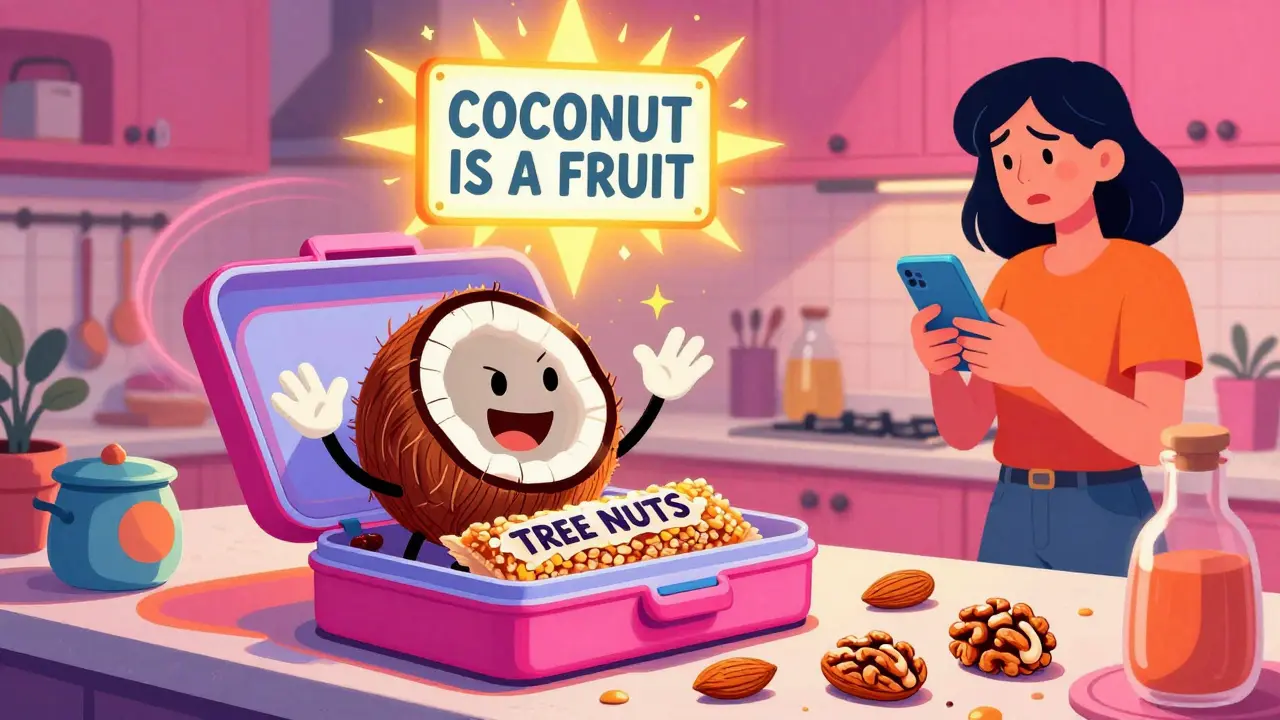
Coconut used to be listed as a tree nut on food labels. It’s not anymore. The FDA removed it from the major allergen list in early 2025. Why? Because coconut is a fruit, not a nut. And while some people are allergic to coconut, their allergy is completely separate from tree nut allergies. Most people allergic to almonds, walnuts, or cashews can eat coconut safely.Removing coconut from the tree nut list reduces unnecessary fear. You no longer have to avoid granola bars or coconut water just because they say "may contain tree nuts." That’s a big win. But here’s the catch: if a product says "contains coconut," that’s still a voluntary statement. Manufacturers can choose to list it - but they don’t have to. So if you’re allergic to coconut, you still need to check the full ingredient list. Don’t assume it’s gone just because it’s not on the "Contains" line.
Shellfish Got Split - Mollusks Are No Longer Covered
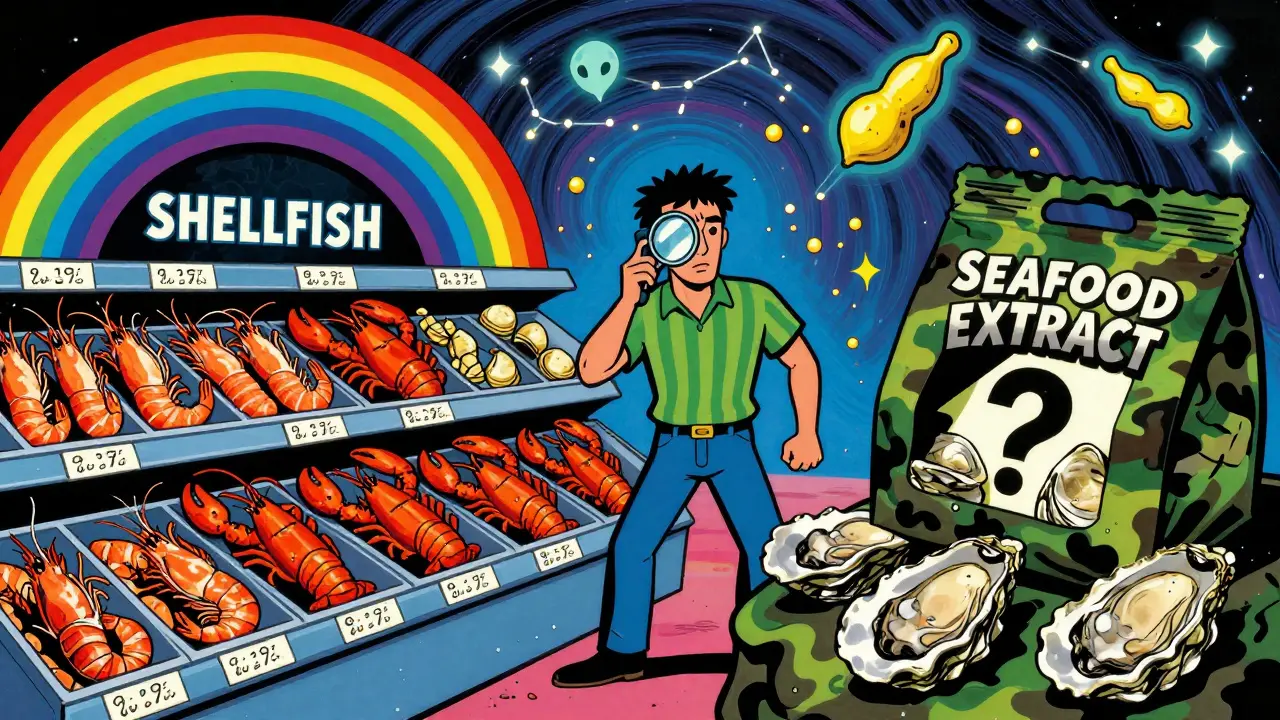
"Shellfish" used to mean shrimp, crab, lobster, clams, oysters, and scallops. Now, it only means crustacean shellfish: shrimp, crab, and lobster. Mollusks - clams, oysters, mussels, scallops - are no longer required to be labeled as allergens under the major allergen rules.This change is controversial. About 1.5 million Americans have mollusk allergies. Many of them assumed "shellfish" meant everything from the sea with a shell. Now, they’re left guessing. A product labeled "may contain shellfish" could still have oysters in it - and the label won’t say so. That’s a dangerous gap. If you’re allergic to oysters or clams, you can’t rely on the "Contains" statement anymore. You have to read every ingredient. And if you see "seafood extract," "natural flavor," or "fish stock," you need to contact the company. No exceptions.
"Free-From" Claims Can’t Be Lied About
You’ve seen it: "Gluten-Free!" on one side, "May Contain Wheat" on the other. It’s confusing. And now, it’s illegal. The FDA’s 2025 rules say you can’t label a product as "milk-free" if it also says "May Contain Milk." That’s a contradiction. Either it’s safe, or it’s not.This change forces companies to be honest. If a product claims to be free of an allergen, it must be free - even from tiny traces from shared equipment. That means manufacturers now have to test their products, clean equipment more thoroughly, and track every step. It’s expensive. Small businesses might pay $5,000 to $15,000 per product line to update their labels and processes. But for people with allergies, it’s worth it. No more guessing. No more "maybe." Just clear, verified safety.
Hidden Allergens Are Still Everywhere - Here’s How to Spot Them
Even with better labeling, allergens hide in plain sight. Soy lecithin? That’s soy. Natural flavorings? Could be milk protein. Modified food starch? Often wheat. The FDA says manufacturers must list the source of these ingredients - but only if they’re one of the nine major allergens.That means if a product uses a wheat-based ingredient, it must say "wheat" somewhere. But if it uses a non-major allergen - like mustard, celery, or sesame - you need to look closer. Sesame became a required allergen in 2023. Now, it must be named clearly. But what about lupin? Or buckwheat? They’re not on the list. If you’re allergic to them, you’re on your own. Always read the full ingredient list. Don’t skip the tiny print. And if you’re unsure? Call the company. Most have allergen hotlines. Use them.
What’s Next? The Future of Allergen Labeling
The FDA isn’t done. In January 2025, they released a separate document outlining how they’ll evaluate new allergens - things like mustard, sesame (already added), and even garlic. They’re building a science-based system to decide what gets added next. That means more allergens could be required on labels in the next few years.Industry analysts predict that by 2027, 75% of major U.S. food companies will follow the new rules - not because they have to, but because consumers demand it. People with allergies are spending billions on safe food. Brands that get it right win loyalty. Those that don’t risk lawsuits and bad press.
But enforcement is still weak. The FDA inspects only about 10% of food factories each year. That means some companies might cut corners. Your safety still depends on your vigilance. Trust the labels - but verify them. Keep a list of trusted brands. Join online communities like r/foodallergies. Share what you learn. The more people know, the safer we all become.
What You Can Do Right Now
- Check every label - even for foods you’ve bought before. Ingredients change.
- Learn the new terms: "goat milk," "crustacean shellfish," "sesame." Know what’s required.
- If a product says "free-from" and also "may contain," don’t buy it. It’s a red flag.
- For mollusks (oysters, clams), assume they’re in anything with seafood flavor unless you confirm otherwise.
- Keep a note on your phone of companies that respond quickly to allergen questions. Use them.
Food labels aren’t perfect. But they’re getting better. The 2025 changes are the biggest step forward since sesame was added in 2023. They’re not just rules - they’re a promise. A promise that if you’re allergic, you deserve to know what’s in your food. And now, more than ever, you have the power to hold companies accountable.
Is coconut still considered a tree nut on food labels in 2026?
No. As of January 2025, the FDA removed coconut from the list of major tree nut allergens. Coconut is now classified as a fruit. Food labels no longer need to list coconut under "tree nuts," but manufacturers can still voluntarily mention it in the ingredient list. If you’re allergic to coconut, you must still check the full ingredient list - it’s no longer grouped with tree nuts, so it won’t be automatically flagged.
Does "shellfish" on a label still include oysters and clams?
No. As of 2025, "shellfish" on U.S. food labels only refers to crustacean shellfish: shrimp, crab, and lobster. Mollusks like oysters, clams, mussels, and scallops are no longer covered under the major allergen labeling rules. If you’re allergic to mollusks, you cannot rely on the "shellfish" warning. You must read the full ingredient list and contact the manufacturer if you see terms like "seafood extract," "natural flavor," or "fish stock."
Can a product say "milk-free" and also "may contain milk"?
No. As of January 2025, the FDA prohibits this. A product cannot claim to be "free-from" an allergen (like milk, eggs, or peanuts) if it also includes a voluntary warning like "may contain" that same allergen. This rule prevents misleading claims and forces manufacturers to ensure their products are truly free of the allergen - even from cross-contact. If you see both, don’t buy it.
What if I’m allergic to goat milk but the label just says "milk"?
That label is now outdated. As of 2025, manufacturers must specify the animal source: "cow milk," "goat milk," "sheep milk," etc. If you see just "milk," the product may not meet current FDA guidance. It could be an older batch, or the manufacturer hasn’t updated their label yet. Always check the ingredient list for specifics. If it’s unclear, contact the company or avoid the product.
Are food manufacturers required to follow the 2025 FDA guidance?
The 2025 FDA guidance is not mandatory - it’s a recommendation. However, it reflects current legal requirements under FALCPA and the FASTER Act. Companies that ignore it risk lawsuits, consumer backlash, and FDA enforcement if their labels are deceptive. Most major brands are updating their labels to comply. Small producers may lag due to cost, but consumer pressure is pushing faster adoption. Always assume the label is accurate - but verify if you’re unsure.
Next Steps for People with Allergies
Start by updating your phone’s notes with the new allergen rules. Keep a list of safe brands and their contact info. If you’re a parent, talk to your child’s school about the changes - many still teach outdated info. Join online communities. Share your finds. The more people speak up, the harder it is for companies to cut corners.
And remember: labels are tools, not guarantees. The best protection is knowledge, vigilance, and asking questions. You’re not being paranoid. You’re being smart.
Glenda Marínez Granados
January 21, 2026 AT 13:18So now I have to read the tiny print on a granola bar like it’s the Rosetta Stone? 🙃
At this point, I just want to eat a sandwich without filing a Freedom of Information Act request.
Also, coconut being ‘not a nut’? Sure, Jan. Just like tomatoes are ‘not a fruit’ and my ex was ‘not a toxic nightmare.’
Labeling is now a full-time job. And I didn’t even sign up for the internship.
Thanks, FDA. I’ll be crying into my (clearly labeled) goat milk yogurt tonight.
PS: If I die from a mislabeled ‘natural flavor,’ can I sue for emotional damages? Asking for a friend. (It’s me.)
shubham rathee
January 23, 2026 AT 09:52you know what this is really about right
its not about safety its about control
the fda wants you to doubt everything
they dont want you to trust labels they want you to call companies
and if you call companies they get annoyed and raise prices
then you buy cheaper food and get sick
and then they say see we told you
its a trap
theyre not helping theyre hunting
just sayin
Sangeeta Isaac
January 24, 2026 AT 22:33so coconut got demoted from tree nut to ‘fruit’ and now i feel personally betrayed
like i spent years avoiding every crunchy thing thinking i was safe and turns out i was just paranoid and coconut was chill the whole time
also shellfish? now oysters are basically the ghost of seafood
you can’t see em but they’re definitely in your ramen
and don’t get me started on ‘natural flavor’-that’s just corporate speak for ‘we don’t want to tell you what’s in here but we’re pretty sure it’ll kill you’
also i now have a new hobby: staring at ingredient lists like they’re poetry
and crying when i see ‘soy lecithin’ like it’s a betrayal from my childhood
we’re all just trying to survive capitalism with a peanut allergy
send help. or a certified allergen-free pizza.
Alex Carletti Gouvea
January 26, 2026 AT 10:51This is why America is crumbling. You can’t have people reading labels like they’re legal contracts. Back in my day, you ate what was put in front of you and trusted the system. Now we’re treating food like a battlefield. If you’re allergic, maybe don’t eat it. Simple. No need for 12-page FDA guidelines. This is weakness dressed up as progress.
Roisin Kelly
January 28, 2026 AT 04:32They changed the rules so now I have to call companies just to find out if my cereal has oyster extract?
What is this, 2025 or a spy thriller?
And don’t even get me started on ‘may contain’ vs ‘free-from’-that’s not a label, that’s a psychological torture device.
They want us to be paranoid. They WANT us to panic.
And guess what? I’m not eating anything anymore.
Not until they give me a 100% guaranteed safe food.
And even then I’d still check the packaging for hidden cameras.
lokesh prasanth
January 29, 2026 AT 11:53labels are a lie
they always were
they just made it more complicated
now you have to know what goat milk is
and what shellfish means
and what natural flavor hides
its not safety
its distraction
they dont want you to think
they want you to read
and then you stop asking why
and that’s the real danger
Yuri Hyuga
January 30, 2026 AT 09:46This is one of the most important public health updates in decades 🌟
Every parent, every person with allergies, every caregiver - you deserve clarity.
These changes aren’t bureaucracy - they’re compassion in action.
Yes, it’s a lot to learn. Yes, it’s overwhelming.
But you’re not alone. Join communities. Share your stories. Tag brands that get it right.
And if you’re a manufacturer reading this - thank you. You’re making the world safer.
Let’s keep pushing for transparency. One label at a time. 💪❤️
MARILYN ONEILL
January 30, 2026 AT 11:27Ugh. So now I have to know the difference between goat milk and cow milk? Like, really?
Who even cares? Just say ‘milk’ and be done with it.
And coconut? Please. It’s a nut. Everyone knows that.
Why do we need all this drama? Just eat something else if you’re allergic.
Stop making everything so complicated. It’s food. Not a PhD thesis.
I’m tired of this ‘safety’ nonsense. It’s just making people more anxious.
And don’t even get me started on ‘may contain’ - that’s just a fancy way of saying ‘we don’t care.’
Coral Bosley
February 1, 2026 AT 09:46I used to think labels were my lifeline.
Now I think they’re a cruel joke.
Every time I think I’ve figured it out, they change the rules.
And now I’m supposed to call companies? Like, what am I, a detective?
I have a 7-year-old who has a near-death experience every time we go to the grocery store.
And now I have to check if ‘natural flavor’ is hiding oyster juice?
I don’t want to be this person.
But I am.
And I’m exhausted.
And I hate that my kid’s life depends on my ability to read tiny print.
Uju Megafu
February 1, 2026 AT 10:27Let me be clear: this is not progress. This is performative safety.
They change a label so they can pat themselves on the back.
But the real problem? The factories. The inspectors. The $5,000 cost to update labels?
That’s why you still get sick.
And now you’re supposed to trust companies that still use ‘natural flavor’ like it’s magic?
Meanwhile, people like me? We’re just collateral damage.
You think this helps? It doesn’t.
It just makes you feel like you’re doing something while they keep profiting.
Wake up. This is capitalism. Not care.