Keeping expired pills in your medicine cabinet isn’t just messy-it’s dangerous. The FDA estimates that 15-20% of prescription drugs go unused each year. That’s over half a billion pills sitting in homes, often within reach of kids, pets, or people looking to misuse them. In 2022 alone, 70,237 drug overdose deaths were reported in the U.S., and nearly 13,500 of those involved prescription opioids left in homes. The solution isn’t harder than throwing out old coffee grounds. But most people still get it wrong.
What the FDA Says About Disposing of Medications
The FDA’s official stance is clear: take-back programs are the best and safest way to get rid of expired or unused medications. This isn’t a suggestion-it’s a public health rule backed by data. Since 2010, federal law has allowed permanent drug collection sites at pharmacies, hospitals, and law enforcement offices. By January 2025, there were 14,352 DEA-authorized collectors across the U.S., mostly located in pharmacies. That’s more than one location in nearly every county.Here’s the truth: if you can access a take-back drop-off within 15 miles or 30 minutes, you should use it for every single medication-even those you think are harmless. Take-back programs have a 99.8% proper disposal rate, according to DEA data. That means almost nothing gets leaked, stolen, or dumped into landfills. Compare that to home disposal methods, which only achieve 87.3% compliance based on FDA’s own surveillance study.
The Three FDA-Approved Disposal Methods
The FDA doesn’t leave you guessing. There are exactly three approved ways to dispose of medications, ranked by safety and environmental impact:- Drug Take-Back Locations - The gold standard. These are secure kiosks, often inside pharmacies like CVS, Walgreens, or Walmart. You drop off pills, patches, liquids-anything sealed or unsealed. No questions asked. No receipt needed. The DEA collects these monthly, and they’re incinerated under federal environmental controls.
- Prepaid Mail-Back Envelopes - If you live far from a drop-off site, the FDA approves mail-back programs. Vendors like DisposeRx and Sharps Compliance provide FDA-compliant envelopes with prepaid postage. These must meet USPS regulations for pharmaceutical waste. User satisfaction is high: 94.2% of participants in Express Scripts’ program said they’d use it again. Cost? Around $2.15 to $4.75 per envelope.
- Home Disposal (Trash or Flush) - Only for when the first two aren’t available. This has strict rules. You can’t just toss pills in the trash. And flushing? Only for one list of drugs.
What’s on the FDA Flush List? (And Why It Matters)
You’ve probably heard you should flush some meds. That’s only true for 13 specific active ingredients as of October 2024. These are drugs with high abuse potential or lethal risk if accidentally ingested-even a single pill. The list includes:- Fentanyl (patch and tablet)
- Oxycodone
- Hydrocodone
- Buprenorphine (added in 2024)
- Oxymorphone (removed from list in 2024)
- Alprazolam (Xanax)
- Clonazepam (Klonopin)
- Methadone
- Tapentadol
- Hydromorphone
- Meperidine
- Phenylephrine (nasal spray)
- Tramadol
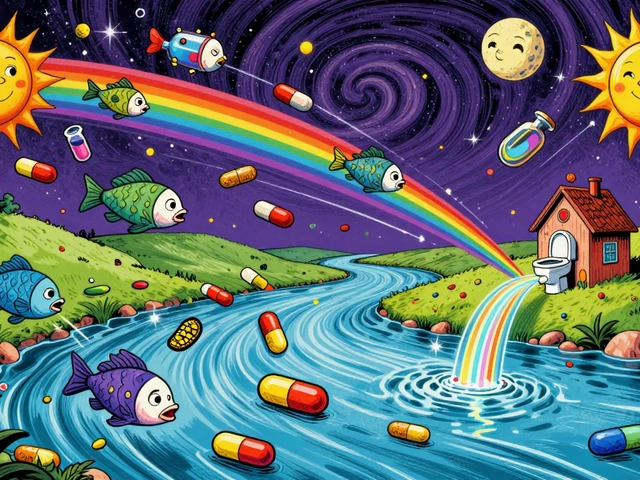
Why flush these? Because they’re so dangerous that even one accidental dose can kill a child or pet. Flushing removes them from the home immediately. But here’s the catch: flushing is only okay if you can’t get to a take-back site. The EPA says flushing should never be the first choice-even for these drugs-because traces end up in water systems. The U.S. Geological Survey found that flushing contributes to 0.0001% of pharmaceutical contamination in water. That’s tiny, but it’s still avoidable.
How to Dispose of Everything Else (Non-Flush List Medications)
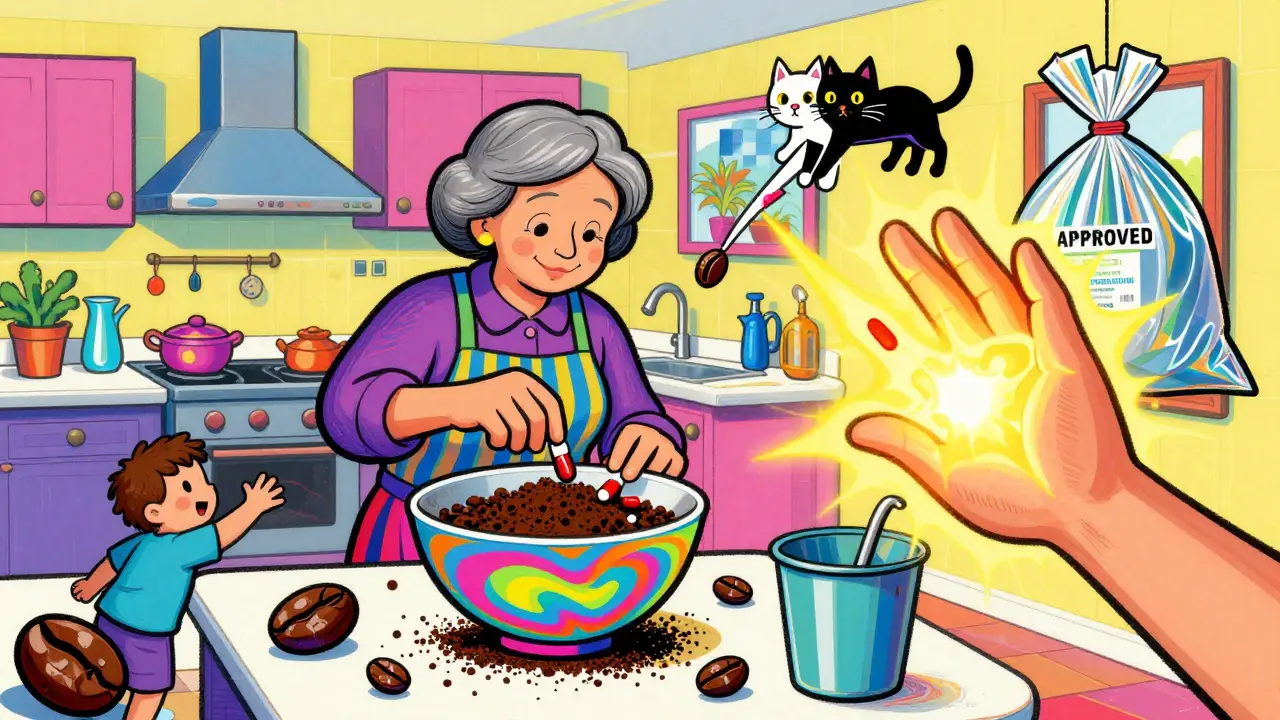
For everything else-antibiotics, blood pressure pills, antidepressants, vitamins-you must use the home disposal method. The FDA’s 5-step process is simple:- Remove personal info - Scrape off labels with alcohol wipes or use a permanent marker to black out your name, prescription number, and pharmacy. Don’t just tear off the label-people can still read the numbers underneath.
- Mix with unpalatable stuff - Use coffee grounds, cat litter, or dirt. The ratio? Exactly 1:1. Put the pills in a small container, add equal parts coffee grounds, then stir. This makes the mixture disgusting to anyone trying to dig through trash.
- Seal it tight - Use a plastic container or zip-top bag that’s at least 0.5mm thick. A flimsy sandwich bag won’t cut it. The FDA’s 2023 study found 37.2% of home disposal failures happened because the container leaked.
- Put it in the trash - Not the recycling bin. Not the compost. The regular household trash. Don’t leave it on the curb.
- Recycle the empty bottle - Once you’ve scrubbed off all identifying info, you can recycle the plastic bottle. Most curbside programs accept #1 or #2 plastics.
Pro tip: People often dump liquid medications directly into the trash. That’s a big no. Liquids must be absorbed first. Pour them into cat litter or coffee grounds. Seal. Then trash.
Why Most People Get It Wrong
A 2024 Consumer Reports survey of 1,200 households found that 78% tried to dispose of meds at home. But 34% of them flushed medications that weren’t on the Flush List. That’s illegal under EPA rules and risky for the environment.Another problem? People don’t know take-back sites exist. A Reddit user who worked in a hospital pharmacy for 12 years said their own survey showed 63% of patients had no idea their local pharmacy had a drop-off kiosk. Even worse: pharmacy pamphlets only get 72% accuracy in explaining disposal. The FDA’s website? 94% accurate.
And rural areas? They’re left behind. The National Rural Health Association found that 31.4% of rural residents live more than 25 miles from a take-back site. That’s why mail-back programs are so important.
What’s Changing in 2025 and Beyond
The system is getting better. The DEA plans to expand permanent collection sites to 20,000 locations by the end of 2025. The EPA just announced a $37.5 million grant program to help towns and pharmacies set up new drop-off points. Walmart now has kiosks in all 4,700 of its U.S. pharmacies. CVS spends $15 million a year on mail-back envelopes.The FDA’s goal? 90% of all medications disposed of through take-back programs by 2030. Right now, only 35.7% are. That gap is huge-but fixable. With more awareness, better labeling on bottles, and expanded mail-back access, we can get there.
Real-World Impact
Dr. Wilson Compton from the National Institute on Drug Abuse published data in JAMA Internal Medicine showing that communities with three or more take-back locations per 100,000 people saw an 11.2% drop in adolescent opioid misuse. Why? Because fewer pills were sitting around in homes.And it’s not just about addiction. When a grandparent’s blood pressure pills end up in the trash because they were mixed with coffee grounds, it keeps them out of the hands of a teenager looking for a quick high. When a child doesn’t accidentally swallow a fentanyl patch, it saves a life.
Proper disposal isn’t complicated. It’s not about being perfect. It’s about being intentional. Take the five minutes. Use the kiosk. Mail it back. Mix it right. It’s one small step that protects your family, your community, and your environment.
Can I flush all expired medications down the toilet?
No. Only 13 specific medications on the FDA Flush List should be flushed, and only if no take-back option is available within 15 miles. Flushing other drugs-like antibiotics, blood pressure pills, or antidepressants-can contaminate water supplies and is against EPA rules. Always check the label or ask your pharmacist first.
What if my pharmacy doesn’t have a take-back kiosk?
Many pharmacies still don’t offer take-back, but you have options. First, check the DEA’s online locator for nearby collection sites. If none are close, use a prepaid mail-back envelope from approved vendors like DisposeRx or Sharps Compliance. Some insurers, like Express Scripts, offer free mail-back programs to members. If you can’t access either, follow the FDA’s home disposal steps: mix with coffee grounds, seal tightly, and trash.
Is it safe to throw pills in the trash without mixing them?
No. The FDA specifically requires mixing expired pills with an unpalatable substance like coffee grounds or cat litter before trashing them. Without this step, someone could dig through the trash and access the pills. In FDA’s 2023 study, 43.8% of home disposal failures happened because people skipped this step. It’s a simple step that prevents accidental poisonings and misuse.
Can I recycle empty medicine bottles?
Yes-but only after you’ve completely removed all personal information. Scrub off labels with alcohol wipes or use a permanent marker to cover your name, prescription number, and pharmacy details. Once de-identified, most plastic medicine bottles (labeled #1 or #2) can go in your curbside recycling. Never recycle bottles with pills still inside.
Do take-back programs accept liquids, patches, and inhalers?
Yes. DEA-authorized take-back sites accept all forms of medication: pills, liquids, patches, inhalers, even syringes (if properly capped). You don’t need to separate them. Just bring them in a bag or box. No receipts, no questions. The DEA collects these items and safely incinerates them under federal guidelines. If you’re unsure, call your local pharmacy-they’re trained to handle any type of medication disposal.
Namrata Goyal
March 22, 2026 AT 21:31Zola Parker
March 23, 2026 AT 05:24florence matthews
March 24, 2026 AT 16:55Kenneth Jones
March 25, 2026 AT 16:49Mihir Patel
March 27, 2026 AT 09:45Kevin Y.
March 28, 2026 AT 17:06Raphael Schwartz
March 29, 2026 AT 05:05Darlene Gomez
March 30, 2026 AT 00:22Katie Putbrese
March 30, 2026 AT 04:45Donna Fogelsong
March 30, 2026 AT 11:11Sean Bechtelheimer
March 31, 2026 AT 21:12Seth Eugenne
April 2, 2026 AT 16:12