Anticholinergic Burden Calculator
Medication Anticholinergic Burden Calculator
Calculate your total anticholinergic burden score from all medications. High scores (>2) increase dementia and heart risks, especially for people over 50.
Your total anticholinergic burden score will appear here after calculation.
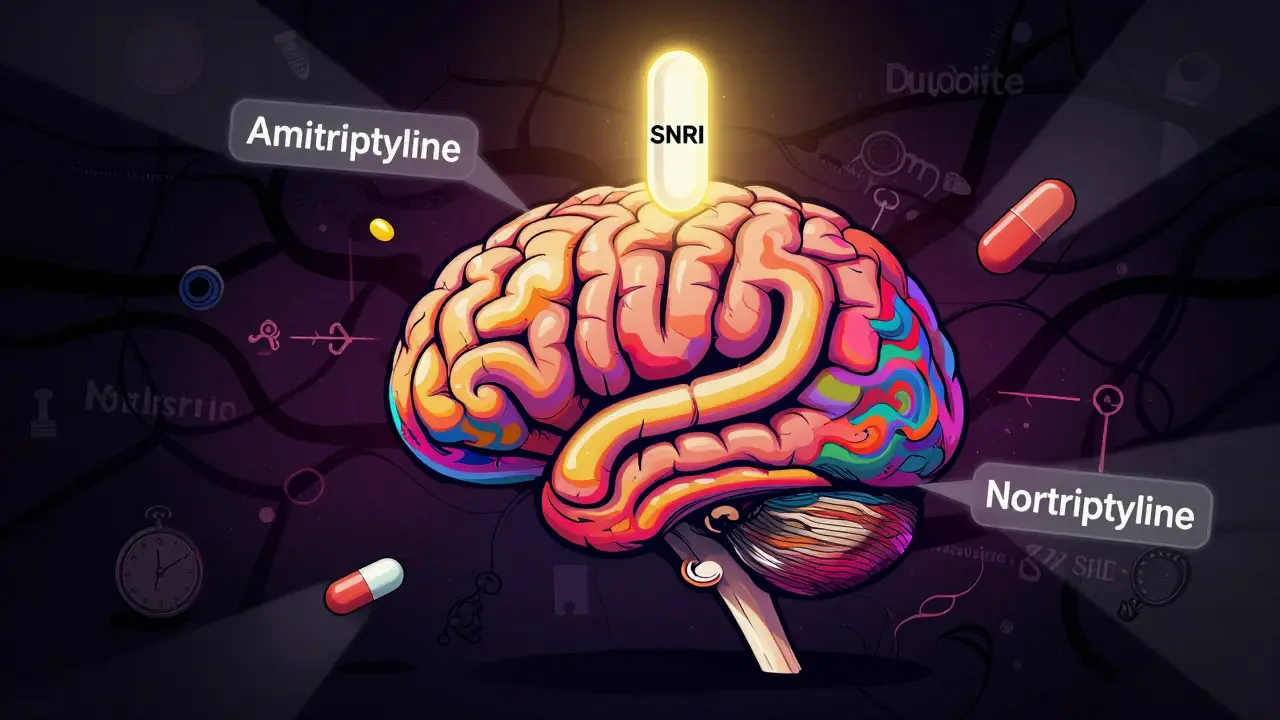
When you take a tricyclic antidepressant like amitriptyline or nortriptyline, you’re not just treating depression-you’re also loading your body with a hidden burden that can quietly damage your brain and heart. These drugs were once the go-to for depression and chronic pain, but today, their risks are harder to ignore. For people over 50, especially those on multiple medications, the anticholinergic burden from TCAs can mimic dementia, trigger dangerous heart rhythms, and lead to irreversible cognitive decline-even after stopping the drug.
What Is Anticholinergic Burden?
Anticholinergic burden is the total effect your body feels from all the medications that block acetylcholine, a key chemical for memory, muscle control, and heart rhythm. Think of acetylcholine as the brain’s messenger for focus, attention, and coordination. When drugs like tricyclic antidepressants block it, your brain struggles to send signals properly. This isn’t just a side effect-it’s a systemic impact that builds up over time. The Anticholinergic Cognitive Burden (ACB) Scale rates medications from 1 to 3. A score of 3 means the drug has strong, proven anticholinergic activity. Tricyclic antidepressants like amitriptyline and nortriptyline consistently get a score of 3-the highest possible. That’s the same level as old-school antihistamines like chlorphenamine and bladder drugs like oxybutynin. Even one drug with an ACB score of 3 can significantly raise your risk of problems.How TCAs Harm the Brain
The most alarming risk? Cognitive decline that looks exactly like dementia. Patients on TCAs often report memory lapses, confusion, trouble finding words, and difficulty concentrating. These aren’t just "getting older" symptoms-they’re direct effects of acetylcholine blockade. A landmark 2022 study tracked 3,434 adults over 65 for seven years. Those taking medications with an ACB score of 3 or higher had a 54% higher chance of developing dementia. And here’s the kicker: the damage didn’t reverse right away after stopping the drug. For many, the brain fog persisted for years. In some cases, it never fully cleared. Clinicians in the UK and US have seen this firsthand. On Reddit’s psychiatry forums, doctors describe patients who were diagnosed with early dementia-only to have their symptoms vanish after switching off amitriptyline. One case involved a 72-year-old woman who stopped remembering her grandchildren’s names. After switching to duloxetine (an SNRI with ACB=0), her memory returned within three months. Her dementia diagnosis was withdrawn. The National Institute for Health and Care Excellence (NICE) now explicitly warns that anticholinergic drugs like TCAs can lead to "false dementia diagnoses." If you’re over 50 and on a TCA, your memory problems might not be Alzheimer’s-they might be medication-induced.How TCAs Threaten the Heart
While brain risks get attention, the cardiac dangers are just as serious-and often deadlier. Tricyclic antidepressants act like class 1A antiarrhythmics, meaning they interfere with the heart’s electrical system. They can prolong the QT interval, a measure of how long the heart takes to recharge between beats. A prolonged QT interval can trigger torsades de pointes, a life-threatening arrhythmia that can lead to sudden cardiac arrest. Amitriptyline, in particular, is known for this. At therapeutic doses, it can stretch the QRS complex on an ECG by 10-25%. In overdose, that jump can hit 50%. Even in normal doses, people with existing heart conditions-like prior heart attacks or heart failure-are at much higher risk. Compared to SSRIs like sertraline, amitriptyline carries 2.8 times the risk of QT prolongation. And unlike SSRIs, TCAs reduce heart muscle strength by 15-20% and make the heart more irritable, increasing the chance of dangerous rhythms. In one Mended Hearts support group, a 68-year-old man developed palpitations and dizziness after just three weeks on amitriptyline. His ER visit revealed a QT interval of 540 milliseconds-well above the safe limit of 450.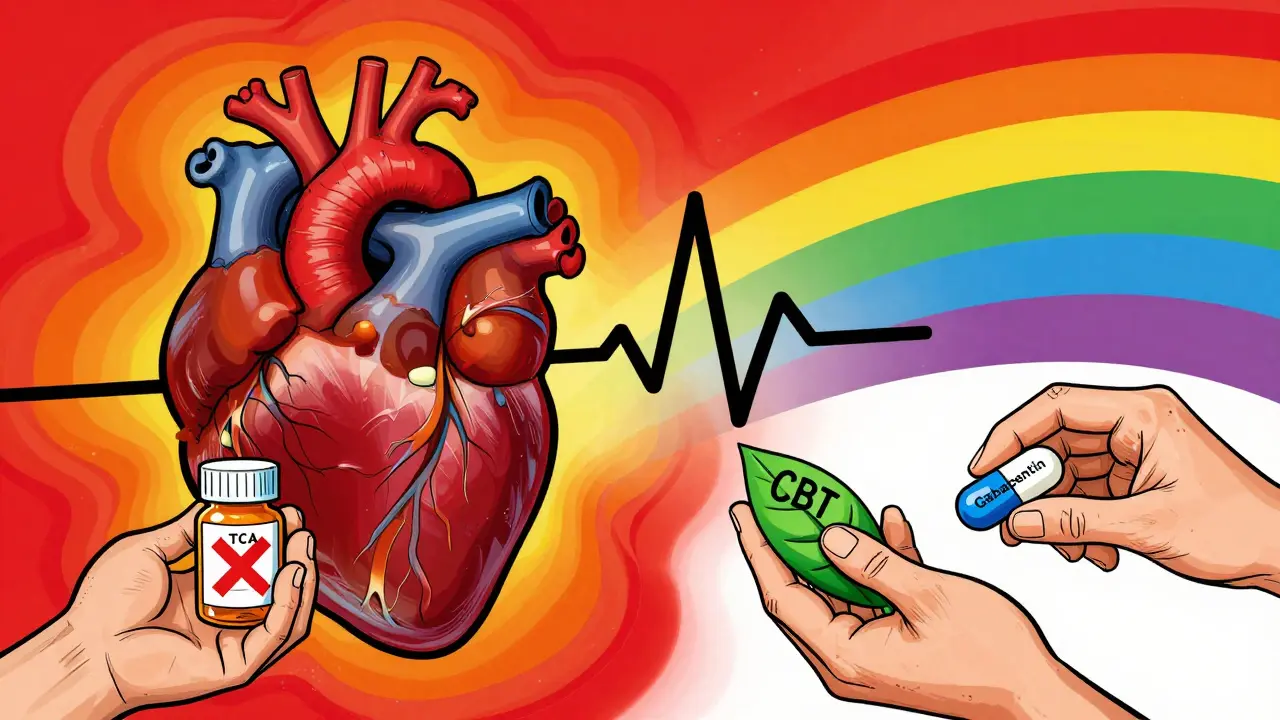
Why TCAs Are Still Prescribed
You might wonder: if they’re so risky, why are they still around? Because they work-sometimes better than anything else. For treatment-resistant depression, especially when SSRIs and SNRIs have failed, TCAs can be the last option. They’re also still used for neuropathic pain, fibromyalgia, and chronic headaches, where their pain-blocking effects are strong. But here’s the reality: they’re rarely the best option anymore. Modern alternatives like duloxetine (an SNRI), venlafaxine, or even non-drug therapies like CBT have proven just as effective for pain and depression-with far fewer risks. Duloxetine has an ACB score of 0 or 1. No brain fog. No heart danger. No confusion. In the U.S., TCA prescriptions for depression dropped from 15% of all antidepressant prescriptions in 2000 to just 4.7% in 2020. In the UK, NHS Digital has integrated ACB calculators into 63% of electronic health records to flag high-risk prescriptions before they’re written.What to Do If You’re on a TCA
If you’re taking amitriptyline, nortriptyline, or another TCA, here’s what to do next:- Check your ACB score. Add up the ACB scores of all your medications. Over-the-counter sleep aids like diphenhydramine (Nytol) or allergy pills like chlorphenamine (Piriton) also count. A total score of 3 or more puts you at risk.
- Don’t stop suddenly. Withdrawal can cause nausea, insomnia, anxiety, and even rebound depression. Tapering over 4-8 weeks is essential.
- Ask about alternatives. For depression: try an SSRI or SNRI. For pain: gabapentin, pregabalin, or CBT. For insomnia: avoid diphenhydramine-try melatonin or sleep hygiene instead.
- Get an ECG. If you’re over 50 and on a TCA, ask your doctor for a baseline ECG to check your QT interval. Repeat it every 6-12 months.
- Track your cognition. Note any memory lapses, confusion, or trouble with daily tasks. Share these with your doctor-not as "just aging," but as possible drug effects.
Success Stories: Deprescribing Works
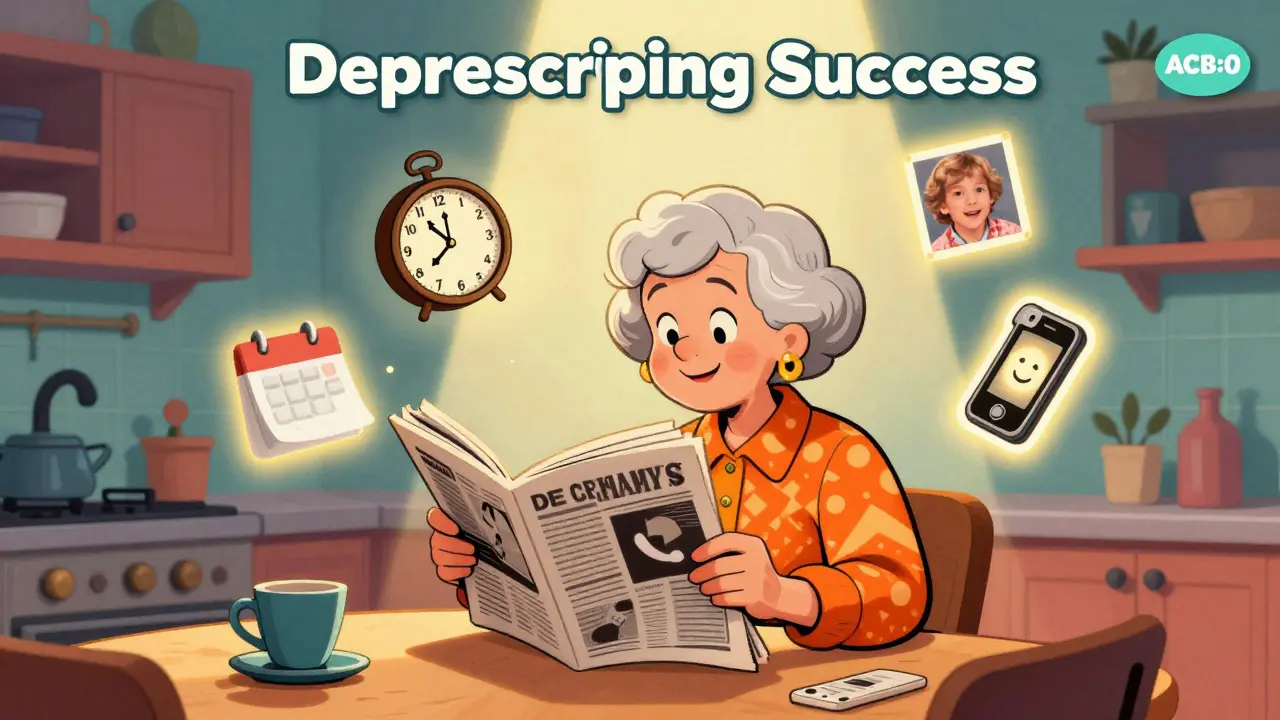
NHS Somerset ran a deprescribing program for older adults on high-ACB medications. Of the 1,200 patients enrolled, 78% had their anticholinergic burden reduced. Within six months, 63% showed measurable cognitive improvement-better recall, clearer thinking, improved ability to manage medications and bills. One 76-year-old woman had been on amitriptyline for 12 years for back pain. She was also taking chlorphenamine for allergies and diphenhydramine for sleep. Her total ACB score was 8. She couldn’t remember her phone number. After switching to gabapentin for pain and stopping the OTC drugs, her ACB score dropped to 0. Three months later, she was back to reading the newspaper and calling her grandchildren without asking for help.The Future: Safer Choices Are Here
The Beers Criteria, used by doctors in the U.S. to guide safe prescribing for older adults, has listed TCAs as "potentially inappropriate" since 2012. The 2023 update strengthened that warning: "Avoid in adults 65+ unless other options have failed and benefits clearly outweigh risks." Newer antidepressants approved since 2010 are almost all low-anticholinergic. AI tools are now being piloted in NHS trusts to automatically flag high-ACB prescriptions before they’re dispensed. In five years, TCAs may be used only in specialist settings-not by GPs for routine depression. The message is clear: the era of "just take one more pill" is over. When it comes to tricyclic antidepressants, the cost to your brain and heart is too high. Better options exist. Safer choices are available. And sometimes, the most powerful medicine isn’t a pill-it’s the courage to ask, "Is this still right for me?"Can tricyclic antidepressants cause dementia?
Yes. Long-term use of tricyclic antidepressants with high anticholinergic burden (ACB score of 3) is linked to a 54% increased risk of dementia over seven years, according to a major study of over 3,400 adults over 65. The cognitive decline can mimic dementia and may not fully reverse even after stopping the drug.
Is amitriptyline safe for older adults?
Generally, no. Amitriptyline has the highest anticholinergic burden (ACB=3) and carries significant risks of cognitive decline, falls, urinary retention, and dangerous heart rhythm changes in older adults. The Beers Criteria and NICE guidelines recommend avoiding it in people over 65 unless all safer alternatives have failed.
What are safer alternatives to tricyclic antidepressants?
For depression: SSRIs like sertraline or escitalopram, or SNRIs like duloxetine or venlafaxine, all with ACB scores of 0-1. For chronic pain: gabapentin, pregabalin, or non-drug options like cognitive behavioral therapy (CBT). These alternatives are just as effective for many people but don’t carry the same brain or heart risks.
How do I know if my medication has anticholinergic effects?
Check the Anticholinergic Cognitive Burden (ACB) Scale. Common high-burden drugs include amitriptyline, nortriptyline, chlorphenamine (Piriton), diphenhydramine (Nytol), and oxybutynin. You can also ask your pharmacist or use free online ACB calculators. Look for symptoms like dry mouth, constipation, blurred vision, confusion, or memory problems-these are red flags.
Can stopping a tricyclic antidepressant improve memory?
Yes. In clinical programs, 63% of older adults who stopped high-burden medications like TCAs showed measurable cognitive improvement within six months. Memory, attention, and daily functioning often get better after tapering off, even if the drug was taken for years. Always taper slowly under medical supervision to avoid withdrawal.




Patrick Merrell
January 26, 2026 AT 21:08This is the kind of post that makes me want to scream at my doctor. I’ve been on amitriptyline for five years for migraines. Last month I forgot my wife’s birthday. Not because I was busy-because I genuinely couldn’t remember it. No one ever told me this could happen. Now I’m tapering off, but the guilt? It’s worse than the headaches.
Ryan W
January 27, 2026 AT 11:17Let’s be clear: this isn’t a medical breakthrough-it’s basic pharmacology. TCAs have been flagged as high-risk since the 90s. The fact that GPs are still prescribing them like candy is a failure of medical education, not a new discovery. ACB scoring has been in EHRs since 2015. If you’re still using amitriptyline as first-line, you’re not a clinician-you’re a relic.
Rakesh Kakkad
January 27, 2026 AT 16:38As a physician from India, I can confirm that this issue is grossly underreported in low-resource settings. Many elderly patients are prescribed TCAs because they are cheap and available. No ECGs. No ACB calculators. No follow-up. We see dementia-like symptoms daily, but families blame aging, not medication. The tragedy is not just the side effects-it’s the silence around them.
Simran Kaur
January 28, 2026 AT 09:17I’m so glad someone finally said this out loud. My mom was on nortriptyline for 11 years. She stopped remembering how to use the microwave. We thought it was early Alzheimer’s. Then we switched her to sertraline and gabapentin. Three months later, she started telling stories from her childhood like she’d never forgotten them. I cried in the pharmacy parking lot. This isn’t just medicine-it’s a second chance.
Angie Thompson
January 28, 2026 AT 19:55OMG I just checked my meds and I’ve got diphenhydramine + amitriptyline = ACB 6 😱 I thought I was just getting old! I’m booking an appt with my doc tomorrow. Also-why does every sleep aid in the US have this stuff?! Who decided that making old people forget their own names was a good trade-off for 6 hours of sleep??
Skye Kooyman
January 30, 2026 AT 12:36My grandma took amitriptyline for 15 years. She never said anything. We just thought she was quiet. Then she died. We found a notebook where she wrote, "I feel like my brain is full of static." No one ever asked. I wish I had.
SWAPNIL SIDAM
January 31, 2026 AT 21:55I’m from a small town in India. Our doctor prescribes amitriptyline because it’s ₹5 a tablet. No one knows what ACB means. I read this post and showed it to my father. He’s 70. He’s been on it for 8 years. We’re stopping it next week. Thank you for writing this.
Geoff Miskinis
February 1, 2026 AT 17:10While the data presented is statistically significant, the emotional framing borders on alarmist. The 54% increased risk is relative, not absolute. In a cohort of 3,434, the absolute risk increase was approximately 1.8% over seven years. Furthermore, the anecdotal success stories lack control groups. This is not a condemnation of TCAs-it’s a call for better risk stratification, not blanket avoidance.
Sally Dalton
February 2, 2026 AT 14:18thank you for sharing this i just found out my dad’s "memory issues" were from his meds and i’ve been so mad at him for forgetting things 😭 we’re switching him to duloxetine next week. i feel like a terrible daughter for not knowing this sooner. but i’m so glad we’re fixing it now.
Betty Bomber
February 3, 2026 AT 02:17my therapist said she’d never seen someone improve this fast after quitting TCAs. my brain fog lifted in 3 weeks. i can finally read a book without rereading the same paragraph 5 times. also-why is this not common knowledge? this should be on every pharmacy label.