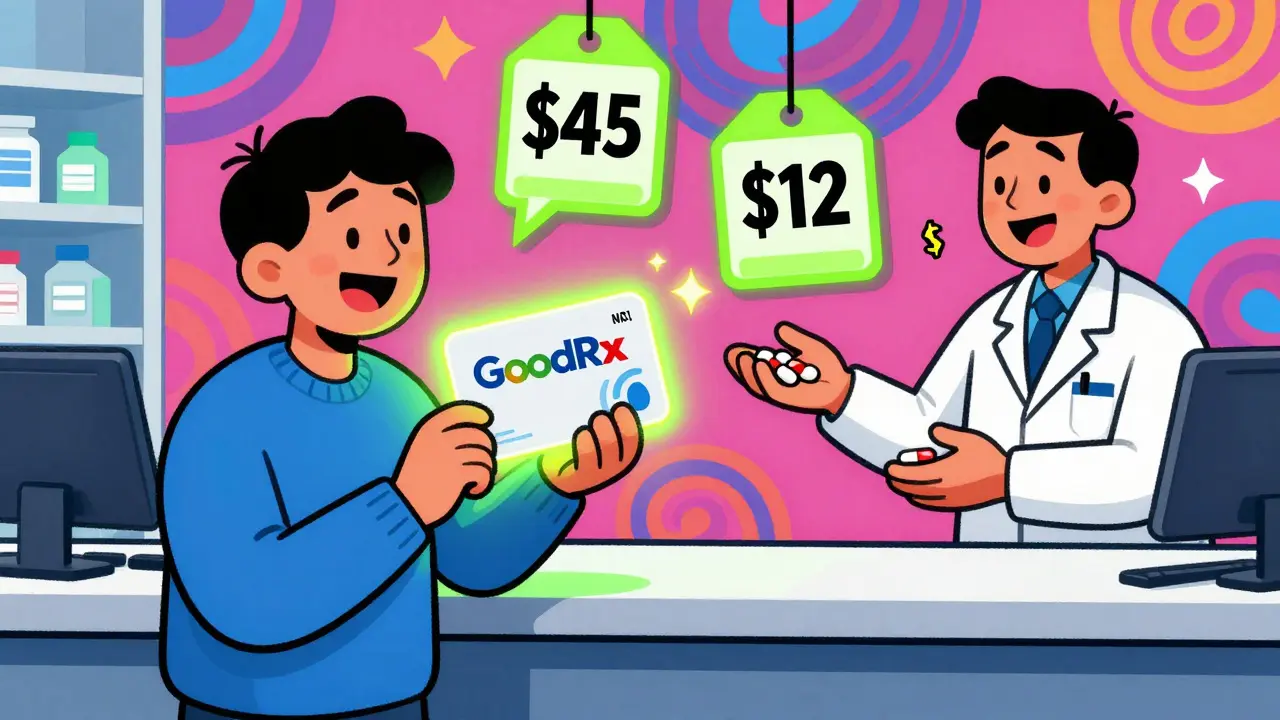
Let’s say you fill a prescription for metformin and your insurance copay is $45. Then you check GoodRx and see the cash price is $12. You walk out paying $12 instead of $45. That’s a $33 win. But what if you’re on Medicare and your plan already covers the same drug for $10? Or what if the coupon only works on the brand-name version of a drug that has a $1 generic equivalent? Suddenly, the discount doesn’t look so clear.
Prescription discount programs and coupons are everywhere. You see them on TV, in your email inbox, on pharmacy counters, and in your phone app. They promise big savings. But do they actually work? The answer isn’t simple. It depends on your insurance, the drug you need, and which program you use.
How These Programs Actually Work
Not all discount programs are the same. There are three main types:
- Manufacturer coupons: These come from drug companies and are usually for brand-name medications. They reduce your out-of-pocket cost at the pharmacy, but they don’t lower the list price. The drug still costs $500 - you just pay $50 instead.
- Third-party discount cards: These are offered by companies like GoodRx, Blink Health, and SingleCare. They negotiate cash prices with pharmacies. You don’t need insurance. You just show the card or app at the counter.
- Prescription Assistance Programs (PAPs): These are run by nonprofits or clinics. They give free or deeply discounted drugs to people with very low income or no insurance.
Each works differently. Manufacturer coupons are tied to a specific drug and require registration. Discount cards are universal - one card can be used for dozens of drugs. PAPs require paperwork, proof of income, and sometimes a doctor’s note.
When They Save You the Most
Discounts work best on generic drugs. A 2022 study in Circulation: Cardiovascular Quality and Outcomes found that discount cards cut the cash price of generic medications by an average of 65%. For example:
- Atorvastatin (generic Lipitor): $52.80 → $18.60
- Metformin: $45 → $8
- Levothyroxine: $32 → $7
That’s where most people see real savings. One user on Reddit saved $47.83 on a 90-day supply of metformin using GoodRx - even though their insurance copay was $55.
For people with high-deductible plans, Medicare Part D, or no insurance at all, these savings can be life-changing. A Blue Cross Blue Shield analysis found that 54% of members who stopped filling prescriptions because of cost ended up using discount cards - saving an average of $18.75 per prescription.
Prescription Assistance Programs (PAPs) offer the biggest savings per person. A 13-month study at a free clinic in Tennessee showed 61 patients received 23 different medications for free. Total savings? $222,563 - or $3,649 per patient.
When They Don’t Help - Or Hurt
Here’s the catch: discount programs often don’t work well for brand-name drugs.
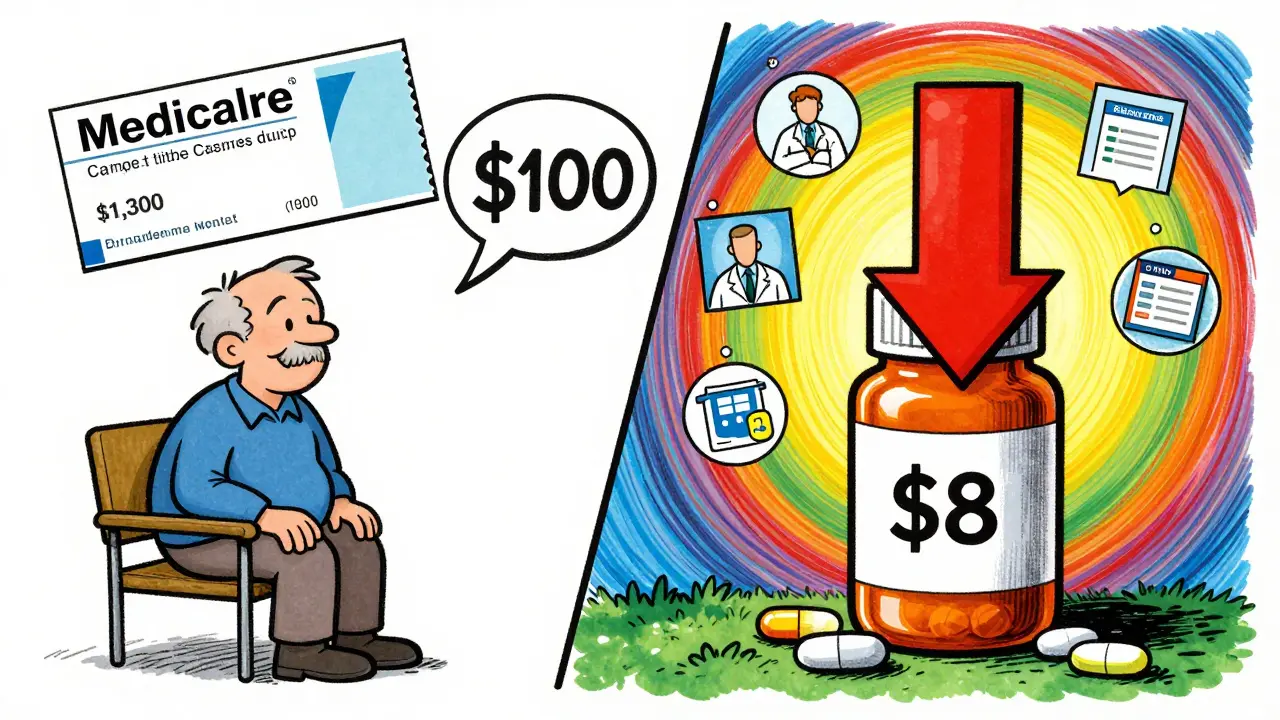
The same 2022 study found that discount cards only saved users 6.8% to 11.7% on brand-name medications. For a heart failure drug that costs $1,300, you might save $100 - not enough to justify the hassle.
And manufacturer coupons? They’re designed to keep you on expensive brand-name drugs. A 2024 JAMA Network Open study found that when patients used coupons for brand-name drugs, they were 60% more likely to stick with them - even when cheaper generics were available. This pushes up overall healthcare spending.
That’s why the Congressional Budget Office estimates manufacturer coupons could increase Medicare Part D costs by $2.7 billion a year. The American Medical Association warns these coupons interfere with doctors’ efforts to prescribe the most cost-effective drugs.
And if you’re on Medicare Part D, you can’t use manufacturer coupons at all - unless you get special permission. That’s because Medicare counts your out-of-pocket spending toward your catastrophic coverage limit. Coupons don’t count. So if you use a coupon, you might hit your cap faster - but still pay more overall.
What Users Actually Experience
Real people report wildly different results.
On Trustpilot, GoodRx has a 4.3/5 rating. Many users love the app’s simplicity and the fact that they can compare prices at 50+ local pharmacies. One reviewer said: “I saved $60 on my blood pressure med. I didn’t even know my insurance wasn’t the best deal.”
But others are frustrated. In 37% of negative reviews, users complained about inconsistent pricing. One pharmacy quotes $15. Another says $32. No explanation. Then there’s the issue of pharmacists not knowing how to process the discount. One user wrote: “I showed the coupon. The pharmacist said it wasn’t valid. I called the manufacturer. They said it was fine. I had to wait 20 minutes while they called corporate.”
And for brand-name drugs? One Reddit user with chronic pain tried to use a coupon for Lyrica. Their out-of-pocket cost dropped from $420 to $418.80. A $1.20 savings. Not worth the effort.
How to Actually Use Them Right
Don’t just grab the first coupon you see. Follow these steps:
- Check your insurance first. Call your pharmacy or log into your plan’s portal. See what your copay is.
- Compare with discount cards. Use GoodRx, SingleCare, or Blink Health. Enter the drug name, dosage, and quantity. Compare the cash price to your insurance price.
- Watch for generics. If a generic exists, it’s almost always cheaper than the brand - even with a coupon.
- Don’t use manufacturer coupons on Medicare. Unless you’ve been approved, it can cost you more in the long run.
- Ask about PAPs. If you’re on a tight budget, ask your doctor or pharmacist about free drug programs. Many clinics have staff who help you apply.
Pro tip: Some pharmacies - like Walmart, Costco, and Kroger - already offer low cash prices on certain generics (often $4 to $10 for a 30-day supply). You don’t need a coupon. Just ask.
What’s Changing in 2025 and Beyond
The landscape is shifting fast. The Inflation Reduction Act caps out-of-pocket drug costs at $2,000 per year for Medicare Part D beneficiaries starting in 2025. That will reduce the need for discount cards among seniors.
At the same time, the Federal Trade Commission is investigating whether manufacturer coupons are anti-competitive. If they find harm, new rules could limit how these coupons are distributed.
And new tools are emerging. Some telehealth platforms now integrate discount checks into the prescription process. Major pharmacy chains are testing AI tools that analyze your insurance, your drug, and local prices - then recommend the cheapest option automatically.
But here’s the big shift: experts like Dr. Stacie Dusetzina of Vanderbilt say the future isn’t in separate discount programs. It’s in insurance design. The most sustainable solution? Make copays fair from the start - not rely on patches.
Bottom Line: Do They Work?
Yes - but only if you use them right.
For generic drugs? Discount cards are a no-brainer. You can save 60-80%.
For brand-name drugs? Coupons rarely help. They often keep you on expensive drugs longer.
For Medicare users? Always compare your plan’s price to the cash price. Sometimes insurance wins. Sometimes GoodRx does.
For people without insurance? PAPs are your best bet - and they’re easier to get than you think.
Don’t assume a coupon means savings. Always check your insurance first. Ask your pharmacist. Compare prices. The right choice might not be the one with the biggest discount sticker - it might be the one with the lowest final price.

John Sonnenberg
February 9, 2026 AT 16:26Jessica Klaar
February 9, 2026 AT 18:39PAUL MCQUEEN
February 9, 2026 AT 21:45glenn mendoza
February 11, 2026 AT 21:20Kathryn Lenn
February 13, 2026 AT 09:52Chima Ifeanyi
February 13, 2026 AT 16:20Tori Thenazi
February 13, 2026 AT 20:35Angie Datuin
February 15, 2026 AT 15:38Camille Hall
February 17, 2026 AT 12:54Ashlyn Ellison
February 19, 2026 AT 07:26Jonah Mann
February 21, 2026 AT 05:47Frank Baumann
February 22, 2026 AT 04:29Scott Conner
February 23, 2026 AT 11:13Alex Ogle
February 24, 2026 AT 23:37