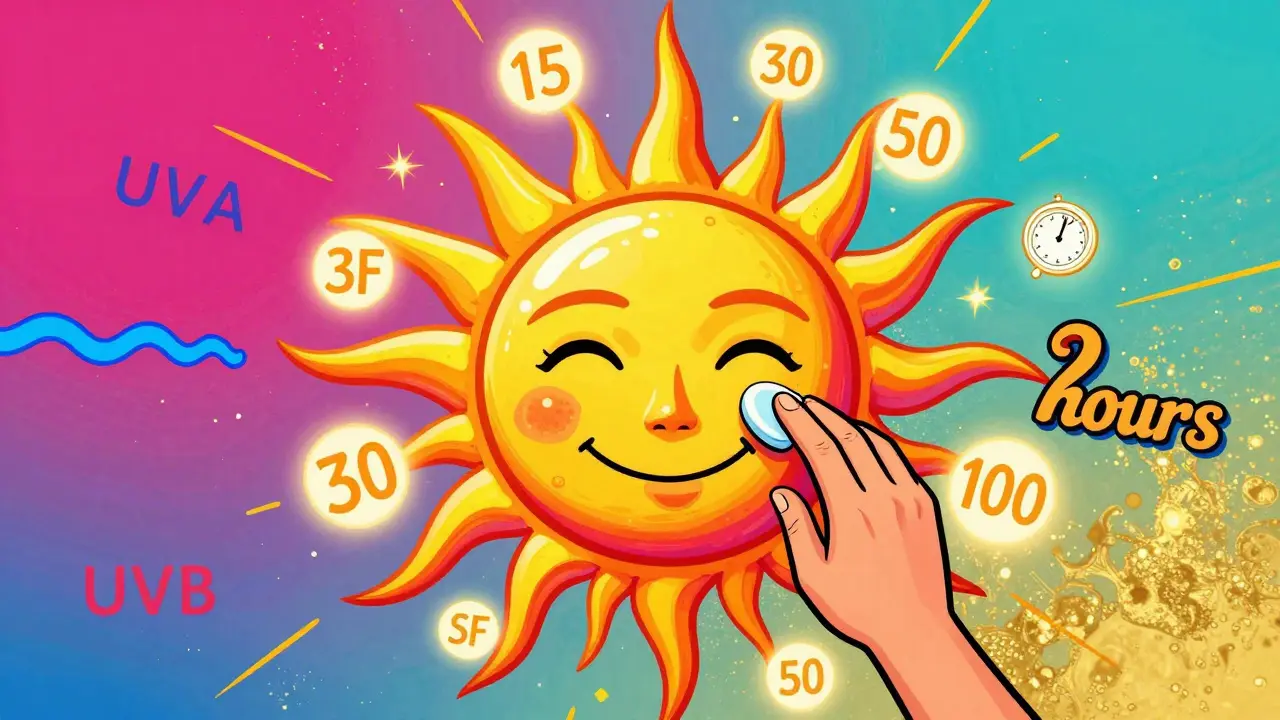
Most people think sunscreen is just about avoiding sunburn. But if you’re not using it right, you’re still exposing your skin to damage that leads to skin cancer and premature aging. The truth? OTC sunscreen isn’t one-size-fits-all. It’s science. And if you’re skipping reapplication, picking the wrong formula, or trusting SPF 100 to last all day, you’re wasting your money-and your skin’s health.
What SPF Actually Means (And Why Higher Isn’t Always Better)
SPF stands for Sun Protection Factor. It measures how well a sunscreen blocks UVB rays-the ones that cause sunburn. But here’s the catch: SPF isn’t linear. SPF 15 blocks about 93% of UVB rays. SPF 30 blocks 97%. SPF 50 blocks 98%. SPF 100? Just 99%. That last 1% doesn’t mean twice the protection. It means a tiny bit more. The American Academy of Dermatology (AAD) says SPF 30 is the minimum for daily use. Why? Because most people don’t apply enough. If you’re using half the recommended amount, SPF 50 drops to SPF 25. That’s why experts don’t push SPF 100. It gives a false sense of security. In real life, reapplication matters more than the number on the bottle.Broad Spectrum Isn’t Just a Buzzword
UVB burns your skin. UVA ages it. UVA rays go deeper, breaking down collagen, causing wrinkles, and contributing to melanoma. That’s why “broad spectrum” isn’t marketing fluff-it’s a legal requirement under FDA rules. To earn that label, a sunscreen must pass a test called Critical Wavelength. It measures protection across the full UVA spectrum, up to 370 nanometers. If it doesn’t hit that mark, it can’t say “broad spectrum,” even if it’s SPF 50. Many cheap mineral sunscreens fail this test. Consumer Reports tested over 100 products in 2025 and found some labeled as SPF 30+ broad spectrum only blocked 40% of UVA rays. That’s worse than no sunscreen at all. Look for zinc oxide or avobenzone on the ingredient list. Zinc oxide is the most reliable UVA blocker. Avobenzone, when stabilized with other chemicals like octocrylene, also works well. Avoid sunscreens that list only titanium dioxide-it’s weak against UVA.Mineral vs Chemical: Which One Should You Use?
There are two types of OTC sunscreens: mineral (physical) and chemical. They work differently, and your skin type matters. Mineral sunscreens use zinc oxide or titanium dioxide. They sit on top of your skin and reflect UV rays. They start working immediately. That’s good for sensitive skin, rosacea, or melasma. Dermatologists like EltaMD UV Clear SPF 46 (with 9% zinc oxide and niacinamide) for acne-prone or reactive skin. But they often leave a white cast, especially on darker skin tones. Some newer formulas have micronized particles that blend better, but they’re still not perfect. Chemical sunscreens absorb UV rays and convert them into heat. Common filters include avobenzone, octinoxate, and oxybenzone. They’re thinner, easier to rub in, and usually don’t leave a white cast. But they need 15-20 minutes to activate after application. And some ingredients, like oxybenzone, are linked to coral reef damage. Hawaii and Key West banned them in 2021. If you’re swimming in the ocean, go mineral. Consumer Reports’ 2025 testing showed chemical sunscreens scored higher in UV protection (average 85/100) versus mineral (55/100). But mineral scored better for skin feel and irritation. If you’re fair-skinned, outdoors a lot, or have a history of skin cancer, chemical filters give you more reliable protection. If you’re sensitive, pregnant, or eco-conscious, mineral is safer-even if you have to reapply more often.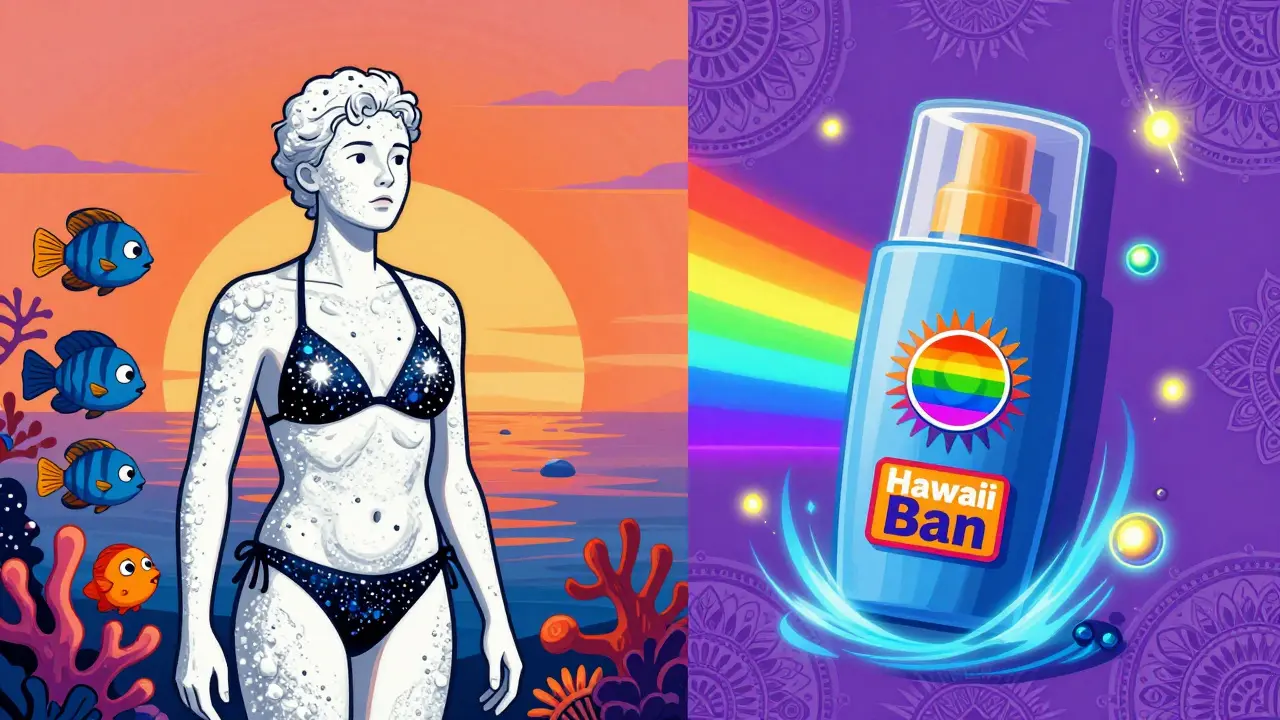
How Much Should You Actually Use?
Most people apply only 25-50% of the recommended amount. That cuts protection in half. The FDA says you need 2 milligrams per square centimeter of skin. For your face? That’s a quarter teaspoon. For your whole body? About an ounce-the size of a shot glass. Think of it like this: if you’re using a pea-sized amount for your face, you’re under-protecting. Use five pea-sized dots-forehead, nose, each cheek, chin-and spread them out. Don’t rub it in like moisturizer. Let it sit. If you’re using a tinted formula, you should still see a slight sheen after application. That’s normal. Dr. Michele Green, a dermatologist with 25 years of experience, says most patients don’t get this right. “I see people with sun damage on their necks and ears because they forgot those areas,” she says. “Sunscreen isn’t just for your face. It’s for your neck, chest, hands, ears, and lips.”Reapplication: The Most Ignored Rule
This is where most people fail. Sunscreen doesn’t last all day. Even “water-resistant” formulas aren’t waterproof. They’re either 40 or 80 minutes resistant, based on FDA testing in chlorinated or salt water. After that, protection drops fast. The rule? Reapply every two hours. And immediately after swimming, sweating, or towel-drying. Towels remove up to 80% of sunscreen. That’s why beachgoers who reapply only once all day are still getting burned. A 2024 study in the Journal of the American Academy of Dermatology found only 14.3% of people at the beach reapplied sunscreen properly. On Reddit’s r/SkincareAddiction, 72% admitted they skip reapplication. That’s not laziness-it’s misinformation. SPF 50 doesn’t mean “all-day protection.” It means “if you apply correctly and reapply, you get 50x more time before burning.” If you’re wearing makeup, use a powder sunscreen or a spray (but spray from 6 inches away and rub it in). Don’t just mist it. That’s not enough. Brands like Supergoop! and Caravee make lightweight, reapplicable sunscreens that work under foundation.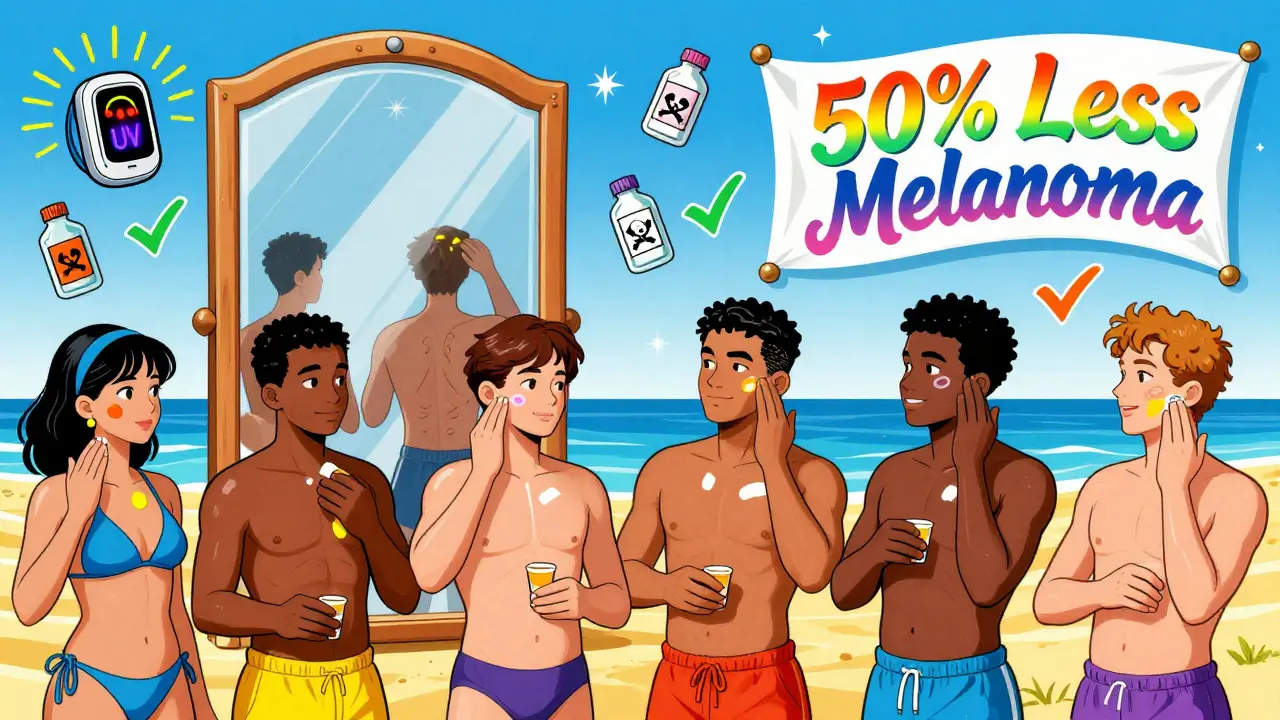
What to Avoid and What to Trust
Not all OTC sunscreens are created equal. Some products fail real-world testing. In January 2025, Consumer Reports found that Australian Botanical Mineral SPF 30 delivered only SPF 4. Black Girl Sunscreen Kids Lotion SPF 50? Only SPF 13. Vichy Capital Soleil Tinted Mineral SPF 60 oxidized to orange on medium skin tones within two hours. Stick with brands that test rigorously and publish results. La Roche-Posay Anthelios Melt-in Milk SPF 60 scored 92/100. Neutrogena Ultra Sheer SPF 55 scored 89. EltaMD UV Clear SPF 46 is the top pick for sensitive skin. CeraVe Hydrating Mineral SPF 30 is decent, but only if you apply enough. Avoid sunscreens with these red flags: no broad spectrum label, SPF under 30, no water resistance claim, or ingredients you can’t pronounce without Googling. If the bottle doesn’t list active ingredients clearly, don’t buy it.Environmental Impact and Future Rules
The FDA is tightening rules. By 2025, only zinc oxide and titanium dioxide will be classified as “generally recognized as safe and effective.” Twelve chemical filters-including oxybenzone and octinoxate-could be banned. The EU already limits oxybenzone to 2.2%. The U.S. allows up to 6%. If you’re near coral reefs, choose mineral-only sunscreens. Even small amounts of oxybenzone can bleach coral. Hawaii, Palau, and Key West banned those chemicals for a reason. New tech is coming. Shade Smart, a wearable UV monitor launching in Q2 2025, will alert your phone when it’s time to reapply. AI-powered skin apps are also predicting your risk based on UV index and skin tone. But for now, the best tool is still a mirror, a teaspoon, and discipline.Final Checklist: Are You Using Sunscreen Right?
- ✅ SPF 30 or higher
- ✅ “Broad spectrum” on the label
- ✅ Zinc oxide or avobenzone as key active ingredients
- ✅ Applied 15 minutes before sun exposure (chemical) or immediately (mineral)
- ✅ Used a quarter teaspoon for your face
- ✅ Reapplied every 2 hours, after swimming or sweating
- ✅ Checked expiration date (sunscreen loses potency after 3 years)
Is SPF 100 better than SPF 30?
Not really. SPF 30 blocks 97% of UVB rays. SPF 100 blocks 99%. That extra 2% doesn’t mean twice the protection-it’s marginal. Most people don’t apply enough sunscreen anyway, so SPF 100 often ends up acting like SPF 30 or lower. Reapplication matters more than the number.
Do I need sunscreen on cloudy days?
Yes. Up to 80% of UV rays penetrate clouds. You can still get sun damage, even when it’s overcast. Daily sunscreen use is the best way to prevent long-term skin aging and cancer risk, regardless of weather.
Can I use last year’s sunscreen?
Most sunscreens expire after 3 years. Check the expiration date on the bottle. If there’s none, assume it’s good for 12 months after opening. If it smells off, changed color, or separated, throw it out. Expired sunscreen won’t protect you.
Are spray sunscreens safe and effective?
They’re convenient but risky. You need to spray generously and rub it in. Most people spray too lightly, missing spots. The FDA is reviewing safety concerns around inhaling spray particles. Use sprays only as a supplement, not your main sunscreen. Always rub them in after spraying.
Why does my mineral sunscreen leave a white cast?
Zinc oxide and titanium dioxide are naturally white. Older formulas use larger particles that don’t blend well. Newer ones use micronized or tinted versions that work better on darker skin. Look for brands labeled “sheer,” “tinted,” or “invisible.” Supergoop! Unseen Sunscreen and Caravee Hydrating Sheer Sunscreen are designed to disappear on all skin tones.
Should I wear sunscreen if I have dark skin?
Absolutely. Darker skin has more melanin, which offers some natural protection-but not enough. Melanoma is often diagnosed later in people of color, leading to higher death rates. UVA damage still causes wrinkles, dark spots, and skin cancer. Broad-spectrum SPF 30+ is essential for everyone.


Lynsey Tyson
December 18, 2025 AT 15:15I used to skip sunscreen unless I was going to the beach, but after my cousin got melanoma at 28, I started using it daily. Even on cloudy days. Now I keep a mini bottle in my purse and reapply before lunch. It’s not glamorous, but my skin hasn’t aged like my coworkers’ who still think ‘I don’t burn, so I’m fine.’
Edington Renwick
December 19, 2025 AT 05:15SPF 100 is a scam. Big Pharma and sunscreen brands want you to believe more numbers = more safety. They don’t tell you that SPF 50+ is basically marketing noise. And don’t get me started on ‘mineral’ sunscreens that leave you looking like a ghost. If you’re not using chemical filters, you’re not protected. End of story.
Allison Pannabekcer
December 19, 2025 AT 23:55So many people think sunscreen is just for summer or beach days. But UV damage is cumulative - it adds up over years, even through windows and on your commute. I’ve been using EltaMD UV Clear for years, especially since I got melasma. It doesn’t clog my pores, and the niacinamide helps with redness. And yes, I reapply every two hours - even if I’m just sitting at my desk. My dermatologist says I’m one of the few who actually gets it. It’s not about looking young. It’s about not ending up with a biopsy next year.
Also, if you have dark skin, you’re not immune. I’ve seen too many cases of late-stage melanoma in people of color because they thought they were ‘protected.’ Sunscreen isn’t a luxury. It’s healthcare.
And please, stop using sprays without rubbing them in. I watched a guy spray his kid’s back at the park and walk away. That’s not sunscreen. That’s a gamble.
Sarah McQuillan
December 21, 2025 AT 15:26Why are we letting the FDA decide what’s safe? Oxybenzone is fine. It’s been used for decades. The EU banning it? That’s just political. And coral reefs? Come on. There are way bigger threats to the ocean than sunscreen. Plus, most of the ‘toxic’ sunscreen claims come from studies using unrealistic concentrations. You’re more likely to die from eating bad sushi than from oxybenzone. Stick with what works - not what’s trendy.
Kitt Eliz
December 22, 2025 AT 06:58YAS QUEEN 🌞✨ Let’s talk about UVA/UVB like the skincare warriors we are! SPF 30 is the baseline, but if you’re outdoors >2 hrs? Go SPF 50+ with zinc oxide + avobenzone combo - that’s the holy grail. And reapplication? Non-negotiable. Think of it like your morning coffee - you don’t sip it once and call it a day. Sunscreen needs top-ups! 🧴💥 Pro tip: Supergoop! Replenish is my ride-or-die for touch-ups over makeup. And yes, dark skin? Still needs it. Melanin ain’t a force field, babe. 💅🏽 #SunSafetyIsSelfCare
Aboobakar Muhammedali
December 23, 2025 AT 10:07i never knew sunscreen had so many rules till i started reading dermatology forums. i used to just smear on whatever was cheap. now i check the ingredients. zinc oxide. no oxybenzone. broad spectrum. i dont care if it leaves a white cast. better white than cancer. i reapply after i sweat. even if im just walking the dog. my mom died of skin cancer. i dont take chances. no more excuses.
anthony funes gomez
December 24, 2025 AT 11:12SPF is a logarithmic function, not linear - yet the public perception treats it as if it were. The marginal gain between SPF 30 and SPF 50 is statistically negligible in real-world application scenarios due to suboptimal dosing. The FDA’s testing protocols assume 2 mg/cm² - a quantity 70% of users fail to achieve. Therefore, the efficacy curve collapses toward SPF 15–20 regardless of label value. Reapplication isn’t a recommendation - it’s a thermodynamic necessity. And mineral filters? Their photostability is inferior to stabilized avobenzone systems. But consumer preference for ‘natural’ compounds overrides evidence. This is a classic case of heuristic decision-making overriding scientific literacy. The solution? Education. Not regulation.
Laura Hamill
December 26, 2025 AT 07:22They’re lying about sunscreen. The government wants you to buy expensive bottles so they can track you. That’s why they push SPF 30+ - it’s all about control. And don’t tell me about ‘broad spectrum’ - that’s just a word they made up to sell more. I’ve been using coconut oil since 2010 and I’ve never had a sunburn. They banned oxybenzone because it’s a ‘chemical’ - but salt is a chemical too. Why not ban that? They’re scared of the truth. Sunscreen is a scam. Wear a hat. Stay in the shade. That’s real protection.