
Key Takeaways
- Metformin is cleared exclusively by the kidneys, making kidney function monitoring essential for safety.
- Dosing changes based on eGFR levels, with contraindication below 30 mL/min/1.73 m².
- Monitoring frequency increases as kidney function declines, often requiring tests every 3 months.
- Patients should hold metformin before procedures involving iodinated contrast dye to prevent acute kidney injury.
- Long-term use requires monitoring for Vitamin B12 deficiency alongside renal health checks.
The Metformin-Kidney Connection
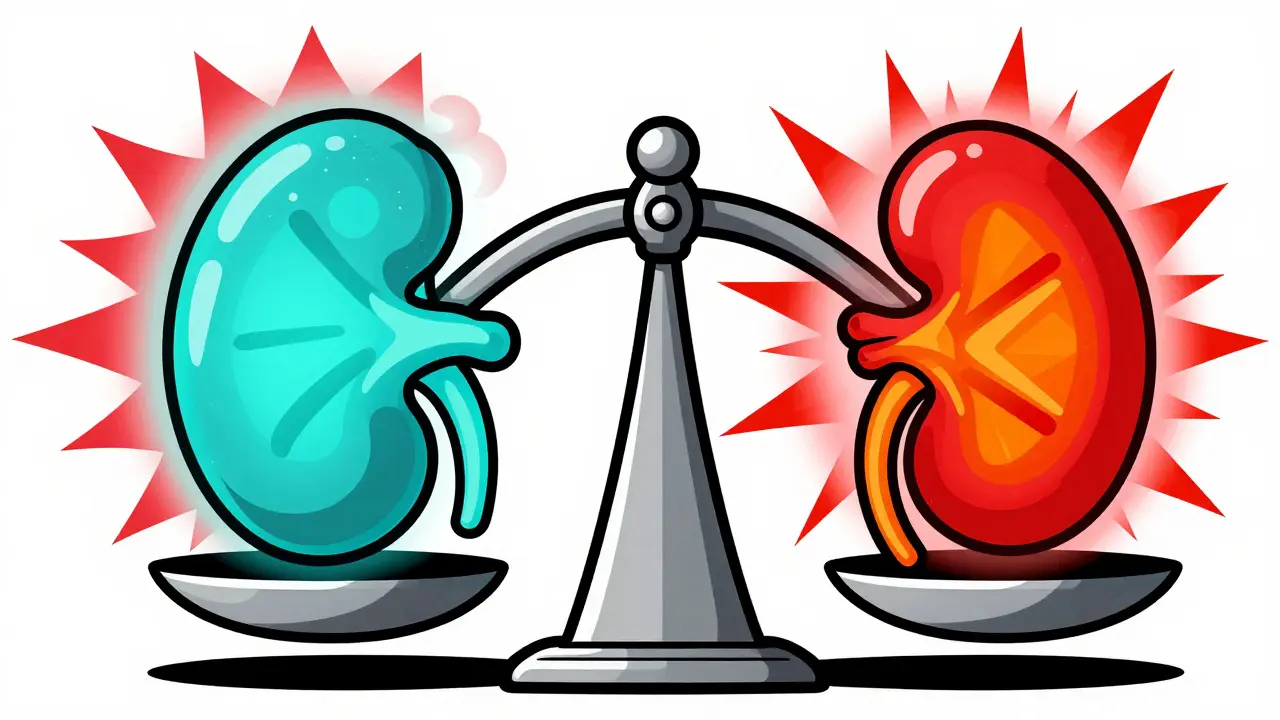
When managing type 2 diabetes, you will almost certainly encounter Metformin. It has been a cornerstone treatment since the 1950s. As the most prescribed oral medication for blood sugar control, its safety profile generally makes it the first choice for doctors. However, there is one major caveat regarding your body’s filtering system. Your kidneys do the heavy lifting of clearing metformin from your bloodstream. Unlike other drugs processed by the liver, metformin exits the body unchanged through the urine. This exclusive pathway means that if your kidneys slow down, the drug accumulates.
This accumulation creates a rare but serious risk known as lactic acidosis. While modern guidelines have significantly expanded who can safely take this medication, the link between the drug and renal function remains absolute. You cannot separate the efficacy of metformin from the state of your kidneys. Understanding this relationship isn't just academic; it dictates whether you keep taking the medicine and exactly how much you take each day. In 2016, regulatory bodies shifted away from older creatinine thresholds to using estimated glomerular filtration rate, or eGFR. This change allows many more patients to continue their therapy safely without unnecessary interruptions.
Understanding eGFR and Renal Monitoring
To manage your treatment effectively, you need to understand what eGFR actually measures. It stands for estimated Glomerular Filtration Rate. This number tells you how well your kidneys filter waste products from your blood. A healthy adult typically has an eGFR above 90 mL/min/1.73 m². As kidney disease progresses, this number drops. For decades, doctors relied on serum creatinine alone, which often misdiagnosed muscle mass issues as kidney problems. The shift to eGFR-based thresholds provides a far more accurate picture of your actual filtering capacity. Current protocols mandate strict surveillance once you cross certain thresholds.
If your eGFR sits comfortably above 60 mL/min/1.73 m², the risk is minimal. Standard practice suggests checking this level every six to twelve months as part of routine annual reviews. Once the number slips into the 45 to 59 range, the protocol tightens significantly. This zone represents mild to moderate reduction in function. Here, you should expect testing every three to six months. As the metric approaches 30, the stakes get higher. In the 30 to 44 range, testing every three months becomes mandatory. These intervals aren't arbitrary recommendations; they are calculated to catch rapid declines before drug toxicity occurs.
| eGFR Range (mL/min/1.73 m²) | Max Daily Dose | Monitoring Frequency | Clinical Action |
|---|---|---|---|
| ≥ 60 | 2550 mg | Every 6-12 months | No adjustment needed |
| 45 - 59 | 2000 mg | Every 3-6 months | Assess benefits vs risks periodically |
| 30 - 44 | 1000 mg | Every 3 months | Risk-benefit assessment required |
| < 30 | Contraindicated | N/A | Discontinue immediately |
Navigating the Gray Zones
The clearest guidelines apply when eGFR is stable, but real life often presents gray zones. When eGFR falls between 30 and 45, confusion is rampant among primary care providers. Recent surveys indicate that nearly 68% of physicians report uncertainty here. Some stop the drug entirely, while others cautiously reduce the dose. The most widely accepted approach involves reducing the daily maximum to 1000 mg. However, simply cutting the dosage isn't enough; you must evaluate why the kidney function dropped.
If the decline is due to acute dehydration or infection, holding the medication temporarily might be safer than permanently stopping it. Once the acute issue resolves and kidney function stabilizes, resuming a lower dose could be beneficial. Conversely, if the decline reflects progressive chronic kidney disease, continuing any amount requires careful judgment. Guidelines from organizations like NICE in the UK suggest a mandatory review whenever eGFR dips below 45. This isn't just about math; it is about understanding the stability of your organ function over time. Unstable renal function is a distinct red flag, regardless of whether the raw number is currently within the acceptable window.
Special Situations and Procedures
Life involves moments where standard dosing rules don't apply. One of the most critical scenarios is undergoing imaging with iodinated contrast dye. This substance is frequently used in CT scans and catheter angiograms to make blood vessels visible. Because contrast dye places significant stress on the kidneys, combining it with accumulated metformin can precipitate acute kidney injury. The rule is straightforward but often overlooked.
If your baseline eGFR is below 60 mL/min/1.73 m², you must stop taking metformin before the procedure. Depending on the specific protocol and your doctor's advice, you might pause it the day before or even two days prior. More importantly, you cannot restart it until your kidney function has been verified as normal again post-procedure. Typically, this means getting another blood test 48 hours after the scan. Ignoring this protocol creates a genuine danger of lactic acidosis because the damaged kidneys suddenly fail to clear the drug that was sitting in your system. Always tell your radiologist you are on metformin so they can coordinate this pause.
Other special populations include those already on dialysis. If you have reached end-stage renal disease requiring hemodialysis, the dosing landscape changes completely. Instead of a standard morning dose, guidelines recommend receiving 500 mg specifically after the dialysis session. Peritoneal dialysis follows a slightly different path, suggesting around 250 mg daily. These adjustments are vital because dialysis filters out toxins differently than natural kidneys. Without these specific modifications, patients on dialysis face the highest risks of toxicity.

Beyond the Kidneys: Vitamin B12 and Long-Term Safety
While kidney health is the primary concern, metformin has another long-term side effect that overlaps with renal management. Approximately 7% to 10% of patients on long-term metformin develop Vitamin B12 deficiency. This happens because the drug interferes with absorption in the ileum, the last part of your small intestine. This deficiency mimics anemia and causes neuropathy, which can feel very similar to diabetic nerve damage. Regular screening is essential, especially for elderly patients or those who already have borderline low B12 levels.
Furthermore, it is crucial to dispel the myth that metformin damages kidneys directly. Extensive research, including audits from the Cleveland Clinic, shows that discontinuing metformin in eligible patients is often driven by misconception rather than medical necessity. Studies found that roughly 22% of patients stopped taking it unnecessarily because of fear that the drug itself causes kidney failure. In reality, metformin is safe and does not harm kidney tissue. It merely relies on the kidneys to exit the body. Keeping this distinction clear helps ensure you retain the cardiovascular protection the drug offers. Cardiovascular risk is the leading cause of mortality in diabetics, and metformin reduces heart attack risk by approximately 32% over ten years.
Practical Implementation and Patient Education
To successfully navigate this regimen, you need a systematic approach to titration and communication. Start low and go slow. Clinical quality improvement projects, such as one conducted in 2022, demonstrated that starting at 500 mg/day and increasing by 500 mg weekly reduces gastrointestinal side effects significantly. Dropping rates due to stomach upset fell from 28% to 9% with this method. This gradual ramp-up also gives your kidneys time to adapt to the metabolic load without sudden spikes in plasma concentrations.
Educate yourself on the signs of instability. Symptoms like unexplained fatigue, muscle pain, or breathing difficulties could signal lactic acidosis, though it is rare. More commonly, you might notice fluctuating blood sugar readings that hint at changing metabolism. Maintaining open dialogue with your care team ensures that eGFR drops trigger a conversation rather than a panic-induced switch of medications. Coordinating eGFR checks with other diabetes appointments is key, particularly for older adults managing multiple conditions. A lack of monitoring coordination is a frequent barrier, affecting over 40% of eligible patients in recent internal medicine studies.
Does metformin cause kidney damage?
No, metformin does not damage the kidneys. It is excreted unchanged by the kidneys, meaning it relies on them for clearance. However, if kidney function is severely impaired, the drug can build up in the blood, leading to potential toxicity like lactic acidosis.
What eGFR level requires stopping metformin?
Metformin is contraindicated when the estimated glomerular filtration rate (eGFR) is less than 30 mL/min/1.73 m². At levels between 30 and 45, dose reduction is required, and initiation of new therapy is generally not recommended.
How often should I check my kidney function?
If your eGFR is above 60, testing every 6 to 12 months is standard. Between 45 and 59, check every 3 to 6 months. Below 45 but above 30, tests should occur every 3 months to monitor stability closely.
Do I need to stop metformin for CT scans?
Yes, if your eGFR is below 60, you should hold metformin before contrast-enhanced CT scans. Restart only after confirming kidney function is stable, usually via blood work 48 hours post-procedure.
Can people on dialysis take metformin?
Yes, but with specific adjustments. Hemodialysis patients typically receive 500 mg after each session, while peritoneal dialysis patients might take 250 mg daily, under strict supervision.



Jordan Marx
March 26, 2026 AT 12:12We are seeing too much confusion regarding renal clearance rates these days.
Pharmacokinetics dictate that accumulation occurs when filtration slows down significantly.
Many practitioners ignore the nuance found in recent FDA guidance documents completely.
Lactic acidosis remains a specter that hangs over any prescribing decision involving biguanides.
The shift from creatinine to eGFR was absolutely necessary for population safety metrics.
However, we still see inappropriate discontinuation in stable clinical presentations.
You cannot simply throw away cardioprotection because of arbitrary lab numbers alone.
Monitoring protocols need to be strictly adhered to without patient panic setting in quickly.
Acute changes in hydration status affect GFR more than chronic pathology does sometimes.
Contrast dye interactions require immediate cessation prior to imaging procedures universally.
Waiting forty-eight hours for re-initiation is standard protocol now across most hospitals.
Dialysis patients require specific dosing schedules that differ from standard oral administration.
Peritoneal versus hemodialysis clearance rates show marked differences in half-life extension.
Vitamin B12 monitoring is often overlooked alongside the renal function testing schedules entirely.
Comprehensive care requires this multi-system approach to prevent unnecessary toxicity risks effectively.
walker texaxsranger
March 28, 2026 AT 01:06big pharma controls the kidney guidelines
kendra 0712
March 28, 2026 AT 10:37!!! That is such a bold claim!!
You really think the medical community is lying about eGFR numbers?!?
No way that is true!!!!!
They wouldn't risk lives for profit!!!
This sounds like pure speculation without data backing!!!
Monique Louise Hill
March 28, 2026 AT 20:13People need to take responsibility for their own health choices! 👩⚕️💊
If you are not watching your diet then why complain about drugs! 🙄🚫
It is selfish to expect others to manage your blood sugar levels! 😤📉
Please stop blaming the medication for lifestyle neglect! ☠️❌
Health is a moral obligation and not a right granted by society! ⚖️🏥
Sarah Klingenberg
March 29, 2026 AT 01:18I totally get where you are coming from but maybe lay off the judgment a bit :)
People struggle with diabetes enough without extra guilt added on top :(
Support is so much better than shaming in this situation :)
Shawn Sauve
March 30, 2026 AT 00:28Sarah you make a very valid point there :D
Blame is rarely helpful for recovery or management :)
We should focus on education and support systems for everyone :D
Eva Maes
March 31, 2026 AT 13:23The systemic failure here is a grotesque tapestry woven from ignorance.
Clinicians act as gatekeepers rather than facilitators of care.
This creates an absurd bottleneck for metabolic stability in patients.
Why do we tolerate such archaic barriers to modern glycemic control?
Rachael Hammond
March 31, 2026 AT 18:15Eva u r sooo smrt lol
i cant agrue wih teh facts u bring up
doctors r confused sometimes i know
its hard to keep up wth all teh rules
Devon Riley
April 1, 2026 AT 20:17Rachael you are so right about how confusing it gets 😟
I always feel scared when i get new test results too 😢
But knowing the rules helps us stay safer 🛡️✨
Thank you for sharing your thoughts here today ❤️