Every year, the world spends more on healthcare than ever before. In 2025, global health spending is projected to hit trillions - but not all of that money goes to new, fancy drugs. A quiet but powerful force is holding back the tide: generic medicines. Without them, millions would go without treatment, and healthcare systems would collapse under the weight of rising costs.
Why Generics Matter More Than You Think
Generics aren’t just cheaper versions of brand-name drugs. They’re the backbone of affordable healthcare in most of the world. In high-income countries like the U.S., Canada, and across Europe, generics make up 80-90% of all prescriptions filled. But they’re not just about saving money - they’re about saving lives.
Take the U.S., where drug spending jumped from $437 billion in 2023 to $487 billion in 2024. That’s a $50 billion increase in just one year. Most of that growth came from specialty drugs for cancer, diabetes, obesity, and autoimmune diseases - drugs with no generic alternatives. Without generics for older, widely used medications like blood pressure pills, antibiotics, or antidepressants, that number would be even higher.
Generics cut those costs dramatically. A typical brand-name drug can cost $300 a month. Its generic version? Often under $10. That’s not a small difference - it’s the difference between someone taking their medicine every day or skipping doses because they can’t afford it.
The Global Divide in Healthcare Spending
But here’s the harsh reality: not every country has the same access to generics - or to any healthcare at all.
In 2022, the global average for public healthcare spending was just 3.8% of GDP. That sounds technical, but what it means is simple: most countries don’t spend enough on health. High-income countries spent an average of 5.8% of GDP. Upper-middle-income countries spent 4%. Lower-middle-income countries? Just 2.4%. And low-income countries? Only 1.2%.
And in 55 countries, people pay for healthcare out of their own pockets - no insurance, no government help. In Turkmenistan, Afghanistan, Nigeria, and Armenia, out-of-pocket payments make up more than 75% of total health spending. That means if you need a generic antibiotic, you pay for it yourself. If you can’t afford it, you don’t get it.
Meanwhile, global aid for health is shrinking. In 2025, development assistance for health is expected to drop to $39.1 billion - the lowest since 2009. That’s a problem for countries that rely on outside help to buy medicines. When funding drops, generics become even more critical.
How Generics Keep the System From Breaking
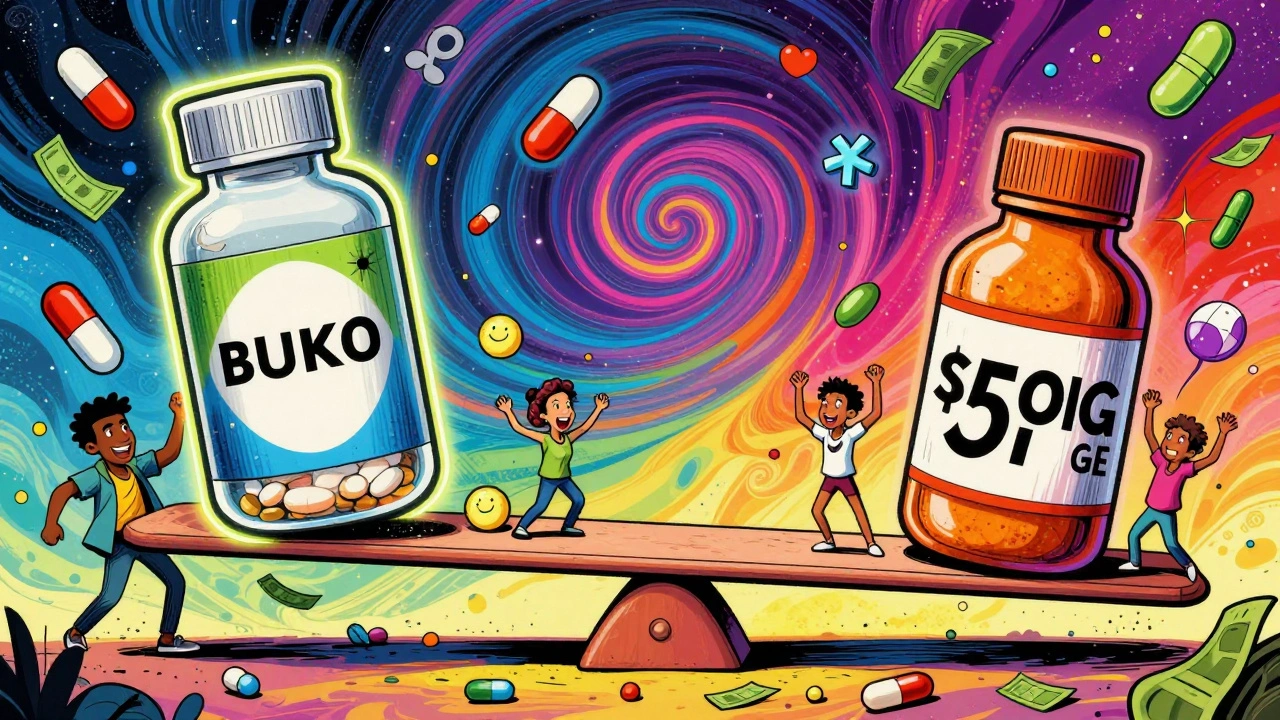
Think of the global pharmaceutical market like a seesaw. On one side: brand-name drugs. They’re expensive, often costing billions to develop. Companies charge high prices to recoup those costs and make profits. On the other side: generics. They’re cheap, easy to make once the patent expires, and they flood the market to drive prices down.
That balance is what keeps the system from tipping into crisis. In the U.S., for example, the Centers for Medicare and Medicaid Services project that by 2033, total health spending will hit $8.6 trillion. Drug spending alone could climb to $1.7 trillion. But without generics, that number could be 30-40% higher.
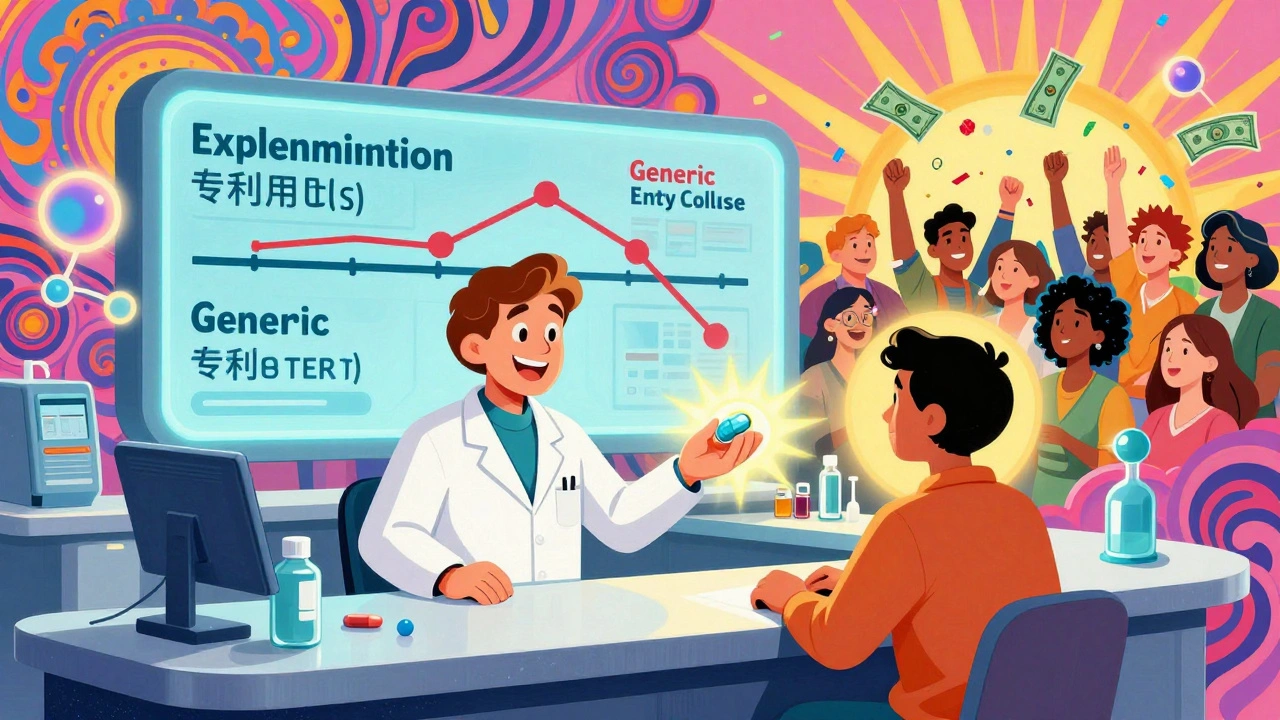
Generics don’t just lower costs - they create competition. When a brand-name drug loses its patent, multiple generic manufacturers enter the market. Prices can drop by 80-95% within months. That’s not magic - it’s basic economics. More suppliers = lower prices.
That’s why insurers and governments push for generic substitution. In Europe, pharmacists can swap a brand-name drug for a generic unless the doctor says otherwise. In the U.S., many insurance plans require generics unless there’s a medical reason not to use them.
The Rise of Biosimilars and New Challenges
But generics aren’t the only cost-savers anymore. Biosimilars - cheaper versions of complex biologic drugs - are starting to enter the market. These are drugs made from living cells, like those used for rheumatoid arthritis, Crohn’s disease, and some cancers. They’re harder to copy than simple chemical pills, so they take longer to develop and cost more.
Still, biosimilars can cut prices by 20-40%. That’s less than traditional generics, but it’s still huge for patients and systems under strain. The problem? Adoption is uneven. In the U.S., doctors are slow to switch. In Europe, they’re faster. In some countries, reimbursement rules don’t cover biosimilars well. In others, patients don’t trust them.
And then there’s the issue of patent thickets. Some drug companies file dozens of minor patents to delay generic entry - extending their monopoly for years. That’s legal, but it keeps prices high. In 2024, a major diabetes drug stayed brand-only for 12 years after its original patent expired, thanks to a string of small patent extensions.
Emerging Markets: From Generics to Innovation
China and other "pharmerging" countries are changing the game. For years, these countries relied almost entirely on generics because they couldn’t afford expensive new drugs. But now, as incomes rise and healthcare systems expand, they’re buying more innovative medicines too.
China’s pharmaceutical market is accelerating post-COVID. More people have insurance. More hospitals can afford new treatments. That’s good news for patients - but bad news for cost control. As these countries move up the economic ladder, they may start to look more like the U.S. or Europe: spending more on innovation, less on generics.
That shift means global generics manufacturers will need to adapt. They can’t just rely on poor countries anymore. They’ll need to compete in mid-income markets where people want both affordability and access to newer drugs.
Who Pays? The Real Cost to Patients
Even in rich countries, patients still pay. In the U.S., out-of-pocket spending on prescriptions is projected to rise from $177 per person in 2025 to $231 in 2033. That’s a 30.5% increase. Why? Because while generics lower costs, they don’t eliminate them. Deductibles, co-pays, and formulary restrictions still push costs onto patients.
And for mental health drugs - where demand is rising fast - generics are vital. Two-thirds of insurers expect demand for mental health services to rise sharply over the next three years. Many of those medications - antidepressants, antipsychotics, anti-anxiety drugs - have generic versions. Without them, mental health care would become unaffordable for most.
The Bigger Picture: Generics as a Human Right
Healthcare isn’t just an economic issue - it’s a human right. The World Health Organization says everyone should have access to essential medicines. But in 37 countries, public health spending has actually dropped since before the pandemic. Lebanon’s spending fell by 71%. Malawi’s by 41%.
When governments can’t pay for new drugs, generics are the only option. They’re not glamorous. They don’t make headlines. But they’re what keep clinics running, hospitals stocked, and people alive.
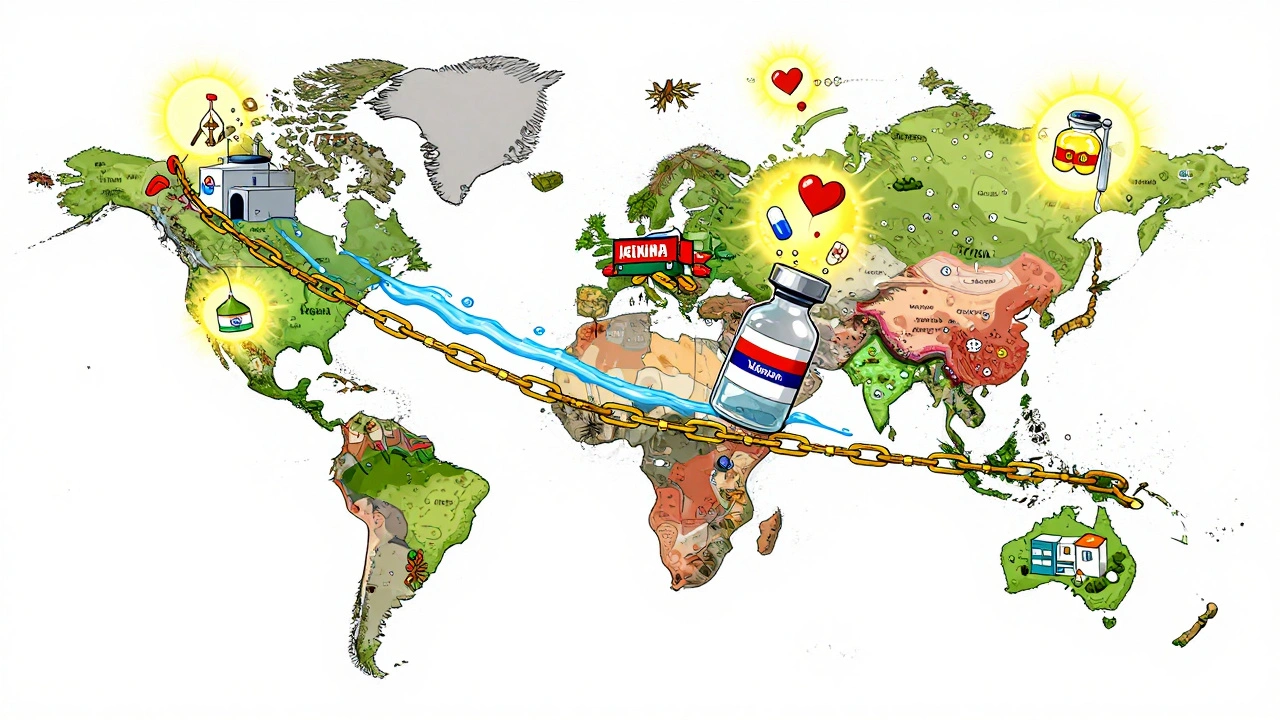
Generics are the quiet heroes of global health. They don’t come with flashy ads or billionaire founders. They’re made in factories in India, China, and Eastern Europe, shipped across borders, and dispensed in rural clinics and city pharmacies alike.
Without them, the global healthcare system wouldn’t just be strained - it would collapse.
What Comes Next?
The future of healthcare spending depends on how well we manage this balance. We need innovation - new drugs for cancer, Alzheimer’s, rare diseases. But we also need affordable access. Generics are the bridge between those two goals.
Policy changes can help. Faster approval of generics. Stronger rules against patent abuse. Better reimbursement for biosimilars. More investment in manufacturing capacity in low-income countries.
But the biggest change? Shifting how we think about drugs. They’re not luxury items. They’re necessities. And the cheapest version - the generic - should be the default, not the afterthought.
Why are generics so much cheaper than brand-name drugs?
Generics are cheaper because they don’t need to repeat expensive clinical trials. Once a brand-name drug’s patent expires, other manufacturers can copy the active ingredient and prove it works the same way. That saves billions in R&D costs. They also face competition from multiple makers, which drives prices down. Brand-name drugs, on the other hand, recoup years of research and marketing through high prices during their patent monopoly.
Do generics work as well as brand-name drugs?
Yes. In the U.S., the FDA requires generics to have the same active ingredient, strength, dosage form, and route of administration as the brand-name version. They must also be bioequivalent - meaning they work the same way in the body. Studies show generics are just as safe and effective. The only differences are in inactive ingredients like fillers or coatings, which don’t affect how the drug works.
Why don’t all countries use generics more?
It’s not always about availability - it’s about trust, regulation, and infrastructure. In some countries, doctors and patients don’t trust generics because they’ve never seen them used before. Regulatory systems may be slow to approve them. Some governments lack the systems to track quality or ensure supply chains are reliable. In places with weak health systems, even if generics are available, they might not reach rural clinics.
How do generics affect drug innovation?
They don’t stop innovation - they balance it. Generics allow companies to recover R&D costs by giving them a temporary monopoly. Once that ends, generics take over, freeing up money in healthcare systems so more resources can go toward new research. Without generics, drug spending would consume so much of health budgets that there’d be little left for developing new treatments.
Are biosimilars the future of generics?
They’re the next step, not the replacement. Biosimilars are for complex biologic drugs - things like insulin, monoclonal antibodies, and autoimmune treatments - that can’t be copied exactly like a pill. They’re harder to make and regulate, so they’re more expensive than traditional generics. But they’re still cheaper than the original biologics. As more biologics lose patent protection, biosimilars will become essential to controlling costs in areas like cancer and rheumatology.
Final Thoughts
Global healthcare spending is rising - fast. But the story isn’t just about cost. It’s about fairness. Generics ensure that a person in Lagos, Lahore, or Louisville can get the same basic medicine at the same low price. That’s not just economics. That’s justice.
The next time you hear about a new $1 million cancer drug, remember: it exists because generics kept the system from breaking. They’re the unsung force keeping healthcare alive - for billions of people who can’t afford anything else.
Jean Claude de La Ronde
December 12, 2025 AT 03:53so generics are like the thrift store of medicine - ugly packaging, no brand name, but same damn pills and half the price. who knew capitalism could be this humble?
Kristi Pope
December 14, 2025 AT 02:13i’ve been on a generic antidepressant for 7 years. it’s saved my life. no flashy ads, no celebrity endorsements - just quiet, reliable relief. these are the unsung heroes we forget to thank.
Aman deep
December 14, 2025 AT 13:00in india, we make 60% of the world’s generics. our factories run 24/7, shipping pills to africa, latin america, even rural america. we don’t get credit, but we keep people alive. proud of that.
Eddie Bennett
December 15, 2025 AT 17:46my dad couldn’t afford his blood pressure med until he switched to generic. he said, ‘i didn’t know pills could be this cheap and still work.’ that hit me hard. we need more of this, not less.
Sylvia Frenzel
December 16, 2025 AT 20:12generics are why american healthcare is a joke. if we didn’t have cheap imports, we’d be paying $1000 for aspirin. our system is broken, but at least generics are holding it together with duct tape and hope.
Paul Dixon
December 17, 2025 AT 16:41just had my pharmacist swap my brand-name omeprazole for generic. saved me $120 this month. honestly? i didn’t even notice a difference. why do we even pay extra?
Vivian Amadi
December 18, 2025 AT 09:07generics are a scam. they’re just knockoffs. you think your body can’t tell the difference? you’re fooling yourself.
Jimmy Kärnfeldt
December 18, 2025 AT 21:15the real tragedy isn’t that generics exist - it’s that we need them at all. we live in a world where a life-saving pill costs more than a car payment. that’s not progress. that’s failure.
Ariel Nichole
December 20, 2025 AT 07:27love how this post highlights how generics connect people across borders. whether you’re in Lagos or Louisville - you’re taking the same pill. that’s beautiful.
john damon
December 20, 2025 AT 18:31generics = 🤝🌍💊 let’s fund more factories in the global south. no more excuses. everyone deserves medicine.
matthew dendle
December 22, 2025 AT 01:05patent thickets? more like patent scams. big pharma’s playing chess while people die of diabetes. and we wonder why trust in medicine is gone
Taylor Dressler
December 23, 2025 AT 14:03the FDA’s bioequivalence standards for generics are among the strictest in the world. every batch is tested. every lot is tracked. the idea that generics are inferior is a myth perpetuated by marketing, not science.