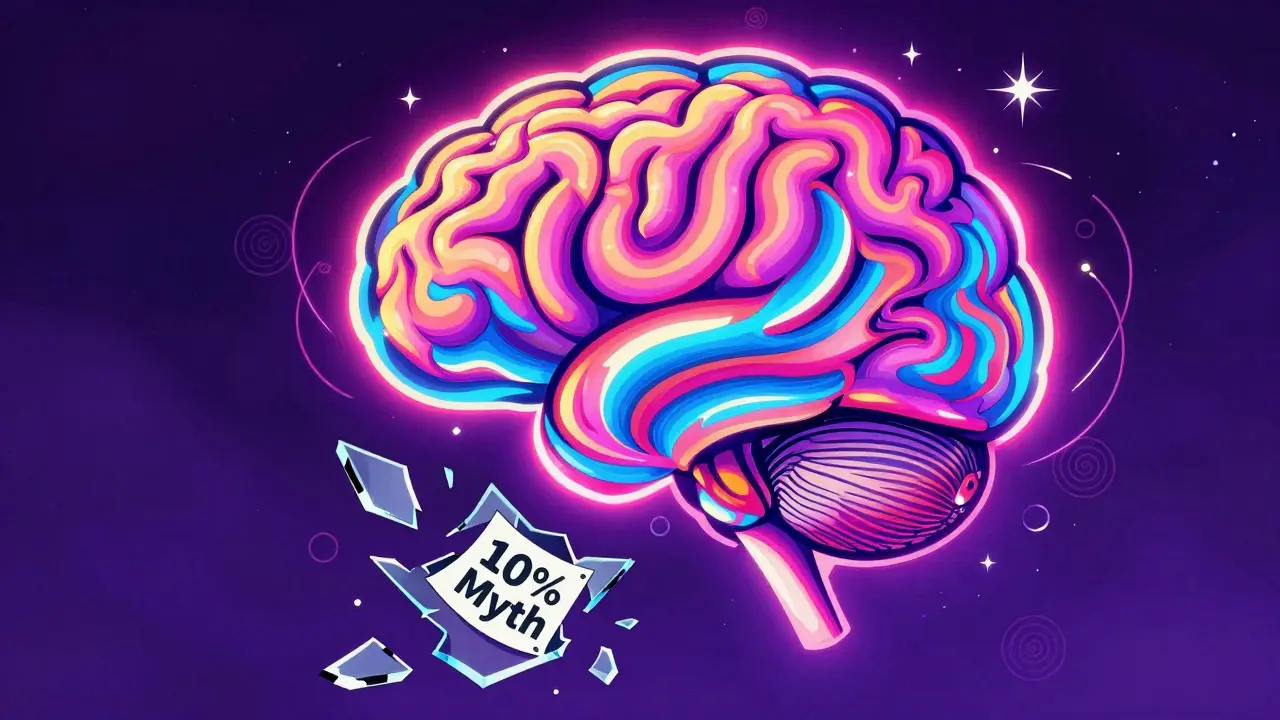
How many times have you heard that you need to drink eight glasses of water a day? Or that chewing gum stays in your stomach for seven years? What about the idea that we only use 10% of our brains? These stories sound plausible, even familiar-but they’re not true. And when these myths stick around in healthcare, they don’t just annoy experts-they can hurt people.
Why Do Health Myths Stick Around?
Myths don’t survive because they’re smart. They survive because they’re simple. Our brains love shortcuts. When a story fits a pattern we already believe-like sugar makes kids hyper, or cold weather causes colds-it feels right, even if it’s wrong. That’s why, despite 23 double-blind studies showing sugar doesn’t cause hyperactivity in children, the myth still shows up in parent groups, school newsletters, and even pediatric waiting rooms. The real danger isn’t just confusion. It’s delay. Someone who believes they need to drink eight glasses of water daily might overhydrate, risking low sodium levels. Someone who thinks a fever is dangerous might skip a vaccine because they fear a mild reaction. In healthcare, myths aren’t just noise-they’re barriers to good decisions.The Eight-Glasses Myth: Where Did It Come From?
You’ve probably seen it on water bottles, fitness apps, and Instagram infographics: "Drink eight 8-ounce glasses of water a day." It sounds scientific. It’s not. In 2002, Dr. Heinz Valtin from Dartmouth Medical School reviewed every peer-reviewed study on water intake. He found zero evidence supporting that specific number. The myth likely started from a 1945 Food and Nutrition Board recommendation that said adults need about 2.5 liters of water daily-and then added, "Most of this quantity is contained in prepared foods." That last part got dropped. Your body is smarter than any app. Thirst is your natural hydration signal. Coffee, tea, fruits, vegetables, even soups all count. A 2023 review in the American Journal of Clinical Nutrition showed most healthy adults meet their hydration needs without counting glasses. Only people in extreme heat, intense exercise, or certain medical conditions need structured fluid goals.Body Heat Loss: Is Your Head Special?
"You lose 70% of your body heat through your head!" That’s what winter survival guides, military manuals, and even some doctors used to say. It’s a compelling image: someone wrapped in a coat but bareheaded, shivering. The truth? Your head makes up about 7 to 10% of your total body surface area. So if you’re cold and bareheaded, you’ll lose about 7 to 10% of your heat through your head. No more, no less. The myth came from a flawed 1950s U.S. Army experiment where subjects wore cold-weather gear but left their heads uncovered. Of course their heads lost the most heat-they were the only part exposed. Dr. Ian Tullberg, a family medicine specialist at UCHealth, confirmed in 2022: "If you leave any one body part exposed, that part will lose heat proportionally." Wear a hat if you’re cold. But don’t think your head is a magical heat drain. Cover your hands, feet, and torso too.Chewing Gum: Does It Really Stay in Your Stomach for Years?
Parents have told kids for decades: "If you swallow gum, it’ll stay in your stomach for seven years." It’s a classic scare tactic. And it’s completely false. Gum isn’t digestible-yes, that’s true. But your body doesn’t need to digest it. It moves through your digestive tract like any other indigestible material: fiber, corn kernels, or seeds. Dr. Tullberg explains, "Most chewing gum travels through your system in a matter of two to four days." It exits the body unchanged. There’s one exception: swallowing huge amounts of gum, especially in young children with small digestive tracts. In rare cases, this can cause blockages. But that’s not the same as gum sticking around for years. That myth persists because it’s easy to remember-and it works as a discipline tool. But it’s not science.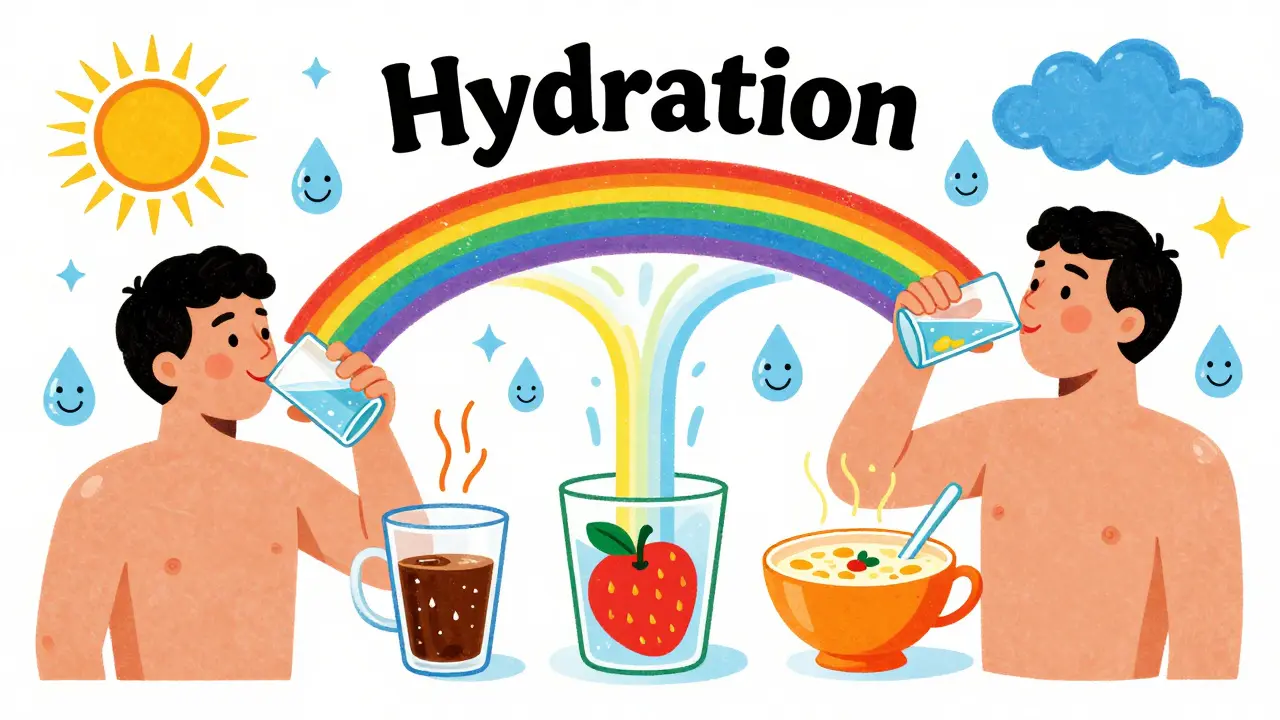
The 10% Brain Myth: Are You Wasting 90% of Your Mind?
This one’s everywhere. Movies like Lucy and Limitless make it look cool: unlock 100% of your brain, become a genius. But it’s not just wrong-it’s dangerously misleading. Neuroscientists have known since the 1990s that every part of the brain has a function. fMRI scans show activity across the entire brain-even during sleep. The myth likely came from a misquote of psychologist William James in the 1920s, who said we only use a small portion of our mental potential. That’s about effort, not biology. Someone twisted it into a literal claim. The real problem? Believing this myth leads people to chase "brain-boosting" supplements, apps, or programs that promise to unlock your hidden potential. There’s no such thing. What you can improve is focus, sleep, nutrition, and mental habits-not some unused part of your brain.Superfoods: Are Goji Berries and Acai Magic?
"Superfood" isn’t a scientific term. It’s a marketing label. The European Food Information Council reviewed dozens of studies and found no evidence that goji berries, acai, chia seeds, or kale offer unique health benefits beyond what you get from a balanced diet. Kale is nutritious? Yes. But so are spinach, broccoli, and cabbage. Acai has antioxidants? So do blueberries, blackberries, and dark chocolate. The difference? Superfoods cost more. A 2023 BBC Science Focus article called them "essentially a branding exercise." Focusing on one "miracle" food distracts from the real key to health: variety. Eating different fruits, vegetables, whole grains, proteins, and healthy fats every day does more for you than eating a spoonful of acai every morning.How to Debunk a Myth Without Making It Worse
You might think the answer is simple: just tell people the truth. But that’s not always true. In fact, repeating the myth-even to correct it-can make people remember it better. That’s called the "familiarity backfire effect." The American Association for the Advancement of Science (AAAS) recommends the "truth sandwich":- Start with the truth. "Your body gets water from all foods and drinks, not just water bottles."
- Then mention the myth-clearly labeled as false. "Some people think you need exactly eight glasses of water a day, but that’s not based on science."
- End with the truth again. "Listen to your thirst. Your body knows what it needs."

What Works in Patient Education?
Healthcare providers who actively correct myths see better outcomes. UCHealth’s 2022 article on common parenting myths got over 1.2 million views. Reddit’s r/DebunkThis community has 147,000 members, and 68% of their top posts are health-related. The most effective tools aren’t long pamphlets. They’re short, visual, and relatable. Veritasium’s YouTube video on body heat loss got 4.7 million views. Why? It showed the science with experiments, not just text. The CDC’s "Myth vs. Fact" template is used by 78% of U.S. health departments. But training matters. Staff need 12 to 16 hours of education to use it well. And they need to understand cultural context. Telling someone in a low-income neighborhood that "sugar doesn’t cause hyperactivity" means nothing if they’ve been told that for 30 years-and if sugary snacks are the only affordable treats.What’s Next in Myth Debunking?
Technology is helping. Google’s "About This Result" feature now gives context for 87% of search results. The World Health Organization’s Myth Busters initiative has corrected over 2,300 myths in 187 countries, cutting vaccine hesitancy by 22%. AI tools like MIT’s "TruthGuard" are being tested to predict new myths before they spread. And by 2024, the International Fact-Checking Network plans to certify professionals who can verify health claims accurately. But no tool replaces human connection. The best myth debunking happens when a nurse takes five minutes to explain why a myth is wrong-not because it’s "bad," but because it’s misleading. When a doctor says, "I used to think that too," it builds trust.Final Thought: Truth Isn’t Always Loud
You won’t see a viral TikTok about how your kidneys filter water. But you’ll see a million videos about how lemon water "detoxes" your liver. The truth doesn’t always win because it’s flashy. It wins because it’s repeated, clear, and trusted. The next time someone tells you a health myth, don’t just correct it. Explain it. Use the truth sandwich. Share a real example. And remember: you don’t need to be a scientist to help someone understand what’s real.Is it true that you need to drink eight glasses of water every day?
No. There’s no scientific evidence supporting the "eight glasses a day" rule. Your water needs depend on your body size, activity level, climate, and diet. Most people get enough fluid from food, coffee, tea, and other drinks. Thirst is your body’s natural signal to drink.
Does chewing gum stay in your stomach for seven years if you swallow it?
No. While your body can’t digest gum, it passes through your digestive system just like other indigestible materials-like corn or seeds. It usually exits within two to four days. The seven-year myth is a myth, not a medical fact.
Do we only use 10% of our brains?
No. Modern brain imaging shows activity across the entire brain, even during simple tasks. The 10% myth comes from a misinterpretation of early 20th-century psychology. Every part of your brain has a function-there’s no unused portion waiting to be unlocked.
Are superfoods like acai and goji berries really better than regular fruits?
No. "Superfood" is a marketing term, not a scientific one. Acai and goji berries are nutritious, but so are blueberries, apples, and oranges. There’s no evidence they offer unique health benefits that other fruits don’t. A balanced diet with variety is more important than chasing one "miracle" food.
Why do health myths persist even after being debunked?
Myths stick because they’re simple, fit existing beliefs, and are repeated often. Some are tied to culture, emotion, or even money-like the sugar-hyperactivity myth, which the food industry promoted for decades. Even when science disproves them, people hold onto them because changing beliefs is hard.
How can I help someone stop believing a health myth?
Use the "truth sandwich": start with the correct fact, briefly mention the myth (clearly labeled as false), then end by restating the truth. Avoid repeating the myth too much. Share personal stories or simple visuals. Be patient-changing beliefs takes time and repeated, respectful conversations.
Chris Buchanan
December 24, 2025 AT 05:00Eight glasses a day? Bro, I drink coffee like it’s my job and I’m still not turning into a walking water balloon. My kidneys are fine, my brain hasn’t melted, and I haven’t needed a hydration coach. Thirst exists for a reason.
claire davies
December 26, 2025 AT 03:00Oh my god, YES. I grew up in a UK household where ‘drink your water’ was basically a bedtime prayer. My mum would track my intake like it was a military operation. Then I moved to Spain and realized people hydrate with wine, olive oil, and gazpacho-and they live longer. The body’s not dumb. It’s just been lied to by fitness influencers who think hydration is a product category.
I once tried counting glasses for a week. Ended up drinking 12, felt bloated, woke up with a headache, and my urine looked like tap water. My body was screaming, ‘I’m not a plant, I’m a mammal.’
The ‘eight glasses’ myth is like telling people to eat five servings of kale a day. It sounds scientific, but it’s just a marketing number dressed up as biology. Your body doesn’t need a spreadsheet. It needs variety, listening, and maybe a little less guilt.
And don’t even get me started on ‘superfoods.’ I saw a $15 acai bowl in Brooklyn that had more sugar than my grandma’s Christmas cake. Meanwhile, the local farmer’s market has apples for $1.20. Guess which one my body actually thanked me for?
It’s not about magic ingredients. It’s about showing up, eating real stuff, and not letting corporations sell you a myth wrapped in a glittery hashtag.
Raja P
December 27, 2025 AT 04:59Man, I remember my dad telling me gum stays in your stomach for seven years. I swallowed a piece once at 8 and spent the whole weekend checking the toilet like it was a treasure hunt. Turns out, my body just… dealt with it. Like it does with everything else. We’re not fragile.
Also, the head heat thing? My uncle in Delhi says if you wear a hat in 45°C, you’ll overheat faster. So yeah, context matters. Not every myth is wrong everywhere-just wrong in the way it’s told.
Andy Grace
December 27, 2025 AT 15:33It is deeply concerning that pseudoscientific narratives continue to permeate public health discourse without rigorous correction. The persistence of the 10% brain myth, for instance, demonstrates a fundamental failure in science communication infrastructure. Peer-reviewed literature has conclusively refuted this claim since the 1990s, yet it remains embedded in popular media. This is not merely misinformation-it is epistemological erosion.
Spencer Garcia
December 28, 2025 AT 17:01Thirst is the best hydration app.
Rachel Cericola
December 28, 2025 AT 20:08Look, I get why people cling to these myths. They’re comforting. They make complex biology feel simple. But when you’re a parent trying to keep your kid alive, and you’re told ‘sugar causes hyperactivity’ by every other mom at the playground, you start to believe it-even when the science says otherwise.
I used to be one of those moms. I banned candy for years. Then I read the 23 studies. I sat down with my pediatrician. I realized I wasn’t protecting my kid-I was punishing them for a lie. Now? We have dessert. And they’re not a tornado. They’re just a kid.
It’s not about being perfect. It’s about being willing to unlearn. And that’s harder than any diet, any supplement, any ‘superfood’ ever will be.
The truth sandwich works because it doesn’t shame. It doesn’t say ‘you’re dumb.’ It says ‘here’s what we know now, and I used to believe the same thing.’ That’s how trust is built. Not by shouting. By showing up, quietly, with evidence and humility.
And if you’re still buying acai bowls because you think they ‘detox’ you? Honey. Your liver is doing just fine. It doesn’t need your $18 smoothie. It needs sleep, water, and maybe a little less Instagram.
Delilah Rose
December 30, 2025 AT 18:09I’ve been thinking a lot about why myths stick, especially in healthcare. It’s not just about ignorance-it’s about identity. If you’ve spent 20 years telling your kids not to swallow gum, or that cold weather gives you a cold, then admitting you were wrong feels like admitting you were a bad parent, a bad caregiver, a bad person.
And that’s not easy. We don’t want to feel like we’ve been fooled. So instead of changing our belief, we double down. We find someone else who agrees with us. We post memes. We tell the same story to our friends. It’s not science. It’s survival.
That’s why the truth sandwich works. It doesn’t attack. It doesn’t say ‘you’re wrong.’ It says ‘here’s what I learned, and I used to believe it too.’ That’s the magic. It lowers the walls. It says, ‘we’re in this together.’
I’ve used this with my aunt who still thinks vaccines cause autism. I didn’t argue. I said, ‘I used to think that too. Then I read the data. And I realized-I didn’t need to fear the vaccine. I needed to fear the disease.’ She didn’t change overnight. But she asked me for the study. That’s a start.
Debunking isn’t about winning. It’s about opening a door. Sometimes, you just have to stand there, quietly, and wait for someone to walk through.
Abby Polhill
December 31, 2025 AT 22:11There’s a neurocognitive dissonance at play here-when heuristic-based cognition overrides evidence-based reasoning, especially in domains with high affective valence like health. The ‘eight glasses’ heuristic is a cognitive schema reinforced by algorithmic content delivery systems that prioritize engagement over accuracy. The result? A pathological reinforcement loop where misinformation becomes epistemologically entrenched.
Moreover, the ‘superfood’ construct is a classic example of biomedical commodification, wherein phytochemical richness is abstracted into a branded, marketable identity divorced from ecological and dietary context. The nutritional equivalence of kale and spinach is not a matter of semantics-it’s a matter of ecological justice, given the disproportionate cost and carbon footprint of ‘exotic’ superfoods.
What’s needed isn’t just education-it’s systemic intervention: curriculum reform, platform accountability, and a paradigm shift from individualized ‘health optimization’ to population-level nutritional equity.
Blow Job
January 2, 2026 AT 03:11I used to think I had to chug water all day. Then I started hiking in the Rockies. Turned out, I’d drink when I was thirsty, eat my trail mix, and my body never complained. I didn’t need an app. I just needed to stop listening to ads.
Also, the head heat thing? My grandpa was a Vietnam vet. He said if you’re cold, cover your hands first. They get cold before your head. And he was right.
People want simple answers. But the body? It’s complicated. And beautiful.
Christine Détraz
January 4, 2026 AT 00:09My grandma used to say if you swallow gum, it’ll stay in your stomach forever. I believed her until I was 16. Then I swallowed a piece on purpose just to prove her wrong. Nothing happened. I didn’t explode. I didn’t turn into a gum monster.
But here’s the thing-I still tell my nieces the same thing. Not because I believe it. But because it’s easier than explaining digestion. Sometimes, we lie to protect them from the mess of truth.
Maybe the real myth isn’t the gum. It’s the idea that we can ever fully fix what’s broken with just facts.
John Pearce CP
January 4, 2026 AT 21:31It is an affront to the intellectual integrity of the American public that such baseless, unscientific notions continue to be disseminated as medical fact. The notion that hydration can be determined by thirst alone is a dangerous regression, particularly in an era of climate-induced heat stress and declining public health literacy. One must rely on empirically derived guidelines, not biological whimsy.
Furthermore, the dismissal of the ‘eight glasses’ rule as a myth is emblematic of a broader cultural trend toward anti-expertism and pseudo-scientific populism. This is not progress. It is peril.
Let us not forget: the Food and Nutrition Board did not arbitrarily suggest 2.5 liters. It was based on decades of physiological research. To discard it on the basis of a single 2002 review is intellectually irresponsible.
Joseph Manuel
January 5, 2026 AT 02:42It is a well-documented phenomenon in cognitive psychology that the mere exposure to a myth-even in the context of refutation-increases its perceived validity. This is known as the familiarity backfire effect, and it is precisely why the ‘truth sandwich’ methodology is not merely preferable, but ethically imperative in public health communication.
However, the assumption that laypersons can reliably interpret and apply scientific findings without structured training is a dangerous fallacy. The CDC’s Myth vs. Fact template, while empirically validated, requires 12–16 hours of certification to implement correctly. Without institutional support, such efforts devolve into performative debunking that reinforces the very myths it seeks to dismantle.
The solution is not individual persuasion. It is systemic. We must embed fact-checking protocols into public health infrastructure, train frontline providers, and hold media platforms accountable for algorithmic amplification of misinformation.
Spencer Garcia
January 5, 2026 AT 08:42My mom still tells me to drink eight glasses. I just nod. Then I drink tea. She’s happy. I’m hydrated. Win-win.