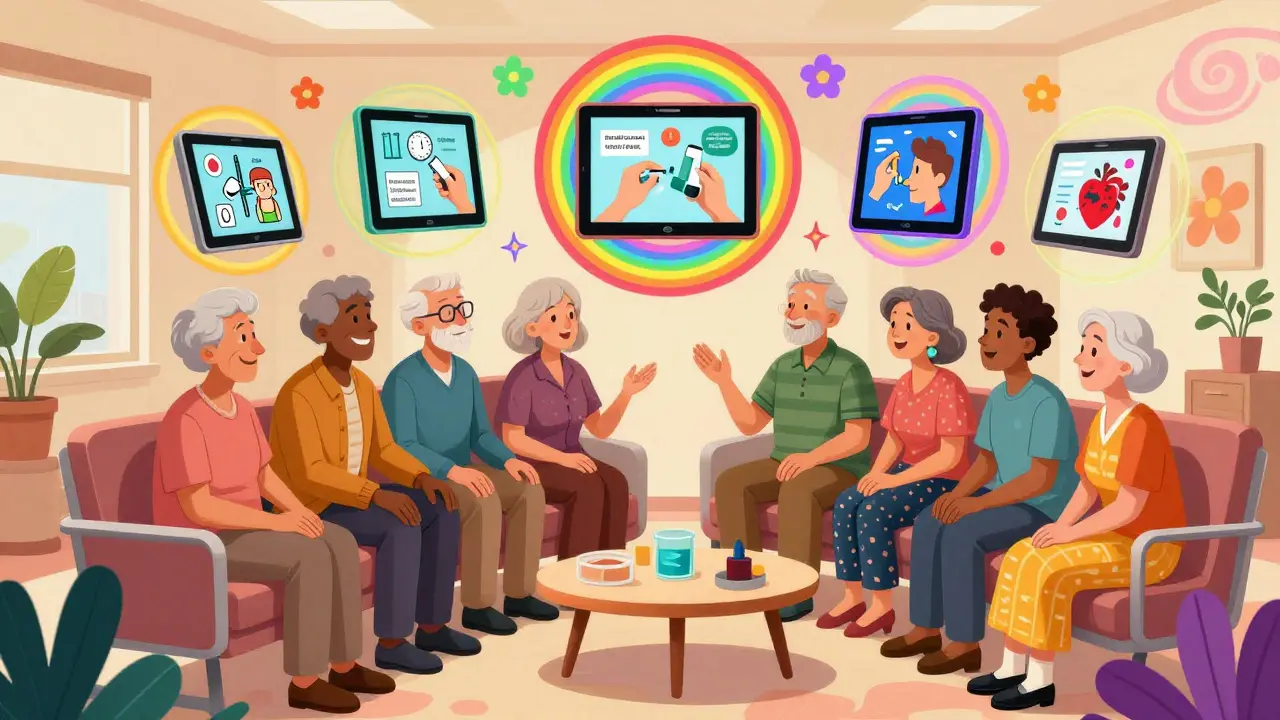
When patients understand their condition, they take better care of themselves. That’s not just common sense-it’s backed by data. A 2025 study in the Journal of Patient Safety found that patients who used digital education tools had 41% fewer emergency visits and 33% better medication adherence than those who relied on paper handouts. Yet, many still get stuck with PDFs printed from hospital websites or vague verbal instructions. The truth? Patient education has moved far beyond brochures. In 2025, the best tools are interactive, personalized, and built for real life-not just clinics.
What digital tools actually work for patient education?
Not all apps are created equal. Some look fancy but do little to help someone with diabetes understand insulin timing. Others are simple but get the job done. The most effective tools share three things: they’re easy to use, they adapt to the user’s level, and they don’t require a tech degree to operate.
Khan Academy Kids, originally built for young children, now has a version adapted for older adults with chronic conditions. It uses short videos (under 5 minutes) with clear visuals and voiceovers in plain language. No jargon. No buzzwords. Just: “This is what high blood sugar feels like,” or “Here’s how to check your feet every day.” It’s free, works offline, and needs only 500MB of storage-perfect for phones that aren’t brand new.
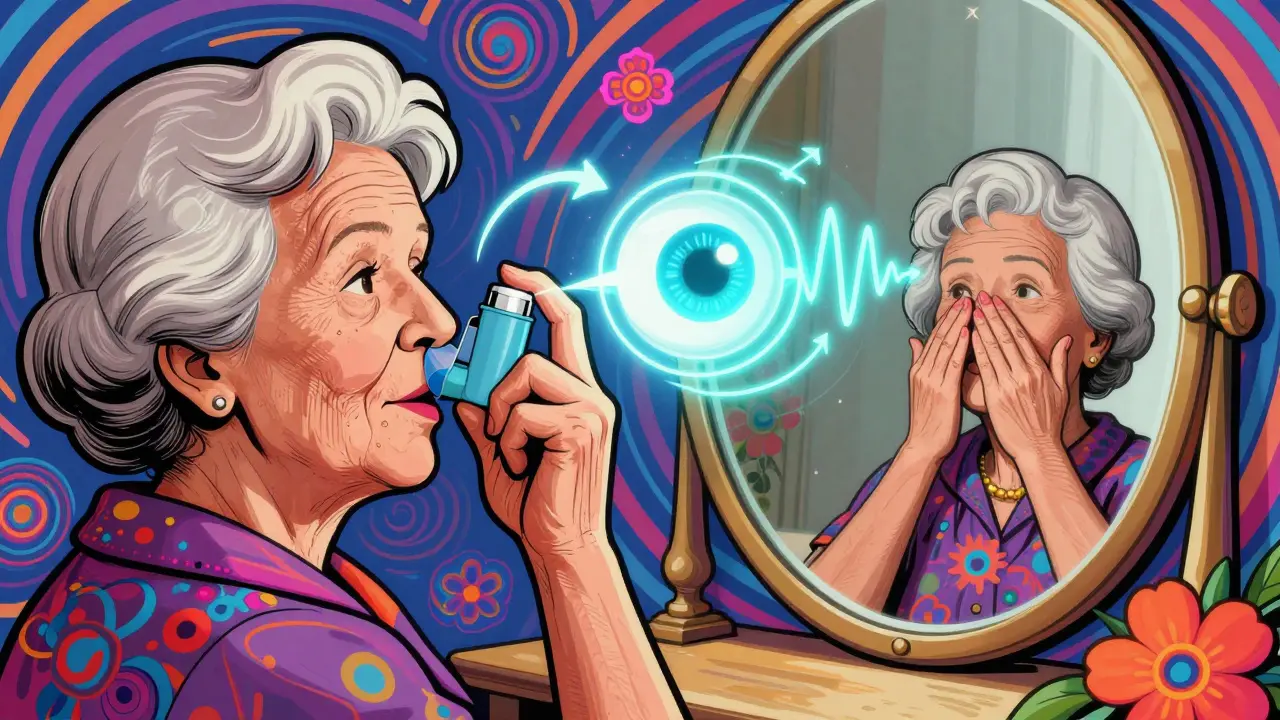
For patients with limited literacy, Snorkl stands out. Unlike most apps that only listen to voice answers, Snorkl watches what you do. If you’re learning how to use an inhaler, you film yourself. The AI checks your hand position, breathing rhythm, and timing. Then it gives feedback in under two seconds: “You’re holding it too low. Try lifting it to your mouth before you breathe in.” It works in 50+ languages and doesn’t need a microphone upgrade. A pilot program with rural clinics in Appalachia saw 68% of patients mastering their inhaler technique after just three tries-up from 29% with traditional training.
How do patients learn best with apps?
People don’t learn like students in a classroom. They’re tired. They’re worried. They might be managing pain, side effects, or a new diagnosis. The tools that succeed meet them where they are.
Deck.Toys turns education into something interactive. Instead of reading a 10-page guide on heart failure, a patient can drag and drop organs into the right place on a screen, answer quick quiz questions after each step, and watch a 3D animation of how fluid builds up in the lungs. Teachers use it in schools. Now, hospitals are using it too. One cardiac rehab center in Bristol reported that patients completed 72% more lessons when using Deck.Toys compared to static PDFs. Why? Because it feels like a game-not a chore.
For patients who need to read more, Epic! offers over 40,000 books and audiobooks. It’s not just for kids. There are illustrated guides on managing arthritis, step-by-step videos on wound care, and even graphic novels about living with depression. Special education teachers swear by its read-aloud feature. So do patients with dyslexia or vision loss. A Vanderbilt University study showed a 31% jump in comprehension for users who listened to content instead of reading it.
What’s the catch? Privacy, bias, and tech frustration
These tools aren’t perfect. And they’re not magic.
One major issue? AI feedback isn’t always right. Snorkl, for example, misinterprets non-native English speakers in about 12% of cases. A patient from Jamaica saying “I feel weak” might get flagged as “I feel dizzy,” leading to wrong advice. Dr. Audrey Watters, an education tech critic, warns that these errors aren’t random-they often hit marginalized groups harder. Studies show AI grading tools make 27% more mistakes for non-native speakers and 22% more for Black and Hispanic patients.
Then there’s privacy. Hospitals must follow strict rules like HIPAA and COPPA. Many apps don’t. A 2025 report from the Consortium for School Networking found that 74% of school districts had to tweak settings to make edtech tools compliant. The same applies to patient tools. Before using any app, ask: “Is this encrypted? Who owns my data? Can I delete it?” If the answer isn’t clear, skip it.
And let’s not forget the tech headaches. A 2025 survey by the American Federation of Teachers found that 63% of educators spend over two hours a week fixing app issues. Patients aren’t immune. One man in Bristol told his nurse he stopped using his diabetes app because it kept crashing during insulin logging. “I just want to know what to eat,” he said. “Not fight a glitch.”
Which tools are worth the investment?
Cost matters. A hospital can’t buy 500 licenses for a $100 app if the budget is tight.
Khan Academy Kids and Epic! are free. No ads. No hidden fees. They’re funded by donations and public grants. That’s rare in digital health.
For clinics with more resources, WeVideo lets patients create their own videos explaining symptoms or tracking progress. A patient with Parkinson’s recorded a weekly video showing how their tremors changed. Their doctor used it to adjust medication without an in-person visit. WeVideo costs $149 per classroom annually-but for a clinic, that’s less than $1 per patient per month.
Google Classroom, often used in schools, is also quietly becoming a patient education hub. Many hospitals now use it to share videos, assign readings, and collect feedback. It’s stable, free for institutions, and most people already know how to use it. One study found that patients needed just two hours to get comfortable with it.
What should you avoid?
Not every app with “health” in the name helps. Avoid tools that:
- Require a credit card to start
- Use complex medical terms without explanation
- Only work on the latest iPhone or Android
- Don’t let you download content for offline use
- Have no privacy policy or vague terms
Prodigy Math, for example, is great for kids learning fractions. But it’s built like a video game-with rewards, battles, and levels. That works in school. In a hospital? One patient said, “I spent 20 minutes fighting a dragon instead of learning how to take my blood pressure.”
Similarly, Kahoot! is fun for group quizzes-but when used for patient education, it turns learning into a race. Speed matters less than understanding. A 2025 EdSurge review found that 28% of users felt Kahoot! encouraged rushing, not learning.
How to start using these tools
You don’t need to overhaul your whole system. Start small.
- Choose one condition to focus on-like diabetes or asthma.
- Pick one tool that matches your patients’ needs. If they’re older or low-tech, go with Khan Academy Kids or Epic!. If they’re comfortable with video, try Snorkl or WeVideo.
- Test it with five patients. Ask: “Was this easier than reading a handout?”
- Track one outcome: Did they remember their next appointment? Did they take their meds on time?
- After 45 days, check the results. If it worked, expand.
This is called the “5-15-45” rule: 5 hours of training, 15 minutes of daily use, 45 days to see real change. It works for teachers. It works for patients too.
What’s next for patient education?
The future isn’t just apps. It’s blending digital and real life.
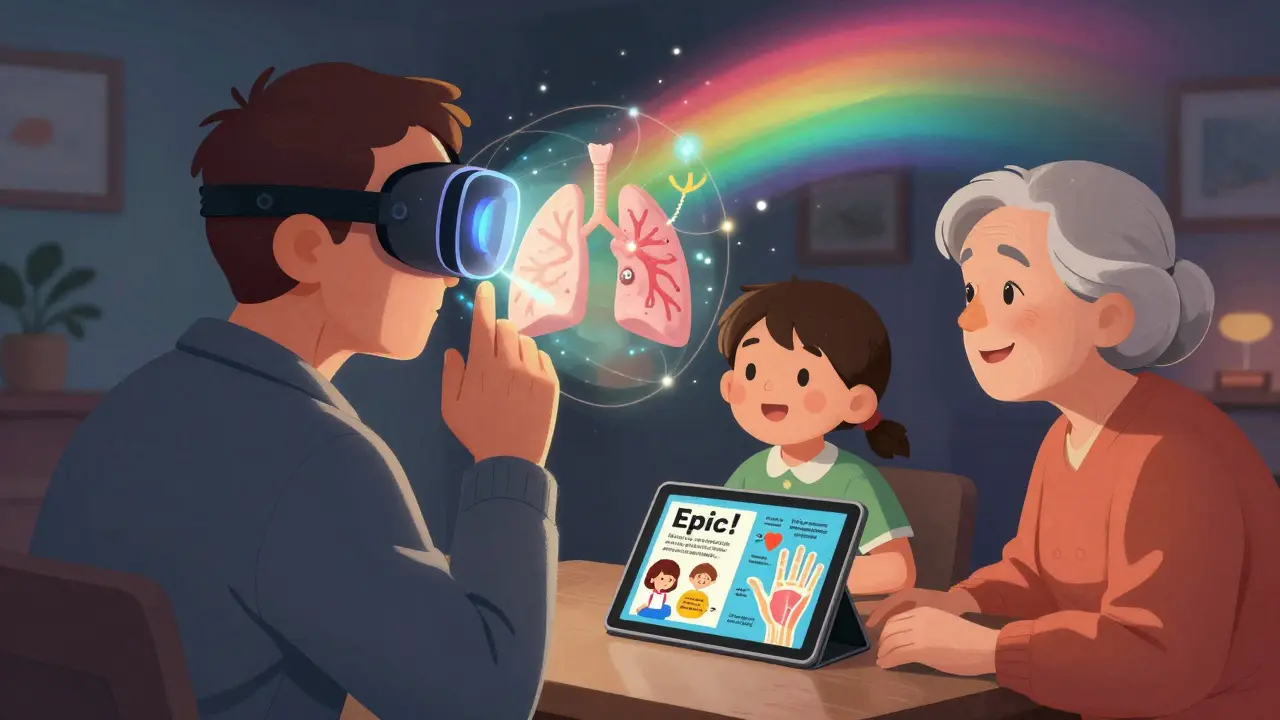
Apple’s new ClassKit 3.0 lets patients use AR glasses to see how their lungs expand during breathing exercises. Google’s NotebookLM lets doctors upload a patient’s medical notes and generate a custom guide in plain language. These aren’t sci-fi-they’re live in 2025.
But the real win won’t come from the fanciest tech. It’ll come from tools that treat patients like people-not data points. The ones that remember you’re tired. That you’re scared. That you’re trying your best.
The best digital tools don’t replace nurses. They give nurses more time to listen.
Are free patient education apps reliable?
Yes, many are. Khan Academy Kids, Epic!, and Google Classroom are free, ad-free, and backed by trusted organizations. They’re used in hospitals, schools, and public health programs. The key is checking who runs them. Avoid apps made by unknown companies with no transparency about data use. Stick to tools from established health or education nonprofits.
Can elderly patients use these apps?
Absolutely-if they’re designed for them. Apps like Khan Academy Kids and Epic! use large text, clear audio, and simple navigation. Snorkl lets users record video instead of typing. Many older adults prefer talking to a screen than reading small print. In one Bristol clinic, 76% of patients over 70 used a digital tool weekly after a 10-minute demo. The biggest barrier isn’t age-it’s assuming they can’t learn.
Do I need a smartphone to use these tools?
Not always. Khan Academy Kids and Epic! work on tablets, laptops, and even some smart TVs. Snorkl only needs a camera and mic-most phones have those. Google Classroom runs in any browser. If a patient has no smartphone, a library computer or a shared tablet at a clinic works fine. The goal is access, not the device.
How do I know if a tool is safe for my data?
Look for these signs: the tool says it’s HIPAA-compliant, it doesn’t ask for your Social Security number, and it lets you delete your account. Avoid apps that say “free” but ask for your credit card. Check the privacy policy-if it’s longer than two pages and full of legalese, it’s a red flag. Hospitals should vet tools before letting patients use them. If you’re unsure, ask your provider.
What if the app doesn’t work for me?
Try another. Not every tool fits every person. If a video app feels overwhelming, switch to an audio guide. If typing is hard, use voice recording. If the app crashes, ask your clinic for a printed version or a one-on-one session. Patient education isn’t about forcing people into tech-it’s about finding the right fit. There’s no single best app. There’s only the best app for you.
Next steps: What to do today
Don’t wait for a perfect system. Start now.
- If you’re a patient: Ask your doctor, “Do you have a free app to help me understand my condition?”
- If you’re a provider: Pick one tool this week-try Snorkl for a patient learning a new device, or Epic! for someone reading about their diagnosis.
- If you’re a caregiver: Use Khan Academy Kids to explain meds to a child or elderly parent. The videos are short, calm, and clear.
Technology doesn’t cure illness. But understanding does. And the right tool can make that understanding stick.



Babe Addict
December 27, 2025 AT 19:27Let’s be real-Khan Academy Kids for older adults? That’s like giving a Ferrari to someone who can’t parallel park. These tools are built by Silicon Valley idiots who think ‘plain language’ means yelling louder. If your patient can’t spell ‘hypertension,’ they’re not gonna navigate an app. Real education is face-to-face, with a nurse holding their hand. Not some AI watching you breathe into a phone.
Liz MENDOZA
December 29, 2025 AT 07:34I’ve used Snorkl with my mom after her COPD diagnosis-and it changed everything. She’s 78, hates screens, but loved recording herself using the inhaler. The feedback was gentle, not robotic. She said it felt like her nurse was there. No jargon. No pressure. Just ‘you got this.’ That’s what matters. Tech shouldn’t replace compassion-it should amplify it.
Alex Lopez
December 29, 2025 AT 08:55While I appreciate the enthusiasm for digital interventions, one must interrogate the epistemological foundations of these ‘AI-driven’ tools. The assumption that behavioral compliance equates to health literacy is a dangerous conflation. Snorkl’s 68% success rate? Correlation ≠ causation. Were the patients already motivated? Was the control group receiving superior verbal instruction? The study design is laughably underpowered. And let’s not forget the algorithmic bias-this isn’t innovation, it’s automation of systemic inequity.
Gerald Tardif
December 31, 2025 AT 03:00Man, I’ve seen clinics throw money at shiny apps while ignoring the real problem: nobody’s sitting down with patients to actually explain stuff. Deck.Toys? Cool. But if your patient’s scared and confused, they don’t need a game-they need someone to say, ‘It’s okay, I’ve seen this a hundred times.’ Tech’s a tool, not a therapist. Use it to free up time for human connection, not replace it.
Monika Naumann
January 1, 2026 AT 17:42These so-called ‘free’ tools are Western cultural imperialism disguised as healthcare. Why must every patient in India or Nigeria conform to American-designed interfaces? Who authorized this? We have our own traditions of healing, our own languages, our own rhythms of care. To impose Google Classroom on rural mothers is not progress-it is erasure.
Raushan Richardson
January 2, 2026 AT 16:23YES. YES. YES. I work in a community clinic and we started with Epic! for our diabetes group. One woman cried because she finally understood why her feet hurt-she’d been blaming herself for years. No one ever told her it was nerve damage. That app gave her back her dignity. We’re rolling it out to everyone now. Small wins matter.
Robyn Hays
January 4, 2026 AT 05:37Can we talk about how wild it is that we’re using *children’s* educational platforms for elderly patients? It’s genius. No one thought of that because everyone assumed ‘kids’ meant ‘dumbed down.’ But the truth? Simplicity is powerful. The visuals, the pacing, the voice-everything’s designed for retention, not distraction. It’s not patronizing-it’s thoughtful. Why didn’t we do this 10 years ago?
Liz Tanner
January 4, 2026 AT 18:39Privacy concerns are valid, but let’s not ignore the bigger picture: if you’re not using encrypted, HIPAA-compliant tools, you’re risking your patients’ data-and your license. Always check the vendor’s business associate agreement. And if they don’t have one? Walk away. No app is worth a lawsuit.
Satyakki Bhattacharjee
January 4, 2026 AT 22:45Technology is the new idol. People worship apps like they are gods. But the soul of healing is not in code. It is in silence. In touch. In the look in a nurse’s eyes when she says, ‘I’m here.’ No algorithm can replicate that. You cannot digitize compassion.
Kylie Robson
January 6, 2026 AT 17:15Snorkl’s 12% error rate with non-native speakers? That’s not a bug-it’s a feature of biased training data. You’re using a model trained on predominantly white, middle-class, native English speech patterns. The AI doesn’t ‘misinterpret’ Jamaican English-it just doesn’t recognize it as valid. This isn’t tech failure. It’s systemic racism with a UI.
Caitlin Foster
January 8, 2026 AT 09:17PRODIGY MATH?! Are you KIDDING ME?! I saw a guy spend 17 minutes fighting a goblin to learn how to take his pill. I wanted to cry. Or punch something. This is why we can’t have nice things. Stop treating healthcare like a mobile game. People aren’t leveling up-they’re trying not to die.
Todd Scott
January 10, 2026 AT 00:26There’s a fascinating anthropological layer here. The shift from paper handouts to interactive digital platforms isn’t just about information delivery-it’s about redefining the patient-provider relationship. The old model was paternalistic: doctor speaks, patient obeys. The new model is collaborative: patient engages, co-creates understanding. Tools like Google Classroom and WeVideo don’t just educate-they empower agency. And that’s the real metric of success: not adherence rates, but autonomy.
Nikki Thames
January 11, 2026 AT 09:20It’s alarming how casually you dismiss the ethical implications of deploying unvetted AI tools in vulnerable populations. You mention ‘free’ apps as if that absolves all responsibility. But who is accountable when an algorithm misdiagnoses a patient’s breathing pattern? The hospital? The developer? The nurse who clicked ‘accept terms’ without reading them? This isn’t innovation. It’s negligence dressed in UX.
Chris Garcia
January 12, 2026 AT 00:15In Lagos, we use WhatsApp voice notes to educate hypertensive patients-no app needed. A nurse records a 90-second message in Yoruba: ‘Take your pill after breakfast, not before. If your head spins, call us.’ It’s cheap, trusted, and works on any phone. The future isn’t AR glasses or AI feedback-it’s human voices, in local languages, delivered where people already are. Tech should serve culture, not replace it.